
Quick Answer for Gulf Visitors
What is Cappadocia? — A region of central Anatolia spanning the Nevsehir, Kayseri, and Aksaray provinces, known for its rock formations (fairy chimneys), underground cities, cave hotels, and sunrise hot-air balloon flights.
How do I get there from the Gulf? — Usually with one stop: fly to Istanbul, then take a domestic flight to Nevsehir (NAV) or Kayseri (ASR), followed by a 45-70 minute drive to Goreme or Urgup.
When is the best time to visit? — April-June and September-October give mild weather and the highest chance the balloons fly. Winter is more photogenic but flights are cancelled more often because of wind.
Comprehensive Introduction
Cappadocia — a unique region in the heart of Central Anatolia in Turkey, famous for fairy chimneys, volcanic valleys, and underground cities. An ideal destination for families from Saudi Arabia thanks to mild summer climate, world-renowned hot air balloon rides, and luxury cave hotels. Distance from Istanbul is approximately 730 km (1.5 hour flight or 8-9 hour drive).
Cappadocia Details for Arab Travelers
Category One: Essential Information
This category includes the basic facts every traveler needs before making travel decisions. Geographic location, climate, currency (Turkish Lira - TRY), official language (Turkish), and international calling code (+90) are among the most important. Gulf travelers find in Turkey an ideal mix of geographic proximity (3-4 hours flight from Riyadh or Dubai) and cultural and religious similarity.
Category Two: Cultural Information
Turkey combines more than 3,000 years of history, starting from ancient Anatolian civilizations (Hittites, Phrygians, Lydians), through the Byzantine Empire (with Constantinople as capital), to the Ottoman Empire (1299-1922). This rich heritage is visible in architectural landmarks, museums, archaeological sites, and traditional cuisine.
Category Three: Practical Travel Aspects
These include entry requirements (visa), internal transport options (flights, buses, metro), accommodation types (luxury hotels, serviced apartments, resorts), and cost of living. The next section provides a detailed comparison of these aspects to help you plan.
Cappadocia Options Comparison
| Criteria | Option One | Option Two | Option Three | Notes |
|---|---|---|---|---|
| Price | Economy | Mid-range | Luxury | Per budget |
| Location | City center | Suburbs | Resort | Per priority |
| Comfort | Basic | Comfortable | Luxurious | Per preference |
| Food | Local | Diverse | International | Per taste |
| Transport | Public | Private | Rental | Per program |
| Language | Little | Moderate | High | Per experience |
Practical Tips for Gulf Visitors
Tips for Gulf Visitors from Saudi Arabia and UAE
- Carry some Turkish Lira for small payments (taxi, groceries), though cards are widely accepted
- Keep a copy of your passport on your phone and cloud storage, along with booking documents
- Use helpful apps: Google Maps, BiTaksi (for Istanbul taxis), Moovit (public transport), Yemeksepeti (food delivery)
- Learn basic Turkish words: Merhaba (hello), Teşekkürler (thank you), Evet (yes), Hayır (no)
- Shop at local craft markets (pottery, carpets, textiles) for better prices and an authentic experience
Family Tips
- Book family-friendly hotels in advance during high season (June-August, Ramadan, holidays) 2-3 months ahead
- Choose connecting rooms or family suites for greater comfort
- Use kids club services in major hotels for relaxation
- Carry snacks for children, though most familiar foods are available in Turkey
- Plan a flexible schedule, especially with young children, to avoid fatigue
Budget Tips
- Use public transport instead of taxis, especially in Istanbul
- Eat at lokanta (local restaurants) instead of tourist restaurants
- Book hotels 4-6 weeks before travel for best prices
- Avoid set tourist menus, order freshly prepared local dishes
- Buy at bazaars instead of malls, and learn to bargain
Practical Info for Gulf Visitors
| Item | Details | Note for Gulf Visitors |
|---|---|---|
| Currency | Turkish Lira (TRY) | 1 USD ≈ 38-40 TRY (2026) |
| Calling Code | +90 | To call Turkey |
| Istanbul Code | 212 (European), 216 (Asian) | For local calls |
| Emergency | 112 (police, ambulance, fire) | Free from any phone |
| Language | Turkish | English common in cities |
| Time | UTC+3 (TRT) | Same as Gulf (or -1) |
| Electricity | Type C/F | 220V, 50Hz (like Gulf) |
| Water | Drinkable in most cities | Bottled preferred |
| Insurance | Highly recommended | $30-100/person |
| Prayer | Mosques everywhere | Most 5-star hotels have prayer room |
| Halal Food | Widely available | Most restaurants are halal |
| Prayer Times | 5 times daily | Adhan, Muslim Pro apps |
Related Articles and Resources
For a complete trip to Turkey, explore these helpful resources:
- Browse and book hotels across Turkey
- Reserve private transfer services
- Book guided tours and excursions
- Read more: Turkey visa for Saudi citizens
- Read more: Istanbul hotel guide
- Read more: Istanbul 5-star hotels
- Read more: Turkey country guide
- Read more: Turkey travel costs
- Read more: Best areas to stay in Turkey
Official Sources
Verify travel information through these official channels:
- Visa application: evisa.gov.tr
- Weather updates: mgm.gov.tr
- Tourism portal: goturkiye.com
- Foreign affairs: mfa.gov.tr
- Maps: yandex.com.tr/maps
How Cappadocia Formed: A Unique Geological Story
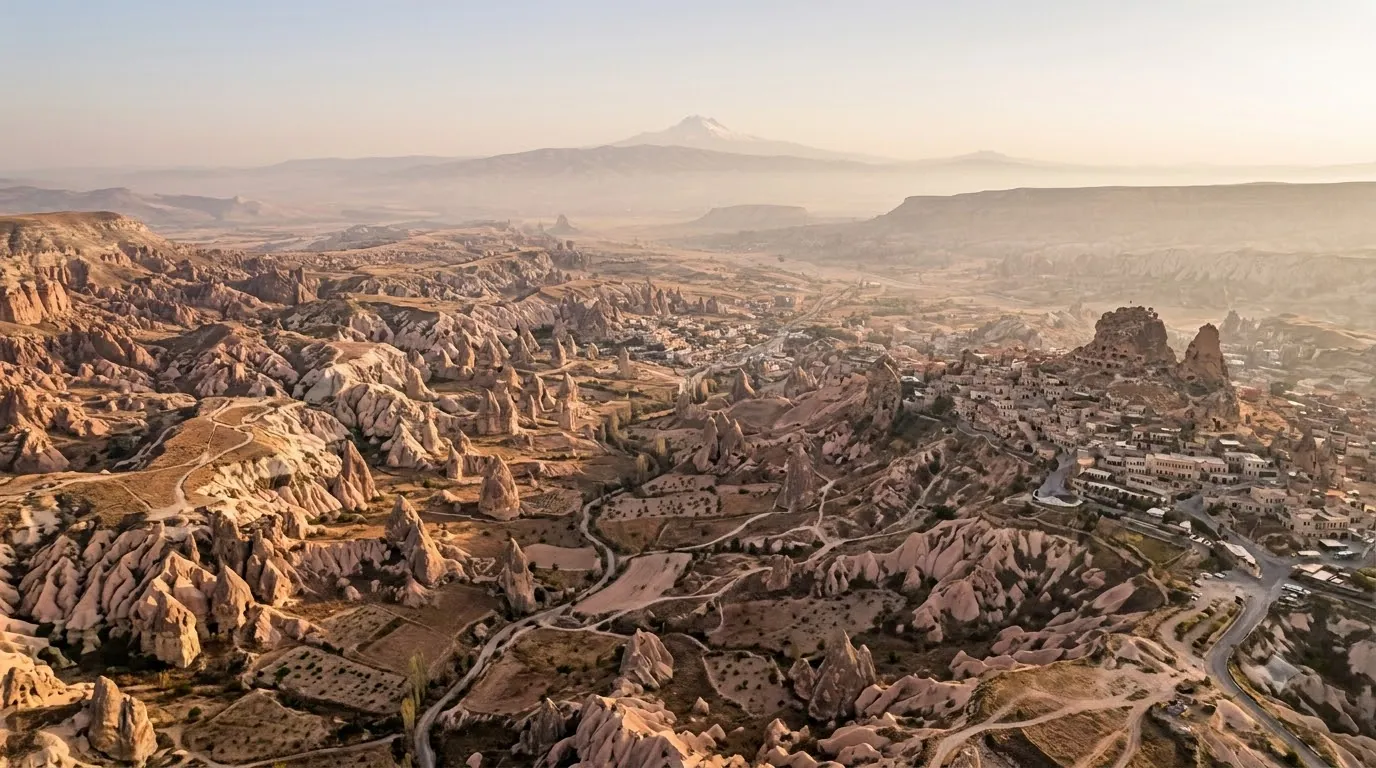
Millions of years ago the volcanoes of Mount Erciyes, Mount Hasan, and Gollu Dag erupted and blanketed the region in ash and lava, forming layers of soft tuff rock. Wind and rain then spent centuries carving these soft layers, leaving conical pillars topped by harder basalt caps that look like hats — the famous fairy chimneys. Humans added their own layer: carving houses, churches, stables, and even entire underground cities into the soft rock, making Cappadocia a one-of-a-kind collaboration between volcanoes, water, and people. That geological story is why the region sits on the UNESCO World Heritage list.
Fairy Chimneys: The Symbol of Cappadocia
The finest chimney clusters are at Pasabag (Monks Valley) east of Goreme, where capped cones rise along both sides of the road, and in Pigeon Valley next to the town. Some chimneys in the region exceed ten meters, and many were carved into dwellings or chapels in the early Christian centuries when communities retreated to the valleys for solitude and safety. The best viewing hour is sunset, when the rock glows pink and gold.
The Underground Cities: Wonders of Human Carving
From Hittite times and later in the Roman and Byzantine eras, the people of Cappadocia carved entire cities underground as shelters during raids. The most famous is Derinkuyu, descending about eight levels to a depth of roughly 85 meters, with ventilation shafts, wells, mills, living quarters, and secret exits — said to have sheltered thousands of people. The nearby village of Kaymakli spreads wider but shallower. Practical advice: the tunnels are narrow and low in places; if you have claustrophobia or back problems, limit yourself to one or two levels, and choose a short guided tour that explains the engineering of these astonishing shelters.
Places Not to Miss in Cappadocia
| Place | Distance from Goreme | Suggested time |
|---|---|---|
| Goreme Open Air Museum | in town | 2-3 hours |
| Uchisar Castle | 5 km | 1-2 hours |
| Pasabag (Monks Valley) | 8 km | 1 hour |
| Avanos pottery workshops | 10-12 km | half day |
| Derinkuyu underground city | 30 km | 1-2 hours |
| Ihlara Valley | 80-85 km | full day |
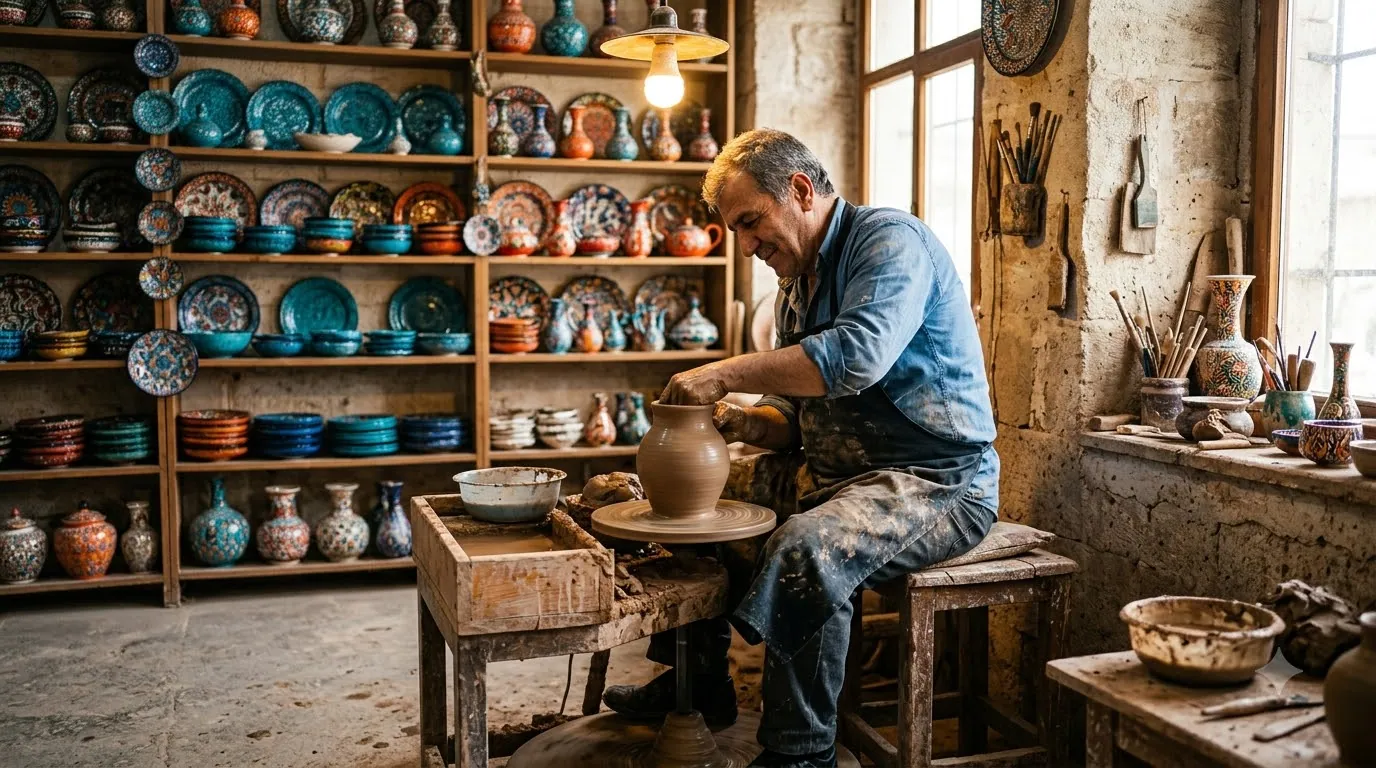
The Goreme Open Air Museum is the heart of any visit: a rock complex with more than ten churches carrying preserved Byzantine frescoes — the finest is the Dark Church, which charges a small extra fee and is worth every lira. Uchisar Castle, the highest point of the region, gives a 360-degree sunset view over all the valleys. Avanos on the banks of the Red River has been a pottery town since Hittite times; watch an artisan shape clay on a foot-driven wheel, try it yourself, and buy directly at prices lower than Istanbul's. Ihlara Valley to the south is a deep canyon with a stream running between trees and cliff-carved churches, visited by an easy walk along the western bank followed by lunch on the water-side restaurant platforms.
Hot Air Ballooning: Everything Practical
The day starts very early: pickup from your hotel between 4:00 and 5:00 AM depending on season, transfer to the launch site where the balloon inflates in front of you, then 45-70 minutes floating over the valleys with sunrise, and after landing a small celebration, flight certificate, and light breakfast. The whole program takes 3-4 hours. Book well ahead — weeks in advance for July and August — through balloon tours, and expect cancellations in strong wind or rain, in which case flights are postponed or refunded. Dress in layers even in summer; the ground is cold before dawn, though the burner keeps the basket warm. Most companies accept children from about age six, so ask before booking.
Four Seasons in Cappadocia
Spring (April-June) brings flowers and mild days and is the most demanded season. Summer days reach the mid-thirties with cool, refreshing nights, plus peak crowds. Autumn (September-October) is mild and colorful — many guides' favorite. Winter turns magical when snow caps the chimneys; prices drop, crowds thin, and balloons keep flying whenever the weather allows. Check the weather forecast the day before your balloon booking.
Getting There and Around Cappadocia
Nevsehir Airport is closest to Goreme (about 40-45 km, 40-45 minutes by car), while Kayseri Airport is larger with more flights (about 75 km, 1 hour 15 minutes). Both receive daily flights from Istanbul, plus some weekly connections from other cities. Pre-book a private transfer, especially with family — public inter-town buses exist but are infrequent. Within the region: Goreme is walkable, minibuses (dolmus) connect the towns for pocket change, renting a car suits travelers who want freedom in the valleys, and quad bike tours are popular but follow set routes with a guide.
Cave Hotels: An Experience Like No Other
The best part of staying here is that the hotel itself is a sight: boutiques carved into the rock that stay cool in summer and warm in winter, ranging from budget guesthouses to luxurious caves with terraces over Pigeon Valley. The best areas to stay: Goreme for proximity to everything and morning balloons drifting right overhead, Ortahisar and Uchisar for quieter castle views, Avanos for pottery and river lovers. Book early from Cappadocia hotels — family cave rooms are limited in number in high seasons.
Dishes to Try in Cappadocia
- Testi kebab (pottery kebab): meat and vegetables slow-cooked in a sealed clay pot that is cracked open at your table — a ritual in itself and the signature dish of Avanos.
- Grape molasses and pumpkin jam: local products of the region's vineyards and pumpkin fields, a practical unbreakable gift.
- Dried apricots: from neighboring Malatya, sold at better prices than the big tourist cities.
- Roasted pumpkin seeds: a regional specialty found in every bazaar.
- Full Turkish breakfast: most cave hotels serve an expanded version on the terrace with a valley view — make it your big meal before a day in the valleys.
FAQ
- Does Cappadocia need advance booking?
Yes, advance booking is recommended especially in high season (June-September) for best prices and room choice. Booking 4-6 weeks before travel is ideal for Gulf families.
- How much does Cappadocia cost for a family?
Costs vary by chosen level, but average 5-day budget for a family of 4 ranges from $1,500-4,000 covering hotels, food, transport, and tours. Luxury hotels can raise the cost to $6,000-10,000.
- When is the best time to visit Cappadocia?
Best times are April-May and September-October (spring and autumn) with mild weather and fewer crowds. Summer (June-August) is hot but peak season with more events. Winter is cold and cheaper but some places may be closed.
- Is Cappadocia suitable for children?
Yes, Turkey is very family-friendly destination. Most hotels offer children's services (kids club, babysitting, pools), Turkish cuisine is appealing to children, and landmarks suit all ages. Halal meals and babysitters are available at major hotels.
- How do I reach Cappadocia from the Gulf?
Direct flights are available from all Gulf countries to Istanbul (IST/SAW), Antalya (AYT), and Trabzon (TZX) via major airlines: Turkish Airlines, Pegasus, Emirates, Qatar Airways, Saudia, flydubai. Flight duration is 3-4 hours from Riyadh/Dubai, 4-5 hours from Kuwait/Doha.
- Do I need a visa for Cappadocia?
GCC citizens do not need a pre-arrival visa (visa-free) for stays up to 90 days. Residents of Gulf countries (expatriates) need an e-visa from evisa.gov.tr. Ensure passport validity is at least 6 months.
- Is Cappadocia safe for Arab tourists?
Yes, Turkey is very safe for Arab tourists. Crime rates are low, police are friendly, and Turkish people are known for hospitality. Avoid remote areas at night, and keep valuables in hotel safe.
- What language is spoken in Cappadocia?
The official language is Turkish. English is understood in major cities, especially in hotels, restaurants, and shops. In rural areas, you may need a translation app or local guide. Learning basic Turkish words is helpful and earns respect from locals.
- Is food halal in Cappadocia?
Yes, Turkey is 99% Muslim and halal slaughter is the standard. Most restaurants and hotels serve halal food. Some luxury hotels hold Halal Standard certification. Avoid pork and alcohol if you prefer.
- How do I pay in Cappadocia?
Credit cards (Visa, Mastercard) are widely accepted in cities. But carry some Turkish Lira for small payments and local markets. ATMs are plentiful. Mobile payment (Apple Pay, Samsung Pay) is accepted in major stores.
- Can I use a SIM card in Cappadocia?
Yes, you can buy a local SIM (Turkcell, Vodafone, Türk Telekom) from the airport or stores, or activate eSIM via Airalo or Holafly apps. Local SIM starts at $15-30 for 10GB. Ensure your phone is unlocked before travel.
- What places are near Cappadocia?
Many nearby destinations are easily accessible: historical landmarks, beaches, resorts, and traditional markets. Plan 2-3 day trips to explore the area.
Conclusion
Cappadocia is one of the essential topics every Gulf traveler should be familiar with before and during their trip to Turkey. With the information provided in this guide, you can make informed decisions about your destination, budget, program, and travel style.
Whether you seek deep cultural experience, beach relaxation, nature adventure, or shopping and entertainment, Turkey has something for everyone. Start planning early, book in advance during high season, and benefit from local information provided by the Voyago team.
To complete your trip to Turkey, explore the following services:
Hotels in Cappadocia · Private transfer in Cappadocia · Cappadocia tours
We wish you a happy and enjoyable trip!
Sources
Related travel guides
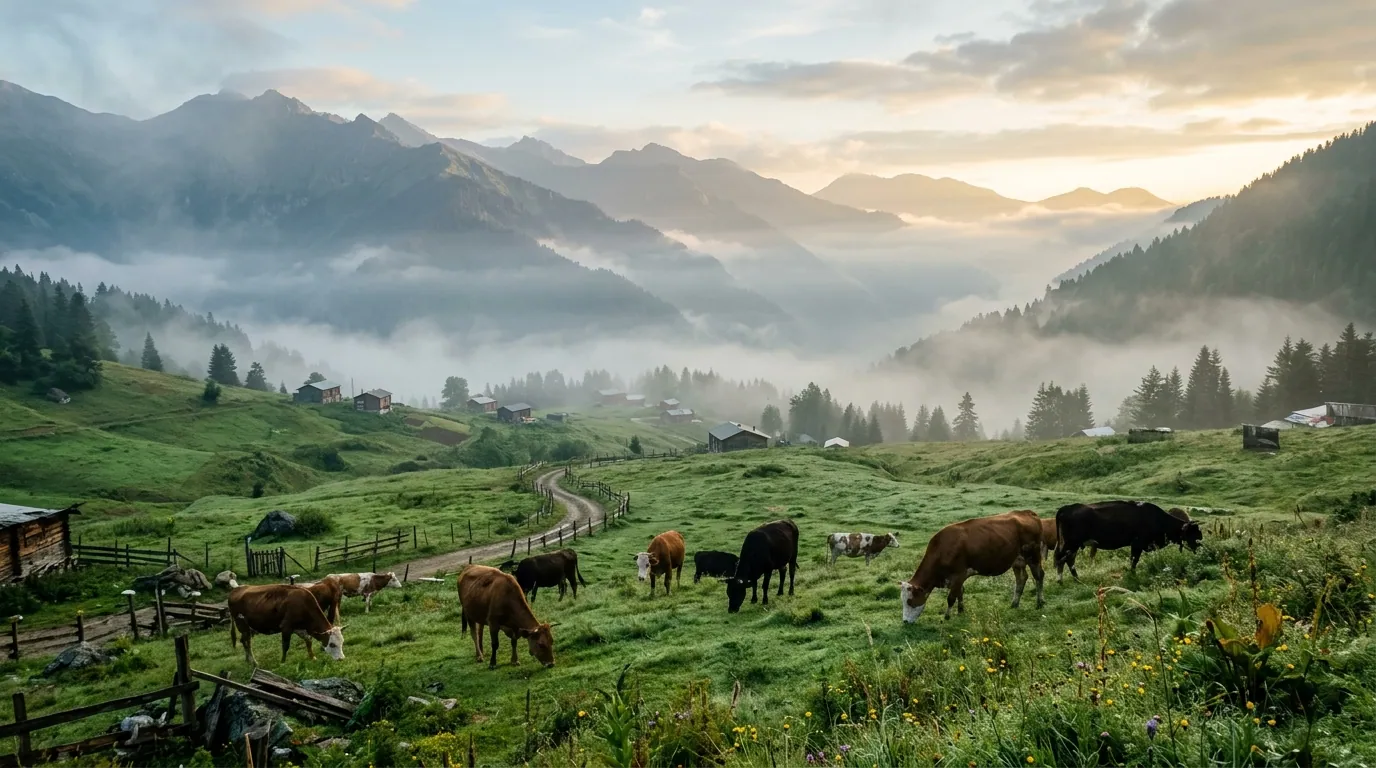
Ayder highlands 5-day itinerary 2026: a day-by-day plan for Arab families covering thermal pools, valleys, and Trabzon.
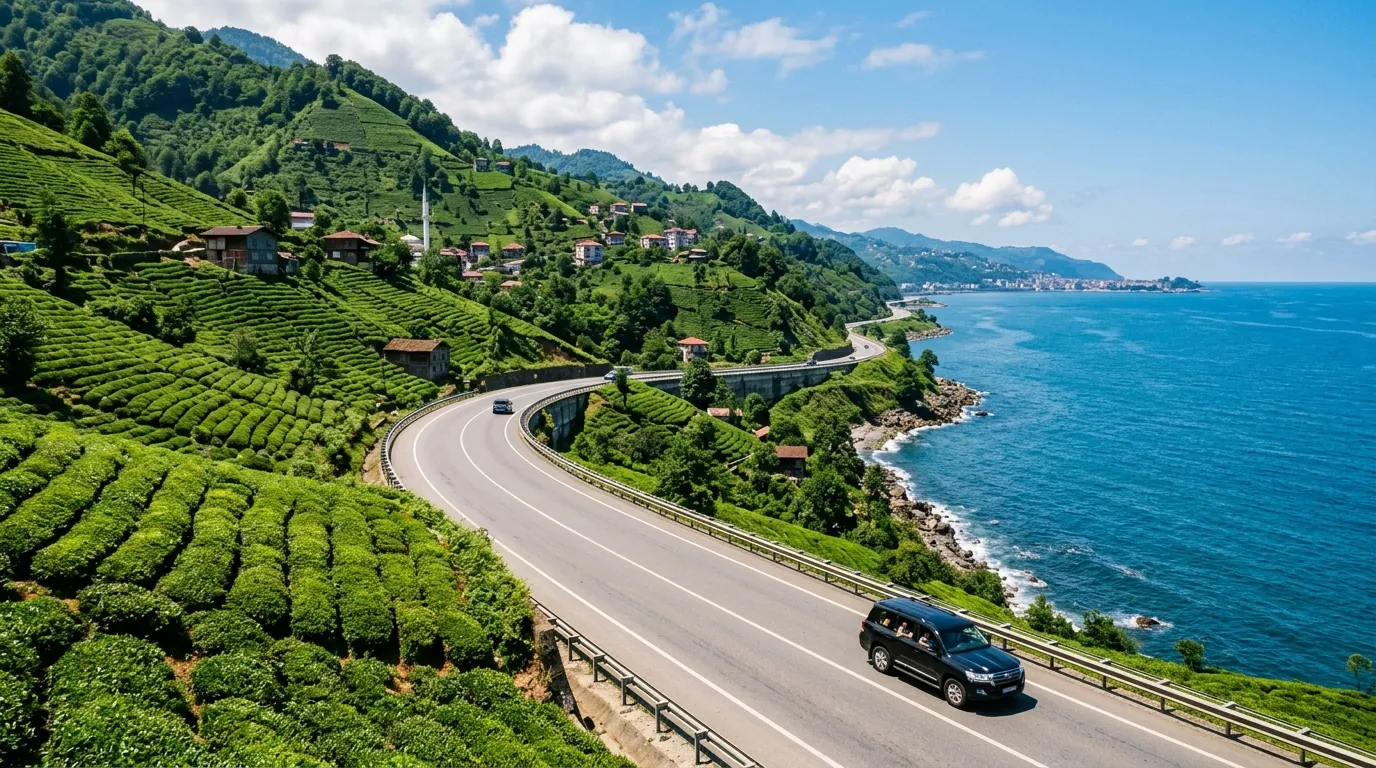
Ayder Trabzon distance 5-day itinerary 2026: a day-by-day plan for Arab families covering the transfer route.
Ayder Turkey weather 2026: monthly averages, rain patterns, best months to visit, and packing tips for Gulf families.
Ready to explore Turkey?
Voyago brings together hotels, tours and transfers to help you plan the perfect trip to Turkey.