
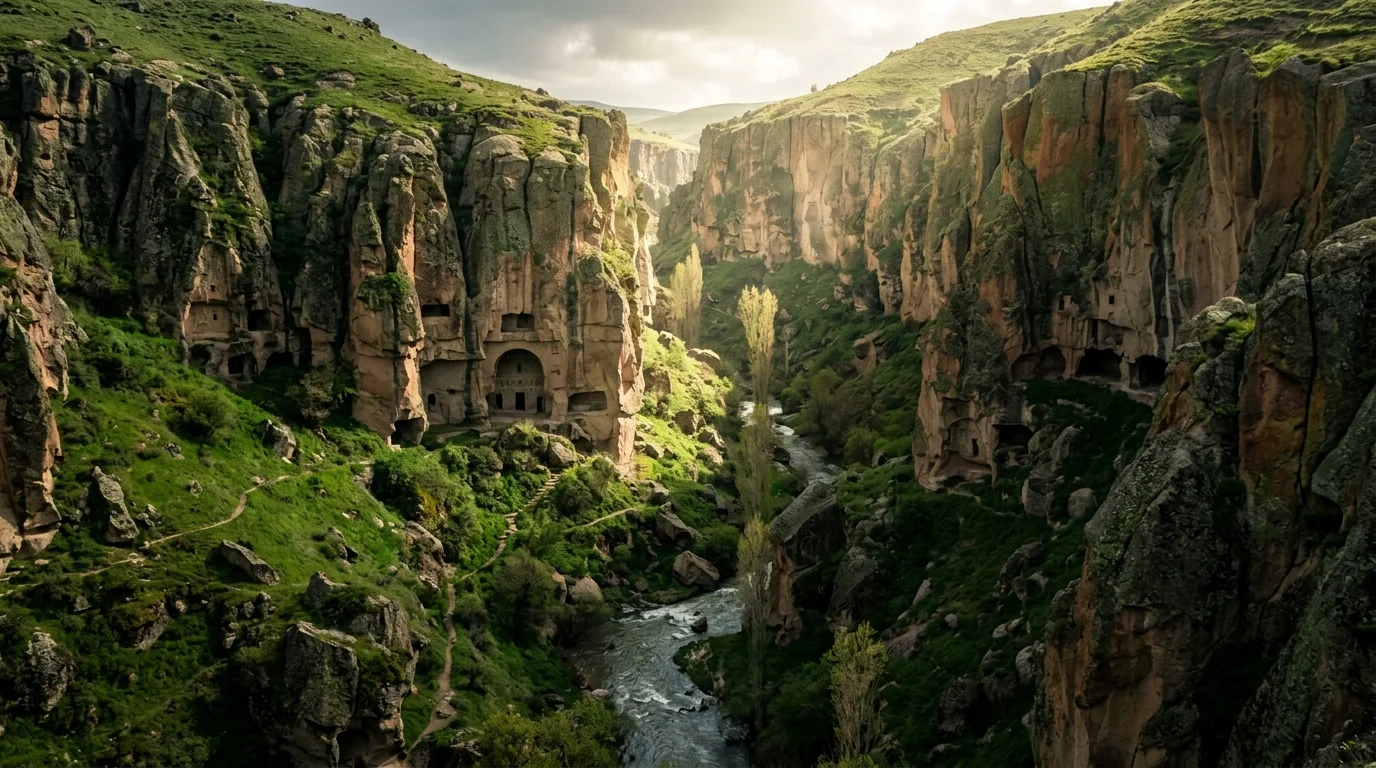
The valleys are the single biggest reason travellers put Cappadocia on their 2026 wishlist. Between volcanic rock sculpted into bizarre fairy chimneys, trails that link rock-cut churches, and old pigeon houses carved into cliff faces, the options run from a gentle stroll to a genuine half-day hike. This guide covers Ihlara, Güvercinlik and Kizilcukur in practical detail: what each valley is like, how they compare on duration, difficulty and family friendliness, a suggested full-day route, and closing advice written for visitors from the Gulf.
Quick Answer
How many major valleys are there? More than ten, with Ihlara, Güvercinlik, Kizilcukur, Love Valley and Devrent the best known.
Which is the easiest to walk? Güvercinlik Valley; an almost flat trail between Uchisar and Goreme that takes one to two hours and suits children and older parents.
Which is the hardest? Ihlara Valley; a long stone staircase down, followed by three to four hours of walking along the Melendiz stream.
Which is best at sunset? Kizilcukur Valley; its red and pink rocks glow in the late-afternoon light.
Do I need a car? The nearby valleys are minutes from Goreme and Ortahisar by car, while Ihlara sits roughly an hour and a quarter away.
Why Is Cappadocia Famous for Its Valleys?
The story begins millions of years ago, when volcanic eruptions blanketed the plateau in layers of ash and lava. Over time those layers turned into soft tuff rock that is easy to carve, and then water and wind spent millennia cutting deep corridors between the hills. The result is a web of interlocking valleys whose rock colours shift between white, pink and red depending on which layer is exposed.
What makes these valleys special is that they are not just scenery. Communities settled here in the Byzantine era and carved out churches, stables, storage rooms and pigeon houses — the birds' droppings fertilised the fields. So the walking path repeatedly passes carved facades you can step inside for a few minutes. You never have to choose between a nature day and a history day; one walk delivers both.
The Main Valleys: What to Expect in Each One
Ihlara Valley: The Longest and Most Historic (3-4 hours)
Ihlara is a deep canyon, in places around a hundred metres down, with the Melendiz stream running along its floor — a rare ribbon of green inside Cappadocia's dry landscape. Rock churches from the Byzantine period line the route, and several still carry traces of their old wall paintings inside.
Most visitors do not walk the full sixteen-kilometre canyon; they choose the middle section between the main entrance and Belisirma village, where shaded riverside restaurants make a natural lunch stop. Remember that leaving the valley means climbing the same staircase you came down, so start early and pace the group if children or older relatives are with you.
Güvercinlik (Pigeon) Valley: The Easiest Family Option (1-2 hours)
This valley runs between the towns of Uchisar and Goreme and takes its name from the pigeon houses carved into the rock faces, once an important part of the local farm economy. The trail is mostly flat, easy to shorten or extend, and ends with a panoramic view of the famous Uchisar rock castle.
This is our recommendation for anyone travelling with elderly parents or small children: no special fitness is needed, and being close to Goreme means you can retreat to the hotel at midday if the heat builds. There are optional short tunnels on the route that add a sense of adventure for kids — bring a small phone torch if you plan to enter them.
Kizilcukur (Red) Valley: King of Sunset (1-2 hours)
The valley takes its name from the red and pink rock that glows hardest in evening light. The trail is shorter than Ihlara and can be approached from Ortahisar or Cavusin, passing a vineyard, side caves and a small rock church worth a quick look inside. The golden rule here is to arrive an hour to ninety minutes before sunset, then climb to the upper terrace and watch the sun drop behind the successive ridges — that view alone justifies the early planning.
Love Valley: Cappadocia's Most Photographed Rocks (1-2 hours)
A short distance from Goreme, this valley is famous for its tall rock columns with rounded caps that have become the signature Cappadocia shot on social media. The walk is gentle and can be done at a relaxed pace among fruit trees; many visitors prefer it in the morning before the large photo groups arrive, then continue to another valley for the rest of the day.
Devrent (Imagination) Valley: A Viewing Stop (30 minutes)
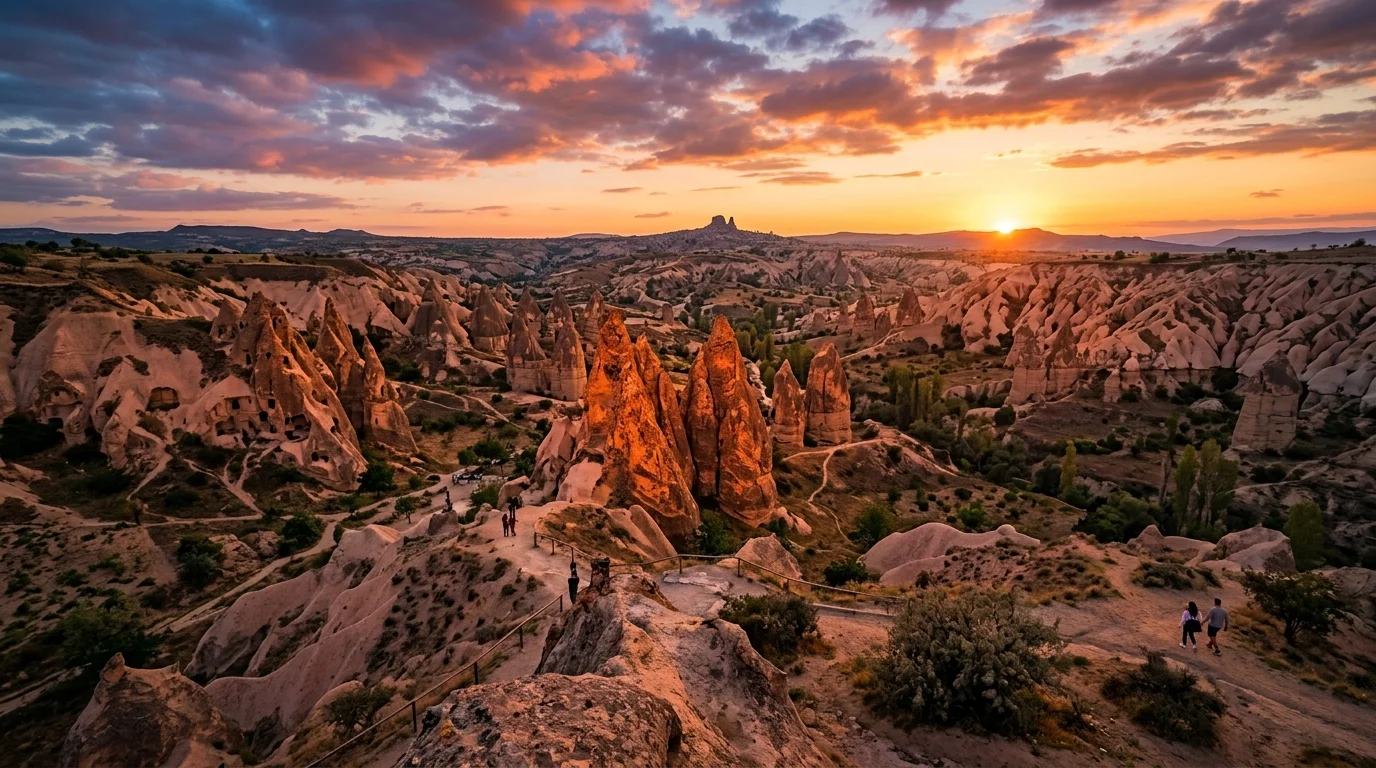
There is no real walking trail here — it is a viewing terrace of rocks shaped like a camel and other animals your imagination gets to name. It works well as a half-hour stop inside a multi-valley day, especially with children who enjoy guessing the shapes, and it is usually combined with nearby Cavusin on the same loop.
Valley Comparison: Which One Fits Your Plan?
| Valley | Length | Duration | Difficulty | Feature |
|---|---|---|---|---|
| Ihlara | 16 km | 3-4 hours | Medium-Hard | Churches and river |
| Güvercinlik | 4 km | 1-2 hours | Easy | Castle view |
| Kizilcukur | 3 km | 1-2 hours | Easy | Sunset |
| Love | 3 km | 1-2 hours | Easy | Rock columns |
| Devrent | - | 30 min | Easy | Photo stop |
The comparison above boils down to three practical cases. Travelling with small children or older parents? Start with Güvercinlik, the shortest and safest option. Chasing the best photograph? Make Kizilcukur your stop right before sunset. Want a full walking day that combines history, water and shade? Choose Ihlara and start early. Devrent, meanwhile, is a viewing site rather than a hike, and usually gets folded into a loop that covers several valleys in one day.
Best Time to Visit the Valleys
The two best windows are spring from April to June and autumn from September to October, when temperatures are mild, the paths are dry and the landscape is at its best. Summer is doable, but plan walks for the early morning hours, because midday heat inside the exposed valleys climbs noticeably. Visitors from the Gulf should note that the dry air here hides sweat while still draining the body — do not be fooled by how moderate the heat feels. In winter, snow can dust the trails and turn the scenery into rare tableaux, though the stone staircase into Ihlara becomes much more slippery.
The day before you go, check the updated forecast on the official Turkish meteorology site; wind and rain change the experience significantly, especially on the open sunset terraces of Kizilcukur.
Safety and Fitness on the Trail
The first rule is to stay on the marked paths. Side valleys look alike and it is easy to take a wrong fork, particularly in Ihlara where phone signal drops in the deeper section. Tell your hotel reception your plan before you set out and give a rough return time so someone notices if you are late. Carry a small first-aid kit — plasters, tweezers and sunburn cream — especially with children, and never drink from the stream no matter how clean it looks. Watch older relatives for signs of heat exhaustion: dizziness, headache or sweating that stops suddenly. At the first sign, stop and rest in the shade.
Photography in the Valleys: Times and Places
The best natural light comes in the first hour after sunrise and the last hour before sunset, when long shadows bring out the folds in the rock formations. Love Valley in the morning and Kizilcukur in the evening are the golden pairing for photographers. Avoid climbing on crumbling columns for the sake of a shot — some of the rock is genuinely fragile. Drones are subject to permits and restrictions in Türkiye, so do not build your plan around aerial shots unless you have confirmed the rules that apply at the time of your visit.
Practical Info Before You Go
Fees: Ihlara Valley is part of the Turkish museums network and charges an entry fee that changes with the season, while the other valleys in this guide are generally open without charge. Verify current prices before you head out, as they are revised periodically.
Getting there: If you are staying in Goreme or Ortahisar, most valleys are minutes away by car. Ihlara is the outlier at roughly an hour and a quarter's drive, which is why many families prefer an organised tour with transport and a guide over driving a full day themselves; you can compare options on our Cappadocia tours page before deciding.
Where to stay: The smart choice is a hotel near the start of the trails so your day begins early; browse Cappadocia hotels by your preferred area. If you are coming from Istanbul or Ankara, arranging a private transfer to Cappadocia saves your family the airport wait.
What to bring:
| Item | Why |
|---|---|
| Non-slip walking shoes | Stone staircases and sandy paths |
| Enough water per person | No shops inside the trails |
| Hat and sunscreen | Exposed sections without shade |
| Light jacket | Morning temperature swings |
| Small phone torch | Optional tunnels in Güvercinlik |
For official background on the region and its sites, see the official Turkish tourism portal.
Tips for Gulf Families
Prayer: There are mosques in the town centres of Goreme, Uchisar and Cavusin; plan prayer times before or after the long descents, and carry a small prayer mat since the valleys themselves have no facilities.
Clothing: Loose, comfortable walking clothes suit the climate and the culture alike, and good shoes matter more than anything else on the list. Standard sportswear is completely acceptable on the mixed tourist trails.
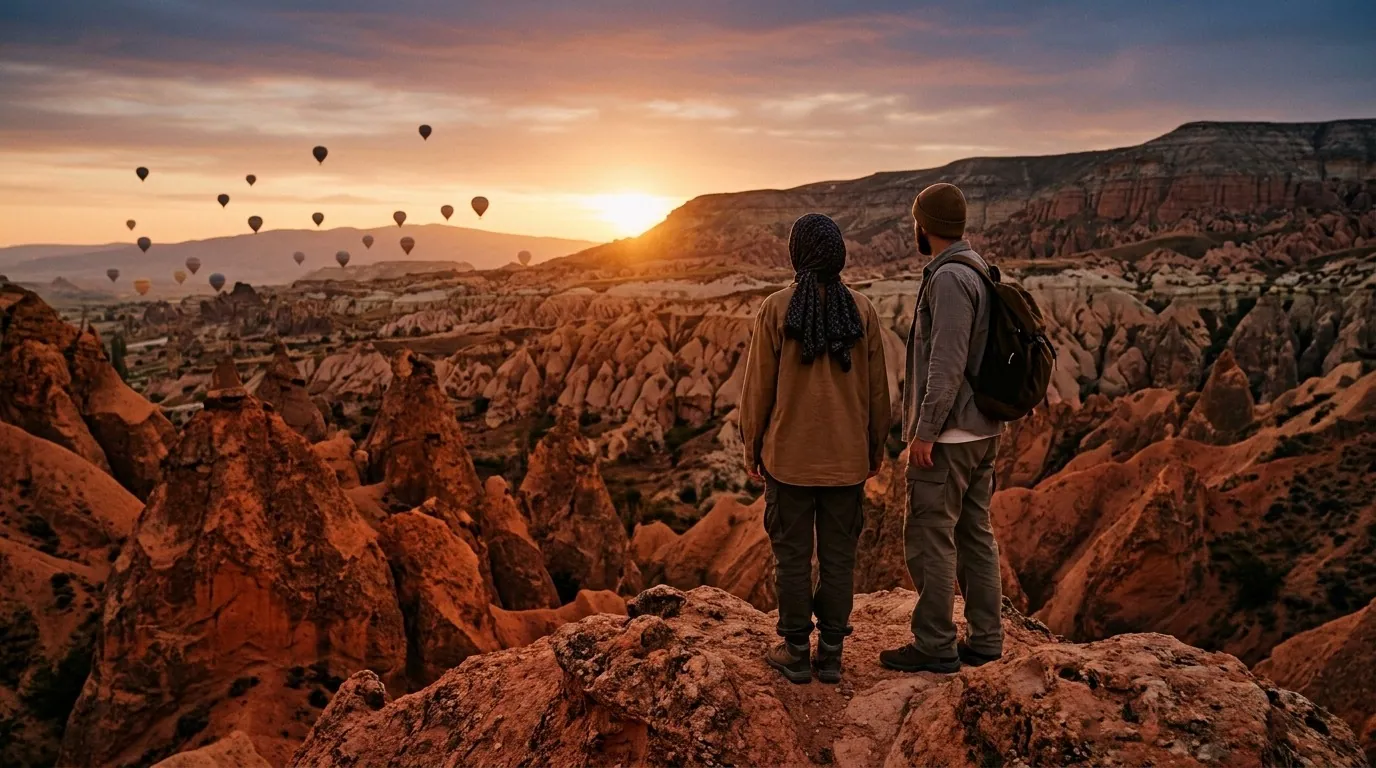
Heat: If you are used to Gulf summers, Cappadocia's heat feels less humid but the midday sun is direct and strong. Walk before 10 a.m. or after 4 p.m. in July and August, and use the middle of the day for lunch and hotel rest.
Food: The Belisirma restaurants on the Ihlara river serve grills and river fish, and Goreme has plenty of family restaurants. Meat in Türkiye is generally halal, but ask about dishes prepared with alcohol if you prefer to avoid them.
Children: Match the distance to your children's age. Güvercinlik and Devrent fill a full family day with a break included, while Ihlara is an effort best saved for kids around eight and older.
A Full-Day Route Between the Valleys
- 7:00 a.m.: Breakfast and an early start to Love Valley for calm light and empty paths.
- 9:00: Move on to Güvercinlik, walk it from the Uchisar side, then take a coffee break in town.
- 12:00: Lunch and rest at the hotel or in Goreme, away from peak heat.
- 3:30 p.m.: Head to Kizilcukur and climb to the sunset terrace about an hour before dusk.
- After sunset: Return to the hotel, then dinner in Goreme.
If you want the full Ihlara day instead, replace this schedule with a tour that starts at seven and returns after a riverside lunch in Belisirma, with an evening of rest at the hotel.
Related Articles
- For a deeper look at the region, read our complete Cappadocia guide.
- If your trip revolves around the balloons, see the Cappadocia balloon tour guide.
- To pin down your travel season, visit the best time to visit Cappadocia.
FAQ
- Which is the easiest valley to walk? Güvercinlik, without competition; the trail is short, nearly flat and close to Goreme.
- How many hours does Ihlara Valley take? Three to four hours for the popular section, which can be shortened by exiting at Belisirma.
- When should I visit Kizilcukur? An hour to ninety minutes before sunset for the best light on the red rocks.
- Can I hike in Devrent? No; it is a viewing and photo stop for animal-shaped rocks with no real walking trail.
- What kind of shoes should I wear? Sports shoes with a non-slip sole, ideally ankle-high, especially for Ihlara's stone staircase.
- Do I need water on the walk? Yes; take one to two bottles per person since there are no shops on the trails.
- Are the valleys suitable for children? Güvercinlik, Love Valley and Devrent work well; Ihlara is better for older kids.
- Is there an entry fee? Ihlara only, as part of the museums network, with a fee that changes by season; the rest are generally free.
- Do I need a guide? Not necessary for the nearby valleys, but a guide adds real value in Ihlara by explaining the churches and their history.
- Where is the most beautiful view? The sunset terrace in Kizilcukur, and the Uchisar castle view from Güvercinlik.
- Can I walk in winter? Yes, with care; snow makes the stone staircase slippery, so proper winter footwear is essential.
- Which valley should I start with if I have one day? Combine Güvercinlik in the morning with Kizilcukur at sunset, and save Ihlara for a separate day.
Conclusion
The valleys of Cappadocia are not just walking trails; they are open-air museums that history carved into the rock. Start with Güvercinlik to ease into the rhythm, make Kizilcukur your sunset appointment, and set aside a full day for Ihlara if your schedule allows. To lock in the rest of your trip logistics, from accommodation to getting between the sites, review the organised Cappadocia tours page before booking — going organised spares you the driving between valleys with the family in tow.
Related travel guides
Ayder highlands 5-day itinerary 2026: a day-by-day plan for Arab families covering thermal pools, valleys, and Trabzon.
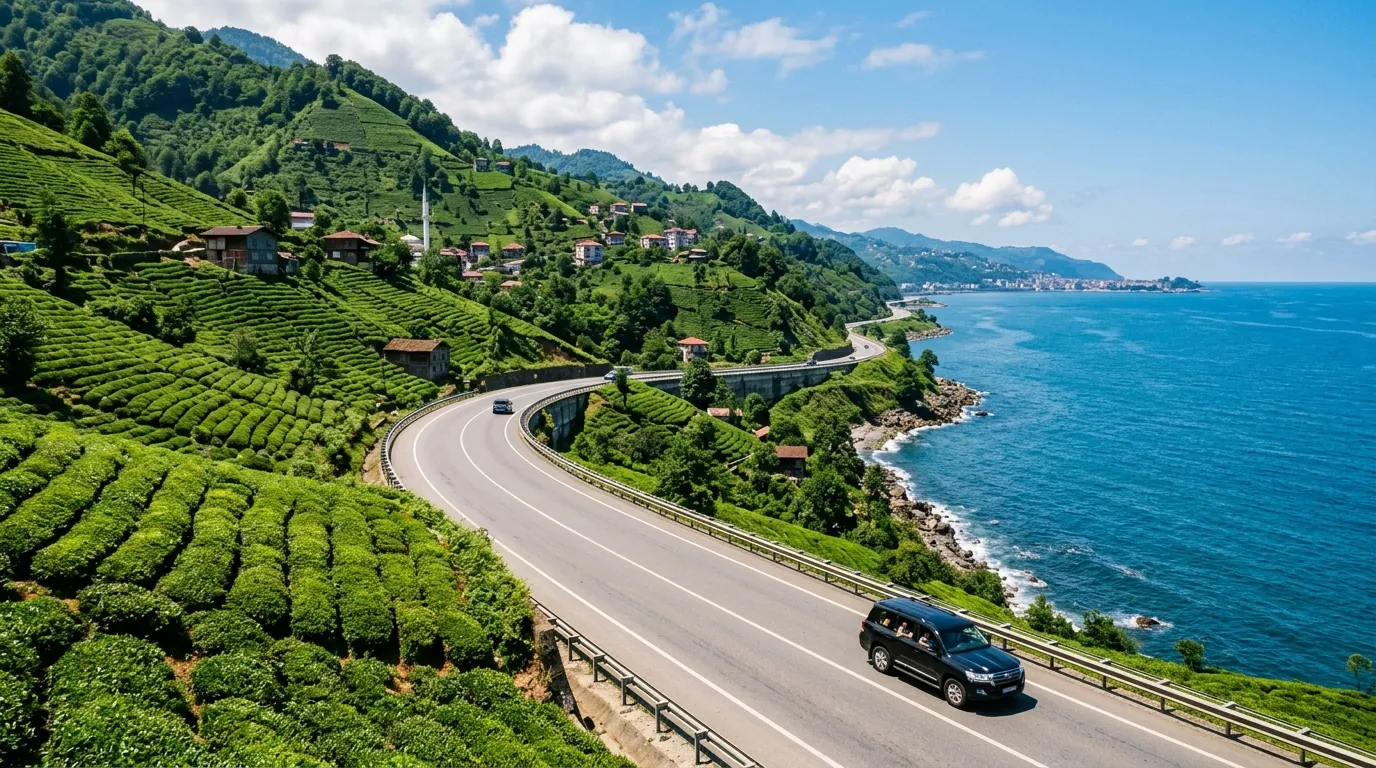
Ayder Trabzon distance 5-day itinerary 2026: a day-by-day plan for Arab families covering the transfer route.
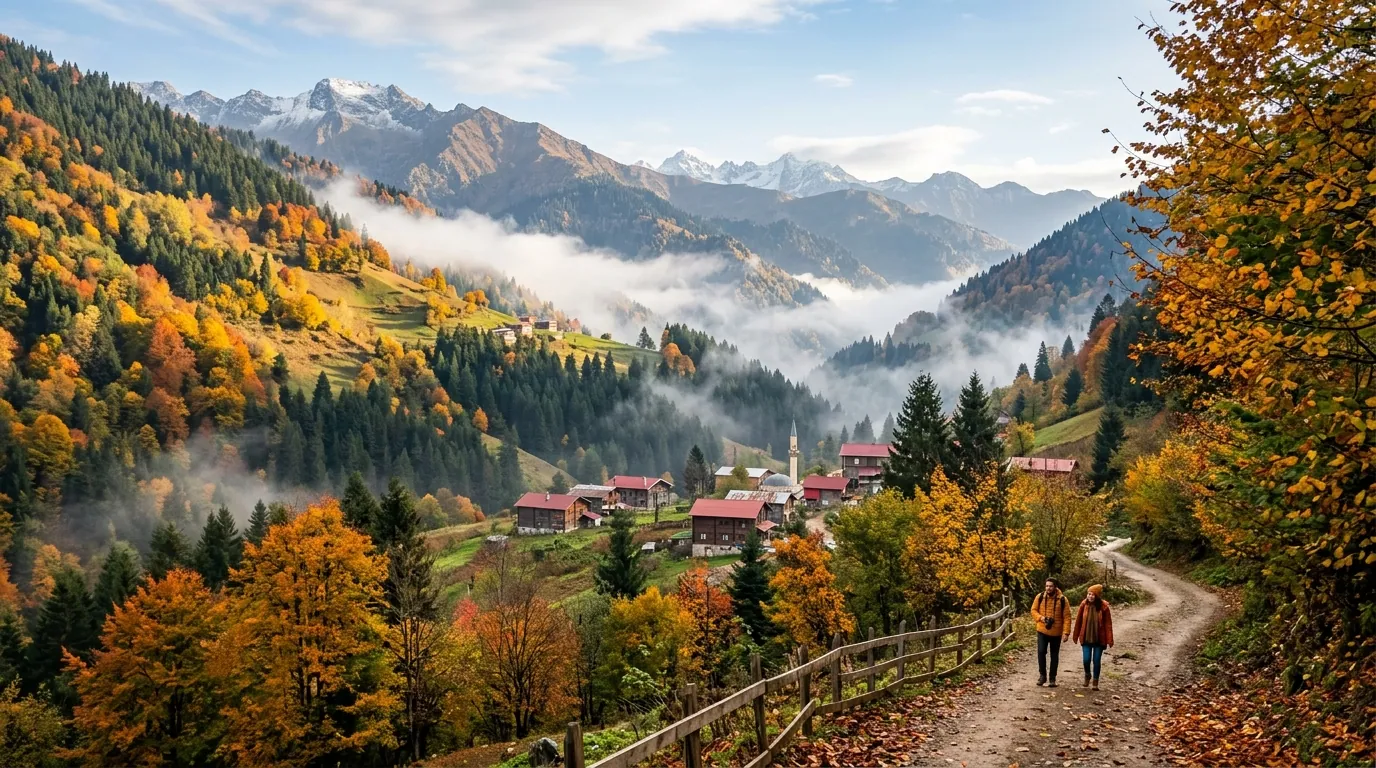
Ayder Turkey weather 2026: monthly averages, rain patterns, best months to visit, and packing tips for Gulf families.
Ready to explore Turkey?
Voyago brings together hotels, tours and transfers to help you plan the perfect trip to Turkey.