
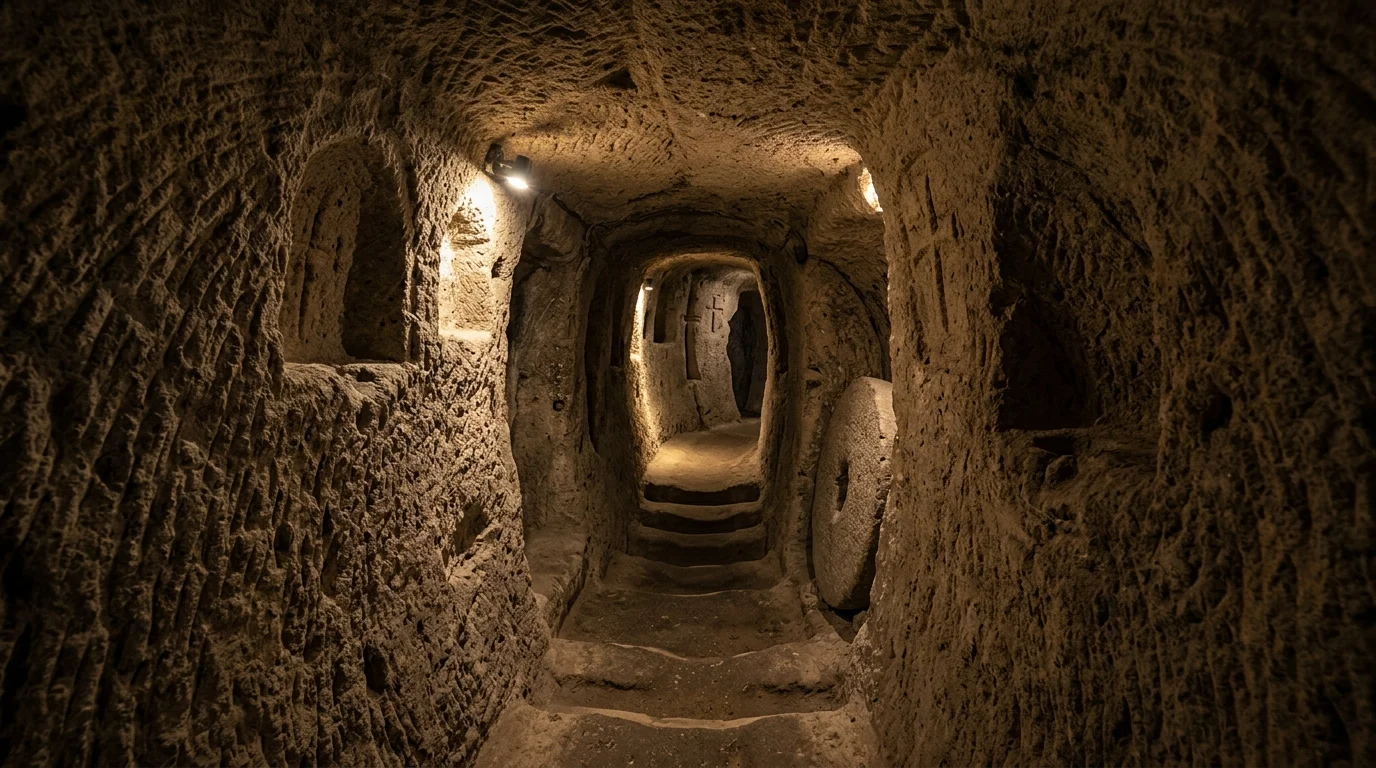
When you stand inside the narrow passages of Derinkuyu and take in the fact that more levels lie beneath your feet and that the network runs for hundreds of metres, you realise Cappadocia is not only about fairy chimneys above ground — there is an entire world below. This guide covers exactly that: how these carved cities came about, what you will see inside each one, a practical head-to-head to help you choose for your family, and closing visit logistics written with Gulf travellers in mind.
Quick Answer
How many underground cities are there? Hundreds of carved settlements have been identified, and the two famous ones open to visitors are Derinkuyu and Kaymakli, both inside Cappadocia's UNESCO-listed rock sites.
How deep is Derinkuyu? Around 85 metres, with eight of its eighteen excavated levels open to visitors.
How much time do I need? One to one and a half hours per city, and both fit in a single day.
Is it suitable if I fear tight spaces? The tunnels are low and narrow in places; anyone with strong claustrophobia is better off waiting in the open upper areas.
Is there an entry fee? Yes; both cities belong to the Turkish museums network with a seasonal fee, and the national "Müzekart" card normally covers them.
The Story: How Were These Cities Built Underground?
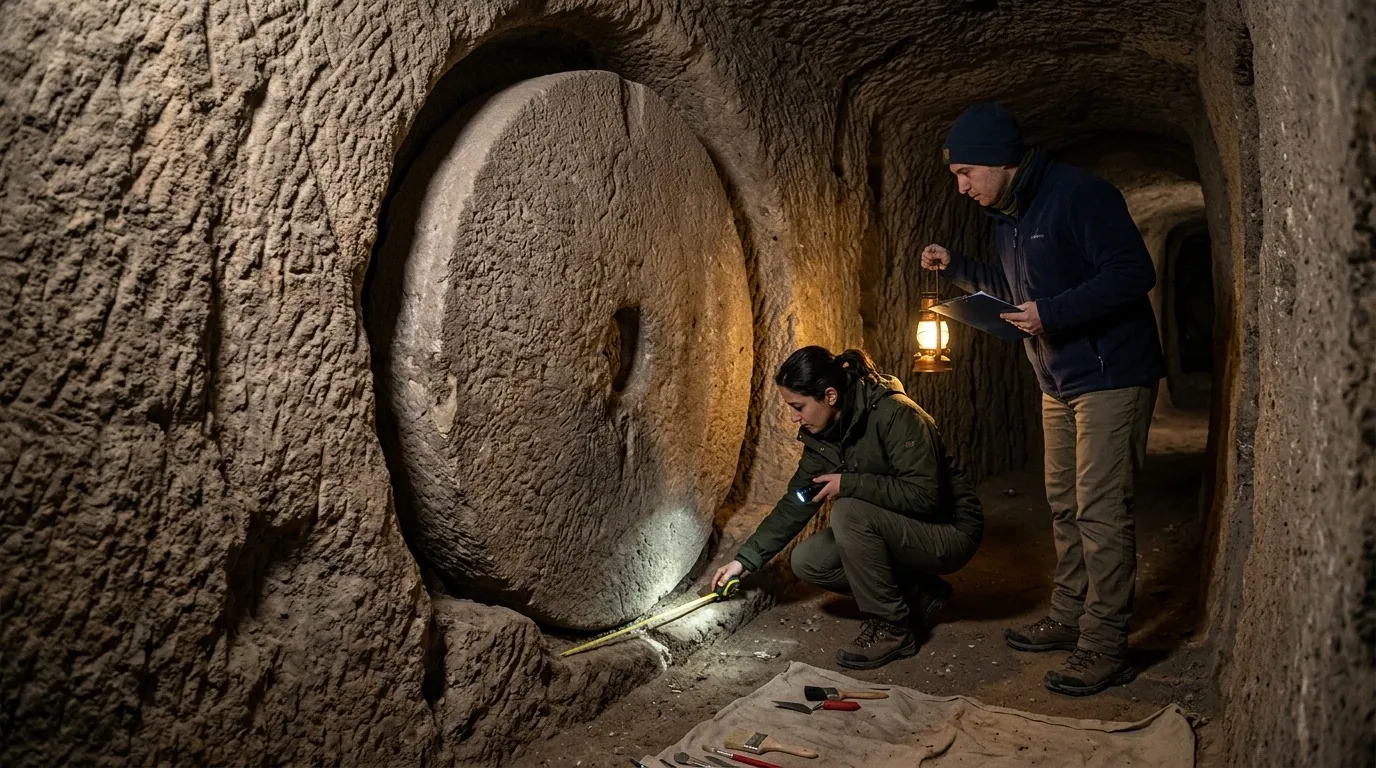
Cappadocia's tuff rock is soft enough to carve with simple tools yet firm enough to stand for centuries — that single property is the secret behind everything. Excavation most likely began in ancient times as food storage sheltered from summer heat and winter frost, and the networks grew over the centuries into full cities: water wells, ventilation shafts, connecting tunnels, and massive rolling stone doors operated only from the inside, sealing an entire passage.
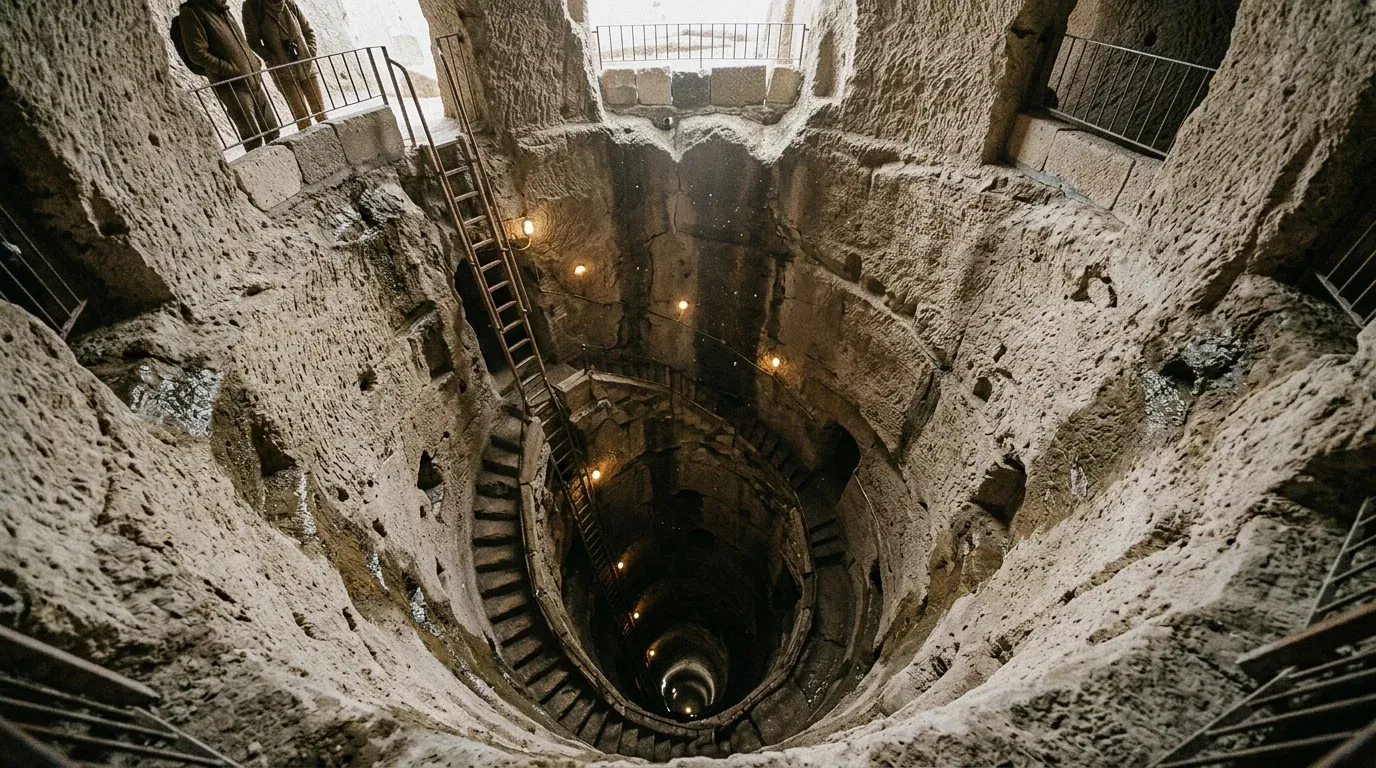
These cities were refuges rather than permanent homes. In times of danger, whole communities descended with their livestock and supplies, sometimes for weeks, while deep vertical shafts delivered fresh air to the lowest levels without giving the position away to anyone above ground.
The engineering still surprises visitors. The deep wells served three purposes at once: continuous ventilation, a water source that besiegers above could not easily poison, and a voice channel between levels. The rolling stone doors — huge discs of rock pivoting on a single point — closed behind retreating groups and blocked the corridor completely, opening only from inside. Storage rooms, kitchens and stables were arranged in studied layers so that supplies could outlast a siege of weeks. When you squeeze through a narrow passage today, remember the narrowness itself was a deliberate defensive feature.
Lesser-Known Cities Worth Knowing About
Beyond the two giants, smaller sites such as Ozkonak north of Avanos, together with Mazi and Tatlarin, see far fewer crowds and suit travellers who visit in peak season and want to escape the coach parties. Some of these sites open on limited hours, so check times before heading out; they complement a visit to Derinkuyu or Kaymakli rather than replace it.
Derinkuyu: The Largest and Deepest
Derinkuyu is the most famous and deepest of Cappadocia's underground cities, estimated to have sheltered tens of thousands of people together with their animals in times of threat. Its modern story famously begins in 1963, when a resident broke through a wall during home renovation and found a mysterious room — follow-up exploration revealed a huge network beneath the whole town, and the site opened to visitors some years later.
Across the eight open levels you pass a carved church, a religious school, grape and olive presses, grain stores, stables and living quarters, plus the deep ventilation well reaching toward the bottom. A modern elevator serves the first two levels and spares you the climb back up, but the heart of the experience remains the low passages you walk through bent over in places.
Kaymakli: The Wider, More Family-Friendly One
Kaymakli is shallower than Derinkuyu, but its passages are relatively wider and its four open levels are easier to walk, which is why many guides recommend it for families and first-time underground visitors. Known in antiquity as "Enegup", it still has town families whose homes keep old connecting entrances down into the network.
Inside, you pass old kitchens with their stone hearths, food storage niches, a small church and a livestock area, and the lowest open level holds a water well. Stories are told of a long tunnel that once linked Kaymakli with Derinkuyu before sections were sealed — a legend that sums up how vast this underworld beneath the plateau truly is.
Derinkuyu vs Kaymakli: Which Should You Choose?
| Criterion | Derinkuyu | Kaymakli |
|---|---|---|
| Depth | ~85 m | Shallower |
| Open levels | 8 | 4 |
| Tight passages | Tighter, more demanding | Relatively wider |
| Suitability for children | Ages seven and up | More comfortable for families |
| Highlights | Church, ventilation well, religious school | Kitchens, clearer living quarters |
The practical summary of this comparison: if you want the dramatic sense of depth and mystery, Derinkuyu is your pick; if you are with small children, older relatives, or simply prefer less stooping, start with Kaymakli. With a car, the two towns are a short drive apart and both are usually done in one morning; many organised tours combine them with a nearby valley stop anyway.
History Through the Ages
| Period | Main use |
|---|---|
| Ancient times | Early storage and shelter |
| Byzantine era | Major expansion as communal refuges |
| Middle Ages | Hiding during raids |
| Ottoman era | Storage and commercial use |
| After the 1960s | Modern discovery and tourist opening |
Researchers debate who dug first; some trace the earliest work to the region's pre-Christian inhabitants, and the consensus is that the great networks peaked in the Byzantine era when local communities used them to shelter during raids. Most were gradually abandoned under Ottoman rule and remained known only to locals, until the modern rediscovery revived them as two of Türkiye's best-known landmarks. Before your trip, the official Turkish tourism portal offers wider background on the region's sites.
Practical Info
| City | Depth | Open levels | Visit duration |
|---|---|---|---|
| Derinkuyu | ~85 m | 8 | 1 to 1.5 hours |
| Kaymakli | Shallower | 4 | About 1 hour |
Fees and entry: Both cities belong to the Turkish museums network with an entry fee that changes by season; figures quoted in older articles no longer apply, so check the official source before you go. If you plan to visit several Turkish museums, the "Müzekart" card can pay for itself.
Getting there: Both cities are under an hour's drive from Goreme, Uchisar and Ortahisar, and only about nine kilometres apart from each other. If you would rather not drive, the easiest route is a guided Cappadocia tour that pairs both cities with a nearby valley in one day — the option most families choose.
Where to stay: To shorten the early-morning run, browse Cappadocia hotels around Goreme, Ortahisar or Uchisar; if you are arriving from Istanbul, a private transfer spares you waiting with luggage and children.
What to wear and carry: The temperature inside the tunnels holds steady at a cool fifteen degrees or so year-round, so bring a light jacket even on a hot day. Proper non-slip shoes matter — the floors get damp in places — and a cloth is handy near the wells where light drips are common.
Guided or independent? Both cities have signposted rooms, so an independent visit works well if you read up beforehand. A guide, though, adds the engineering and human stories the signs do not carry — how the stone doors worked, how sheltering families actually lived. Organised tours include this automatically; independent visitors can sometimes join a small group at the entrance with an Arabic- or English-speaking guide, subject to availability.
Tips for Gulf Visitors
Before you fly: Citizens of most Gulf states enter Türkiye easily via the e-visa or, depending on nationality, directly; check the Turkish e-visa portal for your passport before booking tickets.
Children: The experience generally delights kids, though Derinkuyu's lower levels involve long stretches of stooping that tire under-sevens — Kaymakli is kinder to them. Hold small hands on the narrow stairs, and explain the concept before you descend so the tunnels feel like an adventure rather than a scary place.
Crowds: Peak coach hours run from late morning to mid-afternoon; visiting right after opening or before closing is far calmer and better for photographs.
Breathing concerns: Ceilings are low and some corridors long; if an older relative struggles in enclosed spaces, the café by the entrance is a comfortable place to wait, since exiting from deep inside is not always quick.
Prayer and food: Derinkuyu and Kaymakli are small towns with mosques and simple restaurants serving grills and sandwiches; meat in Türkiye is generally halal. Plan midday prayer before or after your descent — the tunnels swallow your sense of time, and phone signal drops on the lower levels, so agree a meeting point at the entrance.
Family privacy: Unlike large museums, the route is mostly one-way, and groups drift apart at forks. Agree to wait at each big stone door; they are natural checkpoints no one can accidentally pass.
What the Visit Actually Looks Like, Step by Step
The visit starts at the upper gate with the ticket office and site map, then a stone staircase drops you quickly into a noticeably cooler world. The first two levels are the widest — this is where Derinkuyu's elevator runs — before the real route begins: curving corridors past signposted side rooms, with passages getting lower and the stooping longer as you descend, peaking at the deep ventilation well where you feel the cool air rising from below.
The way back up follows a parallel corridor ending at the exit square with its shop and café. One practical tip: if a guided group with a photographer is around, walk near them — guides move slowly and pause at the key spots, and following them saves you guessing at junctions. And when you surface, take a minute to reflect that what took you minutes to walk took generations to carve.
A Suggested Day Combining Both Cities
Leave Goreme at eight in the morning for Derinkuyu to be among the first inside, then move on to Kaymakli before eleven; after lunch in either town, add a light stop in a nearby valley or in Guzelyurt with its carved church before heading back. The plan works well because most of it is underground and immune to midday heat — which is exactly why it succeeds even at the height of summer.
If your schedule is already packed with morning activities like the balloon flight, split the two cities across separate days instead: one underground city plus an evening valley on one day, the other city just before departure. That layout keeps flexibility in case the balloon is postponed by winds — a common event that can upend a whole day's plan.
Related Articles
- To prepare for the whole region, read our complete Cappadocia guide.
- To balance your days between cities and valleys, see the Cappadocia valleys guide.
- If your travel dates are flexible, check the best time to visit Cappadocia.
FAQ
- Which is the largest underground city? Derinkuyu; the deepest and most famous of those open to visitors.
- How deep is it? Around 85 metres, with eight of eighteen historically excavated levels open.
- What does entry cost? It changes with the season within the museums network; verify with the official source before your visit.
- Can claustrophobic visitors go in? The tunnels are narrow and low in places; waiting in the open upper areas is the better choice.
- Is it suitable for children? Generally from age seven, and Kaymakli's wider tunnels suit younger kids better.
- How many hours per city? About an hour for Kaymakli and one to one and a half for Derinkuyu.
- Is there an elevator? Yes, in Derinkuyu, serving the first two levels — useful on the way out.
- Which city is better? Visit both if you can; Derinkuyu for depth and mystery, Kaymakli for family comfort.
- Is it cold inside? Mild to cool, around fifteen degrees all year; bring a light jacket.
- Can I take photos? Generally yes; avoid strong flash in the busy narrow corridors.
- Best time of day? Right after opening or mid-afternoon onwards, away from the coach rush.
- Can both cities be done in one day? Easily; they sit about nine kilometres apart.
Conclusion
The underground cities are Cappadocia's other face, and a trip here is incomplete without them. After the balloon and the valleys, you descend a stone staircase into passages where people once lived for months below ground. Plan a day that pairs Derinkuyu and Kaymakli with an above-ground stop between them, and to secure transport and programme in one go, review the organised Cappadocia tours page before booking — especially when travelling as a large family.
Related travel guides
Istanbul night tour 2026: Bosphorus dinner cruises, live music, halal restaurants, family activities, night safety, and late transport for Gulf visitors.
Istanbul historical sites 2026: Hagia Sophia, Topkapi, the Blue Mosque, the Grand Bazaar and more, with tickets, a 3-day plan and tips for Gulf families.
Cappadocia balloon tour 2026: prices by category, dawn takeoff, safety rules, best season for Gulf families, booking window, and cancellation policy.
Ready to explore Turkey?
Voyago brings together hotels, tours and transfers to help you plan the perfect trip to Turkey.