
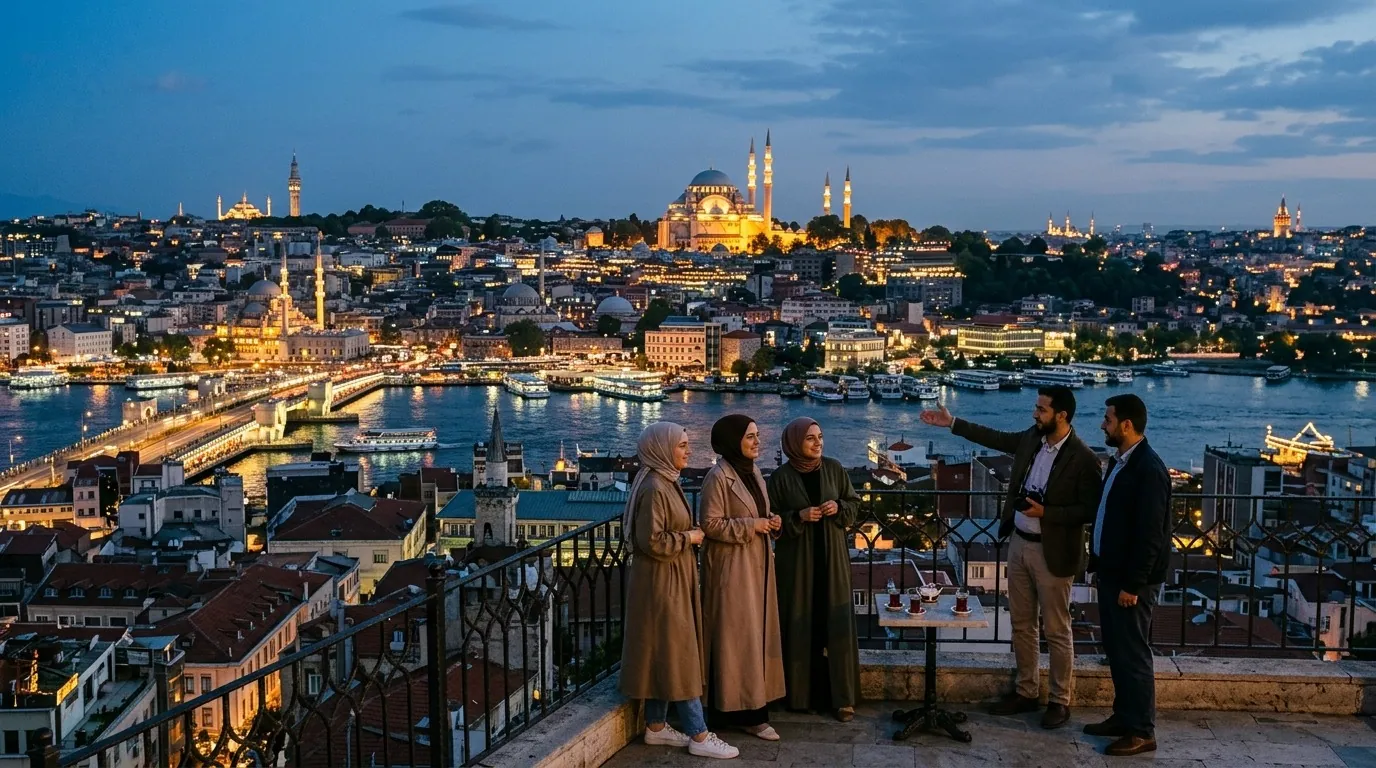
Quick Answer for Gulf Visitors
What is the most important thing about the Turkish state? — Turkey is a republic founded in 1923 with Ankara as its capital, Istanbul as its largest city, and 81 provinces covering 783,562 km².
Why does it matter for Gulf visitors? — Knowing how the state works (weekends, holidays, opening hours, regions) makes every day of your trip smoother.
Where do I start? — In the sections of this detailed guide, with comparison tables and official sources at the end.
Comprehensive Introduction
Turkey — Turkey (officially the Republic of Turkey) is a country at the crossroads of Europe and Asia, with Ankara as capital and Istanbul as its largest city. Population approximately 85 million, area 783,356 km². One of the top tourism destinations for Gulf travelers due to its cultural diversity and geographic proximity.
Turkey Details for Arab Travelers
Category One: Essential Information
This category includes the basic facts every traveler needs before making travel decisions. Geographic location, climate, currency (Turkish Lira - TRY), official language (Turkish), and international calling code (+90) are among the most important. Gulf travelers find in Turkey an ideal mix of geographic proximity (3-4 hours flight from Riyadh or Dubai) and cultural and religious similarity.
Category Two: Cultural Information
Turkey combines more than 3,000 years of history, starting from ancient Anatolian civilizations (Hittites, Phrygians, Lydians), through the Byzantine Empire (with Constantinople as capital), to the Ottoman Empire (1299-1922). This rich heritage is visible in architectural landmarks, museums, archaeological sites, and traditional cuisine.
Category Three: Practical Travel Aspects
These include entry requirements (visa), internal transport options (flights, buses, metro), accommodation types (luxury hotels, serviced apartments, resorts), and cost of living. The next section provides a detailed comparison of these aspects to help you plan.
Comparison of Turkey Travel Options
| Criteria | Option One | Option Two | Option Three | Notes |
|---|---|---|---|---|
| Price | Economy | Mid-range | Luxury | Per budget |
| Location | City center | Suburbs | Resort | Per priority |
| Comfort | Basic | Comfortable | Luxurious | Per preference |
| Food | Local | Diverse | International | Per taste |
| Transport | Public | Private | Rental | Per program |
| Language | Little | Moderate | High | Per experience |
Practical Tips for Gulf Visitors
Tips for Gulf Visitors from Saudi Arabia and UAE
- Carry some Turkish Lira for small payments (taxi, groceries), though cards are widely accepted
- Keep a copy of your passport on your phone and cloud storage, along with booking documents
- Use helpful apps: Google Maps, BiTaksi (for Istanbul taxis), Moovit (public transport), Yemeksepeti (food delivery)
- Learn basic Turkish words: Merhaba (hello), Teşekkürler (thank you), Evet (yes), Hayır (no)
- Shop at local markets (Grand Bazaar, Spice Bazaar) for better prices and authentic experience
Family Tips
- Book family-friendly hotels in advance during high season (June-August, Ramadan, holidays) 2-3 months ahead
- Choose connecting rooms or family suites for greater comfort
- Use kids club services in major hotels for relaxation
- Carry snacks for children, though most familiar foods are available in Turkey
- Plan a flexible schedule, especially with young children, to avoid fatigue
Budget Tips
- Use public transport instead of taxis, especially in Istanbul
- Eat at lokanta (local restaurants) instead of tourist restaurants
- Book hotels 4-6 weeks before travel for best prices
- Avoid tourist menu traps, and order freshly prepared dishes directly from the kitchen
- Buy at bazaars instead of malls, and learn to bargain
Practical Info for Gulf Visitors
| Item | Details | Note for Gulf Visitors |
|---|---|---|
| Currency | Turkish Lira (TRY) | 1 USD ≈ 38-40 TRY (2026) |
| Calling Code | +90 | To call Turkey |
| Istanbul Code | 212 (European), 216 (Asian) | For local calls |
| Emergency | 112 (police, ambulance, fire) | Free from any phone |
| Language | Turkish | English common in cities |
| Time | UTC+3 (TRT) | Same as Gulf (or -1) |
| Electricity | Type C/F | 220V, 50Hz (like Gulf) |
| Water | Drinkable in most cities | Bottled preferred |
| Insurance | Highly recommended | $30-100/person |
| Prayer | Mosques everywhere | Most 5-star hotels have prayer room |
| Halal Food | Widely available | Most restaurants are halal |
| Prayer Times | 5 times daily | Adhan, Muslim Pro apps |
Related Articles and Resources
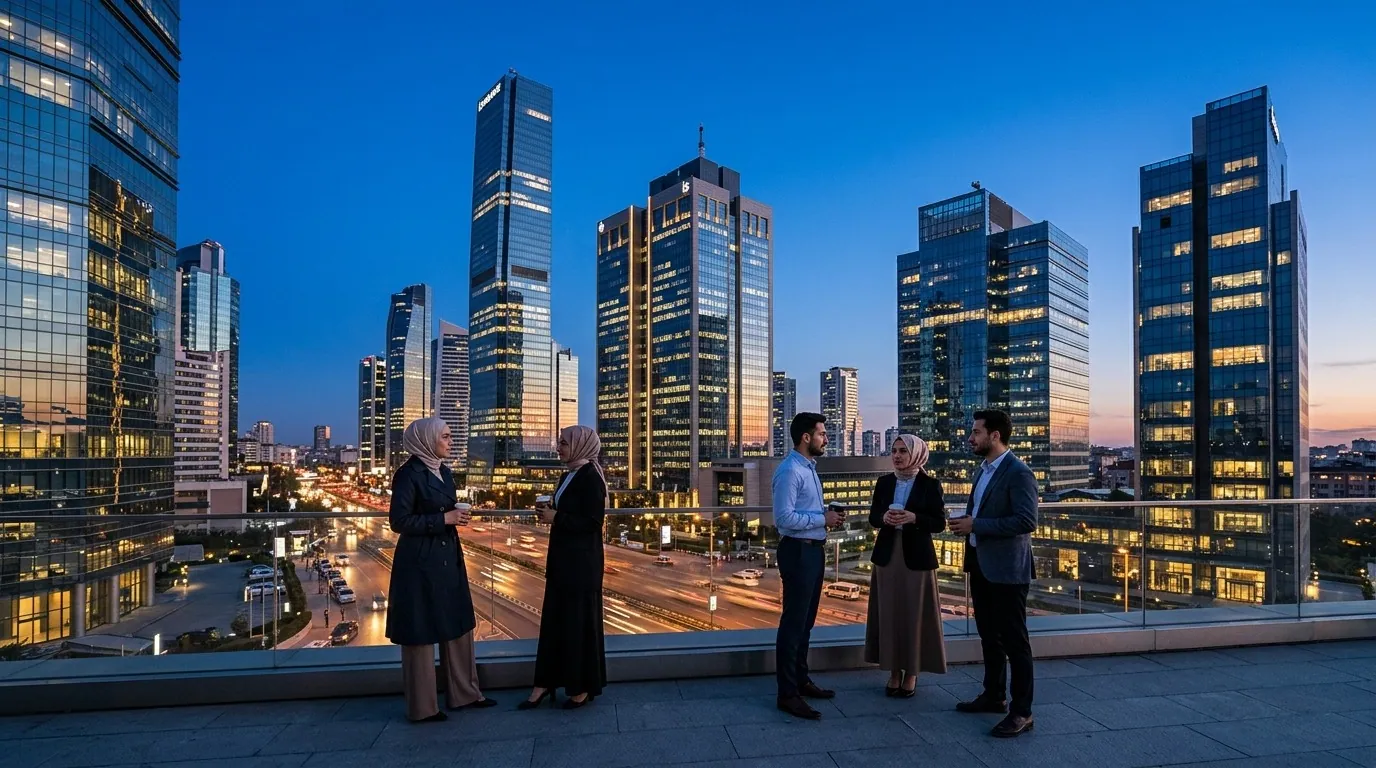
For a complete trip to Turkey, explore these helpful resources:
- Browse and book hotels across Turkey
- Reserve private transfer services
- Book guided tours and excursions
- Read more: Turkey visa for Saudi citizens
- Read more: Istanbul hotel guide
- Read more: Istanbul 5-star hotels
- Read more: Turkey country guide
- Read more: Turkey travel costs
- Read more: Best areas to stay in Turkey
Official Sources
Verify travel information through these official channels:
- Visa application: evisa.gov.tr
- Weather updates: mgm.gov.tr
- Tourism portal: goturkiye.com
- Foreign affairs: mfa.gov.tr
- Maps: yandex.com.tr/maps
Turkey in Brief: A 2026 Fact Card
| Item | Information | Note for Visitors |
|---|---|---|
| Official name | Republic of Turkey | Türkiye in Turkish |
| Republic founded | 1923 | By Mustafa Kemal Ataturk |
| Administrative capital | Ankara | Istanbul is the largest city, not the capital |
| Population | About 85 million | A young population |
| Administrative divisions | 81 provinces | Each province centers on its main city |
| Government system | Presidential republic | Direct elections |
| Currency | Turkish Lira | Symbol ₺, code TRY |
| Time zone | UTC+3 | Same as Saudi Arabia and Qatar most of the year |
A fact many get wrong: Istanbul is the economic, demographic, and tourism heart of the country, but the official capital has been Ankara since 1923, home to parliament, embassies, and state institutions. So you will most likely arrive through an Istanbul airport and may never set foot in Ankara on a short tourist visit, which is perfectly normal.
State Symbols: Flag and Anthem
Turkey's flag is red with a white crescent and star, raised over government buildings, schools, and bridges on national occasions. The national anthem is the Istiklal Marsi, the Independence March, heard in schools each morning and at official events; visitors simply need to recognize it as a symbol of respect when played. The currency carries Ataturk's portrait on nearly every denomination, so do not be surprised to see the same face on every banknote.
Administrative Divisions: 81 Provinces and the Ones Gulf Visitors Care About
Turkey is divided into 81 provinces, each an administrative center for its surroundings. For travelers, mastering the map of eight major provinces is enough: Istanbul, the heart of history and shopping; Antalya, capital of beaches and all-inclusive resorts; Trabzon, gateway to the green Black Sea; Mugla (Bodrum and Marmaris), the refined Aegean coast; Nevsehir, gateway to Cappadocia and its balloons; Bursa, the green city of Uludag mountain; Gaziantep, the food capital; and Rize, the land of tea. These eight cover roughly 90% of Gulf family trips, and each deserves at least 3 nights explored properly.
The State's Ties With the Gulf: What It Means for You
Turkey and the Gulf states enjoy strong economic and tourism ties that translate directly into comfort for visitors: visa-free entry for GCC citizens, daily direct flights from Riyadh, Jeddah, Doha, Dubai, and Kuwait to Istanbul and Antalya, and even seasonal summer flights to Trabzon. In major cities you find exchange offices dealing in riyals and dirhams, Arabic restaurants, and translators in private hospitals. The sheer density of Gulf families in summer has trained major hotels to expect their needs: connected family rooms, halal kitchens, and mosques nearby.
A Day in the Life of the State: Hours That Matter to You
| Facility | Usual Hours | Note |
|---|---|---|
| Government offices | 8:30-17:30 | Weekend is Saturday and Sunday |
| Banks | 9:00-17:00 | ATMs run 24/7 |
| Large supermarkets | 10:00-22:00 | Seven days |
| Traditional bazaars | Until sunset | Friday is the busiest day |
| Pharmacies | 9:00-22:00 | A night-duty pharmacy in every district |
The weekend in Turkey is Saturday and Sunday as in Europe, and Friday is a peak market day rather than a holiday, so plan crowded bazaar visits accordingly. The main official holidays are Republic Day on October 29 and Victory Day on August 30, when cities fill with celebrations worth watching.
State Services That Matter to Tourists: Tourist Police and Health
The state runs a tourist police unit in Istanbul, Antalya, and Bodrum whose officers usually speak English; look for blue Tourist Police signs near historic areas. If your documents go missing or a dispute arises with a vendor, they are your first stop. For urgent cases the number 112 is unified and free as explained, and most public hospitals handle emergencies without complications, though Gulf families usually prefer major private hospitals such as Acibadem and Medipol for their interpreters and better rooms; travel insurance covers most of them if Turkey is explicitly included.
Pharmacies work differently from the Gulf: every district has an overnight duty pharmacy marked with a lit green sign, and pharmacists there act almost as doctors for minor conditions, suggesting suitable alternatives. Carry prescriptions for any chronic medications using the international generic names, since Gulf brand names may not exist under the same label, while the active ingredient is usually available at a much lower price.
One Country, Four Climate Faces
Being a large country means several climates within the same week: Antalya is Mediterranean, hot in summer and mild in winter; Istanbul has four distinct seasons; Trabzon is rainy and green most of the year; and Cappadocia is continental, cold at night even in summer. The common Gulf mistake is packing a single-weather suitcase; the right approach is light layers that suit both beach and mountain when your plan covers two regions. Check official forecasts two days before each domestic move; differences between cities can reach ten degrees on the same day, and the Turkish weather service offers accurate English forecasts for every city.
FAQ
- Does Turkey need advance booking?
Yes, advance booking is recommended especially in high season (June-September) for best prices and room choice. Booking 4-6 weeks before travel is ideal for Gulf families.
- How much does Turkey cost for a family?
Costs vary by chosen level, but average 5-day budget for a family of 4 ranges from $1,500-4,000 covering hotels, food, transport, and tours. Luxury hotels can raise the cost to $6,000-10,000.
- When is the best time to visit Turkey?
Best times are April-May and September-October (spring and autumn) with mild weather and fewer crowds. Summer (June-August) is hot but peak season with more events. Winter is cold and cheaper but some places may be closed.
- Is Turkey suitable for children?
Yes, Turkey is very family-friendly destination. Most hotels offer children's services (kids club, babysitting, pools), Turkish cuisine is appealing to children, and landmarks suit all ages. Halal meals and babysitters are available at major hotels.
- How do I reach Turkey from the Gulf?
Direct flights are available from all Gulf countries to Istanbul (IST/SAW), Antalya (AYT), and Trabzon (TZX) via major airlines: Turkish Airlines, Pegasus, Emirates, Qatar Airways, Saudia, flydubai. Flight duration is 3-4 hours from Riyadh/Dubai, 4-5 hours from Kuwait/Doha.
- Do I need a visa for Turkey?
GCC citizens do not need a pre-arrival visa (visa-free) for stays up to 90 days. Residents of Gulf countries (expatriates) need an e-visa from evisa.gov.tr. Ensure passport validity is at least 6 months.
- Is Turkey safe for Arab tourists?
Yes, Turkey is very safe for Arab tourists. Crime rates are low, police are friendly, and Turkish people are known for hospitality. Avoid remote areas at night, and keep valuables in hotel safe.
- What language is spoken in Turkey?
The official language is Turkish. English is understood in major cities, especially in hotels, restaurants, and shops. In rural areas, you may need a translation app or local guide. Learning basic Turkish words is helpful and earns respect from locals.
- Is food halal in Turkey?
Yes, Turkey is 99% Muslim and halal slaughter is the standard. Most restaurants and hotels serve halal food. Some luxury hotels hold Halal Standard certification. Avoid pork and alcohol if you prefer.
- How do I pay in Turkey?
Credit cards (Visa, Mastercard) are widely accepted in cities. But carry some Turkish Lira for small payments and local markets. ATMs are plentiful. Mobile payment (Apple Pay, Samsung Pay) is accepted in major stores.
- Can I use a SIM card in Turkey?
Yes, you can buy a local SIM (Turkcell, Vodafone, Türk Telekom) from the airport or stores, or activate eSIM via Airalo or Holafly apps. Local SIM starts at $15-30 for 10GB. Ensure your phone is unlocked before travel.
- What places are near Turkey?
Many nearby destinations are easily accessible: historical landmarks, beaches, resorts, and traditional markets. Plan 2-3 day trips to explore the area.
Conclusion
Turkey is one of the essential topics every Gulf traveler should be familiar with before and during their trip to Turkey. With the information provided in this guide, you can make informed decisions about your destination, budget, program, and travel style.
Whether you seek deep cultural experience, beach relaxation, nature adventure, or shopping and entertainment, Turkey has something for everyone. Start planning early, book in advance during high season, and benefit from local information provided by the Voyago team.
To complete your trip to Turkey, explore the following services:
Hotels in Turkey · Private transfer in Turkey · Turkey tours
We wish you a happy and enjoyable trip!
Sources
Related travel guides
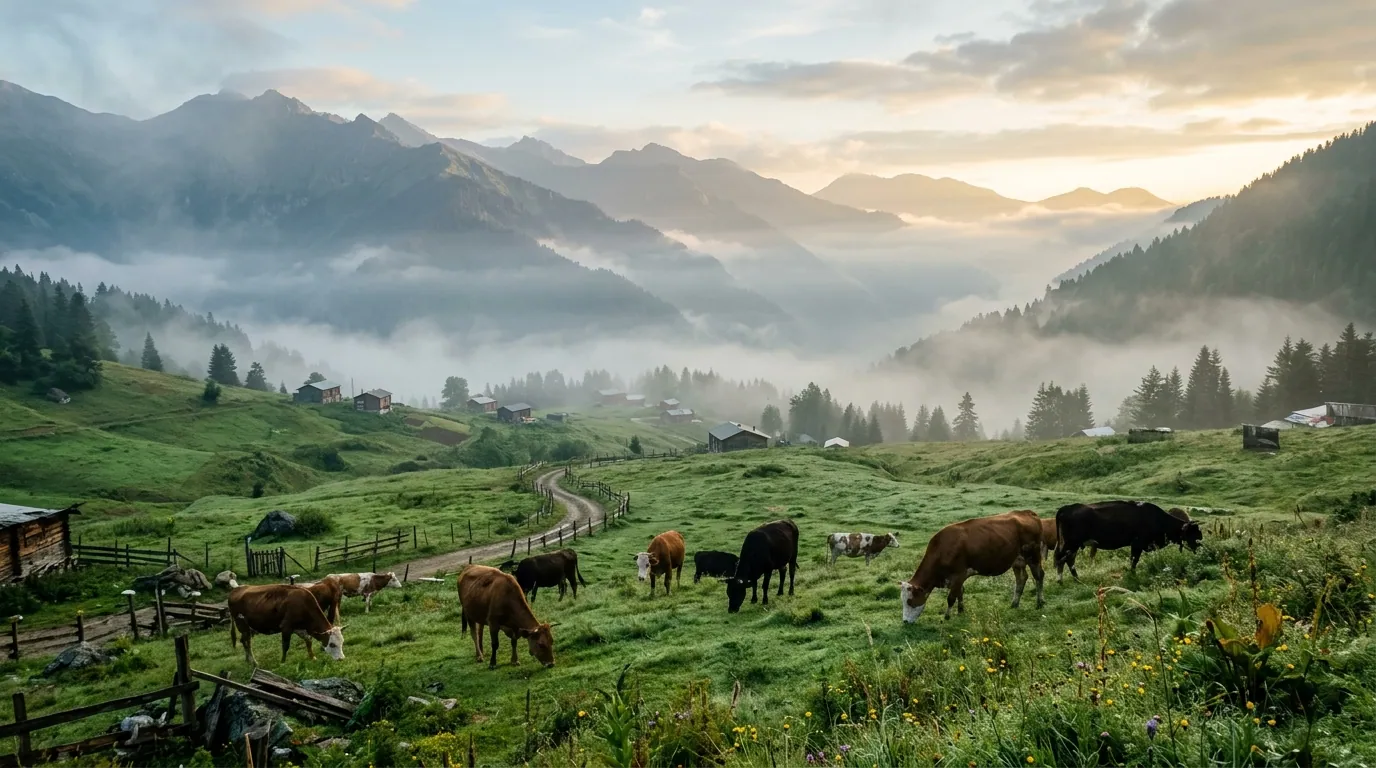
Ayder highlands 5-day itinerary 2026: a day-by-day plan for Arab families covering thermal pools, valleys, and Trabzon.
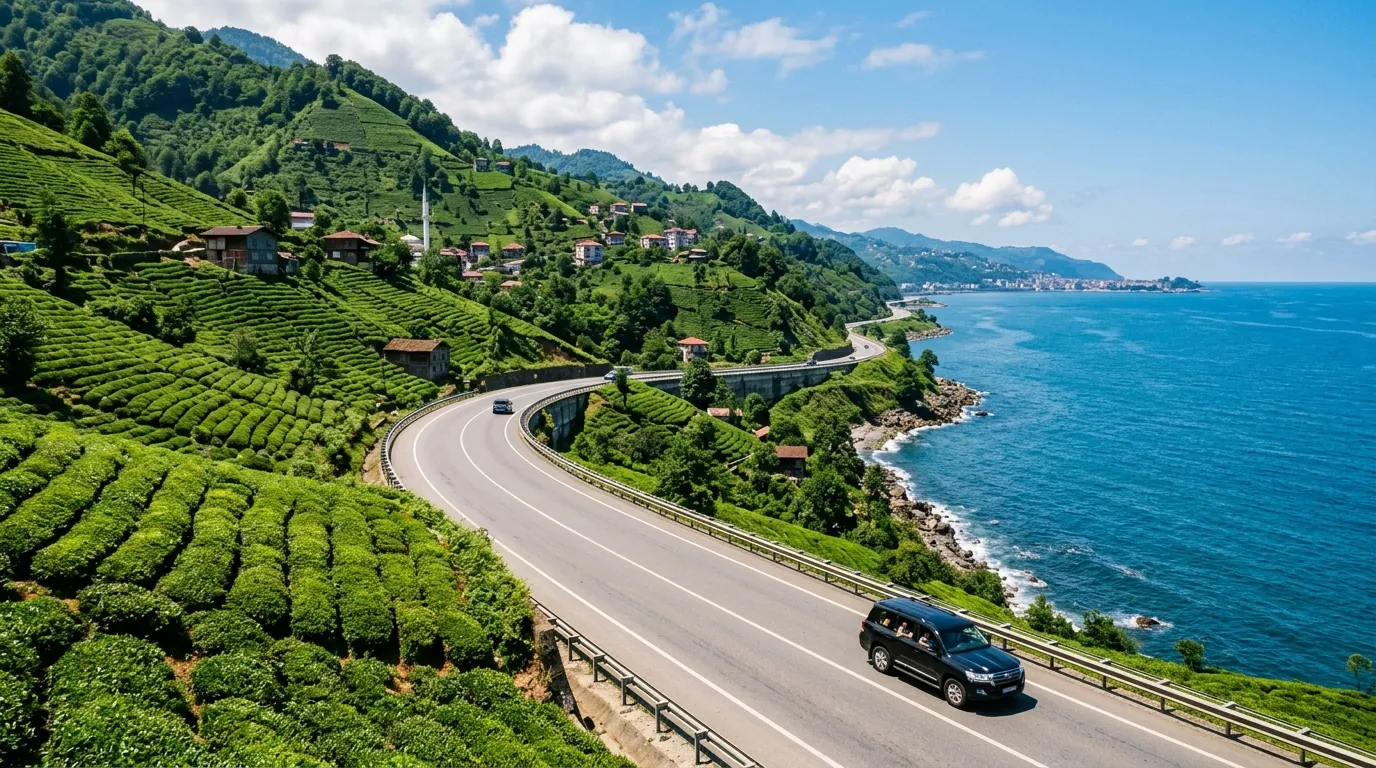
Ayder Trabzon distance 5-day itinerary 2026: a day-by-day plan for Arab families covering the transfer route.
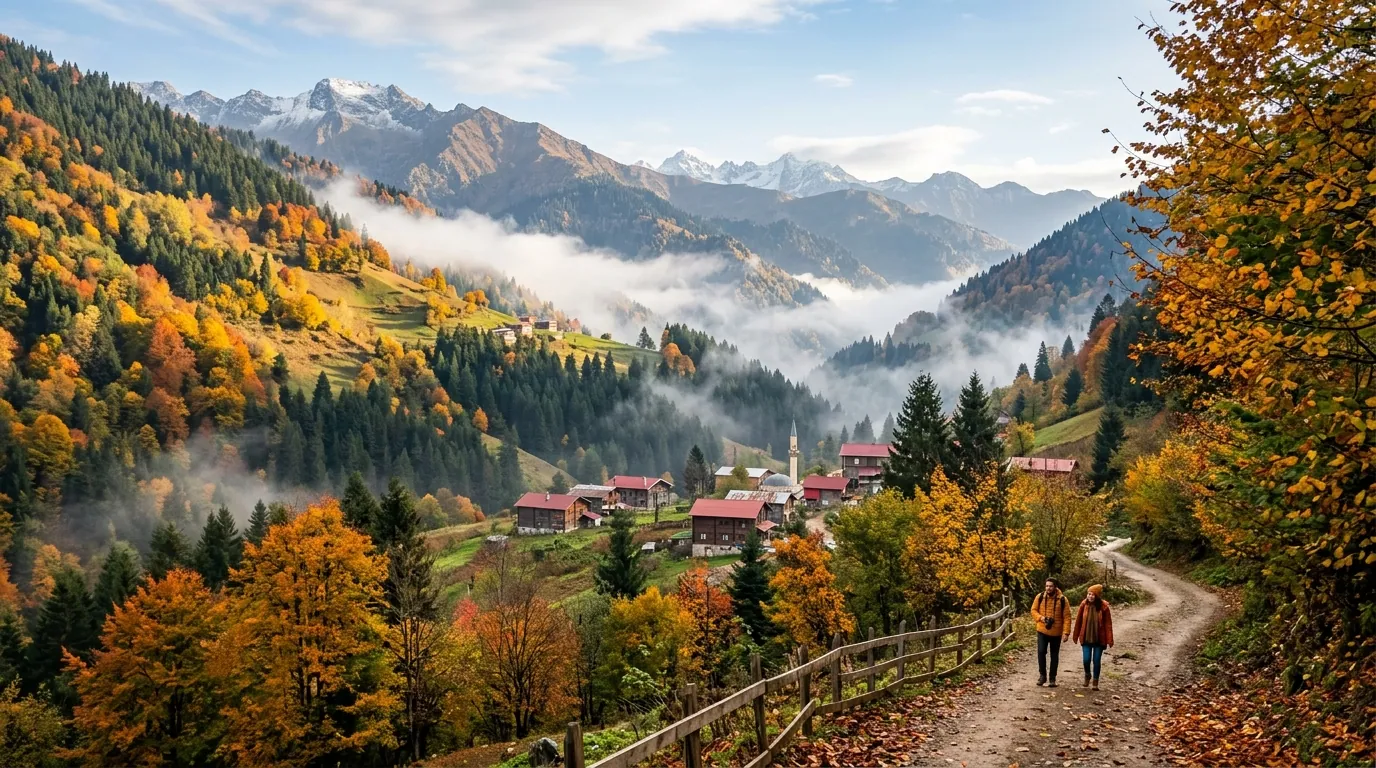
Ayder Turkey weather 2026: monthly averages, rain patterns, best months to visit, and packing tips for Gulf families.
Ready to explore Turkey?
Voyago brings together hotels, tours and transfers to help you plan the perfect trip to Turkey.