
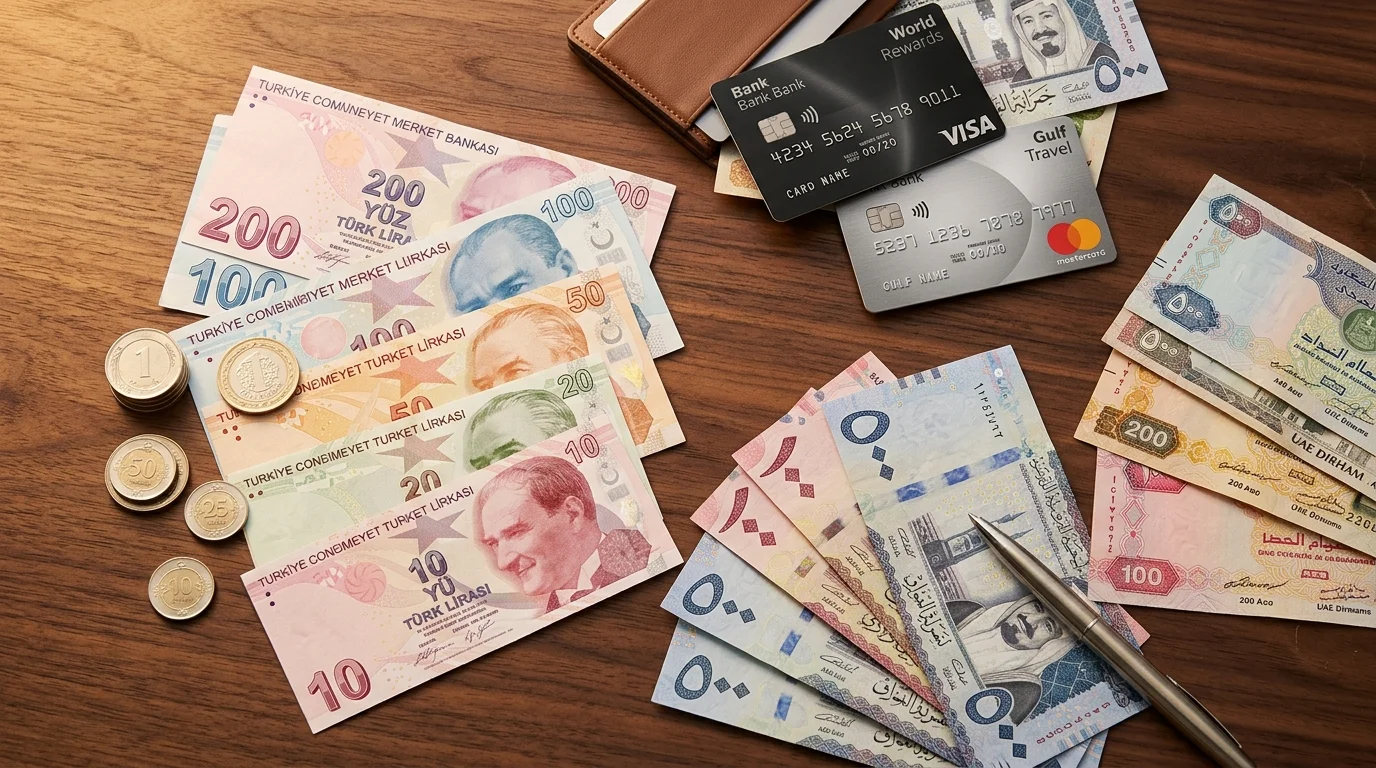
Quick Answer for Gulf Visitors
What currency is used in Turkey? The Turkish lira (TL, symbol ₺) alone. Gulf currencies and US dollars are not accepted in shops and restaurants; you need to exchange them or pay with an international card.
Cash or card? Both, in the right mix: the card covers hotels, restaurants, shops and modern transit, while lira cash is needed for traditional bazaars, small stores and some taxis.
Where should I exchange? A small amount at the airport for your first day, and the larger amounts at licensed exchange offices in the city centre where the rate is clearly better.
Is the lira strong against the riyal and dirham? The lira is weaker than every Gulf currency, so one riyal equals several lira; but Turkish prices have risen with inflation, so do not read currency strength as cheap living. The sound way to compare is to price the same basket of purchases, a coffee, a meal and a ticket, in your currency at home and in lira in Turkey.
Practical Info About the Lira and Payments
| Item | Detail |
|---|---|
| Official currency | Turkish lira (TL, ₺) |
| Common banknotes | 50, 100 and 200 lira, plus the large 500 |
| Small denominations | Keep them for groceries, buses and tips |
| Most accepted | Visa and Mastercard almost everywhere |
| Least accepted | American Express and Gulf local cards such as mada |
| Phone payments | Accepted in large stores and restaurant chains |
| Smart reserve | One day's cash in your pocket, the rest in the hotel safe |
One tip that spares you an awkward moment: enable international withdrawals and overseas payments on your card before you fly. Many Gulf banks block both by default until you activate them yourself, and discovering this at the first ATM in Istanbul is not the best moment for a customer-service call. For the wider picture of trip costs, the Turkey travel costs guide breaks the budget down line by line.
Exchange Ranges for 2026: Indicative Only
The lira is a volatile currency, and any figure printed in any guide ages quickly. The table below gives indicative ranges at the time of writing; the only authoritative source for the live rate is the Central Bank of the Republic of Turkey:
| Currency | Approximate lira equivalent |
|---|---|
| 1 US dollar | 38 to 42 lira |
| 1 euro | 41 to 45 lira |
| 1 Saudi riyal | 10 to 11 lira |
| 1 UAE dirham | 10 to 11 lira |
| 1 Kuwaiti dinar | 125 to 135 lira |
| 1 Qatari riyal | 10 to 11 lira |
| 1 Omani riyal | 98 to 106 lira |
| 1 Bahraini dinar | 100 to 108 lira |
The practical rule: before any large amount, open the central bank site or your banking app and compare the office's offered rate with the official one. A gap of a few cents per unit is acceptable; a large gap is a signal to walk past that office. General tourist pricing context is available through the official Turkish tourism portal.
Comparing Exchange Venues: Where Do You Get the Best Rate?
| Venue | Rate | Commission | When to use it |
|---|---|---|---|
| Airport exchange offices | Worst, clearly below market | Usually built in | Arrival day only, small amount |
| City-centre offices | Best | Usually zero with clear signage | All large amounts |
| ATMs | Good, near the official rate | Machine fee plus your bank's fee | When offices are closed |
| A formal bank | Official rate | Almost none | Emergencies and very large sums |
At city offices follow three steps: ask for the rate in writing rather than verbally, ask whether a commission applies before handing over money, and count the lira in front of the clerk before leaving the window. The locations of service desks and banks in the arrivals hall are documented on the official Istanbul Airport site, so know their position before you land and know your first-day amount in advance.
Cash Versus Card: Comparing the Two
| Method | Where it works | Advantage | Disadvantage |
|---|---|---|---|
| Visa or Mastercard | Almost everywhere | Safe and traceable | Foreign-transaction fees from your bank |
| Lira cash | Everywhere | Bargaining and small shops | Loss risk and manual counting |
| USD or EUR cash | Big hotels and large bazaars | Emergencies | Poor rate when accepted |
| Gulf currencies cash | Not accepted in practice | None | Exchange them at a licensed office first |
The tested strategy for a Gulf family: one primary card plus a backup from a different bank, and cash equal to about two days at any time. Activate contactless payment on your phone as well; major chains accept it, and it reduces how often you pull out your wallet in front of crowds, a privacy benefit families appreciate.
Estimated Daily Spending Per Person
| Level | Food | Local transport | Sights and activities | Daily total |
|---|---|---|---|---|
| Budget | 400 to 700 lira | 100 to 200 lira | 200 to 400 lira | 700 to 1300 lira |
| Mid-range | 900 to 1600 lira | 200 to 500 lira | 400 to 900 lira | 1500 to 3000 lira |
| Luxury | 2500 and up | 600 to 1500 lira | 1000 to 2500 lira | 4000 to 6500 lira |
These figures exclude accommodation and flights. Accommodation is the largest item and swings hard with the season, so compare Turkey hotels for your exact dates early instead of relying on stale averages, and book your private airport transfer in advance at a fixed price to protect your first day's budget from meter surprises.
Common Prices in Your Currency (Indicative Range)
| Item | Approximate lira | In SAR | In AED | In KWD |
|---|---|---|---|---|
| Turkish coffee in a cafe | 60 to 100 | 6 to 10 | 6 to 10 | 0.5 to 0.8 |
| Popular lunch meal | 300 to 500 | 30 to 50 | 28 to 47 | 2.3 to 3.8 |
| Taxi for 5 kilometres | 150 to 250 | 14 to 24 | 14 to 23 | 1.2 to 1.9 |
| Mid-range hotel night | 3500 to 6000 | 330 to 570 | 330 to 560 | 27 to 46 |
| Major sight entry | 500 to 900 | 48 to 86 | 47 to 84 | 3.8 to 6.9 |
| Cappadocia balloon flight | 9000 to 13000 | 860 to 1240 | 840 to 1215 | 69 to 100 |
The mental shortcut that simplifies your daily arithmetic: memorise only two numbers, one riyal is about ten lira and one Kuwaiti dinar about one hundred and thirty, and round with them at any counter. Full precision matters only for exchange and large purchases. If you want live precision at the moment of purchase, most Gulf banking apps show a currency converter right on the home screen.
Tipping Culture in Turkey
| Service | The usual custom |
|---|---|
| Restaurant | 5 to 10 percent, or rounding the bill up |
| Taxi | Rounding up, not a percentage |
| Hotel porter and bell staff | 20 to 50 lira |
| Tour guide | 100 lira and up depending on tour length |
| Room service | 30 to 50 lira per order |
| Public facilities attendants | Small notes suffice |
Tipping is appreciation, not obligation, but it is expected in individual services. The practical family rule: keep a stack of fifty-lira notes in a side pocket, covering the whole day's tips without ever opening your main wallet in front of anyone.
Bargaining and Tax Refunds: Where Cash Is King
Bargaining is part of the fun of heritage markets like the Grand Bazaar and the Spice Bazaar, and it is the one zone of cash the card cannot compete in: sellers give a kinder price for immediate payment. Start by asking the price calmly, offer below what you intend to pay, and meet in the middle; if you bargain, buy, because withdrawing after agreement is poor market manners. Large shopping malls use fixed prices where bargaining is not customary, and the maps of where to shop in each city are detailed in the Istanbul shopping guide.
Large stores and international brands usually offer VAT refunds for non-resident travellers: request the refund form and invoice at payment, and keep the goods and your boarding pass, which may be requested at the airport. Percentages and rules vary by store, so ask one direct question before paying; it can save your family a tidy sum for the last day's spending.
Managing the Family Budget on the Trip
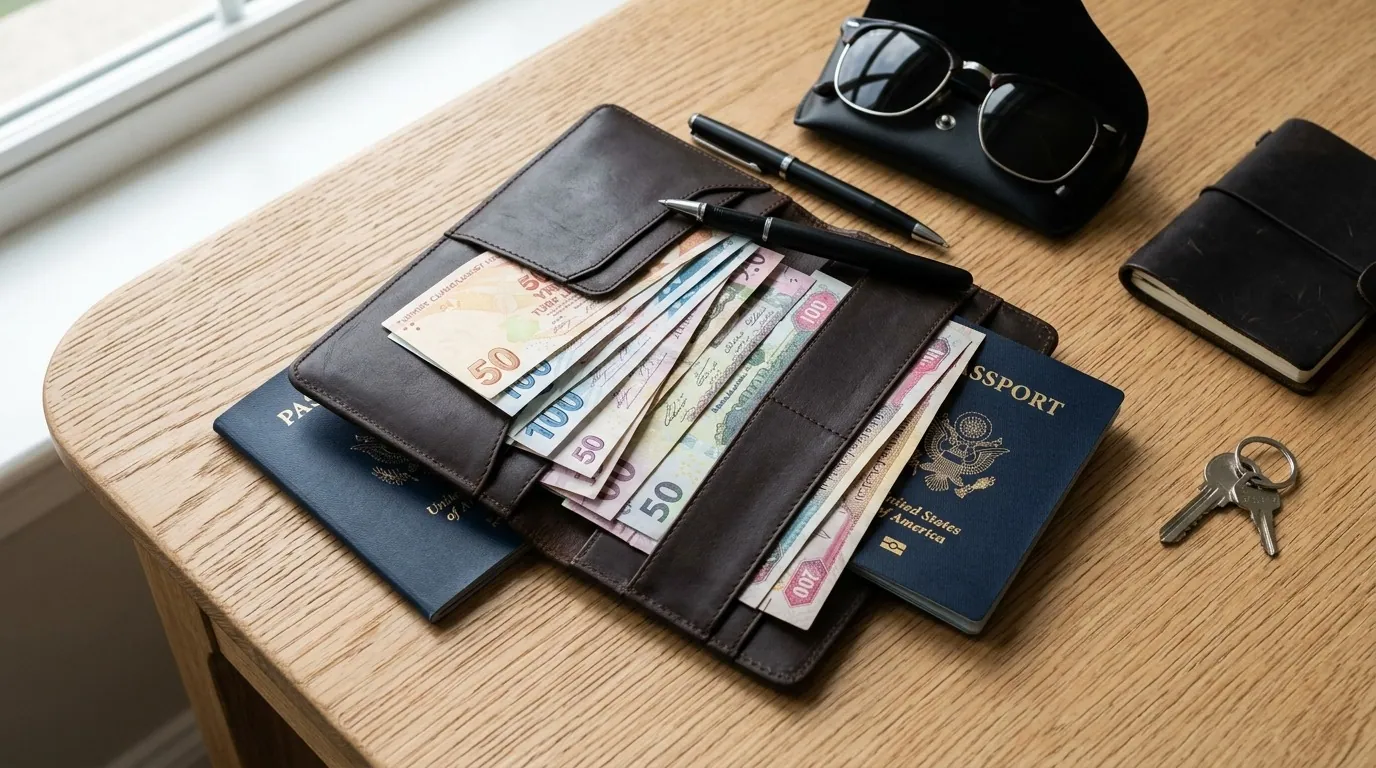
Gulf families in Turkey usually work with a flexible budget, and the cleanest method is dividing it across the days of the trip: a known amount per day, and whatever one day saves rolls into a bigger day, a balloon flight, a mall visit or a fine dinner. Give the children a small daily allowance in small notes; they learn the value of the lira and you avoid upgrade requests at every shop. Carry cash wisely: today's needs in your pocket and the rest in the hotel safe, a rule that protects you from loss and frees you from worry in crowds.
A model money day: a morning coffee at the price of a cup paid by card or a small note, a family lunch settled by card since it is easier with a full table, an afternoon heritage market where cash is the hero of bargaining, and an evening review of the day's spending log in your banking app, a five-minute habit that flags any line going over plan early. If you must withdraw cash, combine two days' needs into one withdrawal: one fee beats three. On long trips, schedule a single exchange session mid-trip instead of repeated small ones; you save effort and catch the best rate available that day.
Financial Safety: Three Real Warnings
The first is counterfeit lira: rare but not a myth. When receiving a 200 or 500 note, tilt it against the light and check the watermark and security thread, especially at night and in crowded markets. The second is misleading exchange offices: some display an attractive board rate then apply another; calculate the expected amount before handing over your money and insist on the written rate. The third is taxis: always ask for the meter and confirm it is running when you board, and use ride-hailing apps in the big cities to know the price in advance, which settles arguments before they begin.
Big Purchases: How to Pay Safely
For a large purchase such as a carpet, gold or fine leather, the first rule: never pay fully in cash on a first offer. Use your card at licensed stores, which preserves your rights and documents the transaction, and request an official tax invoice in your name as your record for any dispute or for customs at home. In heritage bazaars where cash is the norm, split the payment into a deposit at agreement and the balance on delivery when possible, and do not leave the market before inspecting the item fully.
Carpets have an extra layer: ask about the certificate of origin and natural materials, compare the same piece between at least two shops before deciding, and mention you will ship it, since many large shops arrange this with documented contracts. Gold is sold by the gram at a posted daily price, so the difference between shops is in the making fee, not the metal; compare craftsmanship fees before design.
Country Notes for Each Gulf State
Saudi Arabia: the local mada card is not accepted in Turkey, so use a Visa or Mastercard from your bank; ATMs do not dispense riyals, so withdraw lira or dollars. UAE: major-bank cards work smoothly over Visa and Mastercard networks, and cash dirhams are not accepted, so exchange them at a licensed office. Kuwait: Kuwait Finance House customers find branches and machines in Istanbul, and withdrawing from their own machines is sometimes cheaper. Qatar, Bahrain and Oman: your local banks have no machines in Turkey, so one international card suffices, with one shared tip: notify your bank of your travel before departure to avoid the card being blocked at its first foreign use.
FAQ (12 Questions)
- What currency is used in Turkey? The Turkish lira only; Gulf currencies and dollars are not accepted in shops.
- Are Gulf currencies accepted as cash? Not in practice; exchange them at a licensed office or withdraw lira from an ATM.
- Where is the best place to exchange? City-centre offices for the rate, and the airport only for the first day's amount.
- How much is one Saudi riyal in lira? In the indicative range of roughly ten to eleven lira at the time of writing; the live reference is the central bank site.
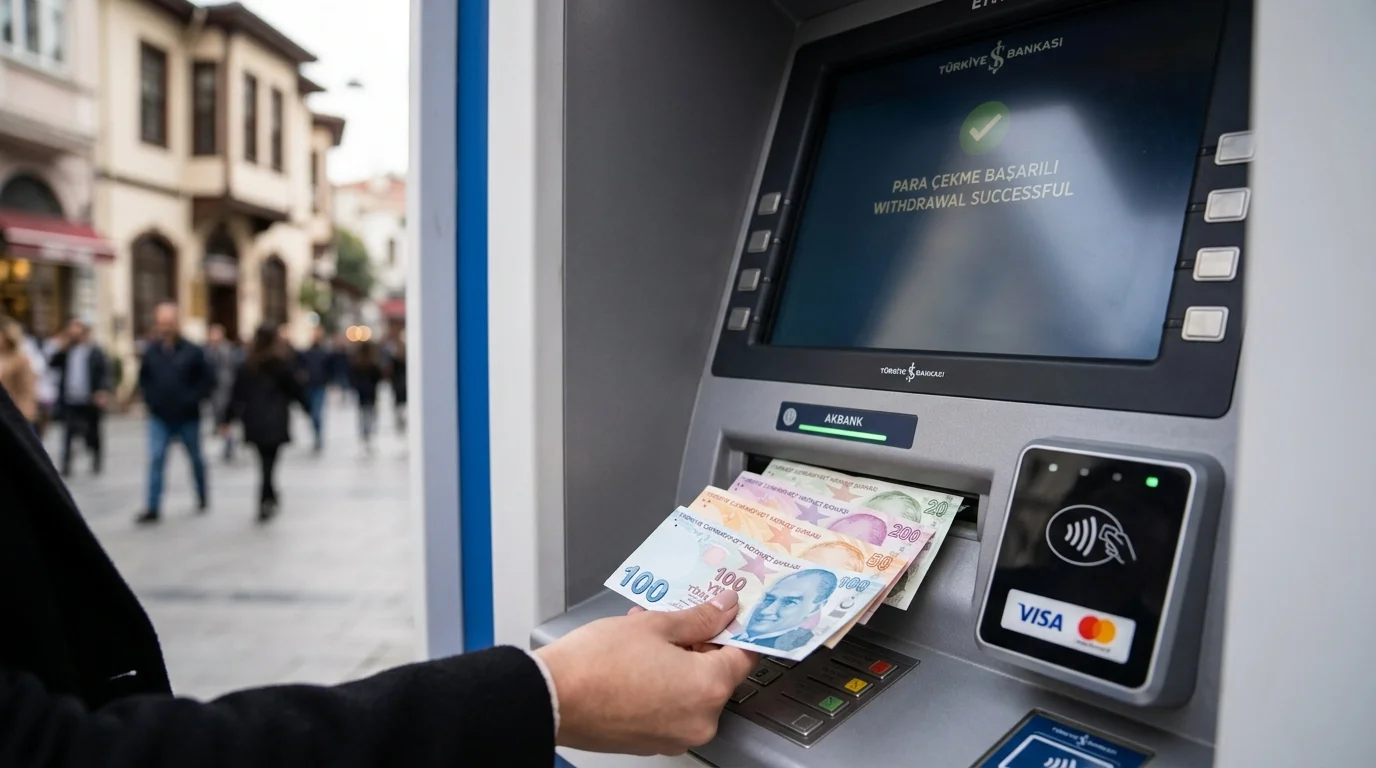
- Should I withdraw from ATMs? Yes, with a Visa or Mastercard, and take a large amount per withdrawal to reduce total fees.
- What are ATM withdrawal fees? A small local machine fee plus your Gulf bank's fee; ask your bank about its international withdrawal policy before travelling.
- Does the mada card work? No; use a Visa or Mastercard issued by your Gulf bank.
- Cash or card for daily spending? The card for restaurants, shops and transit, and cash for traditional markets and tips.
- How much should I tip? Five to ten percent in restaurants, rounding up in taxis, and small notes for individual hotel services.
- Is counterfeit currency a big risk? Very rare; check the watermark when receiving large notes in crowded places.
- How much should a family budget per day? Excluding accommodation, a family of four at mid-range needs roughly six to twelve thousand lira a day for food, transport and activities.
- Is tax refund available to Gulf visitors? Yes, at participating stores, provided you keep the invoice and form and complete the process at the airport before departure.
Conclusion
The money story of your Turkish trip is simple: lira for cash, an international card for everything else, and the family budget divided across the days. Exchange small at the airport and larger in city offices, withdraw in combined amounts rather than scattered ones, tip by rounding or a simple percentage, and keep one live reference for the rate, the central bank's site. Settle the two big items early, accommodation from the Turkey hotels page and transport from the transfer services, then add the tours you want to book, and the daily details stay easy to manage as long as each day's amount is known in advance.
Sources
Related travel guides

Ayder highlands 5-day itinerary 2026: a day-by-day plan for Arab families covering thermal pools, valleys, and Trabzon.

Ayder Trabzon distance 5-day itinerary 2026: a day-by-day plan for Arab families covering the transfer route.

Ayder Turkey weather 2026: monthly averages, rain patterns, best months to visit, and packing tips for Gulf families.
Ready to explore Turkey?
Voyago brings together hotels, tours and transfers to help you plan the perfect trip to Turkey.