
Quick Answer for Gulf Visitors
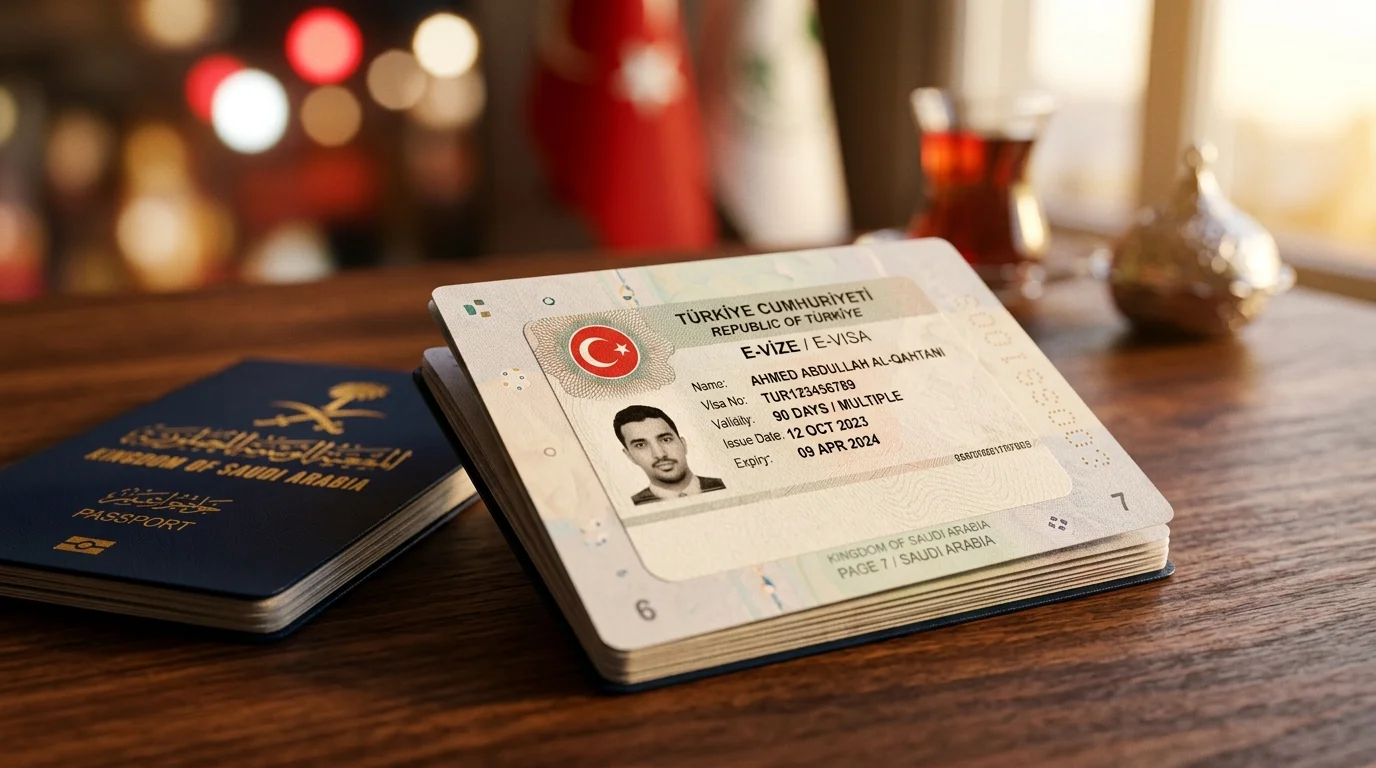
Do Gulf citizens need a visa for Turkey? No; all six Gulf nationalities enter visa-free with a stay of up to 90 days in any 180-day period, with nothing more than a passport stamp on arrival, no fee and no prior application.
What are the actual entry conditions? A passport valid for at least six months, with the possibility that the officer asks for a return ticket, hotel confirmation and simple proof of funds, so it is wise to carry printed copies in your hand luggage.
Can you stay longer than 90 days? Yes, through a tourist residence permit from the immigration directorate of the province where you stay, at a cost of roughly 80 to 200 dollars; the details are in the extension section below.
The Golden Rule: Every Gulf Nationality Is Exempt
Citizens of all six Gulf Cooperation Council states enter Turkey fully exempt from the visa requirement, and the exemption stands firm in 2026 with no announced change:
| Country | Entry type | Allowed stay | Fee |
|---|---|---|---|
| Saudi Arabia | Exemption | 90 days in 180 days | Free |
| UAE | Exemption | 90 days in 180 days | Free |
| Qatar | Exemption | 90 days in 180 days | Free |
| Kuwait | Exemption | 90 days in 180 days | Free |
| Bahrain | Exemption | 90 days in 180 days | Free |
| Oman | Exemption | 90 days in 180 days | Free |
The exemption covers tourism, family visits and medical treatment, with no prior application, no fee and no waiting; a passport valid for at least six months from the entry date is all that is required. Because each nationality can carry small differences in the fine print, the permanent official references are the Turkish e-Visa portal and the Turkish Ministry of Foreign Affairs, and we have unpacked the rules for the two largest Gulf traveller groups in the Turkey visa guide for Saudi citizens and the Turkey visa guide for UAE citizens.
Basic Entry Conditions at the Airport
An exemption means easy entry, not entry guaranteed without questions, and passport officers everywhere hold discretionary authority. Five points make your passage smooth:
- Passport validity: at least six months from the entry date; twelve months is safer still, especially with extension plans.
- Return or onward ticket: some officers ask for proof of intention to leave, so keep it booked and showable.
- Hotel confirmation: for the full stay or at least the first two nights, ideally a paper copy alongside the one on your phone.
- Proof of funds: no official amount is published, but fifty to one hundred dollars per person per day is a safe benchmark.
- A clean record: anyone previously refused entry to any country should consult the Turkish embassy before booking non-refundable tickets.
The Arrival Step by Step
Before departure: complete your hotel and domestic flight bookings and keep them in your email or booking app, print paper copies, and check that children's passports are valid in their own right, not merely registered in a parent's passport.
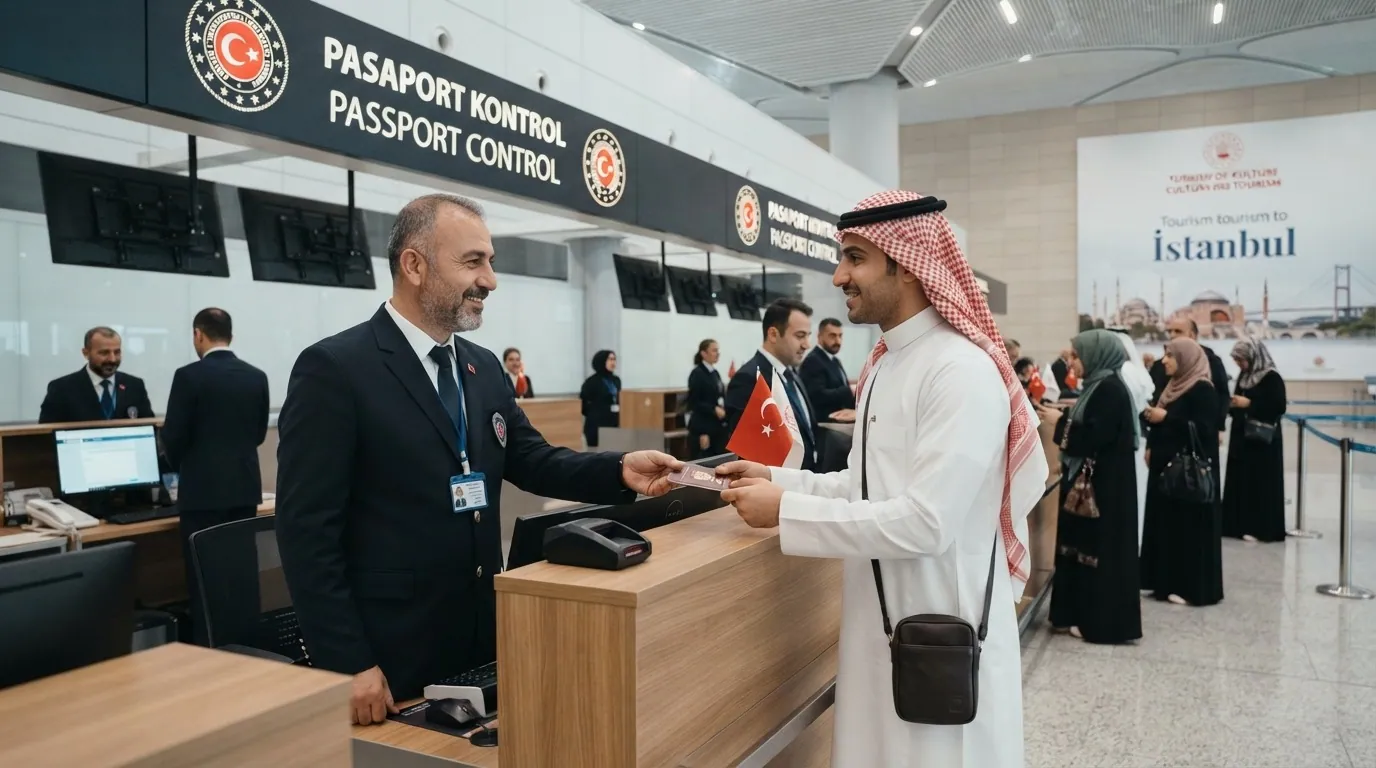
On arrival: you pass through the foreigners' passport desk, hand over your passport, and the officer may ask the length and place of your stay; a short, clear answer with a hotel booking screenshot shortens the conversation. You receive the entry stamp with your arrival date, then move to baggage claim and the exit. Expected waiting time runs between five and twenty-five minutes: shortest in quiet hours and longest in the evening peaks of Gulf flights in summer.
The moment you are stamped in you are inside the tourism system like any other visitor, and the first practical decision is reaching your hotel: a family arriving after an overnight flight with luggage and children genuinely benefits from a pre-arranged private transfer waiting in arrivals, an option we detail in the Sabiha Gokcen transfer guide.
What the Officer Asks and How to Answer
Questions at the desk are short and limited, aimed at confirming you are a genuine visitor who will leave on time. The three most frequent: how many days will you stay, what is the purpose of the visit, and where will you be staying. The best answer is short, honest and consistent with your papers: a number of days, tourism or a family visit, and a hotel name with the booking on screen. Long, hesitant answers extend the conversation more than they reassure the officer.
A fourth question may appear for larger families: who pays for the trip? Showing a bank card and a paid booking is answer enough. Do not volunteer details nobody asked for; an answer beyond the question sometimes triggers a new question that could have been avoided. And if no common language emerges, an interpreter is available at the major Istanbul airports within minutes, so a language barrier is never a real obstacle.
Visa-Free Entry vs e-Visa: Practical Comparison
A Gulf citizen has no choice to make at all, but the comparison matters for anyone holding a second nationality or travelling with a companion on a non-Gulf passport:
| Criterion | Gulf visa-free entry | e-Visa |
|---|---|---|
| Application | None, direct stamp | Electronic application in advance |
| Fee | Free | About 50-100 USD depending on nationality |
| Issue time | Instant at the desk | Usually 24 hours |
| Stay length | 90 days in 180 days | Usually 30 days |
| Required documents | Passport only | Passport, ticket, accommodation address |
| Refusal risk | Extremely rare | Possible for restricted nationalities |
The practical rule: a traveller holding both a Gulf and another passport should know the Gulf one is the fastest way in; companions on visa-required nationalities must apply through the official portal at least a week ahead, because arriving without a visa stops the whole family at the desk.
The Fastest Entry Airports for Gulf Families
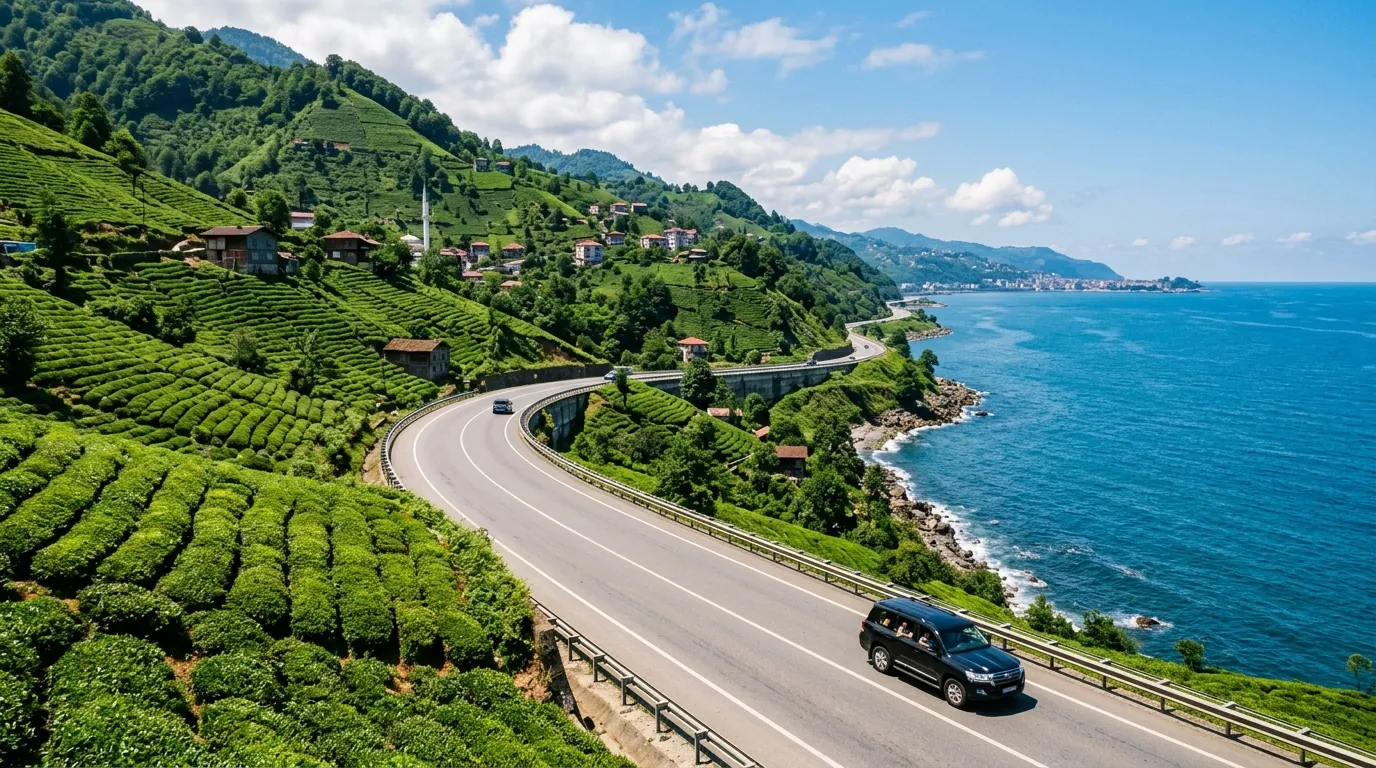
Istanbul Airport is the Gulf's main gateway by far, and its size and family services are documented on the airport's official site, where you find terminal maps and family facilities. Sabiha Gokcen on the Asian side is calmer and closer to Kadikoy, Uskudar and the Asian-side hotels. In summer, seasonal direct flights run from the Gulf to Antalya, Trabzon and Bodrum, and Trabzon in particular is a favourite summer destination for Gulf families, with full details in the complete Trabzon guide.
A time-saving tip: know your foreigners' passport control gate number before landing, keep the family's passports in one holder, and complete any children's forms in the queue rather than at the desk. The difference between clearing in ten minutes and waiting forty is usually document organisation, not officer speed.
Non-Gulf Arab Nationalities: A Quick Table
Many Gulf families travel with relatives or staff on other Arab passports, and the differences between them are significant:
| Nationality | Entry type | Stay | Approximate cost |
|---|---|---|---|
| Jordan | Exemption | 90 days | Free |
| Lebanon | Exemption | 90 days | Free |
| Tunisia | Exemption | 90 days | Free |
| Algeria | Exemption | 90 days | Free |
| Morocco | Exemption | 90 days | Free |
| Egypt | Exemption | 90 days | Free |
| Iraq | Exemption | 90 days | Free |
| Libya | Exemption | 90 days | Free |
| Syria | Conditional e-Visa | 90 days | 50-80 USD |
| Yemen | Conditional e-Visa | 30 days | About 50 USD |
| Sudan | e-Visa | 30 days | About 50 USD |
| Palestine | e-Visa | 30 days | About 50 USD |
Restricted nationalities require security clearances that can take two days to a month, so anyone travelling with a companion on one of these passports should start the process a full month ahead and accept that plans may shift; the final reference is always the official portal, not friends' experiences.
Who Still Actually Needs an e-Visa?
Non-exempt nationalities such as India, Pakistan, Bangladesh, the Philippines, Indonesia and Nigeria pass through a simple five-step route: open the official portal, complete the application in five to ten minutes, pay the fee by bank card according to nationality, receive the visa by email usually within 24 hours, then print it and keep it with the passport for the whole trip.
Two cautions: the platform accepts only eligible nationalities, so there is no point attempting an application on an exempt one; and the details must match the passport letter for letter, because a single wrong character in a name is enough to restart the application from zero and possibly miss the flight.
Longer Visas: Residence, Work and Study
| Visa type | Length | Target group | Approximate cost |
|---|---|---|---|
| Tourist residence | 6 months to a year | Retirees and long-stay visitors | 80-200 USD |
| Work | One year, renewable | Employees of Turkish companies | Per contract |
| Study | Length of programme | University students | 80-120 USD |
| Medical | 90 days, extendable | Hospital patients | Per case |
| Real estate | One year, renewable | Property owners in Turkey | About 200 USD |
| Transit | 24 to 72 hours | Travellers to other countries | About 25 USD |
All of these routes require advance application through official channels, never on arrival, and the full details sit on the Ministry of Foreign Affairs site.
How to Extend Your Stay Beyond 90 Days
Anyone wanting more than the exemption ceiling needs a tourist residence permit issued by the immigration directorate of the province of residence. The core documents: your passport, valid health insurance covering the permit period, proof of income or savings at 500 to 1,000 dollars a month, and a lease or title deed proving your address. The total cost with the card runs between 80 and 200 dollars, and a first permit is typically issued for six months to a year and renewed thereafter.
The timing is what matters most: file the application before the ninety days end, not after, because overstaying triggers a fine estimated at fifty to one hundred dollars per overdue day and can end in a one-year entry ban. The practical family rule: a plan covering mid-June to mid-September breaches the ceiling by two weeks, so either file the residence application early or end the trip with a safety margin before the ninetieth day.
The practical filing steps: book an electronic appointment at your province's immigration directorate through the official gateway, attend with the original documents and copies, and you leave with a receipt proving your application is under review, which protects you legally until the card is issued. Keep that receipt with you at all times, as it stands in for the card during the wait, and do not leave Turkey before the application is resolved, because departure cancels it entirely.
Medical Insurance: Do You Need It Despite the Exemption?
Visa exemption does not mean exemption from hospital bills, and private healthcare in Turkey is excellent but fully paid. A simple travel insurance policy covering a single emergency can save a family thousands of dollars, and for a mid-size Gulf family the two-week premium usually costs no more than one dinner at Jeddah or Dubai airport. The practical selection criteria: coverage between thirty and fifty thousand euros for emergencies, inclusion of infants without age restrictions, and coverage of stable chronic conditions if any family member has one.
The policy serves you a second time when you later apply for the tourist residence permit, because health insurance is a core requirement of the extension; buying it on day one serves both paths at once: peace of mind during the trip and a smooth extension afterwards without a new document.
Travel with Children and the Family: Documents Not to Forget
Every child needs an individual passport under the same rules, but officers pay attention to travel without one parent: carry the family book or the child's birth certificate, and if the father travels alone with the children, or the mother does, a notarised written consent from the other parent is best, which some airlines already demand before boarding. Elderly travellers on regular medication should carry a stamped medical report and a list of medicines by their scientific names, and some controlled medicines need advance ministry approval.
A family organising its first complete trip will find city plans and seasons in the complete Turkey guide, current season updates in the travelling to Turkey report, and once the visa question is settled, the remaining decisions are the right hotel, comfortable transfers and organised tours.
Practical Info for Gulf Visitors
| Item | Detail |
|---|---|
| Exemption | 90 days in 180 days for all Gulf nationalities |
| Passport validity | At least six months from entry |
| Fee | Free for Gulf citizens |
| Prior application | Not required; the exemption is automatic at the desk |
| Children's passports | An individual passport for each child, same rules |
| Travel without one parent | Notarised consent and the family book |
| Extension | Tourist residence from the immigration directorate before expiry |
| Overstay fine | 50 to 100 USD per day of overrun |
FAQ (12 Questions)
- Is the visa free for Saudi citizens? Yes, the exemption is free for every Gulf nationality without any fee.
- How many days can I stay? Up to 90 days in any rolling 180-day period.
- Do I apply before travelling? No, the exemption applies automatically when you show your passport on arrival.
- Does the exemption cover work? No, work needs a work visa and a contract with a Turkish company, and even remote work is not formally permitted on a tourist stay.
- Can I enter repeatedly? Yes, within the ceiling of 90 days per 180 days, several short trips are no problem.
- Can I enter at any airport? Yes, all Turkish air and land border posts recognise the Gulf exemption.
- Can I visit Northern Cyprus? Yes, entry is available via Turkey without an additional visa for Gulf nationals.
- What if I overstay 90 days? A daily fine on departure and possibly a one-year ban; the legal extension is always cheaper and safer.
- Does a newborn need a passport? Yes, every traveller regardless of age needs a valid passport.
- Will the officer ask about my hotel? Sometimes; keep the booking confirmation on paper or in your phone to close the question quickly.
- Can I study on the exemption? No, formal study requires a student visa before travel.
- What if entry is refused? Ask for the reason in writing, contact your embassy in Ankara, and note that refusals are extremely rare for Gulf visitors with sound documents.
Conclusion
Entering Turkey as a Gulf citizen is easier than ever: no visa, no fee, no waiting, one stamp on arrival and a stay of up to ninety days. Prepare a passport valid for at least six months, carry printed booking confirmations, and start the extension procedure before the deadline if you want the whole summer. After that, the trip's real decisions remain: the city, the hotel and the tours, all within reach through the links above.
Book your hotel across Turkey's cities · Arrange your private airport transfer · Discover organised tours
Sources
Related travel guides

Ayder highlands 5-day itinerary 2026: a day-by-day plan for Arab families covering thermal pools, valleys, and Trabzon.
Ayder Trabzon distance 5-day itinerary 2026: a day-by-day plan for Arab families covering the transfer route.

Ayder Turkey weather 2026: monthly averages, rain patterns, best months to visit, and packing tips for Gulf families.
Ready to explore Turkey?
Voyago brings together hotels, tours and transfers to help you plan the perfect trip to Turkey.