
Quick Answer for Gulf Visitors
What is Turkey's foremost symbol? — The national flag: a red field bearing a white crescent and a white five-pointed star, an heir of the late Ottoman banner standardized in its republican form by the Flag Law of 1936.
What do the crescent and star mean? — Two ancient symbols long tied to the region and the Ottoman state, and for Turks today they represent national identity and independence, with the colors evoking sacrifice for freedom and the light of hope.
Where will a traveler meet these symbols? — On minarets, palaces, and streets during national holidays, on souvenirs and blue tiles in Istanbul's bazaars, and across official designs on government platforms.
Why National Symbols Enrich Your Trip
National symbols are not schoolbook trivia; they are keys to understanding what you see every day in Turkey. Why do red flags fill every street on the twenty-ninth of October? Why do Turks decorate everything with the celebrated tulip motif? And why does a blue eye charm hang in every shop? Once you know the stories, your market walks and strolls grow richer, and bazaar gifts turn from pretty objects into messages with meaning. This guide explains the country's official and popular symbols in traveler's language, complemented by our general cultural coverage in the complete Turkey guide.
Because symbols touch identity, respect is also a practical matter. Handling the flag with care is something Turks deeply appreciate; photographing your family holding the flag on Republic Day earns smiles, not objections, while sitting on or stepping over national emblems is offensive to everyone. The rule is simple: treat the country's symbols as you would want yours treated.
The Turkish Flag: The Story of Red, Crescent, and Star
The red background with the open white crescent and five-pointed star is a composition centuries old, known in similar forms from the late Ottoman period since the mid-nineteenth century, then fixed by the Turkish Flag Law of 1936 with precise specifications for proportions and angles that preserve the crescent-star balance, in the familiar two-to-three ratio. Red and white carried the meanings of independence and peace in the young republic's imagination after the War of Independence, and the flag has remained the unifying symbol of state and society unchanged since that law. You will see it raised at schools each morning, flying from ships crossing the Bosphorus, and above the parliament in Ankara, a city we introduce in our guide to Ankara, Turkey's capital.
A point Gulf visitors ask about: does the Turkish flag differ from other crescent flags? Yes; its distinguishing features are the crescent opening toward the star and a deep specific red, and knowing the difference helps you spot accurate souvenirs versus sloppy imitations when shopping.
Comparison: Turkey's Official and Popular Symbols
| Symbol | Status | Where you see it | Meaning |
|---|---|---|---|
| Red flag with crescent and star | Foremost national symbol | Squares, schools, ships | Independence and identity |
| Istiklal Marsi anthem | Official anthem | Ceremonies and schools | Epic of the independence war |
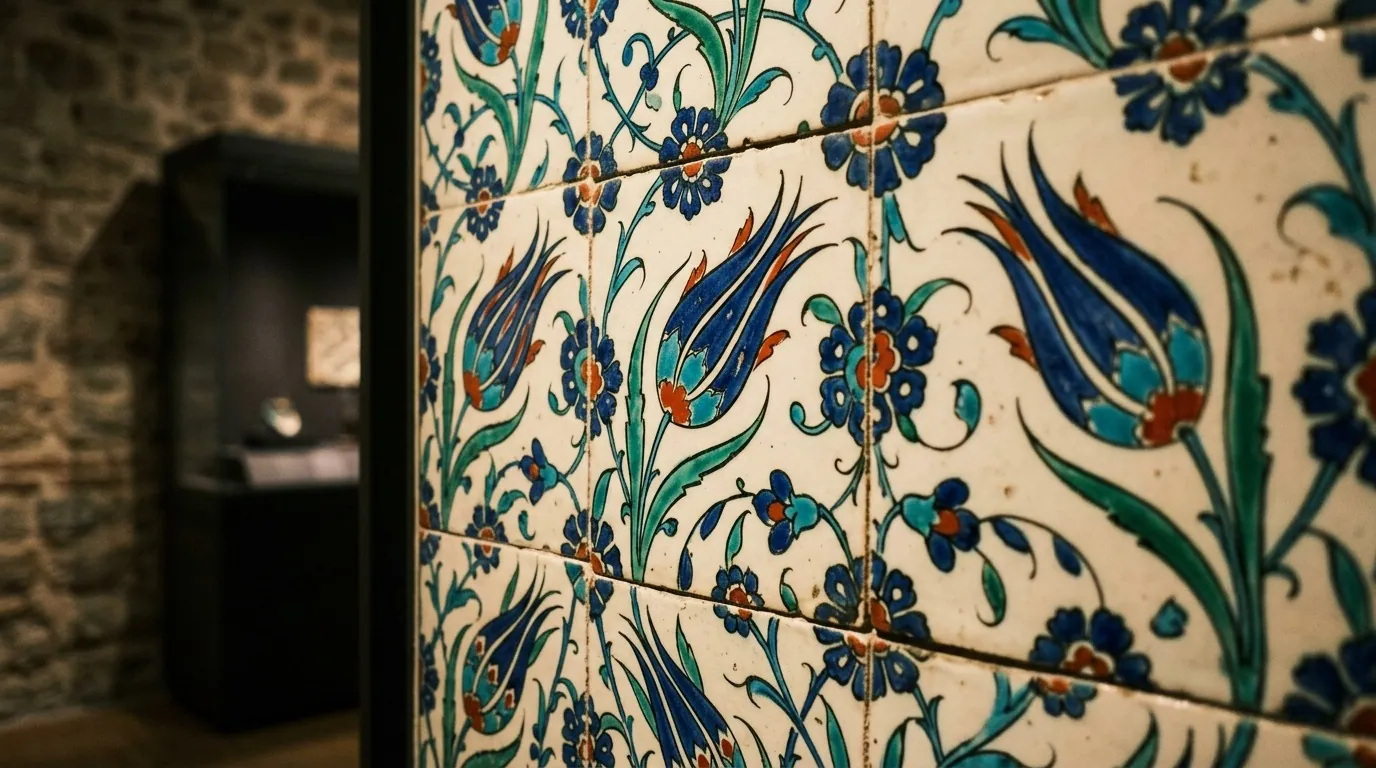
| Tulip (lale) | Beloved national flower | Ceramics, tiles, gardens | Ottoman "Tulip Era" heritage |
| Blue eye (nazar) | Folk charm | Every souvenir shop | Warding off envy in folklore |
| Lira sign ₺ | Currency symbol | Bills and exchange offices | A doubled letter with two strokes |
| Sun and eagle motifs | Historical ornament | Museums and carpets | Ancient Asian heritage |
Notably, Turkey keeps its official iconography minimal: most institutions simply use the crescent and star inside a red oval on Foreign Ministry papers and official correspondence via the government gateway, one of the simplest symbolic systems among nations.
The National Anthem and Republic Day: When the Country Turns Red
The Istiklal Marsi, the Independence March, was written at the height of the War of Independence in the early 1920s and adopted officially in 1921; its verses speak of love of homeland and sacrifice, and it is performed standing at every ceremony. The scene that delights travelers is the national holiday season: on Republic Day, the twenty-ninth of October, streets turn into rivers of flags and lights; on Children's Day, the twenty-third of April, children parade in national dress; and on Youth and Commemoration Day, the nineteenth of May, squares fill with popular celebrations. If your trip coincides with one, count yourself lucky: cities wear their finest and bazaars stay open in a family carnival atmosphere. Practical moving tips for those days sit in our general advice on traveling to Turkey.
Symbol Souvenirs: What to Buy and Where
The three most popular symbolic souvenirs among Gulf visitors: the blue eye in sizes from medallion to large hanging amulet, a folk charm rather than an official emblem; tulip-decorated ceramics and Iznik-style plates; and gift boxes of baklava and fine chocolates wrapped in crescent-star designs. The best hunting grounds: the Grand Bazaar and Egyptian Bazaar in Istanbul, the markets of Ankara near the founder's mausoleum, and Antalya's covered bazaars. The golden price rule: compare three shops before buying, always ask for a receipt, and inspect print quality on flag-themed items, because distorted emblems are sold at fine-emblem prices to hurried tourists. For more shopping and neighborhood options, see our Turkey map facts guide and the Istanbul hotel booking guide for a stay near the bazaars.
Practical Info for Gulf Visitors
| Item | Details | Gulf note |
|---|---|---|
| Flag respect | Never sit on it or let it touch ground | Respectful handling is treasured |
| Photos with symbols | Welcome and encouraged | Avoid political commentary |
| National holidays | Oct 29, Apr 23, May 19 | Beautiful festive atmosphere |
| Symbol souvenirs | Mostly USD 5-50 | Compare three shops |
| The anthem | Played standing | Stand with the crowd |
| Crescent on minarets | Ottoman heritage, everywhere | A normal sight in every city |
Other Symbols Worth a Pause: The Tulip, the Eagle, the Bosphorus
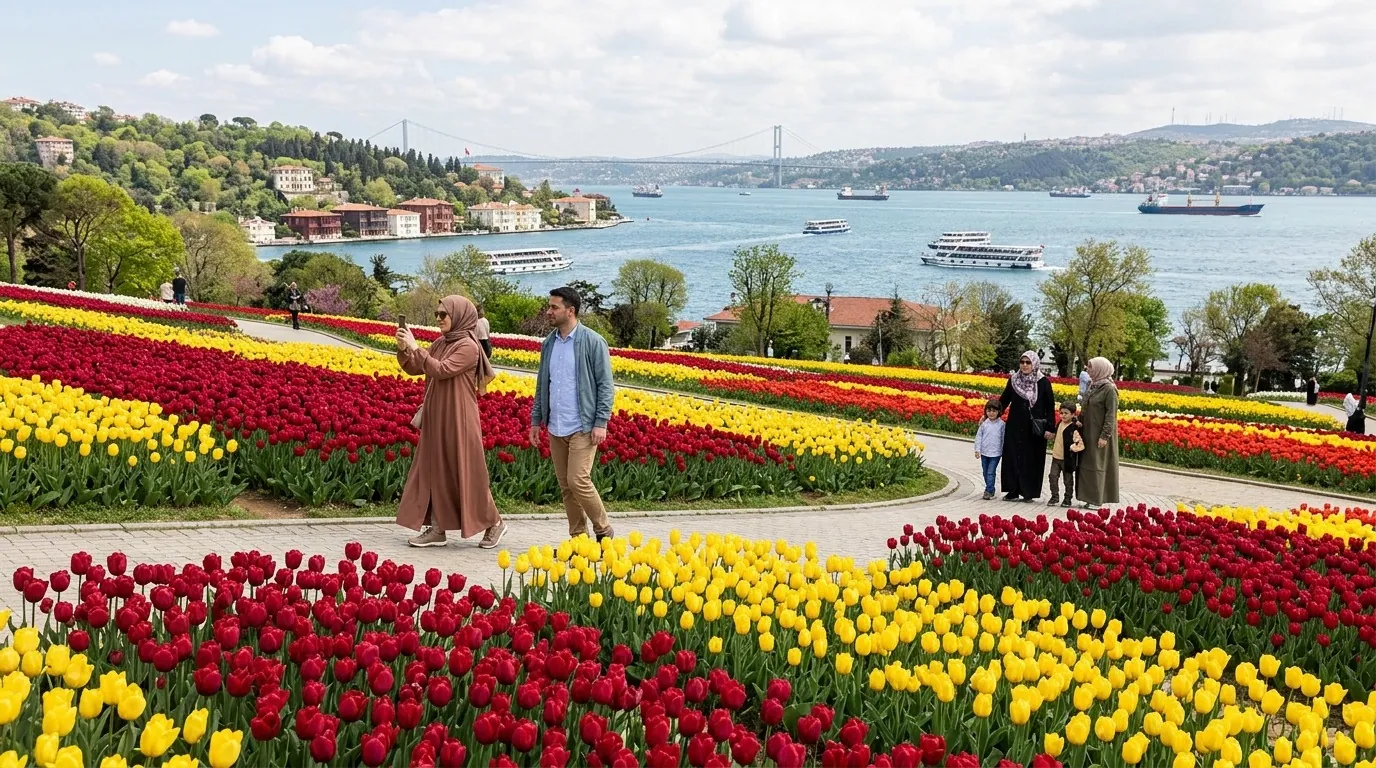
Despite the simplicity of Turkey's official symbolic system, other symbols crowd the popular and cultural memory and deserve a pause. The tulip, lale in Turkish, held a special place in the eighteenth century when the Ottomans held its festivals, so much so that an entire era of the state's history was named the Tulip Era. The tulip adorns the famous Iznik tiles and the fine arts collections in Istanbul's museums today, and decorates the streets during the annual spring festivals.
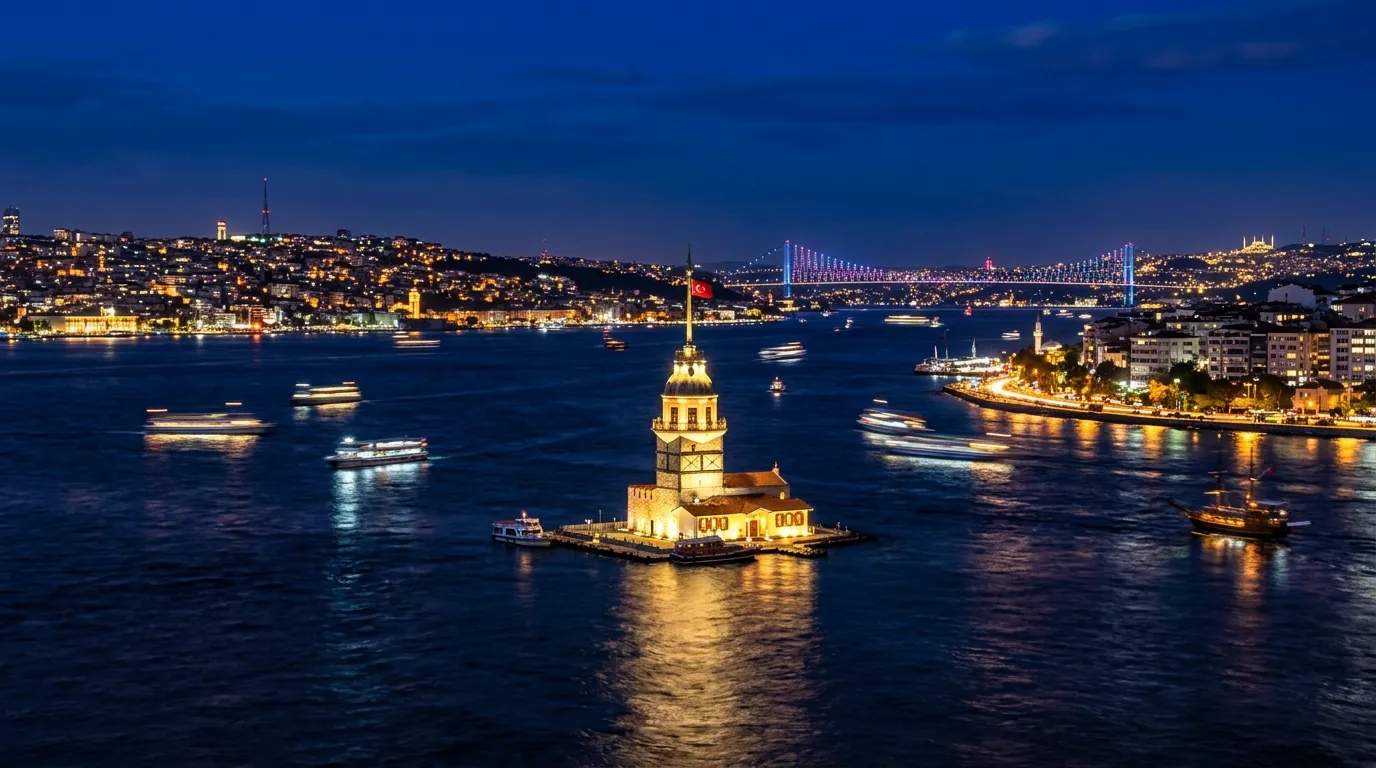
Then there is the Bosphorus at the heart of Istanbul, a geographic symbol as significant as any official emblem: the strait linking the Sea of Marmara to the Black Sea, lined with Ottoman palaces, parks, and yachts, and meeting two continents in a single frame. The Bosphorus has no central statue, but its presence in art, literature, and popular stories surpasses any official monument.
And finally, popular charms you find in every shop: the blue eye that Turks believe wards off envy, the small metal keys hung on shopfronts as a symbol of blessing, and the red candles lit at religious occasions. These small symbols are the daily fingerprint of Turkish society, and travelers pick them up in every market and every neighborhood. The currency sign ₺ recurs on every receipt and every exchange machine, reminding that the Turkish lira carries a special symbol rather than the first letter of its name, a symbol that echoes major world currencies and confirms the identity of the local money.
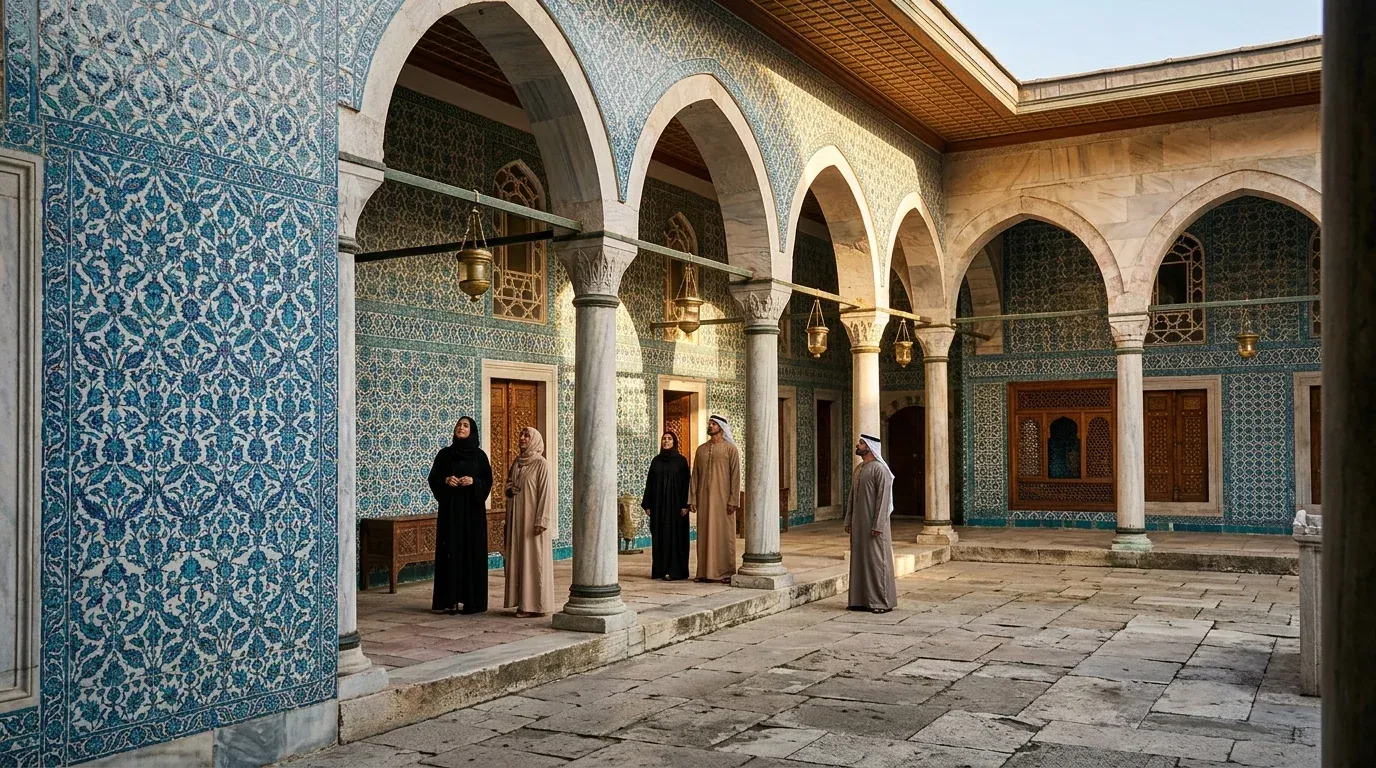
For those who care about the details of symbols in museums, the Museum of Turkish and Islamic Arts in Istanbul and the Museum of Anatolian Civilizations in Ankara offer important collections that explain the evolution of symbols through the centuries, adding an intellectual layer to what you see in the streets. For anyone who wants to connect these symbols with the country's nature, we recommend reading the complete Turkey guide and the Istanbul hotel booking guide before traveling.
FAQ (12 Questions)
- What is Turkey's official symbol?
The national flag: a red field with an open white crescent and a white five-pointed star, the symbol anchored in the constitution and law since its standardization in the 1930s.
- What do the crescent and star on the flag mean?
Two ancient symbols long associated with the Ottoman state and the region's broader culture, carrying the meanings of freedom, independence, and shared national identity in the modern Turkish mind.
- Why is the flag's background red?
Red is traditionally tied to sacrifice and the blood given for the homeland, paired with white for peace and light, a combination carried from the late Ottoman banner onward.
- When was the current Turkish flag adopted?
The republic inherited the late Ottoman form, and the Flag Law of 1936 unified the precise proportions and angles, fixing the flag in its familiar image ever since.
- Does Turkey have an elaborate official emblem?
No. Official bodies use the crescent and star inside a red oval for correspondence and stamps, one of the simplest national symbol systems among countries.
- What is the Turkish national anthem?
The Istiklal Marsi, the Independence March, written in the early 1920s amid the War of Independence and adopted officially in 1921, performed standing on all occasions.
- What is the beloved national flower of Turkey?
The tulip, lale in Turkish, whose gardens flourished in the Ottoman era to the point an age was named after it, and which you will find today on ceramics, tiles, and textiles in every souvenir market.
- What is the Turkish lira symbol ₺?
A doubled Turkish letter crossed by two strokes, resembling the marks of major currencies, seen on receipts and price tags everywhere.
- What is the story of the blue eye?
An old folk charm believed to ward off envy, and the best-selling souvenir category for visitors; remember it is a cultural folk item, not an official state symbol.
- When is Turkey at its most flag-filled?
On national holidays: Republic Day on October 29, Children's Day on April 23, and Youth and Commemoration Day on May 19, plus other official observances throughout the year.
- Is photographing the flag and celebrations allowed?
Generally yes and welcome; Turkish families enjoy taking photos with guests. The only caution is avoiding any demeaning act toward the symbol or political comparisons in what you post.
- Where do I buy authentic symbolic souvenirs?
The Grand Bazaar and Egyptian Bazaar in Istanbul, and the covered bazaars of Antalya and Bursa, comparing prices across three shops; more details on the Go Turkiye portal.
More Symbols and Cultural Stories
Beyond the flag and the anthem, Turkey's symbolic world extends into daily life, art, and architecture. The Anatolian eagle (Anadolu Kartalı) appears on the crests of several sports teams and traces back to the eagle imagery of pre-Islamic Anatolia. The official emblem of the Republic, designed by Bosnian artist Halim Bey in 1925, frames a crescent and star inside vegetal ornament, and still appears on official documents and currency. The tulip (Lale) is a centuries-old cultural emblem, peaking during the Lale Devri of Sultan Ahmed III in the early eighteenth century, and it is still celebrated every April in the Istanbul Tulip Festival, when millions of bulbs bloom in the historic gardens. The blue eye (Nazar Boncuğu) is the popular amulet against the evil eye, hung on doors, cars, and shop entrances, and widely sold as a souvenir to Gulf visitors. Music instruments such as the saz, bağlama, and Ottoman oud form another symbolic register, and pastries like baklava and Turkish tea round out the everyday symbolic vocabulary that Gulf travelers recognize on the spot.
Conclusion
Turkey's most famous symbol is its red flag with the white crescent and star, a story stretching from the late Ottoman banner to the 1936 law that fixed its final form, surrounded by official symbols like the national anthem and popular ones like the tulip and the blue eye that fill the bazaars. Knowing these meanings adds a beautiful layer to your trip and gives your souvenirs a story, and the national holidays are a golden chance to see the country at its most festive. Start your plan by booking a hotel near the bazaars, arranging a private transfer, and choosing an organized cultural tour to return with photos and keepsakes that carry meaning.
Sources
Related travel guides
Istanbul night tour 2026: Bosphorus dinner cruises, live music, halal restaurants, family activities, night safety, and late transport for Gulf visitors.
Istanbul historical sites 2026: Hagia Sophia, Topkapi, the Blue Mosque, the Grand Bazaar and more, with tickets, a 3-day plan and tips for Gulf families.

Cappadocia balloon tour 2026: prices by category, dawn takeoff, safety rules, best season for Gulf families, booking window, and cancellation policy.
Ready to explore Turkey?
Voyago brings together hotels, tours and transfers to help you plan the perfect trip to Turkey.