
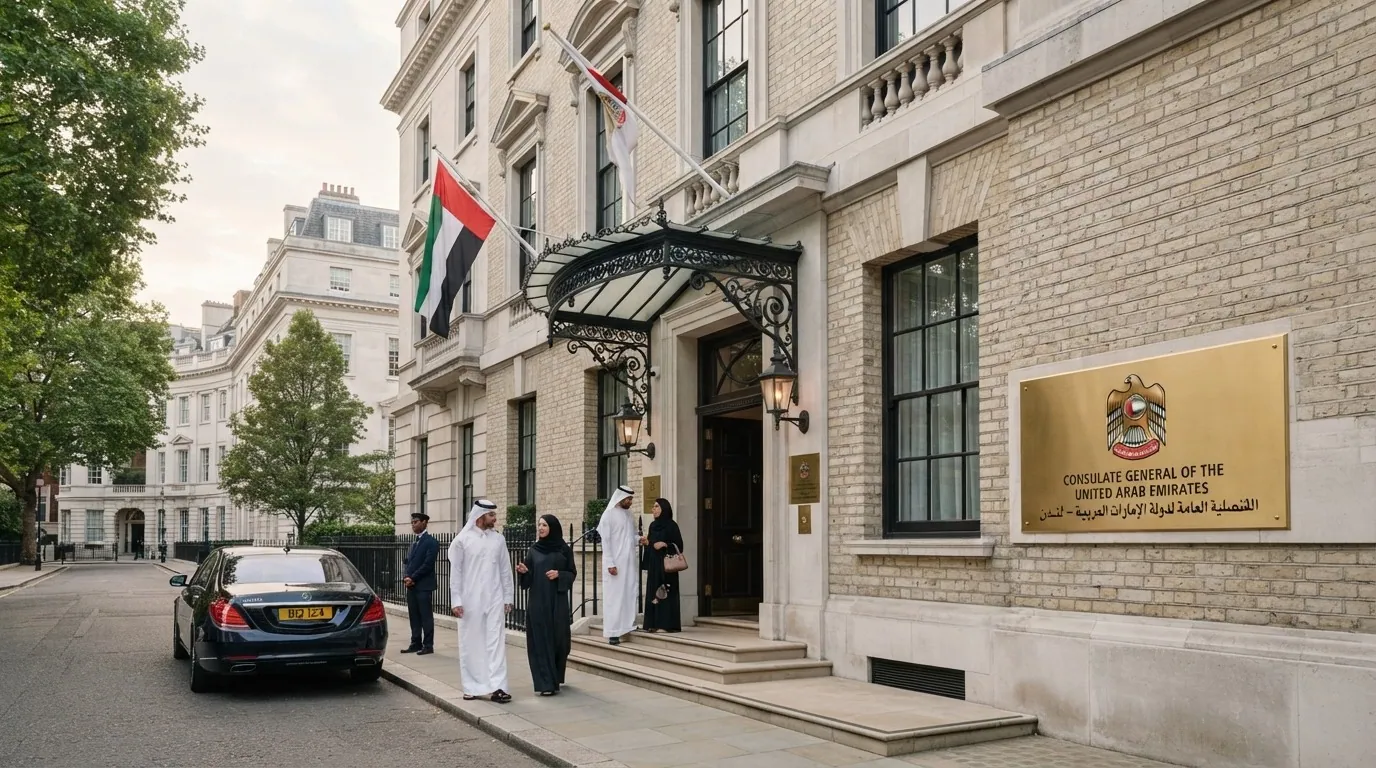
Quick Answer for Gulf Visitors
What is the difference between a Turkish embassy and a consulate? The embassy is the main mission in the capital and handles political representation, while the consulate sits in the major commercial cities and handles the everyday services: passports, attestations, and civil status.
When do I actually need the Turkish consulate? When legalizing an official document for use in Turkey, applying for a work or study visa, or losing your passport inside Turkey. Short tourism trips on a GCC passport do not involve a diplomatic mission at all.
How do I verify the consulate's address and phone number? Through the Turkish Ministry of Foreign Affairs portal only; it is the official reference updated the moment any mission detail changes.
When Do You Actually Need the Turkish Consulate?
The practical rule for Gulf travelers is simple: a tourist entering Turkey for a short stay needs neither the consulate nor the embassy in most cases, because GCC citizens enter visa-free for up to 90 days on a valid passport. We cover current entry conditions in detail in our travel to Turkey guide, and Saudi readers have a dedicated guide to the Turkey visa for Saudi citizens.
The consulate remains genuinely necessary in four situations: legalizing an official document (a birth, marriage, or commercial certificate) for use in Turkey; applying for work, study, or long-stay visas; issuing a formal power of attorney so a lawyer or relative can complete a transaction in Turkey while you are abroad; and finally serious emergencies while you are inside Turkey.
If you reside in a Gulf country with a non-GCC passport, you follow the rules of your own passport: e-visa eligibility varies by nationality, so check evisa.gov.tr first; eligible nationalities obtain the e-visa from home within 24 to 48 hours without visiting any mission, while special-category visas run through the consulate or an authorized visa center. Eligible residents benefit from an important practical rule: the e-visa generally requires a valid residence permit in your country of residence and a passport valid at least 60 days beyond your permitted stay (six months is a common airline safety margin), so check the conditions a month before your planned travel to escape seasonal pressure.
Do not forget the audience this guide matters to most: Gulf families traveling in summer. Document legalization and special-category visas should be completed well before departure, because a paper shortfall discovered late can mean booking a new appointment and waiting an extra week — enough to squeeze an entire summer itinerary.
Embassy vs Consulate: The Core Difference
The two concepts confuse many travelers, and mixing them up costs a visit to the wrong building. The embassy is the highest political representation in the capital, managing the relationship between the two states and offering consular services within limits. The consulate general serves citizens and residents in a specific city or region, concentrating on passports, civil status, and attestations. Here is the direct comparison:
| Element | Embassy | Consulate General |
|---|---|---|
| Location | the capital (Riyadh, Abu Dhabi, Doha) | major cities (Jeddah, Dubai) |
| Core mission | political representation, bilateral relations | direct consular services |
| Work and study visas | yes | yes within its territorial jurisdiction |
| Attestations and powers of attorney | yes | yes, and usually the busier office for them |
| Civil status for Turks | yes | yes, its specialty |
| Emergency assistance | yes | yes, and usually faster to reach |
| Political representation | yes | no |
The practical bottom line: if your transaction is paperwork about yourself, the nearest consulate is usually your destination; if it is exceptional or political, the embassy handles it. A territorial rule settles the confusion in the two Gulf states with two missions: in Saudi Arabia, the Jeddah consulate's district covers the west of the kingdom while other regions link to the Riyadh embassy; in the UAE, the Dubai consulate covers Dubai and the northern emirates while the Abu Dhabi embassy covers the capital and the western region. Knowing the jurisdiction before booking spares you canceling and rebooking at the correct mission.
Services the Turkish Consulate Provides
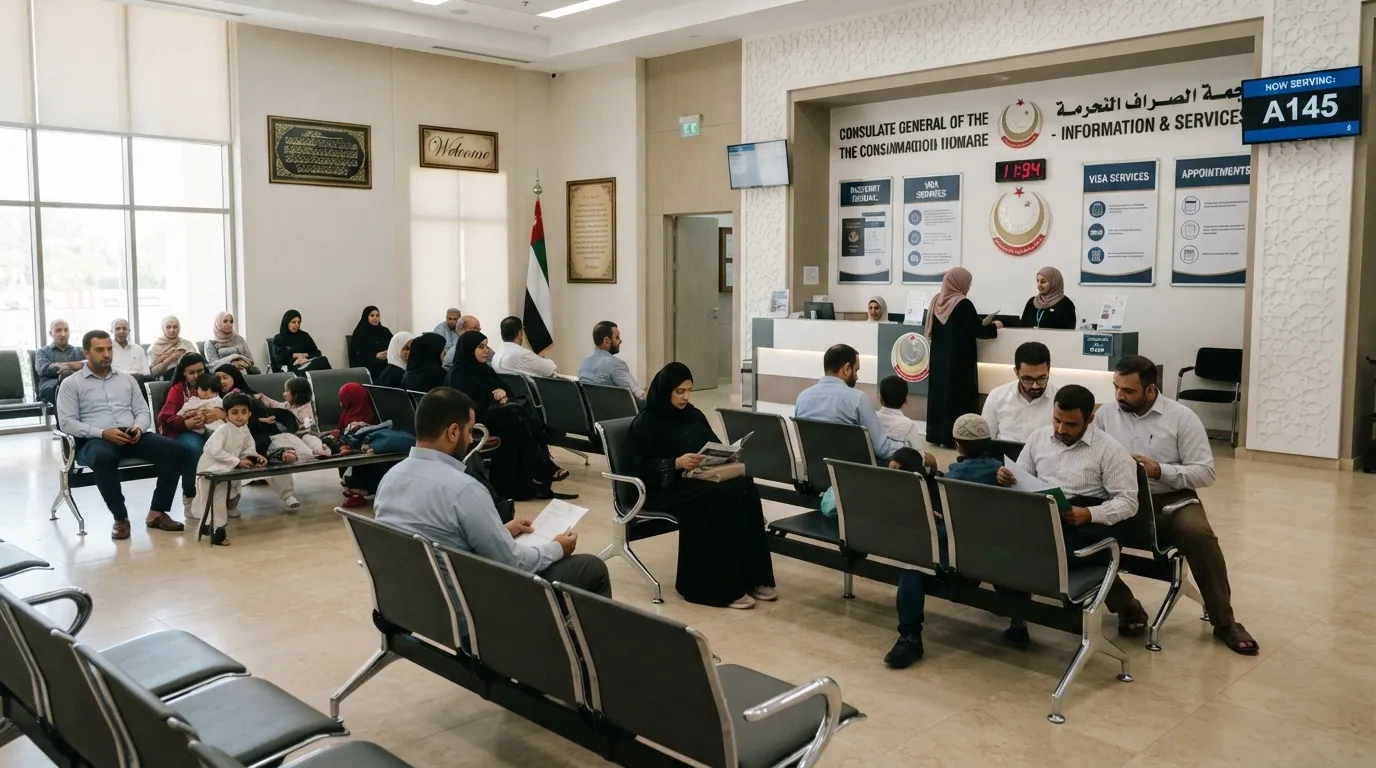
Turkish consulates in the Gulf operate on an electronic appointment system and offer Gulf visitors and residents the following services. Note that most require a complete paper file from the very first visit; a single missing document resets the transaction to the back of the queue even if the gap is one photo or an uncertified translation:
- Turkish passport renewal: for Turkish citizens residing in the host country, with delivery through the consulate itself.
- Civil status registration: births, marriages, and deaths of Turkish citizens abroad, with official documents issued locally.
- Official attestation: certifying translated certificates and contracts for use before Turkish authorities.
- Judicial powers of attorney: authorizing a lawyer, heir, or commercial agent to act legally inside Turkey.
- Student services: legalizing files of students admitted to Turkish universities and certifying transcripts.
- Consular assistance in crises: lost passports, major accidents, and detention, under international conventions.
Note that the tourist visa is not part of the daily services of Turkish consulates in the Gulf; it is either a direct exemption for GCC citizens or an e-visa for eligible nationalities, and only special categories fall back on a paper file through the consulate or the authorized visa center.
Turkish Missions Across the Gulf: A Quick Access Map
Turkey maintains at least one diplomatic mission in every Gulf state, and some states pair an embassy in the capital with a consulate general in the main commercial city. The table summarizes the standard layout:
| Country | City | Mission type | What matters to visitors |
|---|---|---|---|
| Saudi Arabia | Riyadh | embassy | special-category visas, attestations |
| Saudi Arabia | Jeddah | consulate general | passports, civil status |
| UAE | Abu Dhabi | embassy | political representation, legalization |
| UAE | Dubai | consulate general | Dubai and northern emirates services |
| Kuwait | Kuwait City | embassy | full consular services |
| Qatar | Doha | embassy | full consular services |
| Bahrain | Manama | embassy | attestations, passports |
| Oman | Muscat | embassy | visas, legalization |
Phone numbers and P.O. boxes change from time to time, so never copy them from a blog or a group chat; rely on the missions page of mfa.gov.tr, where each mission's data is published updated. For readers who need mission-specific detail, we maintain dedicated guides on contacting the Turkish embassy and the Turkish embassy in Kuwait.
Official Working Hours: Planning Your Visit
Turkish missions in the Gulf follow the official working week of the host state, so the first day of the week differs by location: missions in Saudi Arabia, Kuwait, Qatar, Bahrain, and Oman generally work Sunday to Thursday, while UAE-based missions work Monday to Friday. Reception hours usually concentrate in the morning between nine and one, with afternoons reserved for internal work and special appointments.
Missions close on both Turkish public holidays and the host country's holidays, including Turkish Republic Day on October 29 and both Eids, and working hours may shorten during Ramadan according to local practice. The golden rule before heading out: open the mission's page on the official portal the same day and confirm the announced reception hours.
Handling Emergencies Inside Turkey
Emergencies inside Turkey are the one situation where the consulate shifts from routine procedure to a genuine support line. Turkey's unified emergency number is 112, covering ambulance, police, and fire, with the police directly on 155. Here is the correct action map:
| Situation | The correct step |
|---|---|
| Lost passport | police report on 155, then contact your country's consulate in Istanbul or Ankara |
| Serious traffic accident | call 112 first, then inform your consulate |
| Theft of money or documents | immediate police report, then the consulate for a travel document |
| Detention | explicitly request that the consulate be informed — a right protected by law |
| Lost bank card | call your bank before anyone else |
| Medical emergency | 112 directly; the consulate helps coordinate with the hospital |
Save your country's consulate number and the Turkish mission's email in every family member's phone before departure; one minute of calm searching beats ten minutes of panic. One detail that matters practically: the Turkish police report comes with a reference number, and that number is the first thing the consulate asks for when following up, so photograph it or write it down before leaving the station. Frequent travelers should also know that some Gulf missions in Turkey offer electronic traveler registration, which makes it easier to reach you if a general emergency affects the region you are visiting.
What the Consulate Cannot Do
It is important to calibrate expectations before a long drive: a consulate is an official institution bound by laws and conventions, not a travel agency. The consulate does not book flights or hotels, does not intervene in civil or commercial disputes between individuals, does not lend money or pay fees on a visitor's behalf, and does not overturn entry bans or removal decisions taken by the host state's authorities. It also cannot accelerate Turkish government procedures such as residence permits; its role there is limited to follow-up and advice.
Steps for a Successful Appointment
- Pin down the exact service from the list published on the consulate's page before calling or booking.
- Book at least two weeks ahead in summer; slots fill quickly between May and August.
- Prepare originals and copies: passport, residence card, required documents with certified translations where needed.
- Arrive fifteen minutes before your slot with your booking number; a short delay can cancel the appointment at some missions.
- Request an official receipt for any fee you pay; you will need it for follow-up or appeals later.
What Happens Inside the Consulate: The Visit Sequence
A typical visit passes through four predictable stations. At the entrance, security verifies your appointment number and identity, so arrive with your passport or residence card at hand. In the waiting hall your number appears on the screen or is called out, and waits range from ten minutes to over an hour depending on the day's crowd; midweek mornings are calmer than Mondays and Thursdays. At the counter, the officer checks originals against copies and signs off the application, and may request a small correction you can complete on the spot if you came prepared. Finally you receive a receipt with a tracking number, and the finished document is delivered later or followed online.
Keep the visit short by preparing intelligently: a clearly tabbed file, backup copies of every sheet, and a single blue pen. Families processing a child's document need at least one parent present, and some services require both — confirm the condition before splitting the day's tasks.
A Practical Comparison: Electronic Channels vs a Personal Visit
| Transaction | Fastest channel | Usual duration | Visit needed? |
|---|---|---|---|
| Tourist e-visa | evisa.gov.tr | 24 to 48 hours | no |
| General inquiry | the mission's official email | 1 to 3 business days | no |
| Booking an appointment | the electronic appointment system | immediate | no |
| Document attestation | the consulate | 1 to 5 business days | yes |
| Formal power of attorney | the consulate in person | 1 to 3 business days | yes, presence mandatory |
The general direction in 2026 is clear: whatever can be completed electronically is completed electronically, and the personal visit is reserved for transactions that require a live signature or inspection of originals. Always start from the digital channel and save yourself a full morning.
Practical Info for Gulf Visitors
| Item | Detail |
|---|---|
| Official reference for missions | mfa.gov.tr |
| Turkish e-visa | evisa.gov.tr |
| Official tourism portal | GoTürkiye |
| Turkey emergencies | 112 unified, 155 police |
| Consular appointments | through the appointment system on the Foreign Ministry site |
| Peak-season planning | book two weeks ahead between May and August |
| Turkish currency and exchange rate | follow the official rate via the Turkish central bank |
| Your destination's weather before departure | Turkish meteorological service |
FAQ (12 Questions)
- What is the core difference between an embassy and a consulate? The embassy sits in the capital and represents the state politically; the consulate sits in major cities and handles passports, attestations, and civil status.
- Where do I find the correct Turkish consulate address and number? On the missions page of the Turkish Foreign Ministry, updated the moment anything changes officially.
- Does a GCC citizen need the consulate to visit Turkey? No; GCC citizens enter visa-free for up to 90 days — more details in our travel to Turkey guide.
- What do I do if I lose my passport inside Turkey? File a police report on 155 first, then contact your country's consulate in Istanbul or Ankara for a travel document.
- Does the consulate issue tourist visas? Mostly no; GCC citizens need no tourist visa at all, eligible nationalities use the e-visa via evisa.gov.tr, and work and study visas are what pass through the mission.
- How do I book a consulate appointment? Through the electronic appointment system published on the mission's page, and some services receive requests by official email.
- How long do consular procedures take? Between one day and a week for attestations and powers of attorney, and two to six weeks for study and work visas.
- Can someone complete the transaction on my behalf? Only for limited services; powers of attorney and passport issuance generally require personal presence, and services accepting proxy need a power of attorney signed beforehand before the consular officer.
- What is the best time to visit the consulate? The first hour of the morning reception window, and outside the summer peak if the transaction is not urgent; midweek is calmer than Monday and Thursday.
- Does the consulate offer out-of-hours emergency services? Yes, for critical cases, via the duty officer's number published on the mission's official page.
- I want to visit Turkey after finishing the paperwork — where do I start? Start by booking private airport transfers and tours early if you are traveling in summer, and reserve hotels directly or through a trusted booking platform with free cancellation.
Conclusion
The Turkish consulate is not a mandatory stop on a short tourist trip; it is the official body you turn to when there is a real need: an attestation, a special-category visa, or an emergency inside Turkey. Save the missions page on mfa.gov.tr and the emergency number 112 in your phone, and use the electronic channels before any personal visit. Once the paperwork is done, turn your attention to what genuinely deserves planning: the trip itself.
Sources
Related travel guides

Turkish Embassy in Kuwait: 24-hour switchboard and emergency line, Al-Surra location, consular morning hours, and when you actually need to go.
Turkish Consulate in Dubai 2026: address at the World Trade Centre, contacts and hours, when to use the consulate or the Abu Dhabi embassy, and visa steps for residents.
Turkish Embassy Qatar 2026: address, phone numbers, working hours, services, and how to reach the embassy from Doha.
Ready to explore Turkey?
Voyago brings together airport transfers, guided tours and car rental to help you plan the perfect trip to Turkey.