
Quick Answer for Gulf Visitors
Is Pamukkale worth the trip? Unhesitatingly, yes. Pamukkale is a UNESCO World Heritage site that pairs luminous white travertine terraces found nowhere else with a complete Roman city built directly above them. You can cover it on one long day trip from Istanbul, or — far better with a family — over two relaxed days with a night in a thermal hotel.
What does it cost? The combined ticket for the terraces and Hierapolis is roughly TRY 200 per person in 2026, the Cleopatra Pool is a separate add-on at about TRY 130, and the domestic flight from Istanbul to Denizli runs USD 60-150 each way if you book early.
When is the best time? May and October are the sweet spot: 20-28 degrees, thinner crowds. July and August climb to 35-42 degrees with peak tour-bus traffic, while winter is cold but dramatically cheaper and quieter.
Why Pamukkale Deserves Your Days
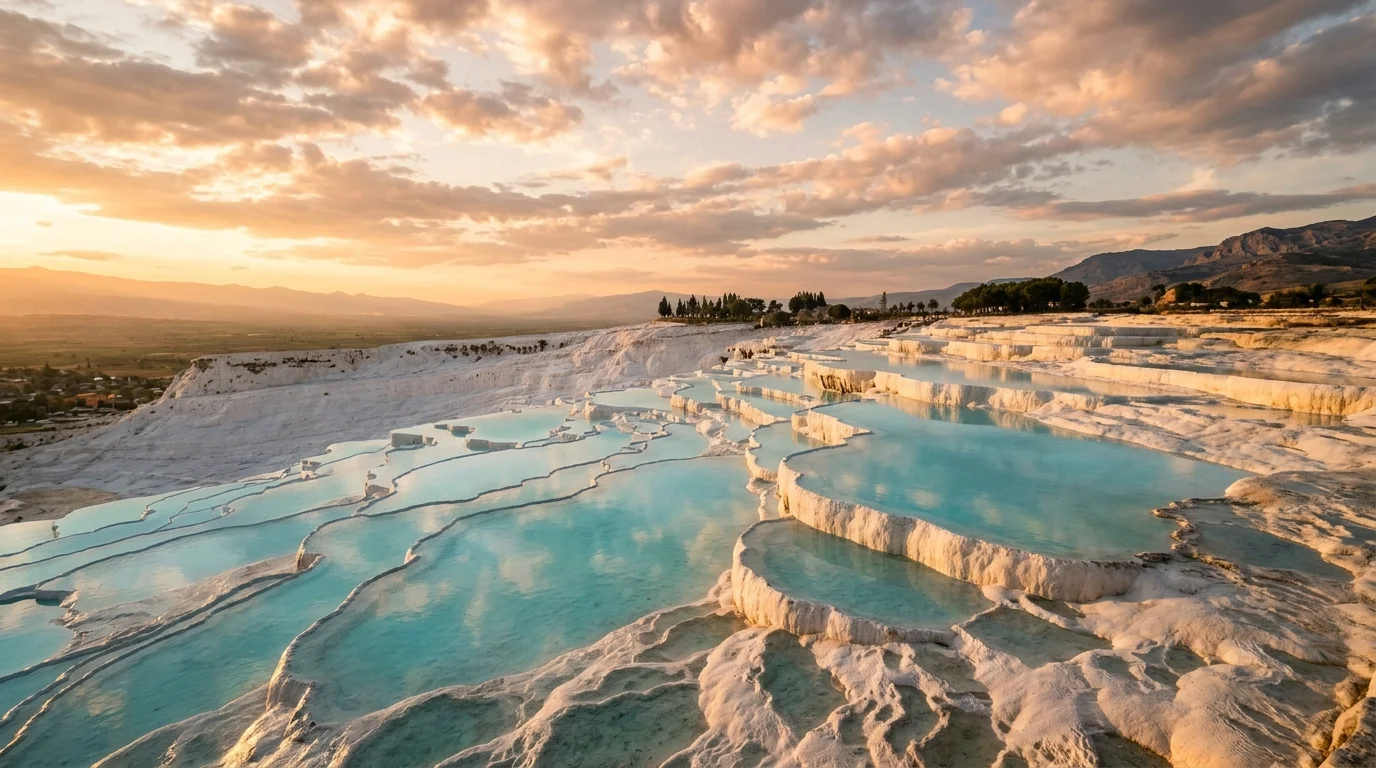
The secret of Pamukkale is thermal water rising from the ground loaded with calcium, which precipitates onto the hillside and slowly builds shelf after shelf of white basins holding turquoise pools. The formation has been growing for thousands of years and is still alive — it visibly changes between seasons — which is why UNESCO lists it together with the ancient city of Hierapolis above it. In Roman times this was a spa town: patients travelled across the empire to bathe in its sulphurous warm springs.
For a Gulf family, Pamukkale bundles three rare experiences in one walkable site: a natural spectacle made for photography, a full ancient city from a 12,000-seat theatre to one of the largest surviving necropolises in Asia Minor, and a genuine thermal soak among fallen Roman columns. The region is conservative and unhurried, and walking the terraces barefoot early in the morning before the tour buses arrive is an experience that works equally for grandparents and children.
Getting There: Flights, Trains and Cars
The aerial gateway is Denizli Airport (DNZ), about one hour from Istanbul followed by a 45-60 minute drive to the site. Several daily flights connect the cities, with indicative fares of USD 60-150 each way when booked ahead. From the airport a pre-booked private transfer is the most family-friendly option: a fixed price known before you fly and a driver waiting with your name.
| Method | Route | Indicative price | Duration |
|---|---|---|---|
| Domestic flight | Istanbul to Denizli | USD 60-150 | 1 h flight + 1 h car |
| High-speed train + bus | Istanbul to Denizli | USD 30-50 | 5-6 hours |
| Private car with driver | Istanbul to Pamukkale | USD 200-300 | 5-6 hours |
| Intercity coach | Istanbul to Denizli | USD 20-35 | 6-7 hours |
Families building a wider western-Turkey route can chain Pamukkale with Izmir and Ephesus by car; the classic combination, though, is a few Istanbul days first — see our Istanbul hotel booking guide. Before anything else, confirm your entry status via our Turkey visa guide for Saudis and the current Turkey entry rules.
2026 Ticket Prices and Entry Rules
| Area | Price | Note |
|---|---|---|
| Terraces + Hierapolis (combined) | ~TRY 200 | Includes museum, theatre, necropolis |
| Cleopatra Pool (Antique Pool) | ~TRY 130 extra | Separate ticket inside the site |
| Hierapolis Archaeology Museum | Included | Within the combined ticket |
| Parking | TRY 30-60 | Varies by lot and season |
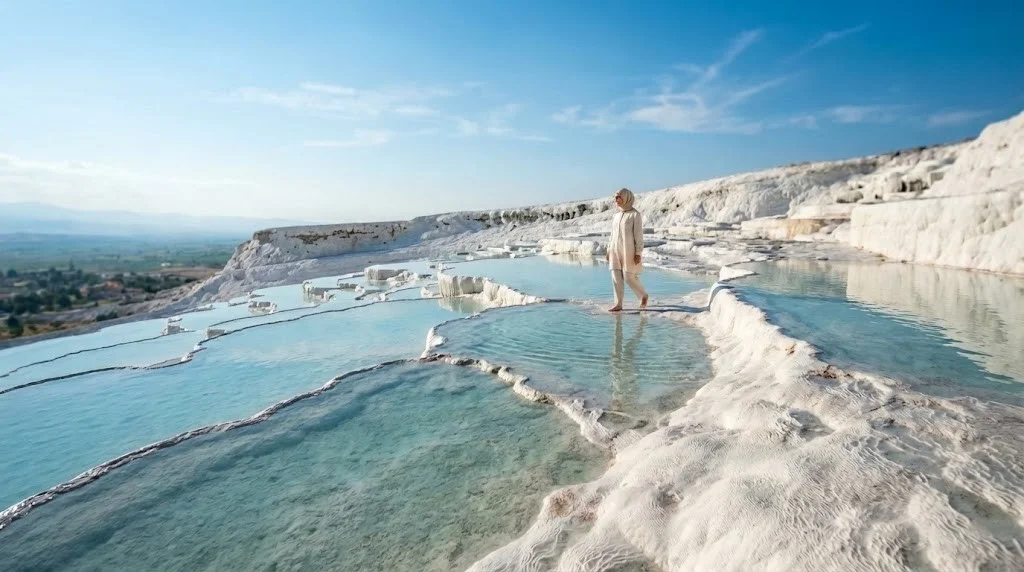
Practical notes: walking the terraces themselves is barefoot-only — shoes come off at the gate and travel in your hand — the site opens early and closes at dusk with longer summer hours, and current official tariffs are published by the Turkish Ministry of Culture museums directorate, worth a check before you travel since prices are revised annually. The foreigner Müzekart covers the site and pays for itself on any multi-museum itinerary.
The Main Sights, Ranked by Time
The White Terraces (2-3 hours)
The southern entrance delivers the postcard moment: you descend barefoot along a water channel spilling over the white shelves, the travertine soft underfoot and the water warm under the sun. The best light for photographs is before 10 a.m. and at sunset, when the white turns gold. The section open for walking rotates between seasons to protect the formation, so ask at the gate which route is open on your day.
Cleopatra Pool (1 hour)
A wide thermal basin held at about 36 degrees year-round, where you swim among the toppled columns of a temple felled by an earthquake. Legend credits Cleopatra herself; fact is that the mineral water is genuinely soothing for joints and rewards a long, lazy soak. Bring swimwear and a cap; lockers and changing rooms are inside the site.
Hierapolis Ancient City (2-3 hours)
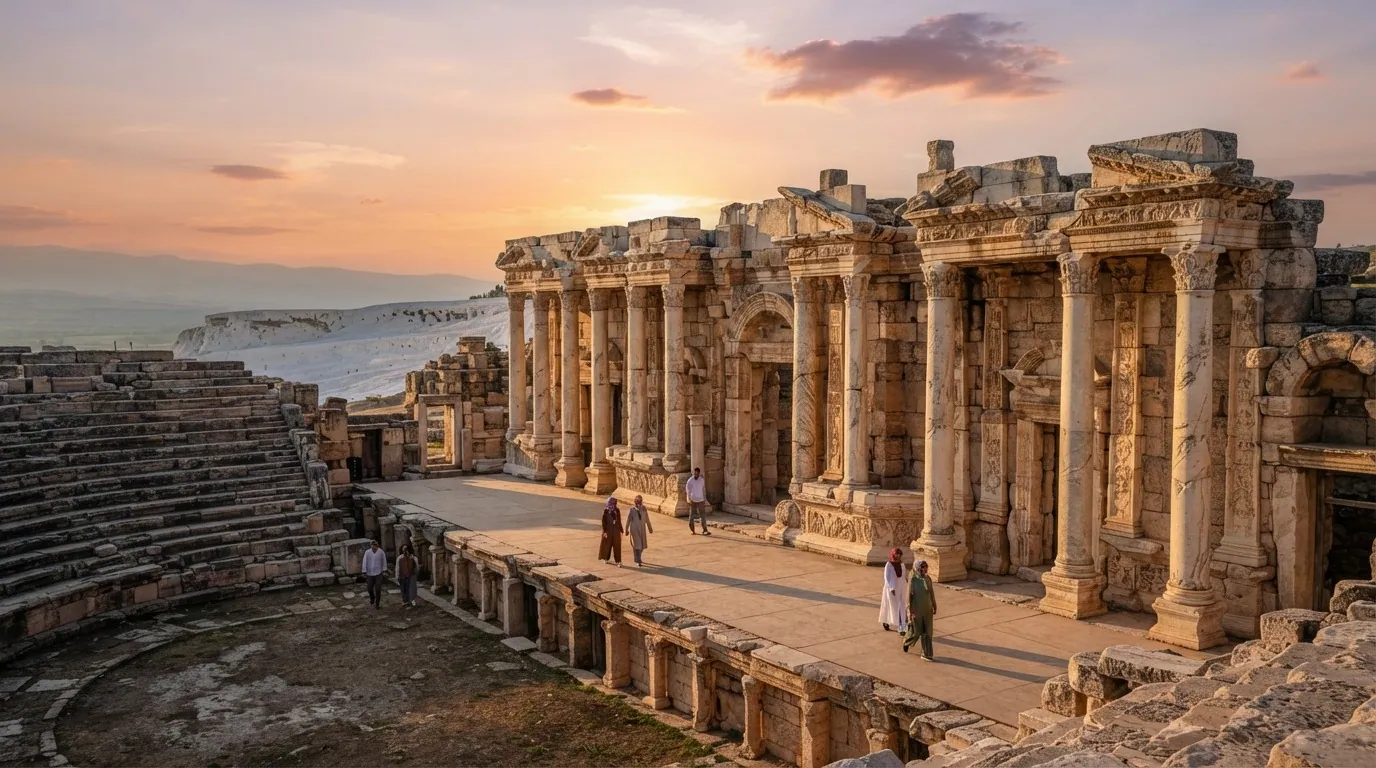
Above the terraces spreads an entire Roman city: a theatre carved in remarkable detail that once seated 12-15,000 spectators and still surveys the whole valley from its top row; a necropolis counted among the largest surviving ancient cemeteries in Asia Minor, with hundreds of decorated tombs; the Temple of Apollo; the remains of St. Philip's Martyrion, once a Byzantine pilgrimage destination; and Roman baths whose halls now house the museum. Shade is scarce — carry water and hats in summer.
A Full-Day Plan That Works for Families
- 7:00-9:00 Arrive before the buses: descend the terraces barefoot and shoot in morning light.
- 9:00-10:30 Swim in the Cleopatra Pool before the sun peaks.
- 10:30-13:00 Tour Hierapolis: theatre, then necropolis, then museum.
- 13:00-15:00 Lunch in Pamukkale village overlooking the white cliffs.
- 15:00-17:00 A second golden-hour photo corner, or — with two nights — a sunrise hot-air balloon over the terraces the next morning.
Organised one-day tours from Istanbul exist but are tiring (dawn flight, midnight return). With children, take at least one night on the ground; guided options are easy to arrange through our tours page.
Hot-Air Ballooning and the Red Springs of Karahayıt
Two add-ons turn a good Pamukkale trip into a great one. Sunrise hot-air balloon flights lift off from the village before dawn and float 150-300 metres over the white terraces, with steam rising off the warm water as the sun comes up. Flights last 45-60 minutes, cost roughly EUR 150-200 per person including hotel pickup, and must be pre-booked in season; the calmest flying windows are April-June and September-November, while winter departures are sometimes grounded for days by fog and wind. Because launch is at first light, ballooning suits travellers already sleeping in a thermal hotel rather than day-trippers racing back to an evening flight.
Five kilometres north, the spa town of Karahayıt is Pamukkale's iron-rich sibling: its springs stain the rocks deep red, locals fill bottles at the free public fountain for the water's digestive benefits, and its public thermal baths are far less crowded than anything in Pamukkale village — a relaxed two-hour stop on departure day, on the way to Denizli Airport.
One Long Day or an Overnight Stay? A Practical Comparison
| Criterion | Day trip from Istanbul | One or two nights on site |
|---|---|---|
| Total cost | Lower on paper (return flights) | Higher, but better value per hour |
| Fatigue | High; a very long day with kids | Low; relaxed family pace |
| Terraces | Two hours at peak crowd | Early morning and sunset in quiet |
| Thermal pools | One quick swim | Evening and morning soaks |
| Photography | One lighting window | Sunrise and sunset both |
The practical verdict: with two weeks in Turkey, give Pamukkale two nights. On a short trip, the day visit still shows you everything — it just never lets you feel the site's calm evening character.
Where to Stay: The Thermal Hotels
| Segment | Examples | Nightly rate |
|---|---|---|
| Thermal 5-star | Pam Thermal, Colossae | USD 120-300 |
| Thermal 4-star | Melran, Richmond | USD 80-200 |
| Family boutique | Hal-Tur, Adempira | USD 60-120 |
| Budget | Otel Doga, Akkale | USD 30-70 |
The headline advantage of the local thermal hotels is private pools filled with the same Pamukkale water: you soak in the evening and again at dawn with no queues, and several properties look straight onto the terraces. Book early for May and October through the hotels page.
The Best Time to Visit
| Period | Weather | Crowds | Prices |
|---|---|---|---|
| April-June | 20-30°C | Medium | Medium |
| July-August | 35-42°C | Very high | High |
| September-November | 18-28°C | Low | Low |
| December-February | 5-15°C | Very low | Lowest |
May and October win outright. Winter has its own magic: the water is warm year-round, steam rises off the pools into the cold air, and hotel rates drop by roughly half.
Food and Halal Dining Around Denizli
Denizli is an ordinary conservative Turkish town, so halal is the default everywhere: the local Denizli kebab, the famous Denizli breed of chicken, lentil and okra soups, and tahini-molasses desserts. A full meal in a local restaurant runs TRY 150-350 per person; the tourist restaurants in Pamukkale village cost a little more but are the easiest with children. Carry plenty of water inside the site in summer — shade is scarce.
Practical Info for Gulf Visitors
| Info | Detail |
|---|---|
| Access | Denizli Airport then 45-60 min; a private transfer is easiest |
| Season | May and October best; winter cheapest |
| Footwear | Barefoot on the terraces; swimwear for the pool |
| Sun | Hat and sunscreen essential in summer |
| Currency | Turkish lira; exchange rates in town beat the airport |
| Time zone | UTC+3, same as Saudi Arabia and Qatar |
| Prayer | Mosques in the village and Denizli; qibla directions on request |
| Visa | Gulf exemption of 90 days, or e-visa |
| Official reference | UNESCO: Hierapolis-Pamukkale |
FAQ
- How do I get to Pamukkale from Istanbul? Fly to Denizli (1 hour) then a 45-60 minute drive, or take the high-speed train and a bus (5-6 hours), or a organised air day-tour.
- What does entry cost in 2026? The combined ticket is about TRY 200; the Cleopatra Pool adds about TRY 130.
- Is Cleopatra Pool included in the ticket? No — it is a separate ticket bought inside the site.
- Can I wear shoes on the terraces? No. Barefoot walking is mandatory to protect the travertine; carry your shoes.
- Can you swim on the terraces? Only walking in the water channel; swimming is in the Cleopatra Pool and the antique pool.
- What is the best season? May and October for mild weather and fewer crowds.
- How many hours does a visit need? Half a day for the terraces and pool, half a day for Hierapolis; a full day is ideal.
- How warm is the thermal water? About 36 degrees Celsius year-round.
- Is Pamukkale suitable for children? Yes — the small basins and the thermal pool delight children, with steady supervision on the water channels.
- Is the food halal in the area? Yes; Denizli is a Muslim-majority town and halal is the default in every restaurant.
- Can Pamukkale be combined with other cities? Yes — Izmir and Ephesus westward in a 3-4 day car route, or Istanbul by air.
- Is a night visit possible? The site is fundamentally a daytime attraction; lighting is limited, so aim for golden hour before closing instead.
Conclusion
Pamukkale gives a Gulf family three trips inside one: a natural white wonder that exists nowhere else, a complete Roman city above it, and thermal waters people have healed in for two thousand years. Plan a night or two in a thermal hotel, walk the terraces barefoot at dawn, give the theatre and necropolis their full time, and come home with photographs nobody else on your feed will have.
Pamukkale and Denizli hotels · Private transfer from Denizli Airport · Guided tours
Related travel guides
Ayder highlands 5-day itinerary 2026: a day-by-day plan for Arab families covering thermal pools, valleys, and Trabzon.
Ayder Trabzon distance 5-day itinerary 2026: a day-by-day plan for Arab families covering the transfer route.
Ayder Turkey weather 2026: monthly averages, rain patterns, best months to visit, and packing tips for Gulf families.
Ready to explore Turkey?
Voyago brings together hotels, tours and transfers to help you plan the perfect trip to Turkey.