
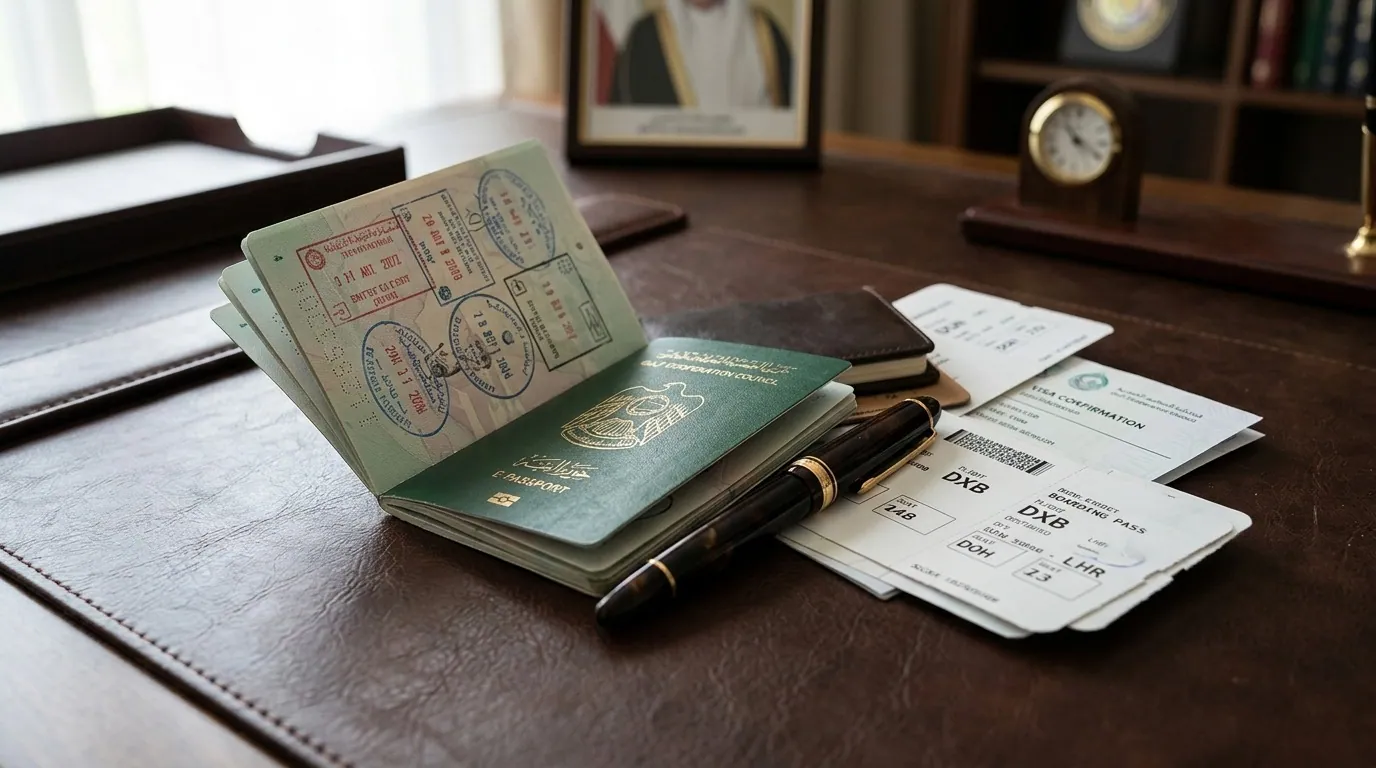
Quick Answer for Gulf Visitors
Is there a special "travel permit" for Turkey? — No; the precise word is "visa" or "waiver." Short tourism needs no additional permit of any kind.
What does a Gulf citizen need? — Nothing at all: a passport valid 150 days, and direct entry for up to ninety days.
And Gulf residents? — By nationality: an e-visa within minutes for eligible ones, or a sticker visa from an application center for the rest.
When is a "residence permit" actually required? — Only for stays beyond ninety days, or for work and study — a completely different track from tourism.
Fixing the Concept First: "Permit" or "Visa"?
Many Gulf searchers ask about a "Turkey travel permit," importing the concept from other countries' systems; the truth is that Turkey imposes no travel permit in the permit sense on any visitor. The system runs on three graduated circles: full waiver for GCC citizens and a set of countries, the e-visa for a long list of nationalities including most Gulf residents, and the sticker visa for the remaining nationalities through embassies and application centers.
A fourth, entirely separate circle is the "residence permit" (short or long term) for extended stays, work, study, and long medical treatment — unrelated to a one-or-two-week visitor. Mixing these two circles is the source of most circulating misinformation, and separating them is the backbone of this guide; every entry category is detailed in is travel to Turkey allowed.
The Three Permission Circles in Detail
Circle One: The Waiver (No Permission at All)
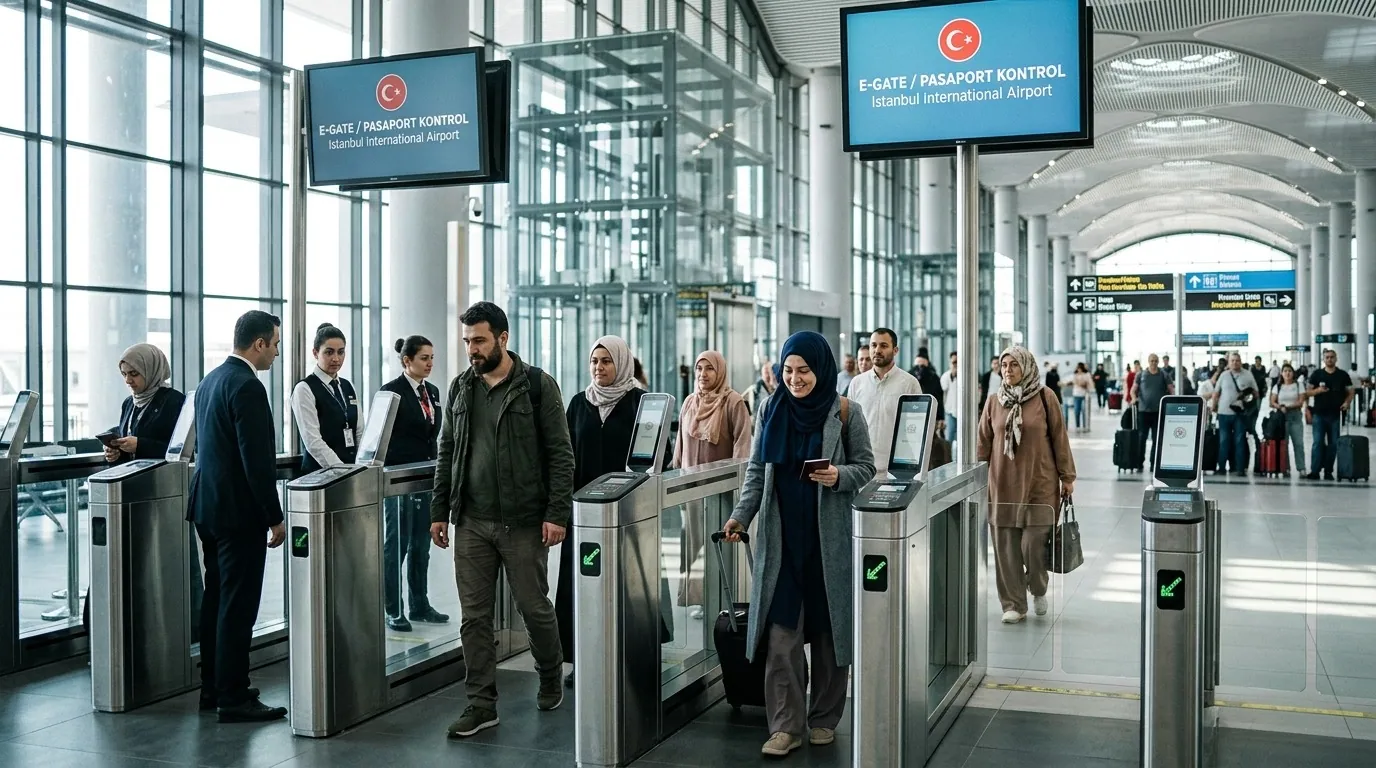
Citizens of Saudi Arabia, the UAE, Kuwait, Qatar, Bahrain, and Oman enter without any prior permission for up to ninety days per 180-day window. What gets stamped on arrival is a mere entry record, not a permit. The waiver covers tourism, family visits, and short unpaid business.
Circle Two: The E-Visa
For hundreds of nationalities including most of those residing in the Gulf: apply online through the official portal with passport data, insurance, and a return ticket; issuance takes minutes to twenty-four hours, and stays are usually thirty days. Step-by-step details are in the official visa website guide.
Circle Three: The Sticker Visa
For non-eligible nationalities: an appointment at an application center or embassy, a full document file, and a 7-15 working-day processing window. Center locations and booking are covered in the visa application centers guide, and for Kuwait specifically the Turkey visa center in Kuwait.
Comparison of the Three Circles and Their Rules
| Criteria | Waiver | E-visa | Sticker visa |
|---|---|---|---|
| Who | GCC citizens and peers | Eligible nationalities | Remaining nationalities |
| Preparation effort | None | 10 minutes online | Appointment and full file |
| Issuance time | Instant on arrival | Minutes to 24 hours | 7-15 working days |
| Stay length | Up to 90 days | Usually 30 days | Depends on type |
| Multiple entries | Yes | Depends on nationality | Depends on type |
| Fees | Free | $50-60 | Roughly $80-120 |
When Does a "Residence Permit" Truly Become Necessary?
If your stay exceeds ninety days within the 180-day window, or you intend to work, study, undergo extended treatment, or join family, you move from the visitor circle to the resident circle. The short-term residence permit is filed through the government portal before your legal window closes, and requires a local address, a lease, and local health insurance. The critical note: a residence permit does not automatically grant work rights; the work permit is a fourth, independent procedure usually handled by the employer.
Common Mistakes That Cause Real Delays
Mistake one: relying on the Gulf residence card instead of the national passport for the e-visa; the visa is issued only against the passport you will fly with. Mistake two: one wrong character in passport data; the system rejects at the gate, not at application. Mistake three: planning an "exit-and-re-enter" run to reset the ninety days; border officers count the rolling window and may refuse tightly repeated entries. Mistake four: working on a short "unpaid" business visit; any paid activity requires a work permit, even remote work for a Turkish entity.
Practical Tips for Gulf Visitors
Identify your circle before any booking: a citizen prepares nothing, an eligible resident files the e-visa a week ahead, and a non-eligible applicant assembles the paper file a month ahead. Keep paper copies of everything, including the entry card. Avoid intermediary sites selling "application services" at multiples of the fee; the official portal is the only safe channel. First-time trip planners can complete the picture with the complete Turkey guide and Turkey travel requirements, and citizen-specific details sit in Turkey visa for Saudi citizens and Turkey visa for UAE citizens.
Practical Info for Gulf Visitors
| Item | Details | Note |
|---|---|---|
| Special tourism permit | Does not exist | What applies: visa or waiver |
| Passport validity | 150 days from entry | Check before booking |
| Gulf waiver | 90 days per 180 | Tourism, visits, short business |
| E-visa | evisa.gov.tr only | Avoid intermediary sites |
| Residence permit | Beyond 90 days only | Via the government portal |
| Work permit | Independent procedure | Employer usually handles it |
| Health insurance | Recommended for visitors | Mandatory for residence applicants |
| Emergencies | 112 | Police and ambulance |
FAQ (12 Questions)
- Do I need a special travel permit for a tourist visit in 2026?
No; nothing called a travel permit exists for tourism. What applies is the waiver if you are a GCC citizen, or the e-visa or sticker visa depending on nationality.
- What is the difference between a visa and a residence permit?
A visa allows entry and short visits; a residence permit allows long stays and is tied to an address and local insurance — never required of a visitor.
- Can I work in Turkey on a tourist visa?
No; any paid work requires a work permit arranged by the Turkish employer, and working on a visit is a violation that risks fines and entry bans.
- How many times can I enter and exit on the Gulf waiver?
The rule is 90 days per 180-day window; tightly repeated entries may raise officer questions, so plan departures around the rolling window, not an imaginary reset.
- Does the e-visa cover work or study?
No; it covers tourism, visits, and short unpaid business, while study requires a student visa with its linked residence procedure.
- I reside in Kuwait with a non-Gulf nationality — where do I start?
Check your e-visa eligibility on the official portal by nationality and passport; if not eligible, your track is the sticker visa through the application center as detailed in the Kuwait guide.
- Do children need separate permission or visas?
Yes; every child needs an individual passport and, where their category requires it, an individual visa — same procedure, filed against the child's passport.
- What if my Gulf residence expires before I travel?
The e-visa resident condition is a residence valid on the application and travel dates; an expired residence usually means losing the Gulf filing route and returning to your nationality's track.
- Can entry be refused despite a valid visa?
Very rarely, but the border may verify return tickets, lodging, and funds; a tidy file on your phone makes this possibility effectively vanish.
- Can I convert a tourist visit into residence from inside Turkey?
Possible for some categories via the government portal before expiry, but never guaranteed; if the plan is a long stay from the start, arrange residence from home.
- How often are e-visas refused, and why?
Refusals are rare and mostly data-entry errors: a wrong passport number, birth date, or double payment; match the passport characters exactly and it clears.
- Where is the official text for all of this?
The official visa portal, the foreign ministry, and the government portal; a practical link summary is in the official visa website guide.
Permit Categories in Detail
Full Visa Exemption (90 Days)
Covers citizens of 78 countries including the six GCC states and most Arab countries. Stay allowed is 90 days per visit, provided total stay does not exceed 90 days within any 180-day period. No pre-arrival procedure is needed, just a passport valid 6 months and one blank page. This exemption suits short tourism, family visits and business. To extend past 90 days, apply for a residence permit at the local immigration directorate.
E-Visa
Eligible nationalities (fully listed on evisa.gov.tr) get a multiple-entry visa valid 180 days from issue, allowing a 30 or 90-day stay per visit. Fees run $50-100, the application is fully online and takes 3-5 minutes. The visa is issued within 24 hours in 95% of cases. E-visa does not permit work, only tourism, business and trade-fair visits. You need a valid passport, an email address and a credit card.
Sticker Visa
Nationalities not eligible for exemption or e-visa need a sticker visa from the embassy or authorised visa centres. Categories: tourist, work, study, medical, family visit. Processing is 7-15 business days, fees run $50-200 by nationality and type. Files need a passport valid 6 months, a completed form, photos, hotel booking, flight ticket, bank statement and an employer letter or trade licence. Children need a separate file even if registered on a parent's passport.
Work Visa
Requires an employment contract from a Turkish company certified by the chamber of commerce and the Turkish ministry of labour. Processing is longer (4-8 weeks) because of multiple approvals. The employer pays specific fees and registers the worker in social security. The work visa is valid for one year and renewable, later converting into a residence permit. For Gulf residents of certain nationalities, Turkish recruitment agencies help find work opportunities and ease procedures.
Long-Stay Residence Permits
After 90 days of stay, you can apply for a residence permit (ikamet) at the local immigration directorate. Types: family, work, study, real-estate investment. Processing is 4-8 weeks and documents include a rental contract, health insurance, bank statement, photos and any document proving the reason for stay. The residence permit is renewed yearly and grants legal stay and work rights.
Extra Details on Visas and Permits
Required Passport
Validity 6 months from the travel date is the basic requirement. Some nationalities require longer validity. Damaged or torn passports may be refused. Losing the passport in Turkey requires a visit to the embassy to issue a temporary travel document. The Saudi embassy in Ankara and the Emirati embassy in Ankara provide emergency services to their citizens.
Humanitarian Cases
Refugees from certain nationalities can request protection in Turkey under international agreements. This procedure is separate from the standard visa and takes months. Syrians have a special status (temporary protection). Iraqis have similar situations. This file is complex and requires specialised legal assistance.
Travel Under 30 Days
Most exempt nationalities and the e-visa are enough for a short visit. The stay is 30 days per visit. No residence permit needed. Suited for tourism, family visits and business. To extend the stay, apply for a residence permit visa at the immigration directorate before the 90 days end.
Travel Between 30 and 90 Days
A residence permit is required from the local immigration directorate. Types: study (student at a Turkish university), work (employment contract), family (marriage to a Turkish citizen), investment (real estate purchase). The procedure is 4-8 weeks. Documents include a certified rental contract, health insurance, bank statement and any document proving the reason for stay.
Travel Over 90 Days
A residence visa is mandatory. Types available: work permit, study permit, family permit, investment permit or long-stay tourism permit. Work and study permits are the most common. Each permit is renewed yearly, and some lead to citizenship after years of stay. For Gulf residents wanting long stays, real estate investment ($250,000+) grants direct residence.
Travel for Special Purposes
- Medical treatment: special visa + Turkish hospital report
- Sports: sports visa + letter from club or federation
- Press: press visa + embassy accreditation
- Voluntary work: special visa + letter from accredited organisation
- Temporary work: temporary work visa + fixed-term contract
Conclusion
The "Turkey travel permit" of 2026 is a popular name for a simpler reality: a Gulf citizen prepares nothing at all, an eligible resident spends ten electronic minutes, a non-eligible applicant files an orderly paper file, and the residence permit belongs to another world of long stays only. Identify your circle, prepare one or two papers, and let the official portal be your only reference. Then start the real planning: accommodation matching your trip, private transfers from the airport, and tours that fill the days with what deserves them.
Sources
Related travel guides

Ayder highlands 5-day itinerary 2026: a day-by-day plan for Arab families covering thermal pools, valleys, and Trabzon.

Ayder Trabzon distance 5-day itinerary 2026: a day-by-day plan for Arab families covering the transfer route.

Ayder Turkey weather 2026: monthly averages, rain patterns, best months to visit, and packing tips for Gulf families.
Ready to explore Turkey?
Voyago brings together hotels, tours and transfers to help you plan the perfect trip to Turkey.