
Quick Answer
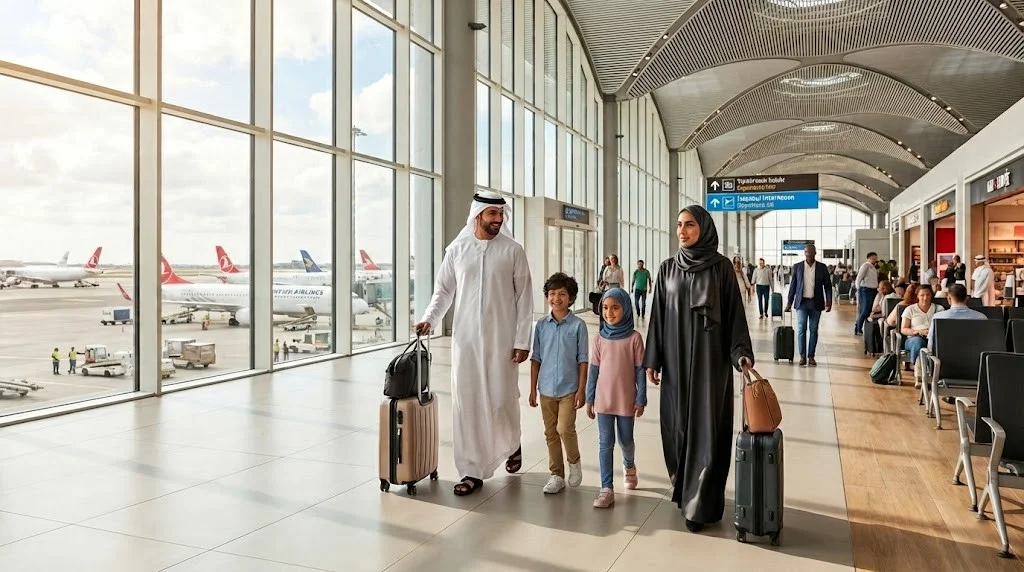
Is Turkey open for Gulf citizens? Yes — Turkey is fully open to all international visitors, including citizens of Saudi Arabia, the UAE, Qatar, Kuwait, Bahrain and Oman. There are no COVID-19 restrictions, no quarantine requirements, and no special travel bans in place. Flights operate normally year-round.
Entry at a glance: Saudi, Emirati, Qatari and Kuwaiti citizens enter visa-free for up to 90 days per 180 days. Bahraini and Oman citizens get an e-Visa online in minutes. No vaccination certificates, no PCR tests, no health declarations.
Best months for Gulf families: April–June and September — warm coastal weather, better flight prices, fewer crowds than peak July–August.
Search Turkey hotels on Voyago · Book your airport transfer · Browse Turkey tours
Turkey's Travel Status — Full Picture
Turkey lifted its final COVID-19 entry restrictions in mid-2023. As of 2026, its borders are fully open with no pandemic-era rules — no vaccination requirements, no PCR tests, no health declarations, and no quarantine for any nationality. The Turkish Ministry of Interior confirmed open-border status is permanent policy, not a temporary measure.
Gulf governments have not issued travel advisories against Turkey. Saudi Arabia's General Directorate of Passports, the UAE's Federal Authority for Identity and Citizenship, and Qatar's Ministry of Interior all maintain normal travel guidance for Turkey — no special warnings, no restrictions, no bans.
The only practical requirements are standard international travel documents: a valid passport, proof of return travel, and — for some nationalities — an e-Visa.
Who Can Enter Without a Visa?
| Nationality | Entry Type | Duration | Cost |
|---|---|---|---|
| Saudi Arabia | Visa-free (ordinary passport) | 90 days / 180 days | Free |
| UAE | Visa-free | 90 days / 180 days | Free |
| Qatar | Visa-free | 90 days / 180 days | Free |
| Kuwait | Visa-free | 90 days / 180 days | Free |
| Bahrain | e-Visa required | 30 days (tourist) | $50 |
| Oman | e-Visa required | 30 days (tourist) | $50 |
Bahraini and Omani citizens: Apply at evisa.gov.tr at least 3 days before departure. Approval is typically within 24 hours.
Diplomatic and Special Passports
All six Gulf nationalities holding diplomatic or special (official) passports also enter Turkey without a visa, under bilateral agreements. This covers government officials, diplomats, and travellers on official passports. Stays are also capped at 90 days per 180 days.
Current Entry Requirements
| Requirement | Detail |
|---|---|
| Passport validity | At least 6 months beyond your entry date |
| Return or onward ticket | Confirmed booking — printed or on your phone |
| Accommodation proof | Hotel booking reference |
| Financial means | ~$50 per day (rarely checked, but have evidence ready) |
| COVID-19 vaccination | Not required |
| PCR test | Not required |
| Health insurance | Strongly recommended, not mandatory |
| Customs declaration | Standard international limits apply |
At the border: Passport officers may ask for your hotel confirmation and return flight. Have both on your phone or printed — this is standard practice at Turkish border crossings. There is no separate "Gulf citizen" lane; all international arrivals use the same passport control.
Is Turkey Safe for Gulf Families?
Turkey welcomes millions of international tourists annually, including large numbers from the Gulf. Gulf families are a well-established tourist segment — Turkish hotels, resorts and tour operators are experienced in catering to halal requirements, prayer times, and family needs.
General safety: Standard tourist precautions apply. Pickpocketing occurs in Istanbul's bazaars, crowded tourist areas, and major transport hubs — keep valuables secure, use a money belt, and keep bags zipped. Violent crime against tourists is rare.
Political situation: Turkey is a stable democracy with regular elections. Check your government's travel advisory (the UK FCDO, US State Department, or your home country's foreign affairs ministry) for current guidance, as you would for any international destination.
Health infrastructure: Turkey has excellent private hospitals and clinics in Istanbul, Ankara, Izmir, Antalya, and major tourist areas. JCI-accredited hospitals in Istanbul (Memorial, Acıbadem, Medical Park) serve international patients in English and Arabic. Public hospitals provide free emergency care. Travel insurance covering private healthcare is strongly recommended — costs for private treatment without insurance can be significant.
Women travelling alone: Turkey is generally safe, but women may receive unwanted attention in some nightlife areas of Istanbul (such as Istiklal Street at night). Modest dress and confident body language help. Family and group travel is far more common among Gulf visitors and is straightforward.
LGBTQ+ travellers: Turkey does not criminalise same-sex activity, but it is not a socially liberal destination. Public displays of affection may attract attention. Istanbul's neighbourhoods of Akaretler, Cihangir and Sisli are more tolerant. This article does not target or exclude any traveller — Voyago serves all visitors to Turkey.
Local laws: Turkish law applies to all visitors. Halal food and alcohol-free venues are easy to find everywhere. Dress modestly in mosques. Photography of military installations is prohibited.
Best Time to Visit — Gulf Family Calendar
Turkey's seasons affect the experience significantly for Gulf visitors, who often travel in school holiday windows.
| Month | Istanbul | Antalya/Bodrum | Cappadocia | Price | Crowds |
|---|---|---|---|---|---|
| January | 5–12°C, rain | 10–15°C, mild | 0–8°C, snow possible | Lowest | Low |
| February | 6–13°C, rain | 11–16°C, mild | 1–10°C | Low | Low |
| March | 8–16°C, warming | 14–20°C, pleasant | 4–14°C | Rising | Medium |
| April | 12–20°C, mild | 17–23°C, pleasant | 8–18°C | Medium | Medium |
| May | 16–25°C, warm | 21–28°C, warm | 12–24°C | Medium-high | Rising |
| June | 20–29°C, hot | 26–34°C, hot | 17–30°C | High | High |
| July | 23–33°C, hot | 30–38°C, very hot | 19–33°C | Peak | Peak |
| August | 23–33°C, hot | 30–38°C, very hot | 19–33°C | Peak | Peak |
| September | 19–28°C, warm | 26–32°C, warm | 14–28°C | Falling | Medium |
| October | 14–22°C, mild | 21–27°C, pleasant | 8–20°C | Low-medium | Medium |
| November | 10–16°C, cool | 16–22°C, mild | 4–14°C | Low | Low |
| December | 7–12°C, cold | 12–17°C, mild | 0–8°C, snow possible | Low | Very low |
Best for Gulf families: Late April–early June and September. Beach weather is established, Istanbul is pleasant for sightseeing, and flight prices are well below peak. July–August offer the best beach conditions but higher costs and extreme heat (especially inland Cappadocia).
Practical Information for Gulf Visitors
A quick table summarising the key practical details before you book your trip:
| Item | Details |
|---|---|
| Currency | Turkish Lira (TRY) — cards accepted everywhere |
| Time zone | UTC+3 — identical to Saudi Arabia, Qatar and Kuwait |
| SIM card | Local SIM or data package available at the airport with your passport |
| Electricity | 220V, European Type F plug |
| Halal food | Widely available in all tourist cities |
| Emergency number | 112 for ambulance, police and fire |
| Tipping | 5–10% in restaurants; optional for transfers and hotels |
| Language | Turkish; English is common in tourist areas and Arabic in major hotels |
Prayer and Halal Food
Turkey is one of the most halal-friendly non-Muslim-majority destinations in the world:
- Halal food: Virtually all restaurants in tourist areas offer halal options; many explicitly label halal dishes. Pork is rare in Turkey's family and tourist restaurants. Meat is typically halal in most family restaurants.
- Prayer rooms: Mescit (prayer rooms) are available in all major airports (IST, SAW, AYT, DLM, BJV), most large hotels, major shopping malls (Mall of Istanbul, Kanyon, Istinye Park), and tourist sites near mosques.
- Ramadan: If your visit falls during Ramadan, most restaurants in tourist areas remain open. Hotel buffets continue to serve. Gulf visitors do not face any difficulty.
- Time zone: Turkey is UTC+3 — identical to Saudi Arabia, Qatar and Kuwait. No jet lag for visitors from these countries.
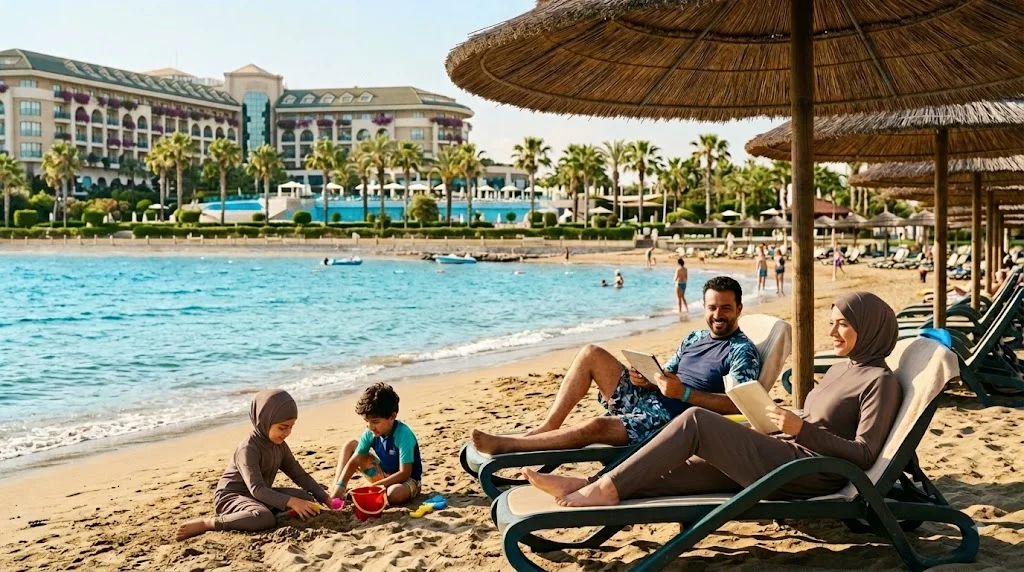
- Dress code: Modest dress is required for mosque visits (women: headscarf + covered arms and legs; men: long trousers). Beachwear is fine at resorts and beaches.
Budget Tiers for Gulf Families
Turkey accommodates all budgets. Here is a rough daily cost guide for a Gulf family of 4:
| Budget Level | Daily Cost (USD) | What's Included |
|---|---|---|
| Budget | $80–150 | Hostel/airbnb, döner meals, public transport |
| Mid-range | $150–350 | 3-4-star hotel, restaurant dinners, tours |
| Luxury | $350–800 | 5-star hotel, fine dining, private tours |
| Ultra-luxury | $800+ | Boutique hotel, private guiding, yacht charters |
Gulf travellers typically fall in the mid-range to luxury segment. The favourable TRY exchange rate makes high-end experiences significantly more affordable than in Saudi Arabia or the UAE.
Health and Medical Care
Turkey's private healthcare system is well-developed:
- Pharmacies (eczane): Available in every neighbourhood. Pharmacists speak basic English and can advise on minor ailments. Common medications are available over the counter.
- Hospitals: JCI-accredited hospitals in Istanbul (Memorial, Acıbadem Maslak, Medical Park Bahçelievler) have international patient departments with Arabic translators. Emergency care is available at public hospitals.
- Dental and cosmetic tourism: Turkey is a leading destination for dental work, hair transplants, and cosmetic surgery — often at 60–80% of Western prices. Tourists on visa-free entry can access consultations.
- Water: Tap water is safe to drink in Istanbul and most cities. Bottled water is widely available.
- Sun protection: The summer sun in Antalya and Bodrum can be intense. SPF 50+ sunscreen and UV-protective clothing are essential, especially for children.
What to Expect at Turkish Airports
All major Turkish airports operate at full international capacity:
- Istanbul Airport (IST): Turkey's largest hub, with Arabic signage in arrivals, multiple currency exchange counters, and SIM/eSIM booths before passport control. ATMs accept international cards. Prayer rooms are in the international arrivals hall.
- Sabiha Gökçen (SAW): Istanbul's Asian-side airport, often less crowded. Shuttle buses to Kadıköy and Taksim.
- Antalya (AYT): Designed for leisure travellers. Duty-free, car rental, and transfer desks are all in arrivals. Arabic-speaking staff at many hotel transfer desks.
- Dalaman (DLM) and Bodrum (BJV): Smaller airports with efficient seasonal operations. HAVAŞ shuttle buses run to major resort areas.
How to Prepare — Full Checklist
Documents (all nationalities)
- Passport valid for 6+ months beyond return date
- Return or onward flight confirmation
- Hotel booking (printed or digital)
- e-Visa printout (Bahrain and Oman citizens only)
- Travel insurance certificate (policy number and emergency contact)
Money
- Turkish Lira (TRY) for local shops and tips
- Credit/debit card for hotels, restaurants and larger purchases
- Some cash for bazaars, small vendors and tips
- Notify your bank of travel dates to avoid card blocks
Packing
- Comfortable walking shoes (Istanbul's cobblestones and bazaars)
- Light layers for evening (especially Istanbul in spring/autumn)
- Sun hat and SPF 50+ sunscreen (essential in summer)
- Modest clothing for mosque visits
- Universal power adapter (Type F, 220V)
- Personal prayer mat (optional — mescit available but can be busy)
- Small backpack for day trips
Technology
- Download offline Google Maps of Turkey before arrival
- Install the BiTaksi app for metered taxis in Istanbul
- Consider a Turkish eSIM or international roaming package
Comparison: Turkey vs Nearby European Alternatives
| Criterion | Turkey | Nearby European options |
|---|---|---|
| Open status | Fully open, no health restrictions | Varies by country and season |
| Gulf visa | Visa-free or e-visa for most nationalities | Schengen needs long appointments |
| Direct flights | Daily from most Gulf cities | Less frequent, often with stops |
| Cost | Flexible lira helps budgets | Pricier and more rigid |
The practical verdict: Turkey remains the closest affordable Europe for Gulf families. For deeper planning read is travel to Turkey allowed? and the travel to Turkey guide, and see the Istanbul hotel booking guide before locking dates.
FAQ
- Is Turkey open for tourists from the Gulf? Yes — fully open since mid-2023, with no COVID-19 restrictions, no quarantine, and no special permits required.
- Do I need a vaccine or PCR test? No — no vaccination certificates, tests, or health documents are required for entry.
- Do Saudi citizens need a visa for Turkey? No — Saudi ordinary passport holders enter visa-free for up to 90 days within any 180-day period. No application needed.
- Is Turkey safe to travel to right now? Turkey is a mainstream tourist destination. Use standard travel precautions as you would anywhere. Check your government's current travel advisory before departure.
- Are flights operating normally? Yes — THY and other carriers operate normal schedules. Seasonal routes to Antalya and Dalaman run April–October.
- Do I need travel insurance? It is recommended but not required. Medical costs in private hospitals can be significant without coverage.
- What if my passport expires in less than 6 months? You will be denied entry. Renew your passport before travelling — this is a universal rule.
- Can I overstay my 90 days? Overstaying incurs a fine of 50 TRY per day, payable at the airport on departure. Repeated or serious overstays may result in an entry ban.
- Are there travel bans on Gulf nationals? No — Saudi, Emirati, Qatari, Kuwaiti, Bahraini and Omani nationals face no current travel bans or restrictions on Turkey.
- Can I visit Turkey for medical treatment? Yes — Turkey is a leading medical tourism hub. A tourist visa or visa-free entry covers consultations and minor procedures. Major treatments may require a medical visa.
- Can I work on a tourist entry? No — working requires a work visa and a job offer from a registered Turkish employer.
- What happens if I lose my passport in Turkey? Report to the nearest police station for a theft report, then contact your embassy or consulate in Istanbul or Ankara for an emergency travel document.
Conclusion
Turkey is fully open for Gulf citizens in 2026 — no COVID-19 restrictions, no special permits, and no quarantine. Saudi, Emirati, Qatari and Kuwaiti citizens enter visa-free; Bahraini and Omani citizens get an e-Visa online in minutes. Turkey's combination of halal food, prayer facilities, warm hospitality, direct flights and a favourable exchange rate makes it one of the most comfortable and accessible international destinations for Gulf families. The best months are April–June and September, when weather is ideal and prices are below peak. Prepare your documents, book your hotel and transfer, and Turkey is waiting — open, safe and ready to welcome you.
Search Turkey hotels on Voyago · Book airport transfer · Browse Turkey tours for Gulf families
Sources
- Official Turkey e-Visa portal (evisa.gov.tr) — the official source for e-Visa applications for Bahraini and Omani citizens and for checking entry conditions by nationality.
- Turkish Ministry of Foreign Affairs (mfa.gov.tr) — updated visa-exemption lists and bilateral agreements between Turkey and the Gulf states.
- Turkish State Meteorological Service (mgm.gov.tr) — official weather data for planning the best months to visit.
- Istanbul Airport (istairport.com) — official information on arrivals halls, passenger facilities and airport prayer rooms.
Related travel guides
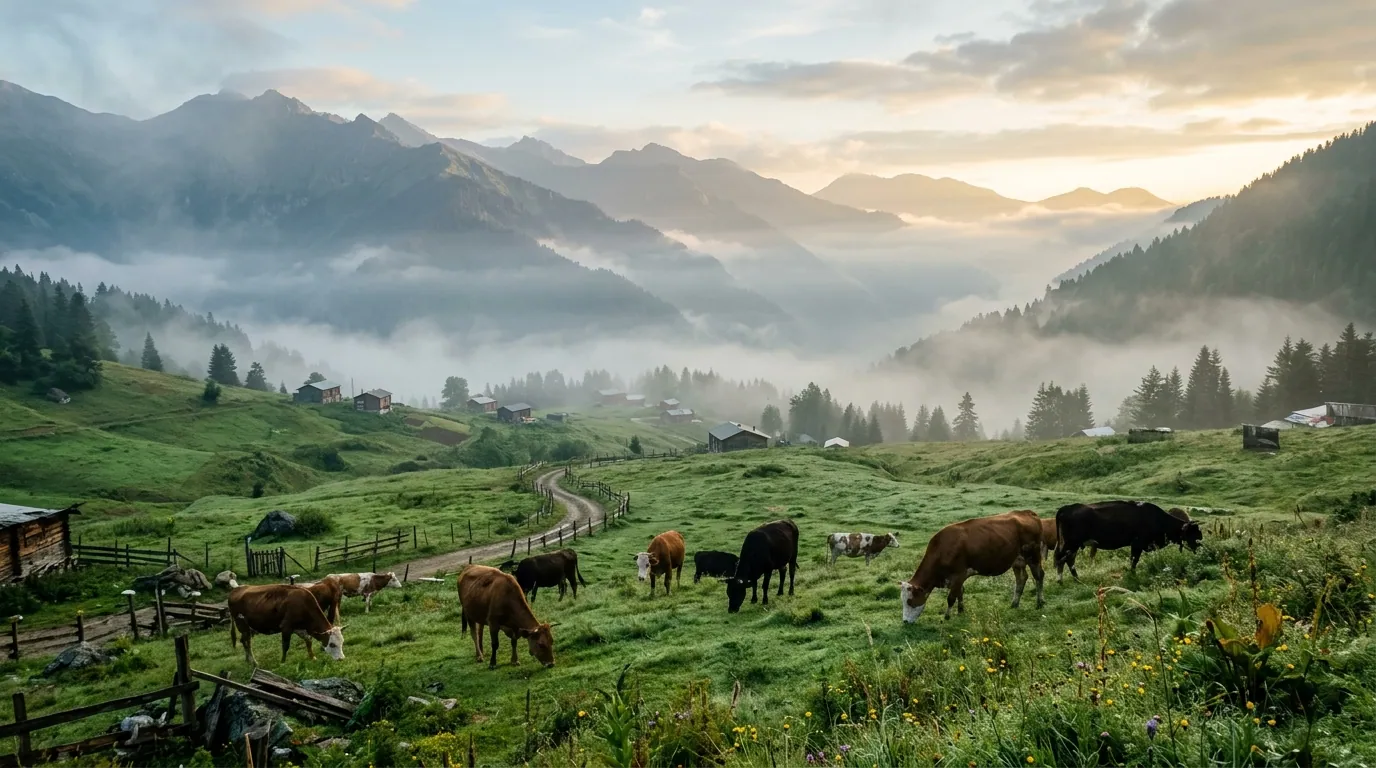
Ayder highlands 5-day itinerary 2026: a day-by-day plan for Arab families covering thermal pools, valleys, and Trabzon.
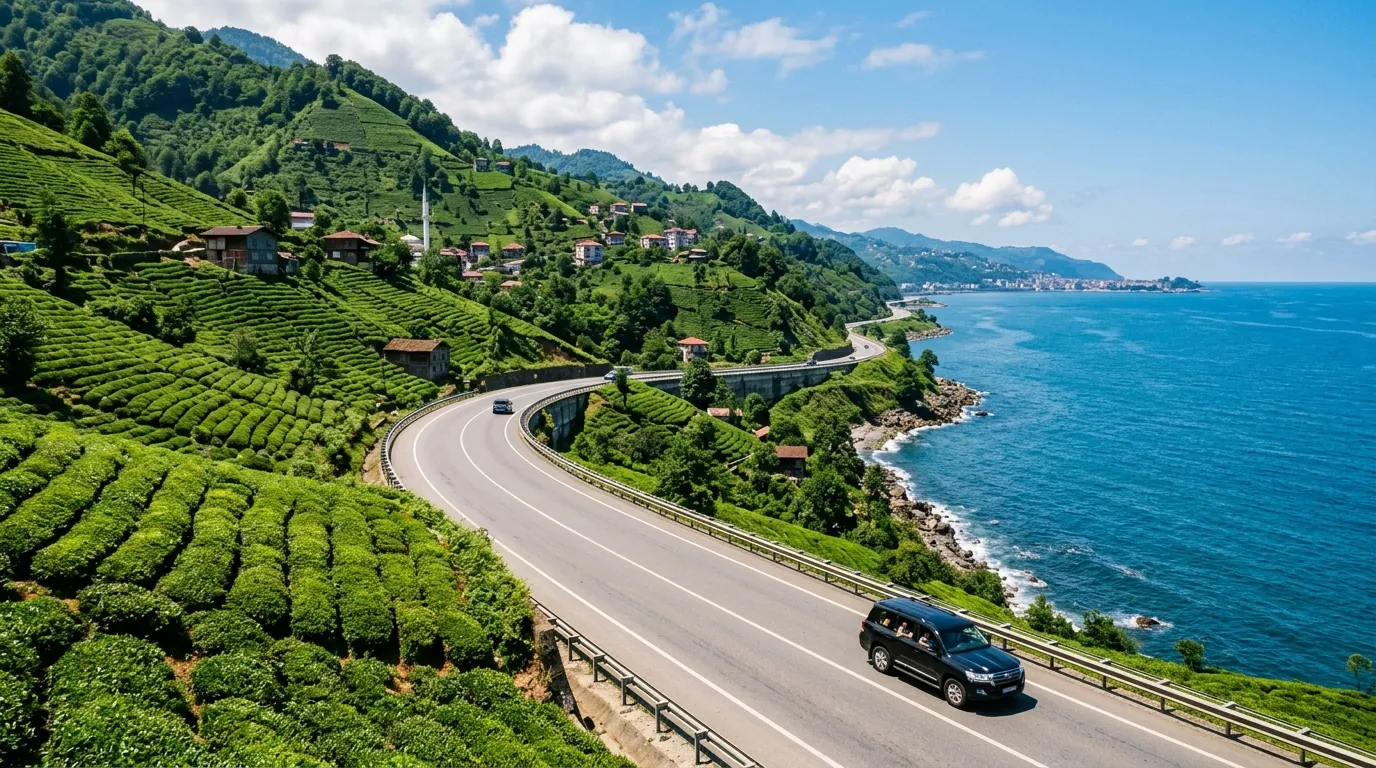
Ayder Trabzon distance 5-day itinerary 2026: a day-by-day plan for Arab families covering the transfer route.
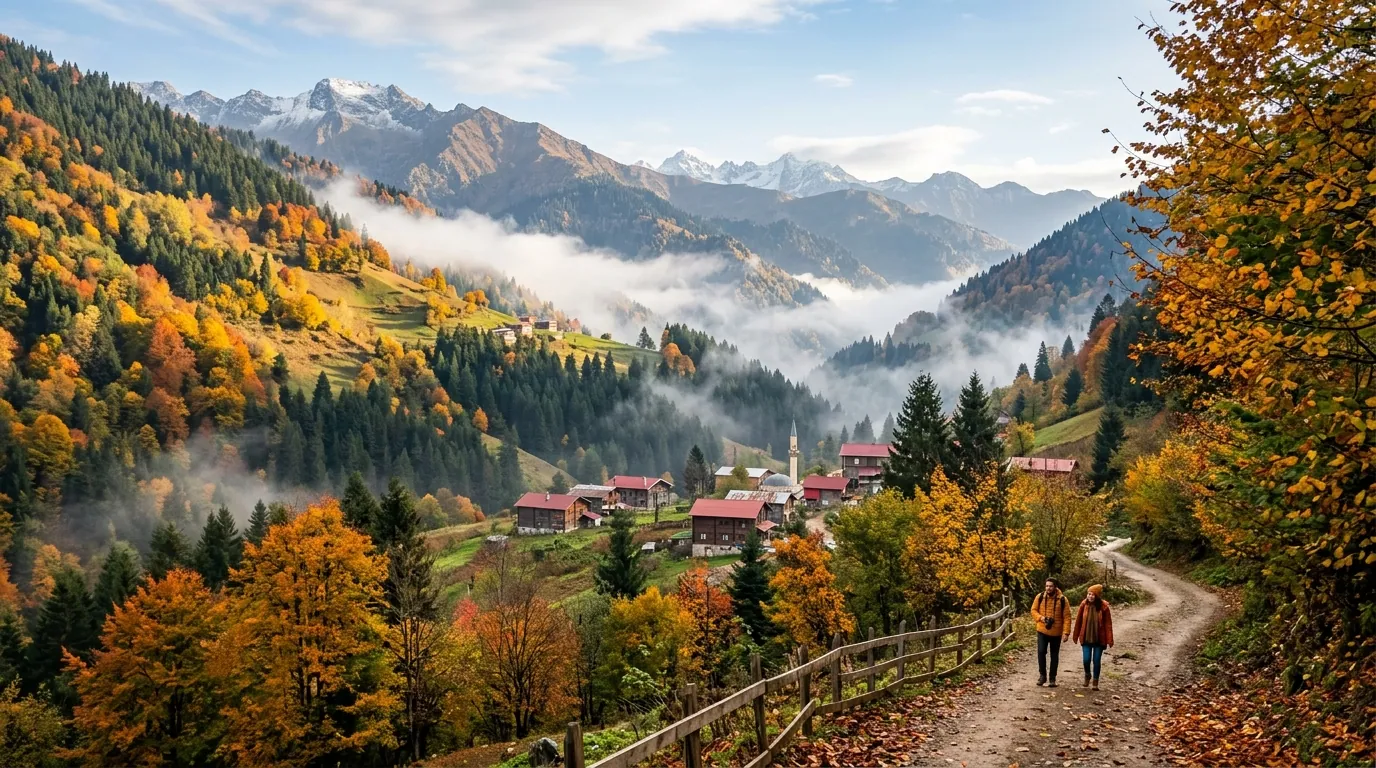
Ayder Turkey weather 2026: monthly averages, rain patterns, best months to visit, and packing tips for Gulf families.
Ready to explore Turkey?
Voyago brings together hotels, tours and transfers to help you plan the perfect trip to Turkey.