
Quick Answer for Gulf Visitors
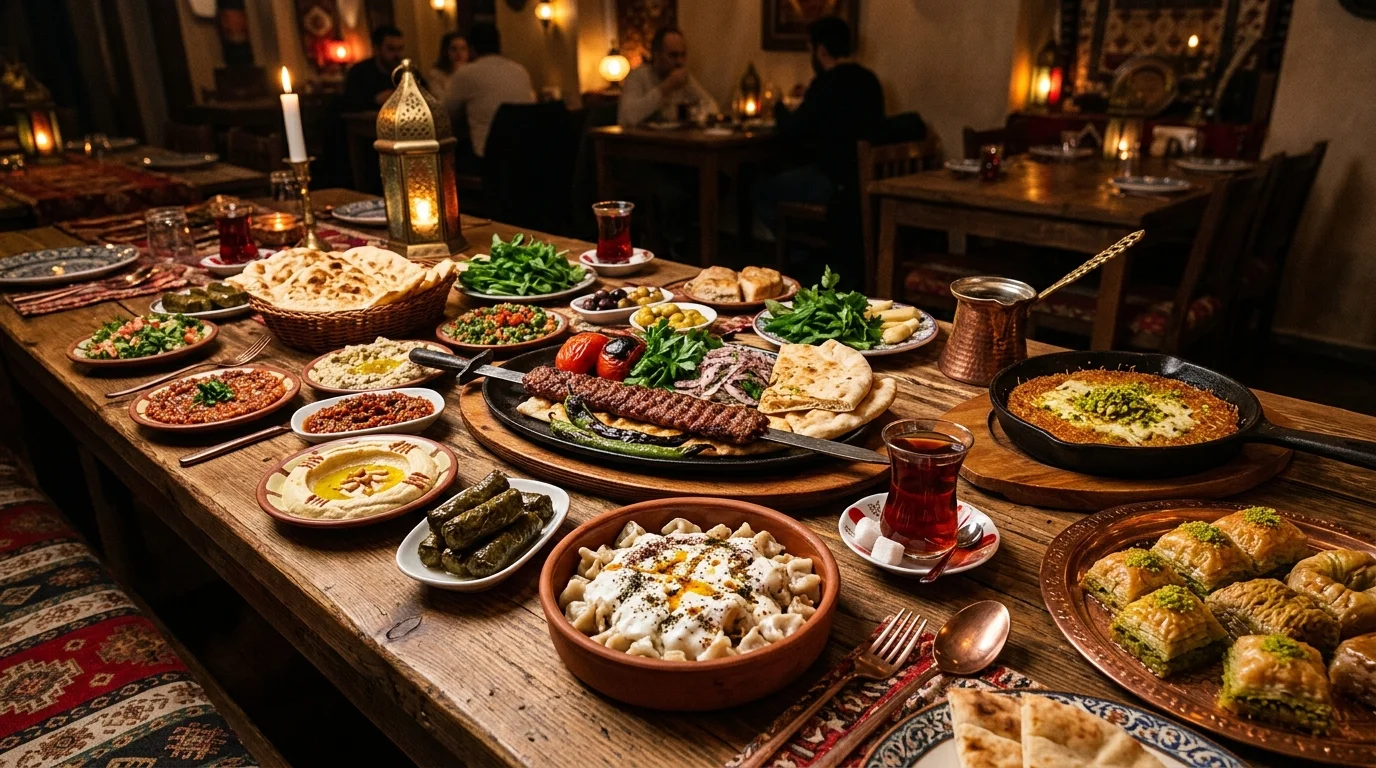
What must you taste in Turkey? The full Turkish breakfast, kebab in all its forms — especially Iskender — pide and lahmacun flatbreads, manti dumplings in yoghurt sauce, hot cheese kunefe, and apple tea after sunset.
Is Turkish food suitable for Gulf families? Very much so; meat in most traditional restaurants is halal, the flavours sit close to Middle Eastern cooking, and family sections exist in most tourist-area restaurants away from venues serving alcohol.
How much does a meal cost? A full breakfast runs $12–20 per person, a mid-range dinner $15–30, and street food $2–6. Price details and customs follow in this guide, built around how Gulf visitors experience Turkey in 2026.
Pick a hotel near the best restaurants · Comfortable airport transfers · Istanbul food tours
What Makes the Turkish Table Different?
Turkish cuisine is far more than kebab, as tourist menus suggest; it is the heir of the Ottoman palace kitchen blended with the cookeries of Anatolia, the Black Sea and the country's southeast. The result is a table that surprises visitors: a hundred kinds of soup, dozens of pide varieties, Bosphorus fish, regional breads, and desserts that change from city to city. Turkish devotion to food shows in the details: bread is baked fresh several times a day, tea arrives in thin tulip glasses as a symbol of hospitality, and breakfast is a feast in its own right rather than a warm-up for the day.
For the Gulf visitor, the resemblances comfort a palate raised on Eastern cooking: rice, meat and soup anchor the table, syrupy sweets feel like home-made baklava and kunefe, and hospitality is offered before you ask. The differences are small and easy to adjust to: olive oil sometimes fries where ghee would at home, ayran accompanies every grill, and Turkish heat levels run milder than Gulf kitchens generally. Whoever wants to truly understand Turkey starts at its table, and whoever wants to understand its cities reads the comprehensive Turkey guide and then chooses cities by their appetites.
| Meal of the day | Usual timing | Signature spread |
|---|---|---|
| Breakfast | 8–11 am | Kahvalti, the full spread |
| Lunch | 12–3 pm | Lentil soup, pide, kofte |
| Afternoon tea | 4–6 pm | Tea, baklava, simit |
| Dinner | 7–10 pm | Grills and fish |
Turkish Breakfast: The Morning Feast
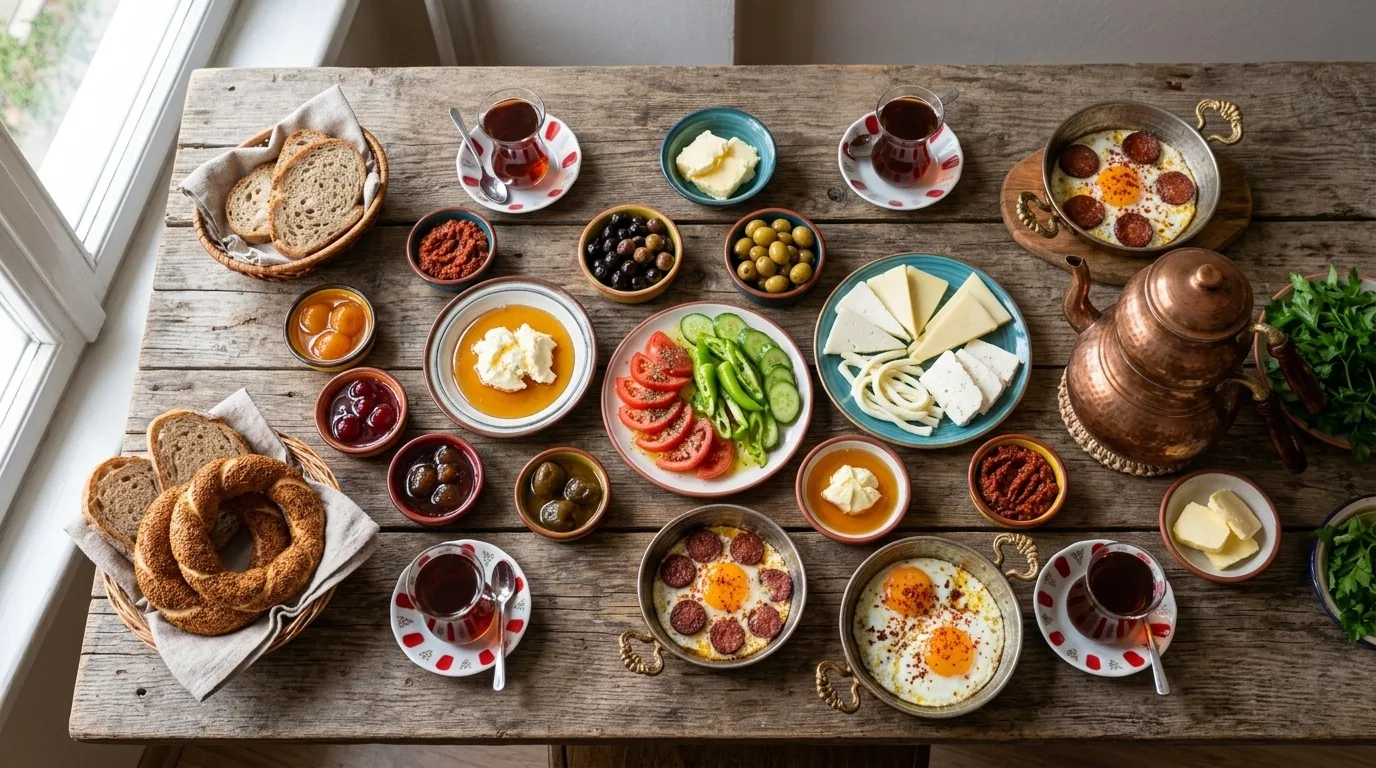
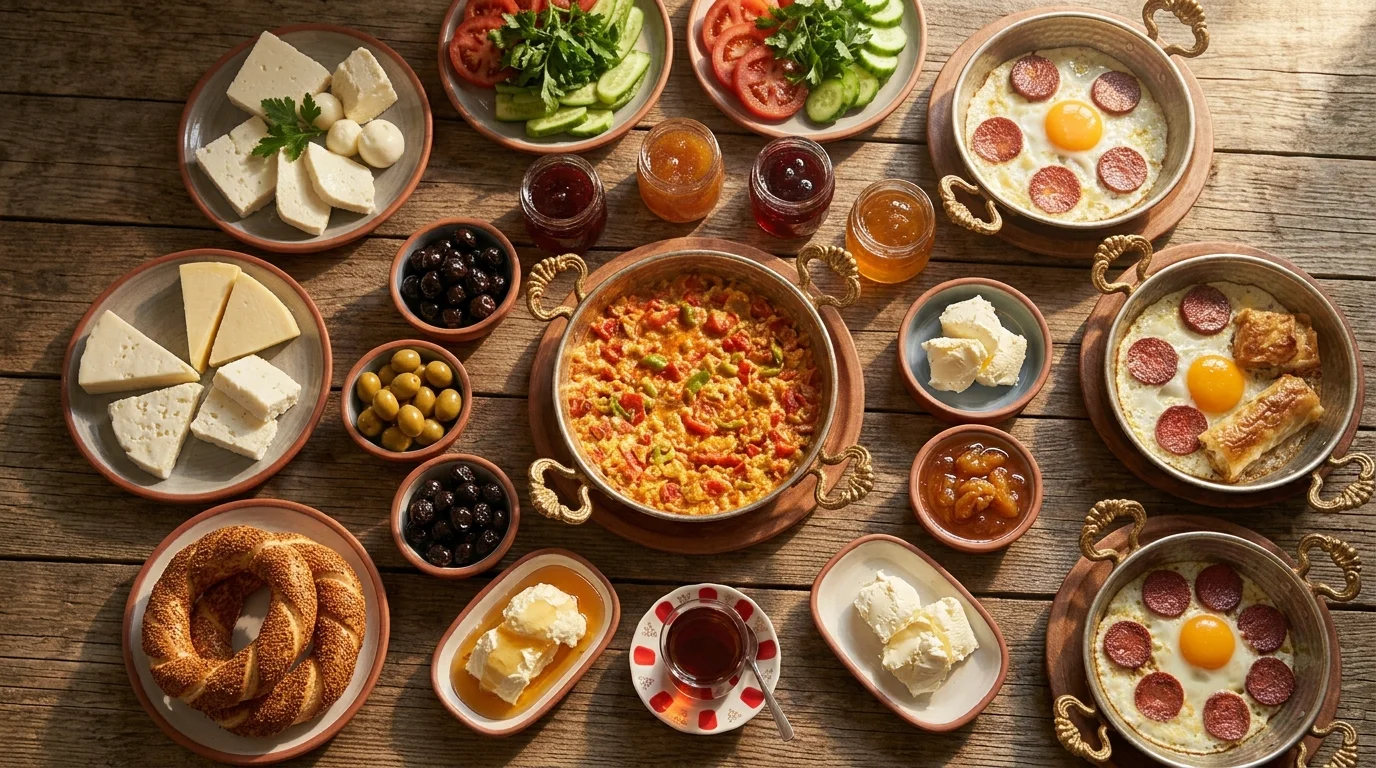
One name will follow you all trip: kahvalti, literally "before coffee", and it is not a meal but a family ritual. The table fills with dozens of small plates: white cheeses and kashar, olives of every kind, honey and thick kaymak cream scooped by the spoonful, fruit jams, eggs cooked several ways, spicy sucuk sausage with eggs, pastirma, cucumber and tomato, and fresh pastries. Everything is eaten with bread and by hand, and the table becomes a shared family experience suited to adults and children alike.
Breakfast specialists in Istanbul, Bursa and Antalya seat you around a spread with small burners cooking eggs in front of you. Order a mixed family breakfast instead of individual plates; it costs less, varies more, and most include apple tea and Turkish coffee with a sweet on the house. Recommended for every Gulf family at least one morning of the trip.
The Most Famous Main Dishes
| Dish | What it is | Where it is best | Approximate price |
|---|---|---|---|
| Iskender kebab | Sliced meat over bread with tomato sauce, yoghurt and butter | Bursa, its birthplace | $10–15 |
| Adana kebab | Spicy minced lamb over charcoal with lavash bread | The southeast and every city | $8–14 |
| Pide | Open flatbread with meat or cheese | The Black Sea coast | $6–10 |
| Lahmacun | Thin flatbread with minced meat, mint and lemon | Everywhere, king of street food | $2–4 |
| Manti | Tiny dumplings with yoghurt and mint sauce | Kayseri | $7–10 |
| Bosphorus fish | Grilled fish or a seaside fish sandwich | Istanbul | $5–12 |
| Testi kebab | Clay-pot stew cracked open at your table | Cappadocia | $12–18 |
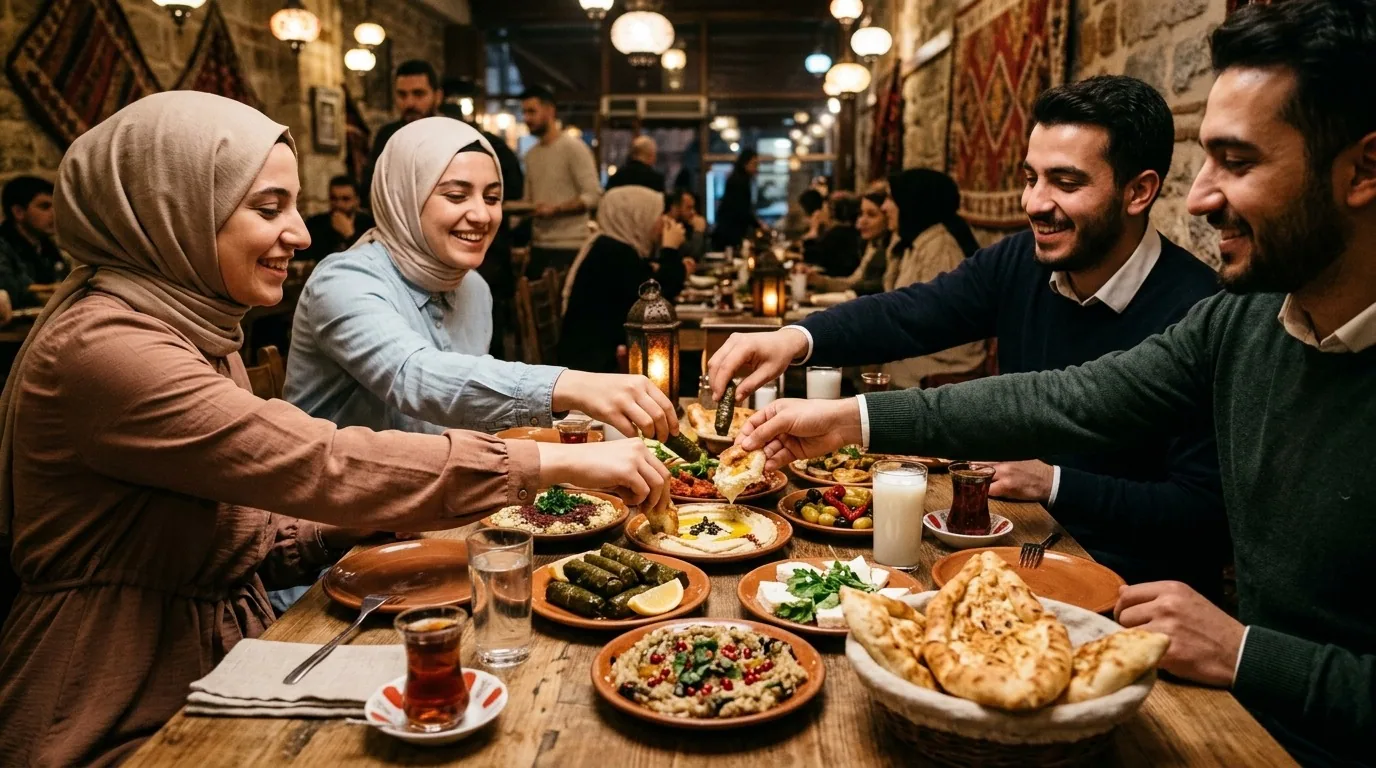
The golden rule when ordering: make the family table a sharing table; one Iskender, one mixed grill, one pide and one manti generously feed four people and cost less than individual orders. In tourist cities order only from busy restaurants; freshness is a standard Turkey never compromises on, and an empty restaurant at peak hour speaks clearly.
How a dish is built reveals the kitchen's quality too: proper Iskender uses tender meat, never dry, and balances the yoghurt against the sauce; good pide leaves the oven the moment you order it, not from a display. Do not hesitate to ask the waiter what the house is famous for; one question of that kind moves your meal from the tourist menu to the real kitchen, and often earns a complimentary starter or dessert. In the northern cities order fried anchovies in season between December and March — the regional national dish, served on waterfront terraces at generous prices.
Desserts and Drinks: The Turkish Finale
Turkish baklava, especially the pistachio variety from Gaziantep, is a different experience from anything you have tried abroad: truly thin layers dissolving under a light, never cloying syrup. Cheese kunefe is served hot in dedicated shops, the stretching cheese giving a flavour nothing like pre-made versions. Alongside them: Turkish delight in all its varieties, baked rice pudding, Kemalpasa sweets, and stretchy Turkish ice cream with its famous street performance.
The undisputed first drink is Turkish tea: served in small tulip glasses, refilled without your asking, and declining it can read as refusing hospitality. Turkish coffee arrives in a small cup with a sweet bite and water, and the betrothal custom of serving it is still alive. Ayran, the salted yoghurt drink, is the official companion of grills; pomegranate and tamarind juices are street favourites; and summer streets mean cold sour-cherry drinks or rose sherbet in some towns. For families avoiding caffeine in the evening, apple tea is the perfect light option available everywhere.
Five Food Experiences No Family Should Miss
First: breakfast on the Bosphorus shore at a specialist spot, egg burners in front of you and ships in view. Second: a grill dinner at a neighbourhood restaurant outside the tourist zone, where tables fill with locals after eight. Third: a fish sandwich from a dockside cart in Istanbul with a squeeze of lemon — five dollars that capture the city's soul. Fourth: hot cheese kunefe at a crowded dessert house, remembering the rule: kunefe is eaten the moment it leaves the pan, never after it cools. Fifth: a lunch-market meal in an inland city like Bursa or Konya, where the real Turkey unfolds far from tourist menus.
These five experiences slot naturally into any five-day itinerary and turn a sightseeing trip into a tasting trip as well. Anyone planning a broader programme will find a full framework mixing sights with restaurants in the travel to Turkey guide, and Istanbul visitors can spread the experiences across districts using the best areas to stay guide.
Street Food and Neighbourhood Restaurants
The best experiences in Turkey usually sit off the main street: the fish stalls of Istanbul's Kumkapi, the pide houses of Uskudar, roasted-corn carts along the waterfronts, and simit ovens that start before dawn. Tradesmen's restaurants serve one-plate lunches at tiny prices and are the truest mirror of everyday Turkish eating: soup, stuffed vegetables, beans in olive oil, and a changing daily casserole.
An insider tip: find the restaurant that starts filling at exactly noon; the locals know. Street food in Turkey is clean and generally well supervised, and its prices make daily experimentation easy: an Istanbul fish sandwich from $4, a simit from half a dollar, and an Ortakoy stuffed potato from $5 is a complete meal in itself.
Halal Eating and Table Manners: What Gulf Visitors Care About
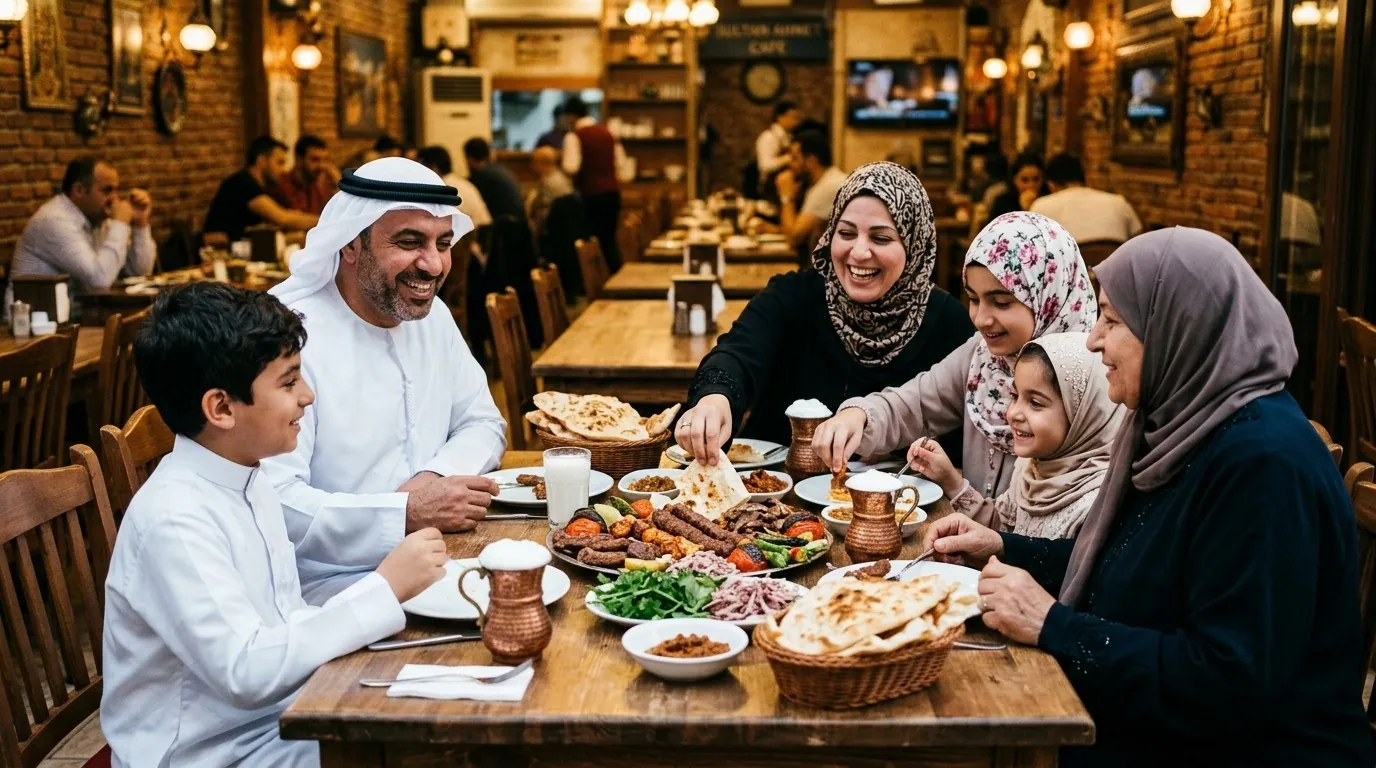
The halal situation in Turkey is comfortable: meat in traditional Turkish restaurants is halal under the prevailing religious slaughter, and doubt concentrates only in modern Asian- or European-style restaurants in upscale districts that may serve imported meat processed differently. Restaurants pouring alcohol are visually obvious and easy to avoid in tourist cities; in exchange, chains of certified halal restaurants and family cafes targeting Gulf visitors keep growing in Istanbul and Antalya, some with Arabic signage and translated menus.
Turkish table manners sit close to Gulf habits: eat with the right hand, take bread with everything, and leaving a little on the plate reads as satisfaction rather than waste. Tipping is a firm custom: 5–10 percent in mid-range restaurants and 10–15 percent in fine dining, left in cash on the table rather than added to the card. During Ramadan the cities' evenings turn into public feasts, and iftar at a Turkish restaurant as the call to prayer rises is an experience everyone who has tried recommends.
Large family restaurants usually offer dedicated family rooms or quiet side tables you can request without embarrassment. Families with small children find Turkish cuisine a friend: soup, rice, grilled chicken and fresh bread make an ideal children's meal, and most restaurants prepare a small portion on request at no extra charge.
Fine Restaurant or Local Eatery: A Practical Comparison
| Criterion | Fine restaurant | Neighbourhood eatery |
|---|---|---|
| Average cost per person | $25–50 | $8–15 |
| Family seating | Private rooms, comfortable booths | Sometimes shared tables |
| Menu variety | Wide, palace dishes included | 3–6 dishes the house masters |
| Advance booking | Preferred on weekends | Not needed |
| Language | English common | Turkish only, picture menus |
| Authenticity | Refined versions of the classics | The food Turks eat daily |
The practical verdict: combine both. One or two nights at a fine restaurant for Ottoman palace dishes, the rest of the evenings at neighbourhood houses serving authenticity at a third of the price. A local breakfast can outclass its luxury twin, and a dockside fish sandwich explains Istanbul better than any museum.
Practical Info for Gulf Visitors
| Item | Details |
|---|---|
| Full breakfast price | $12–20 per person |
| Mid-range dinner | $15–30 |
| Tipping | 5–10% casual, 10–15% fine dining |
| Peak times | Lunch 12–2, dinner 8–10 |
| Reservations | Advisable Friday and Saturday evenings |
| Children's portions | Soup, chicken and rice usually free of charge |
| Arabic menus | Available in tourist districts |
| Restaurant hours | Open late, closing after 10–11 pm |
FAQ (12 Questions)
- Is all meat in Turkey halal? Meat in traditional restaurants and markets is halal under prevailing religious slaughter; doubt concerns modern foreign-cuisine restaurants, and asking is completely acceptable everywhere.
- Do restaurants open only in the morning for breakfast? Most open from eight or nine, and breakfast specialists fill up until noon; reserve before ten in high season.
- Which is the best food city in Turkey? Gaziantep is the capital of kebab and baklava, Istanbul gathers everything, Bursa owns Iskender, and Trabzon rules Black Sea fish and breads — details in the Trabzon guide.
- Do restaurants serve alcohol? Yes, especially in nightlife districts, clearly visible from the setting and menu; neighbourhood family restaurants are mostly free of it.
- Is spicy food available? Turkish kitchens run milder than Gulf ones generally; ask for the chilli side sauce or seek out Adana dishes if you love heat.
- Is Turkish ice cream halal? Yes in its basic ingredients, and it is famous for its stretchy texture; countless varieties exist and children adore the street performance.
- What does breakfast cost for a family of five? A shared family breakfast usually feeds five for $50–70 at a mid-range restaurant including tea and dessert.
- Can I order vegetarian dishes? Easily; Turkish cuisine is rich in olive-oil vegetable dishes and legumes, most famously beans in olive oil and stuffed vine leaves.
- Are global fast-food chains available? Nearly every city has them, some with special Turkish menu items, but local eateries are cheaper and more authentic.
- Is water free in restaurants? Water usually comes as paid bottles; order a carafe of mineral water for the family, cheaper than individual glasses.
- What are iftar timings in Ramadan? Most restaurants open before sunset with full Ramadan menus, and soup and fresh bread start from mid-afternoon in the old districts.
- Is family seating available everywhere? In the big tourist cities, mostly yes; ask for a family table or family hall on arrival and you will be guided courteously.
Conclusion
Turkish food culture in 2026 is an experience complete in itself, not a gap between landmarks. Start with a full morning breakfast, share grill plates across the family, and finish with hot kunefe and apple tea over the Bosphorus. The food is mostly halal, and prices sit below European levels with far more variety. Give your trip one full day of street food and neighbourhood dining, and a single night at a fine restaurant, and you will carry home the sweetest food memories Turkey can offer.
And no complicated plan is needed: pick one famous breakfast in each city you visit, one neighbourhood restaurant off the main street, and one local dessert the city is known for. That simple rule is enough to taste the best of every destination without straining the budget or the stomach, and it gives your children new taste stories to tell back home.
Hotels near the tastiest districts · Comfortable transfers between districts · Food and city tours
Sources
- Go Türkiye — the official guide to Turkish food, drink and gastronomic destinations.
- Turkish government gateway — official information on restaurant health supervision.
- Travel to Turkey guide — planning the trip from flights to the table.
- Istanbul hotel booking guide — where to stay near the best food districts.
Related travel guides
Istanbul halal food guide 2026: where meat is halal by default, the best kebab, fish, and Ottoman restaurants, breakfast, desserts, and family-friendly tips.
The best halal restaurants in Turkey for Gulf families: where and what to eat across Istanbul, Antalya, the Turkish North and Cappadocia, with prices and practical tips.
The complete 2026 Turkish cuisine guide for Gulf families: famous kebabs, Turkish breakfast, mezes, baklava, city food capitals and clear halal guidance.
Ready to explore Turkey?
Voyago brings together hotels, tours and transfers to help you plan the perfect trip to Turkey.