
Quick Answer for Gulf Visitors
Is food in Turkey halal? Overwhelmingly yes: slaughter in Turkey is effectively halal by law and practice, meat in restaurants and home kitchens is halal by default, and the only caution applies to specific restaurants serving alcohol or European dishes containing pork, which are rare outside tourist districts.
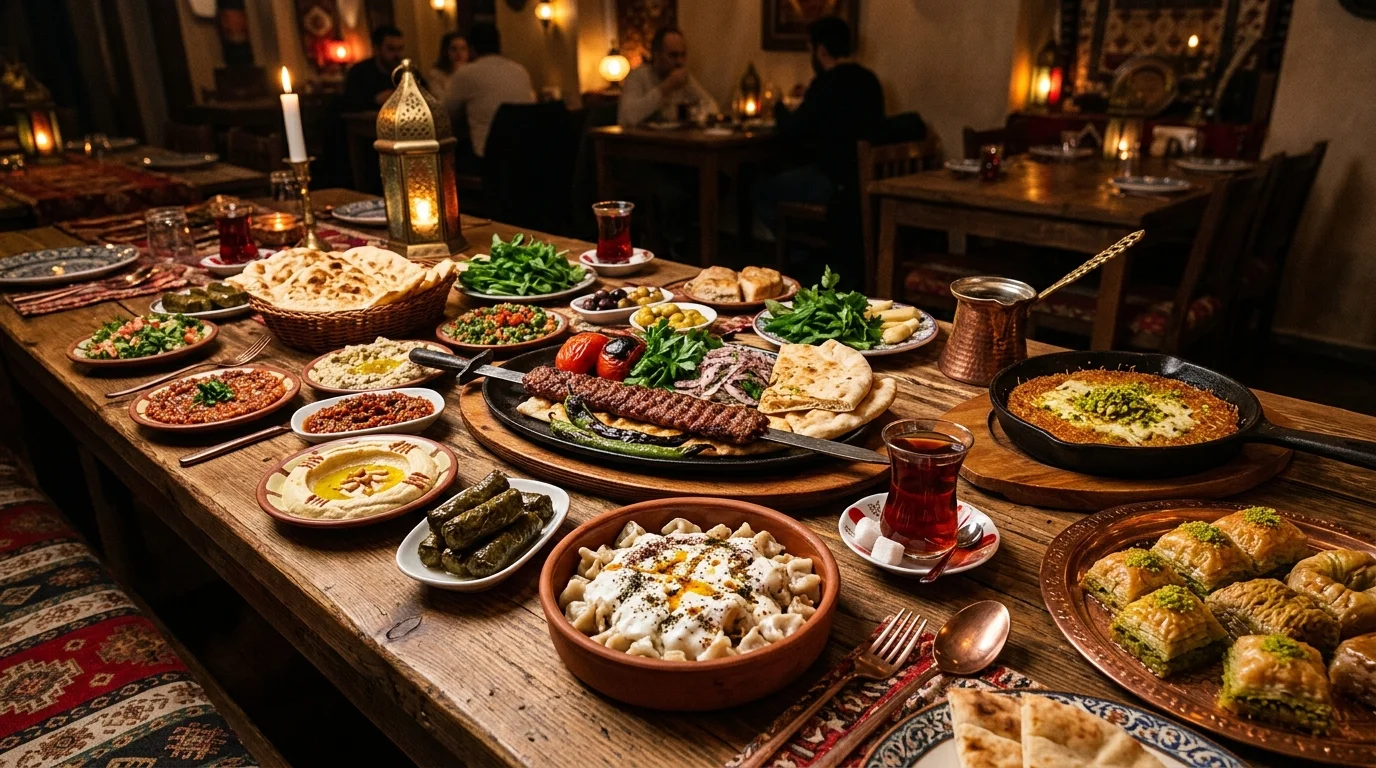
Which dishes should you not miss? The full Turkish breakfast, Iskender kebab in Bursa, Adana kebab in its birthplace, pistachio baklava from Gaziantep, and kunefe served hot with cheese.
How much does eating out cost? A family breakfast runs roughly three hundred to six hundred lira, and a kebab meal per person between two hundred and five hundred lira depending on city and level; prices vary by city and season.
Where are the food capitals? Gaziantep for baklava and kebab, Hatay for kunefe and mezes, Bursa for Iskender, and Istanbul for everything at once.
Why Turkish Cuisine Feels Comfortable for Gulf Families
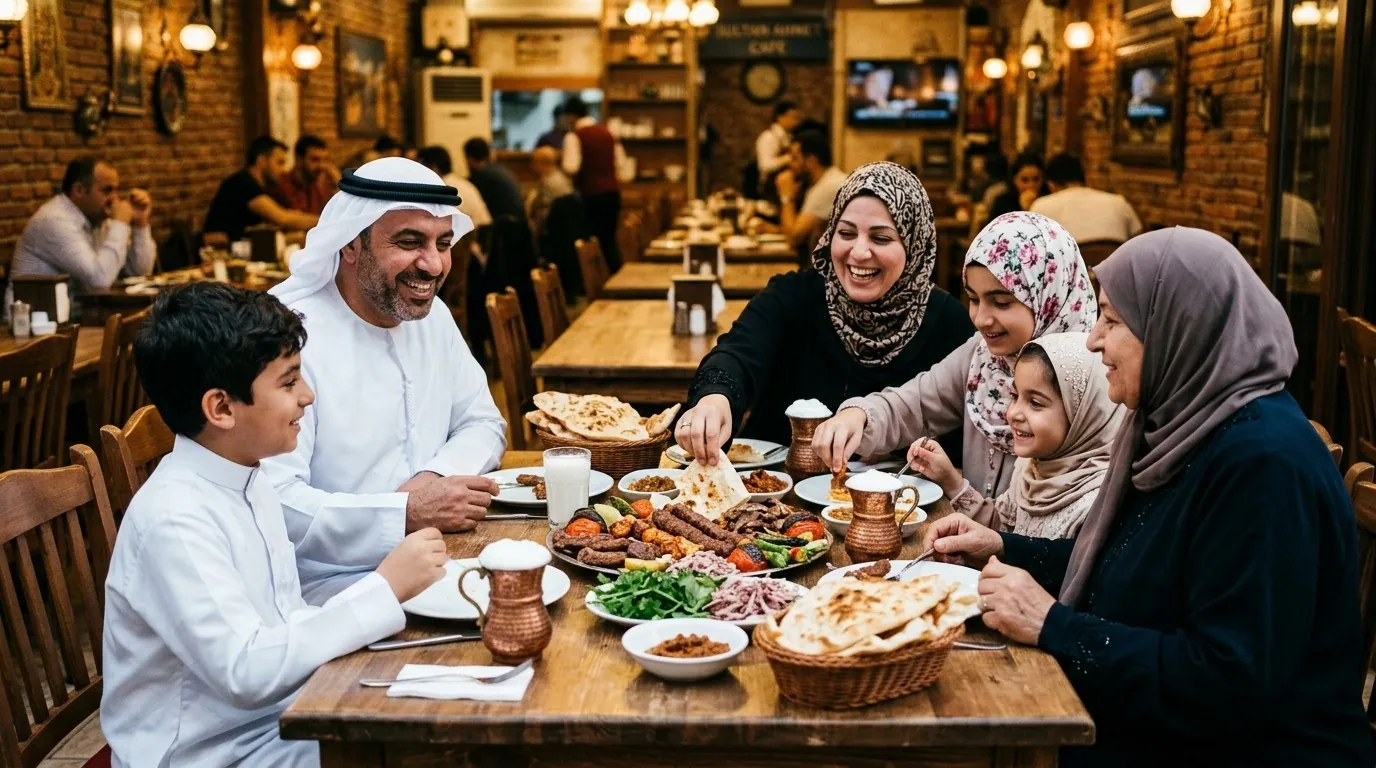
Turkish cuisine is the closest major tourist cuisine to the Gulf palate: grills, kebabs, rice, warm bread and cold mezes are completely familiar elements for anyone raised on Gulf and Levantine tables, and the differences lie in details rather than foundations. Turkish-style minced meat, kofte seasoned with parsley and spices, hummus and baba ghanoush are bridges of taste that leave the family satisfied without needing Arab restaurants at all.
The second advantage is abundance: a Turkish breakfast alone brings dozens of small plates of cheeses, jams and olives, and hotel buffets offer variety enough for a full week without repetition. The third is purely practical: alcohol-free restaurants are found in every district, especially in inland cities and areas popular with Gulf and Arab visitors, so you rarely need to search long for a place your family feels comfortable in. Turkish cuisine is in fact one of the pillars of official tourism marketing, as you can see on the official Turkish tourism portal. And if this is your first trip to Turkey, our complete Turkey travel guide puts the map of cities and seasons in context before you dive into the table.
Turkish Breakfast: The Meal You Should Not Miss
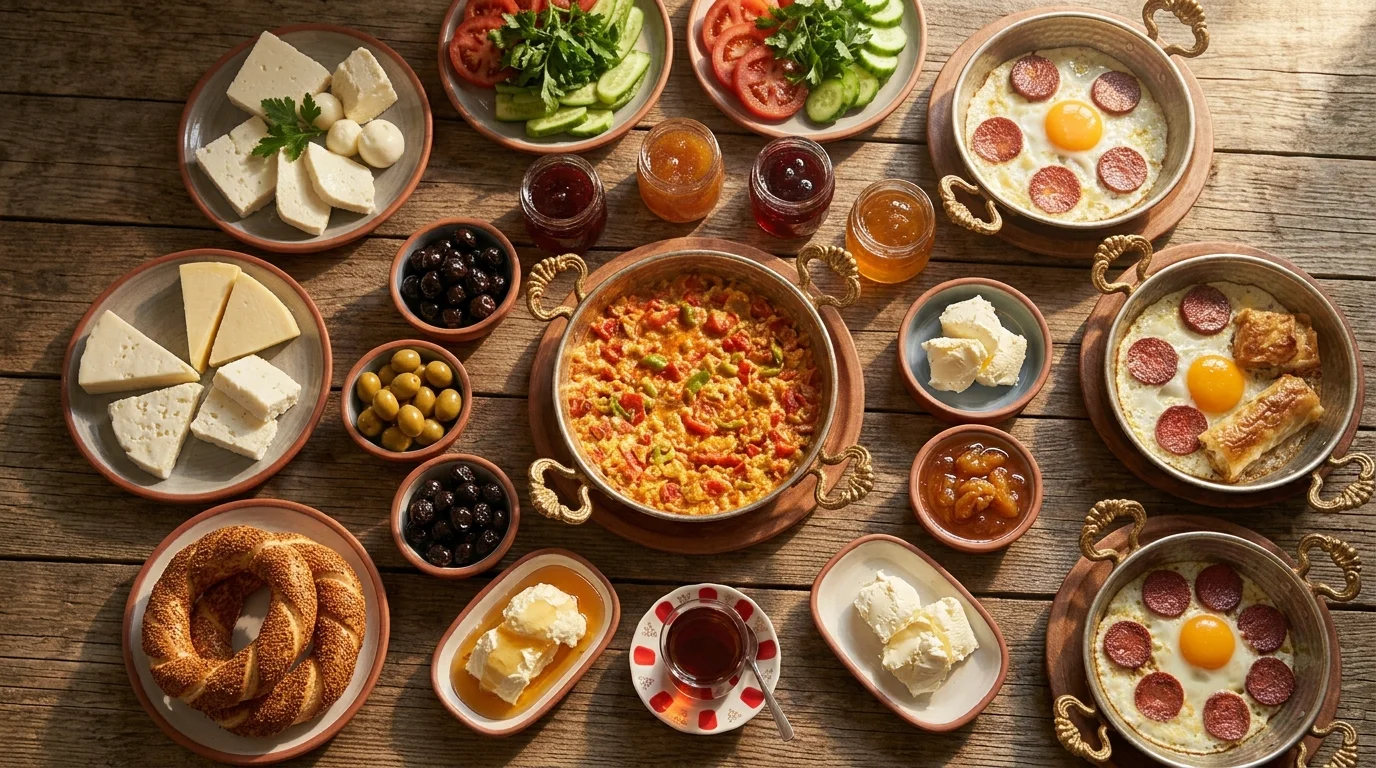
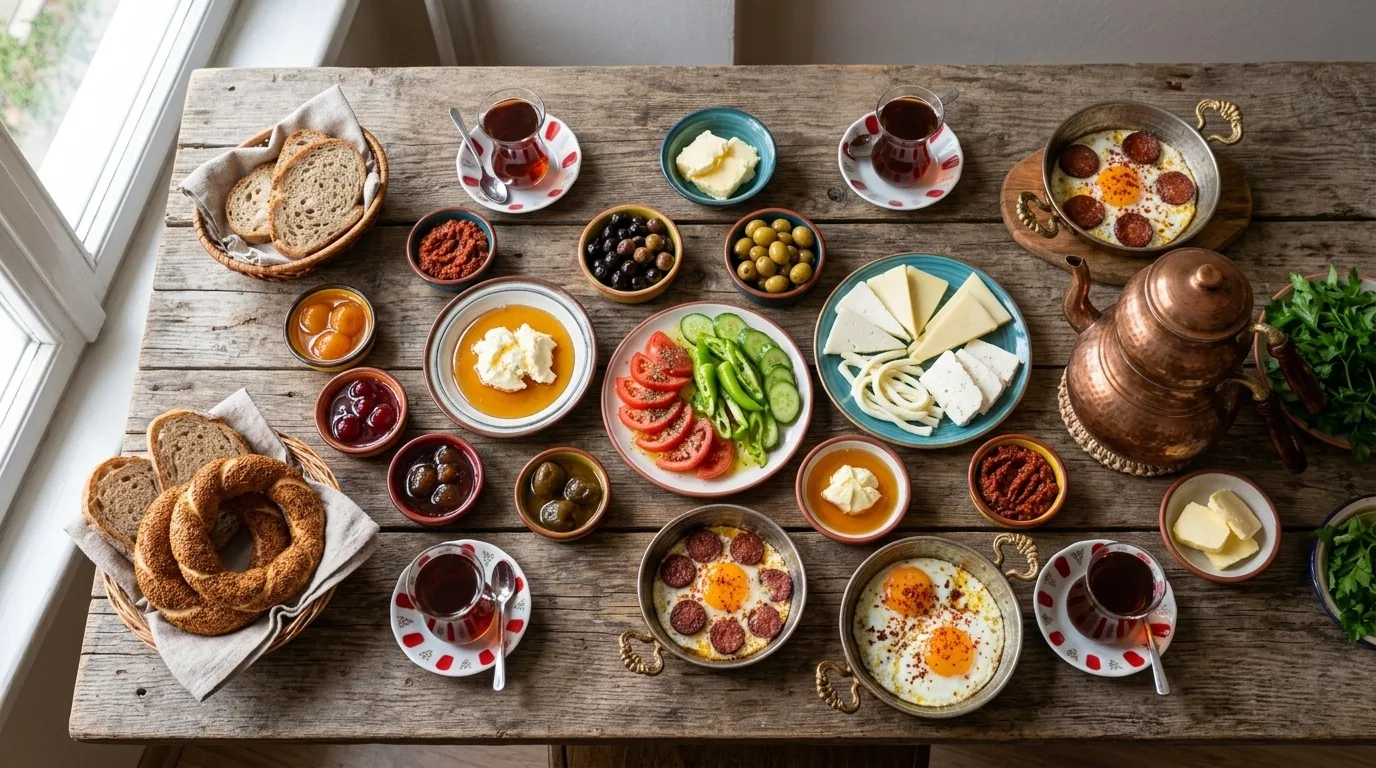
Breakfast in Turkey is not a meal but a full family ritual: a table spread with small plates, red tea served in thin tulip glasses one after another, and a sitting that stretches beyond an hour. For a Gulf family this style is familiar and beloved, so do not skip it for the sake of time.
| Element | What it is | Note for children |
|---|---|---|
| White and kasar cheese | Soft, lightly salted cheeses | Accepted instantly by kids |
| Jam and clotted cream | Especially fig and cherry jams | The favourite sweet element |
| Olives | Black and green, spiced varieties | May take some getting used to |
| Eggs in many styles | From sucuklu to menemen | Ask for cheese eggs for little ones |
| Simit and pide | Warm fresh breads | An excellent substitute for Arab bread |
| Honey and butter | Served in shared dishes | The flavour backbone of the table |
A practical rule: order one full breakfast for the table rather than per person, since the shared spread is cheaper and richer, and ask the waiter to cut the tea for children or swap it for milk. And make a point of trying breakfast once in a local neighbourhood restaurant away from the hotels, not only in your hotel buffet.
Turkish Kebabs: A Comparison of the Famous Types
| Type | Birthplace | Character | Who it suits |
|---|---|---|---|
| Iskender kebab | Bursa | Shawarma meat on bread with tomato sauce, butter and yogurt | Everyone's first try |
| Adana kebab | Adana | Hot minced meat over charcoal | Fans of real heat |
| Urfa kebab | Sanliurfa | Same as Adana without the heat | Families with children |
| Shish tavuk | Everywhere | Marinated chicken on skewers | The safe pick for kids |
| Beyti sarma | Istanbul | Minced meat wrapped in thin lavash | A famous signature dish |
| Tantuni | Mersin | Spicy minced meat in flatbread | A cheap fast street meal |
The golden rule of Turkish kebab: the original in its home city beats the branch in Istanbul. Iskender in Bursa is served in its historic location on a copper tray with an entirely different atmosphere, and the same goes for Adana in Adana. If your trip includes these cities, save each kebab experience for its hometown; if you are staying in Istanbul only, the flagship branches of the original houses come very close.
Mezes and Soups: What to Order Before the Main Course
Start with soup in cold weather: Turkish winter lentil soup is thick and filling, tarhana soup is lightly sour, and tomato vermicelli soup is the permanent children's choice. In summer, replace soup with cold mezes: hummus, baba ghanoush, strained yogurt with walnut (haydari), eggplant salads and green salads with pomegranate dressing.
Hot starters deserve a place at every table: cheese or minced-meat pide is a filling bread children love, grilled kofte in a clay pan, pastirma rolls, and daily catch in the coastal cities. Order three starters plus one main per two people; Turkish generosity makes over-ordering genuine waste and leftovers no one eats.
Turkish Sweets: From Baklava to Kunefe
| Sweet | Ingredients | Most famous city | Note |
|---|---|---|---|
| Baklava | Filo layers with pistachio or walnut and syrup | Gaziantep | The top gift; sold by the kilo |
| Kunefe | Shredded wheat with cheese or cream | Hatay | Served hot, eaten immediately |
| Lokma | Fried dough balls in syrup | Everywhere | A cheap street treat |
| Sutlac | Milk pudding with rice and cinnamon | Home-style restaurants | Light and kid-friendly |
| Kazandibi | Grilled milk pudding | Istanbul and Hatay | Chilled cream with a burnt top |
| Turkish delight | Starch and sugar with rose flavours | Istanbul | A light travel gift |
| Maras ice cream | Stretchy salep ice cream | Kahramanmaras | A theatrical serving show |
The rule of Turkish sweets: everything with syrup is delicious but calorie-heavy, so let dessert be the closing note of the experience, not the opening. Fine baklava with deep-green pistachio is eaten in small quantities, kunefe is ordered hot for the whole table, and rice pudding is the light after-meal option. Diabetics should watch the syrup: sugar levels are high in most of these sweets.
Gaziantep or Hatay: Which Food Capital for Your Trip?
Both cities are recognised in the UNESCO Creative Cities of Gastronomy network, and they offer completely different experiences. Gaziantep is farther away but deeper in kebab and baklava: its historic restaurants serve hundreds of varieties, baklava is weighed in front of you with dark pistachio, and kebab there is an inherited culture rather than a restaurant category. The city is inland and dry, so treat it as a two-day stop on a southeastern route or a short dedicated food trip.
Hatay (Antakya) is closer to the coast and cheaper: its cheese kunefe is the most famous in the country, its Levantine-style cold mezes feel instantly familiar to Gulf visitors, and its olives, green cheese and olive-oil vegetables form a complete table without any meat at all. If you have three days dedicated to food, choose Gaziantep; if you want great food within a coastal trip near Antalya, Hatay is closer and better suited. For how these cities fit into a wider route, see the Turkey cities guide for Gulf families.
Halal in Plain Terms: What You Actually Need to Ask
Halal is the default in Turkey, but a religiously careful family asks about three specific things. First, alcohol: some tourist and European-style restaurants serve it, and the solution is neighbourhood and family restaurants that never serve it, which are the majority. Second, pork: it appears only in European-kitchen restaurants and some big-hotel breakfast buffets, and the major buffets separate dishes and label contents clearly. Third, gelatine and flavourings in industrial sweets, which is a precaution limited to packaged products.
The practical question that helps most: does the restaurant have a family section? Many local restaurants have one, and it provides the privacy a Gulf family appreciates, requested with one simple word nearly every waiter knows. During Ramadan you will find public iftar tables in the major cities and a distinctive evening atmosphere, though working hours shift, so book early. In the large resorts, breakfast and dinner buffets include documented halal sections alongside international ones, labels clarify every dish, and Arabic-speaking staff in the Gulf season answer detailed questions immediately. For a comfortable base, the Istanbul hotel booking guide notes the character of each district and the restaurants around it.
Prices and Restaurant Etiquette
Price levels on average: a simple local restaurant costs two to three hundred lira per person, a mid-range kebab speciality house four hundred to seven hundred, and fine dining and hotel restaurants start from a thousand lira per person. Service is usually included, but rounding up the bill is a common custom when you are happy with the service. Bread and small water are usually free additions.
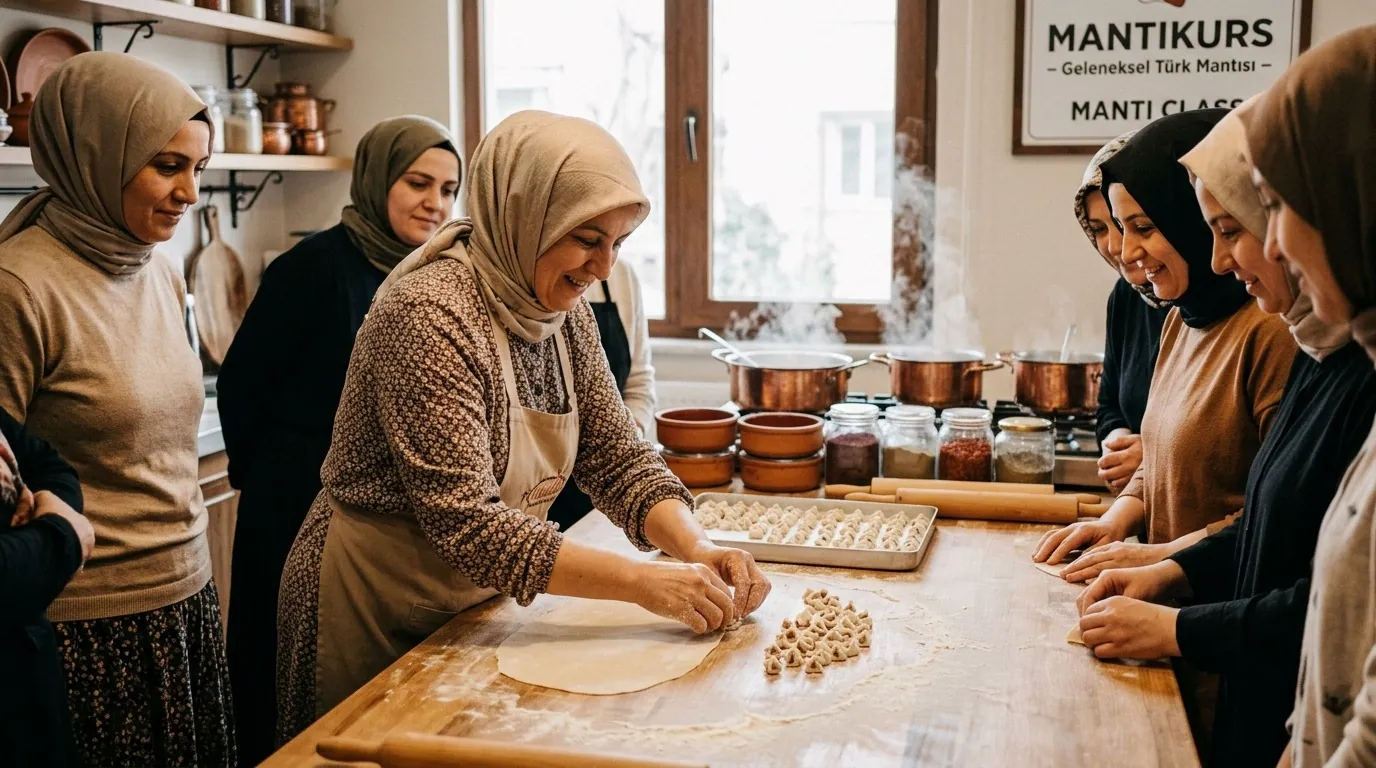
Practical etiquette: booking is essential on Friday and Saturday evenings at famous restaurants, and large tables for extended families need a reservation a day ahead. Children are welcome in nearly every local restaurant, and table napkins and complimentary small mezes arrive before you order. For travellers building a full food itinerary, the daily tours across Turkey include market and home-kitchen programmes in Istanbul and Gaziantep that show the Turkish table from the maker's side.
Turkish Coffee and Tea: The Drinking Culture
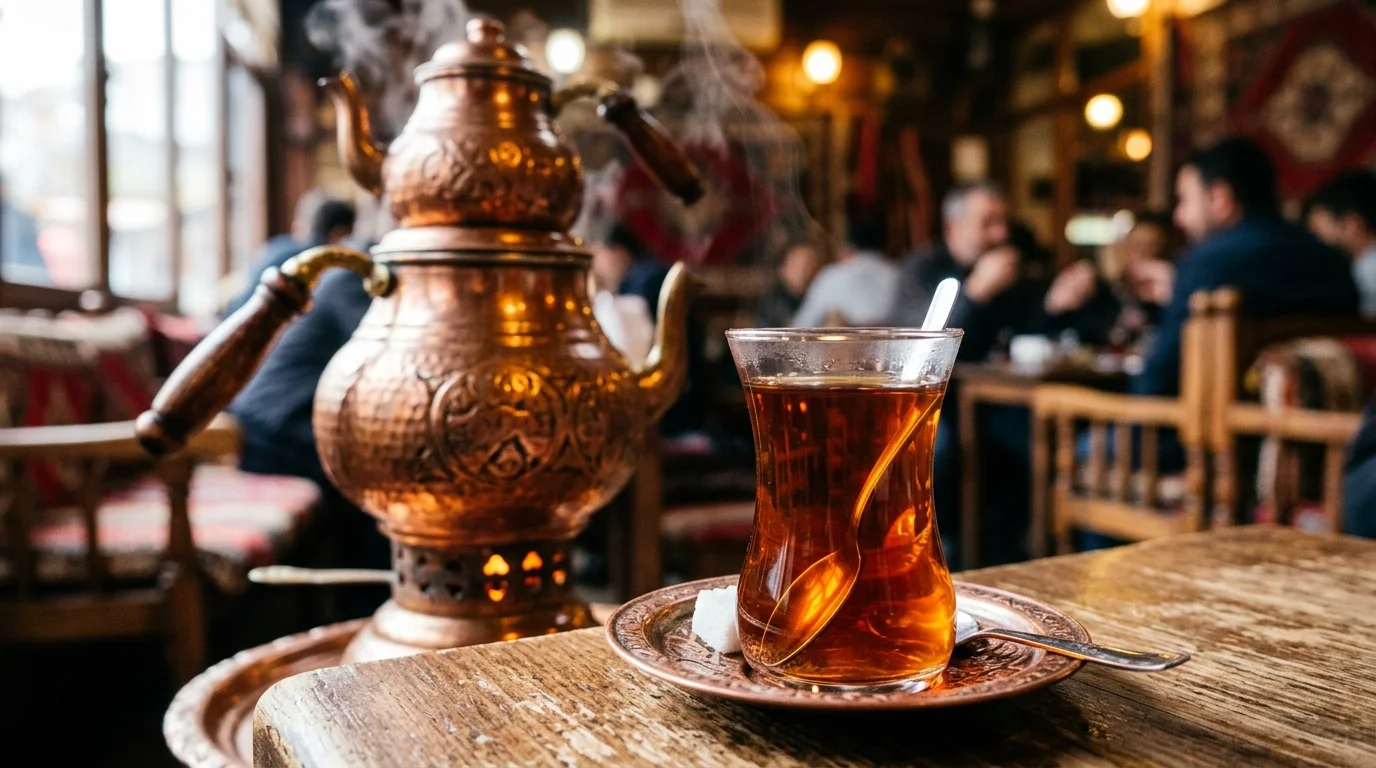
Red tea is the true national drink: served in thin tulip glasses, drunk sweetened without milk, and offered free in every home, shop and office as a sign of hospitality. Gulf visitors will find it close to Gulf red tea but lighter in taste; ask for mint tea and you will find it ready in tourist areas.
Turkish coffee is a different ritual: ground very fine, brewed in a small copper cezve, and served in a small cup with a sweet bite and a glass of water. The rule is not to drink to the bottom, where the grounds settle. Order it medium-sweet by default or unsweetened, and you will find fortune reading a common entertainment in local cafes rather than a belief. Seasonal fresh juices are an unmissable bonus in summer: pomegranate, orange and cherry pressed in front of you at street carts for very little money.
A Full Food Day in Istanbul
A tested formula for a family wanting to cover the Istanbul table in one day: start with a full breakfast in Karakoy or the historic Cemberlitas side before ten in the morning to avoid queues, then walk toward the Egyptian Bazaar for spices, sweets and Turkish delight, with fresh pomegranate juice from a cart along the way. Have lunch after two at a pide house or an unpretentious kebab spot off the main street, where prices drop and quality rises two steps into the side alleys.
Late afternoon belongs to Turkish coffee in a historic cafe on a hill above the old city with a Bosphorus view, and the evening to kunefe or baklava at an old master shop before dinner, then a light tantuni or shawarma to close. This loop costs a family of four roughly two to three thousand lira at a mid-range popular level, clearly cheaper than a full hotel-buffet day while being far richer as an experience.
Practical Info for Gulf Visitors
| Item | Detail |
|---|---|
| Halal | Meat is halal by default; ask about alcohol and family sections |
| Daily food budget | 600 to 1500 lira per person depending on level and city |
| Drinking water | Drink bottled; tap water is fine for washing, not drinking |
| Spice level | Adana is hot; asking for it without heat is one simple word |
| Peak hours | Lunch after twelve, dinner after seven in the evening |
| Reservations | Essential at famous restaurants on weekend nights |
| Coffee and tea | Tea is the table's base; Turkish coffee closes the meal |
| Halal fast food | Turkish meat and shawarma chains are halal and widespread |
FAQ (12 Questions)
- Is all meat in Turkey halal? Slaughter in Turkey is effectively compliant with sharia, and restaurant and kitchen meat is halal by default; caution is limited to a few European-style restaurants.
- Does pork exist in Turkey? It appears in some European-kitchen restaurants and certain hotel buffets, with clear labels and proper separation.
- Where is the best baklava? Gaziantep without contest; deep-green pistachio is the first sign of quality.
- Is Turkish breakfast suitable for children? Yes; cheese, jam, honey and fresh bread are elements children love immediately.
- How much does a family breakfast cost? Between three hundred and six hundred lira for the table at popular restaurants, more in tourist areas.
- Is vegetarian food available? Yes, abundantly; olive-oil and vegetable dishes in Aegean and Hatay kitchens form a complete table.
- Is kunefe eaten cold? The Antakya cheese version is served hot and eaten immediately; cold kunefe is a different experience entirely.
- Are alcohol-free restaurants easy to find? Yes, and they are the majority, especially outside European tourist districts; look for the word family restaurant.
- What is the difference between Adana and Urfa kebab? Nearly the same dish, but Adana is hot and Urfa is without chilli; the first for adults, the second for families.
- Is Turkish tea compulsory? It is the symbol of hospitality, often served free; accepting one glass is a lovely local courtesy.
- Can I try cooking Turkish food? Yes; home-cooking experiences are available within the tours list.
- Are prices higher in Istanbul than other cities? Yes, relatively; the same meal in an inland city is usually twenty to forty percent cheaper.
Conclusion
Turkish cuisine is one of the strongest reasons Gulf families repeat their visits to Turkey: familiar in its foundations, rich in its variety, halal in essence, and suited to every budget from humble street food to resort buffets. Make the full breakfast, hot kunefe and a kebab in its hometown three experiences reserved in advance on every trip to Turkey, and leave the rest to adventure. Book the famous kunefe and breakfast houses two days ahead in high season; Friday queues in Istanbul and Antalya run long.
Find your stay near Istanbul's restaurants · Book your transfers between food cities · Discover food and cooking tours
Sources
Related travel guides
Istanbul halal food guide 2026: where meat is halal by default, the best kebab, fish, and Ottoman restaurants, breakfast, desserts, and family-friendly tips.
The best halal restaurants in Turkey for Gulf families: where and what to eat across Istanbul, Antalya, the Turkish North and Cappadocia, with prices and practical tips.
Turkish food culture 2026: must-try dishes from breakfast to dessert, dining customs, prices and halal tips for Gulf families eating out in Turkey.
Ready to explore Turkey?
Voyago brings together hotels, tours and transfers to help you plan the perfect trip to Turkey.