

Quick Answer for Gulf Visitors
What is the rental contract and which clauses matter most? The contract is the agreement you sign with the rental company at pickup, and five clauses matter above all: rental period and total price, the deposit, insurance level, fuel policy, and mileage cap. Read those five before signing — never settle for the advertised daily rate alone.
Should you book Uniq directly or through comparison platforms? Booking through the major comparison platforms shows contract terms and deposit rules upfront and gathers offers on one page, while booking directly through the company's site or WhatsApp gives more room for adjustments. Both end with the same contract at pickup.
Does a Gulf family need a rental car at all? Inside Istanbul, rarely; the most comfortable family options are a private car with driver or the tram and metro. In Antalya, the countryside and along the coast, a rental car lifts the whole trip to another level.
Hotels with parking · Comfortable alternative: car with driver · Tours with no driving
Getting to Know the Company and Its Booking Channels
Uniq is a local car rental brand operating mainly in Istanbul and Antalya, serving short and long tourist bookings and expats, with its listings appearing through major comparison platforms such as Yolcu360, Obilet and Turna alongside Skyscanner, plus its own direct channels. Three things set this type of local company apart from global agencies: usually lower prices for the same category, flexible delivery within the city or at the airport, and promotions such as no-prepayment or deposit-free booking on selected categories, as each campaign announces.
That same flexibility is exactly why this guide exists: a local contract can carry terms that differ from what you are used to with global agencies, and the difference between a good contract and a painful one lies in understanding four lines before you sign. The golden rule before anything else: request a copy of the contract in English or Turkish and read the deposit, insurance and fuel clauses line by line; five minutes of reading saves hundreds of dollars of dispute at return.
What Does the Rental Contract Mean and Why Does It Matter?
The rental contract — sozlesme, as the Turks pronounce it — is an official document defining the two parties, the car, the duration, the price and what the price includes, plus each side's rights and obligations: who carries traffic fines, what happens on late return, where you may drive, and what is forbidden (leaving Turkey is banned in most contracts without written consent). The contract is signed at pickup together with the condition report, the sheet that records every scratch and dent present at handover — and the single most important paper protecting you at return.
The classic first mistake of Arab visitors: signing without reading the condition report, or picking the car up at night and returning it at night without documenting anything. The classic consequence: a deposit deduction for an old scratch you cannot prove pre-existed. The fix is simple: video the car in a full walk-around at pickup and again at return, focusing on corners, alloy wheels and the windscreen, and send the video to yourself on WhatsApp so it carries a verified timestamp. That single file settles any dispute before it starts.
The Most Important Contract Clauses: A Reference Table

| Clause | What you must know | Negotiation point |
|---|---|---|
| Deposit | An amount held on your credit card, not charged | Ask about deposit-free categories and return timing |
| Basic insurance CDW | Reduces liability but keeps an excess | Upgrade to full SCDW cover for a few dollars |
| Fuel policy | Full-to-full is the fair standard | Never sign full-to-empty |
| Mileage | Most contracts allow 250–300 km daily or unlimited | Unlimited wins for coasts and the north |
| Additional driver | Registered on the contract for a small daily fee | Register your spouse free of charge sometimes |
| Child seat | Legally mandatory below a set age | Bring yours or request it with the booking |
| Delivery and pickup | In-city usually free, airport carries a fee | Compare the airport fee with the cost of reaching the office |
| Driving abroad | Forbidden without written permission | Georgia and Bulgaria need prior consent |
The Deposit: Exactly How It Works
The deposit is not a charge but a hold placed on your credit card, usually between $100 and $400 depending on car category and campaign terms. The amount appears frozen in your banking app and is only captured if a fine or uncovered damage materialises. On a clean return the hold lifts automatically, but the timing depends on your bank: anywhere from three days to two weeks for international cards — a delay that usually belongs to the card network rather than the company.
Three tips protect your deposit. First, use a real credit card rather than a debit card; some companies refuse debit entirely and others freeze larger amounts on it. Second, keep the hold-release receipt or the signed return sheet until the amount reappears in your bank. Third, if you booked through a comparison platform you may have paid part or all of the price in advance; the deposit then remains a separate item from the paid price, so keep the two amounts straight when reconciling with your bank.
Insurance: What It Covers and What It Does Not
The usually included basic cover (CDW) reduces your liability in a crash but keeps an excess typically between $300 and $800 by category, and generally excludes glass, tyres, underbody damage and partial theft. Full cover (SCDW or "super") takes the excess to near zero and sometimes adds glass and tyres. The daily difference is comparatively small — five to ten dollars — and it is the best money you will spend on the whole trip if this is your first time on Turkish or northern mountain roads.
A point many miss: premium credit cards provide free rental insurance when you pay the full rental with them, but the card policy sits behind the company's insurance, not in front of it — it reimburses what you paid out, not what the company paid, and claims stretch over weeks after you return home. The practical decision for a family travelling two weeks or less: take the super cover from the company and relax, and consider the card policy for long rentals where the gap multiplies.
Istanbul vs Antalya: Where Is Renting Easier?
Driving culture differs radically between the two cities, and that difference — not price alone — should drive your decision. In Istanbul, driving is a daily challenge for visitors: congestion from seven in the morning to ten at night, scarce and costly parking in the centre and tourist districts, and highway interchanges that demand attention even with navigation. That is why most trip planners recommend Istanbul without a car at all: metro and trams cover the sights, a car with driver handles special runs, and a hotel in a tram-connected district as detailed in the Istanbul hotel booking guide completes the picture.
Antalya is the opposite: the coastal road is wide and clear, parking is far easier outside the old town, and the distances between resorts, beaches and surrounding villages make a car genuinely valuable. The same logic applies to the northern trips around Trabzon and Uzungol, where public transport is thin and the scenery deserves stops whenever you please. The verdict: rent in Antalya, along the coasts and in the north; skip the car in Istanbul where you can, and if you must have one there, book a pickup office away from the evening-peak airport rush.
Three Real Cases from Rental Seasons
Case one: a family picked up the car late at night without filming it and returned it at dawn, facing a fifty-dollar deduction for a scratch the condition report never mentioned. Lesson: no pickup without a full walk-around video, however tired you are. Case two: a couple signed a full-to-empty contract because it looked three dollars a day cheaper, returned the car half-full, and were billed a refuel at double the pump price. Lesson: full-to-full, always. Case three: a traveller cruised the Anatolian highway without an activated toll sticker, and the tolls plus their penalties landed on his deposit a month after he flew home. Lesson: ask about the HGS sticker before departure and photograph it.
Comparison Platform vs Direct Booking: A Practical Comparison
| Criterion | Via comparison platform | Direct with the company |
|---|---|---|
| Displayed price | Competitive, partly prepaid | Negotiable, especially for long periods |
| Contract clarity | Terms shown before payment | You ask and document yourself |
| Changes and cancellation | Through the platform's rules | Faster phone flexibility usually |
| Dispute resolution | The platform is a strong mediator | Straight with the company |
| Booking proof | Instant by email | Confirm it in writing |
The practical verdict: for a first rental with any company, book through a trusted comparison platform — the intermediary protects you if reality differs from the description. If the experience wins you over and you want a long rental or a repeat, move to direct booking and negotiate the total price and deposit. And in either case, anyone arriving late at night with family and luggage should seriously consider a private airport pickup for the arrival night and collecting the car the next morning, calm and rested, rather than signing contracts after a long flight.
Safe Driving in Turkey: Ten Points Before You Set Off
First, motorways, bridges and tunnels are tolled electronically through the HGS sticker; confirm the car carries an active one and ask how tolls will be settled at return. Second, fines reach the company and are deducted from your deposit with an administrative fee, and speed cameras are dense on the highways. Third, parking in Istanbul is a guaranteed penalty outside paid car parks; use parking apps. Fourth, drive on the right, with limits of 50 in cities, 90 outside and a 140 motorway maximum. Fifth, winter in mountain regions legally requires winter tyres between November and April.
Sixth, an Arab driving licence is generally accepted with your passport for short visits, and an International Driving Permit shortens any discussion — arrange it before travelling. Seventh, in any accident call the police on 155 and obtain the accident report; without it the insurance will not move. Eighth, 95-octane fuel suits most rentals and higher octane is wasted money. Ninth, Google Maps works excellently in Turkey, but download offline maps for the northern mountains before you go. Tenth, and alongside all of this, anyone who would rather not drive at all will find flight, bus, train and driver-with-car alternatives in the Turkey transportation guide.
Practical Info for Gulf Visitors
| Item | Details |
|---|---|
| Minimum age | 21 usually, 25 for some categories |
| Licence | Your original licence + passport; an IDP preferred |
| Payment | Credit card in the main driver's name |
| Typical deposit | $100–400 held on the card |
| HGS toll sticker | Confirm presence and activation before departure |
| Child seats | Legally mandatory below the set age; request with booking |
| Emergency numbers | 155 police, 112 general emergency |
| Return | Same fuel level, joint inspection documented on video |
FAQ (12 Questions)
- Can I collect the car at Istanbul's airport? Yes, with an additional fee shown in the quote; always compare it with the cost of reaching the city office — airport options are detailed in the Sabiha Gokcen transfer guide.
- What happens if I return the car a few hours late? Most companies allow a one-hour grace period, then charge half or a full extra day; inform them in advance if you know.
- Does the daily rate include insurance? Basic CDW usually yes; full SCDW is a daily add-on. Confirm the insurance type is written in the contract, never verbal.
- Can I drive the car to Trabzon or Cappadocia? Within Turkey, yes, unrestricted in most contracts if mileage is open; but the distances are large, so compare with a domestic flight.
- Is driving into Georgia allowed? Only with prior written consent and border insurance, and many contracts forbid it outright; verify before booking, not after.
- Who pays speeding fines? You do; they reach the company and are deducted from the deposit with an admin fee. Use the speed-limit feature in your maps app.
- What if the car breaks down on the road? Established companies provide replacement within hours in major cities; the support number is in the contract, so photograph it and save it.
- Is there a mileage cap? Most offers are open-mileage per day; if capped, double your trip math before accepting.
- Can I cancel a free booking? It depends on the fare type; no-prepayment offers usually cancel free, and prepaid ones follow the rules shown before purchase.
- Will they deliver the car to my hotel? Most branches deliver in-city free or for a small fee; the delivery agreement must be written into the booking.
- Should my wife register as an additional driver? Yes if she will drive; she is registered on the contract for a small fee or free in some offers. Driving by an unregistered driver voids the insurance.
- What are the alternatives if I prefer not to drive? A car with driver by the day or by the task suits families perfectly, and every intercity option is laid out in the Turkey transportation guide.
Conclusion
The rental contract with Uniq or any other Turkish company is not routine paperwork but the map of your money: deposit, insurance, fuel and mileage are the four clauses that turn small print into large amounts when neglected. Read the contract for five minutes, video the car's condition at pickup and return, choose full cover for your first trip, and keep every receipt until the deposit returns in full. And if driving is not part of your planned pleasure, a car with driver delivers the same freedom with none of the liability — leaving your trip a memory rather than a list of deductions.
Hotels with safe parking · Private car with driver · Ready-made tours, no driving
Sources
- Turkish government gateway — official rules on vehicle registration, fines and traffic services.
- Go Türkiye — the official guide to getting around and driving for visitors.
- Istanbul Airport — rental office locations and airport access options.
- Turkey transportation guide — flight, bus, train and driver-with-car alternatives.
Related travel guides
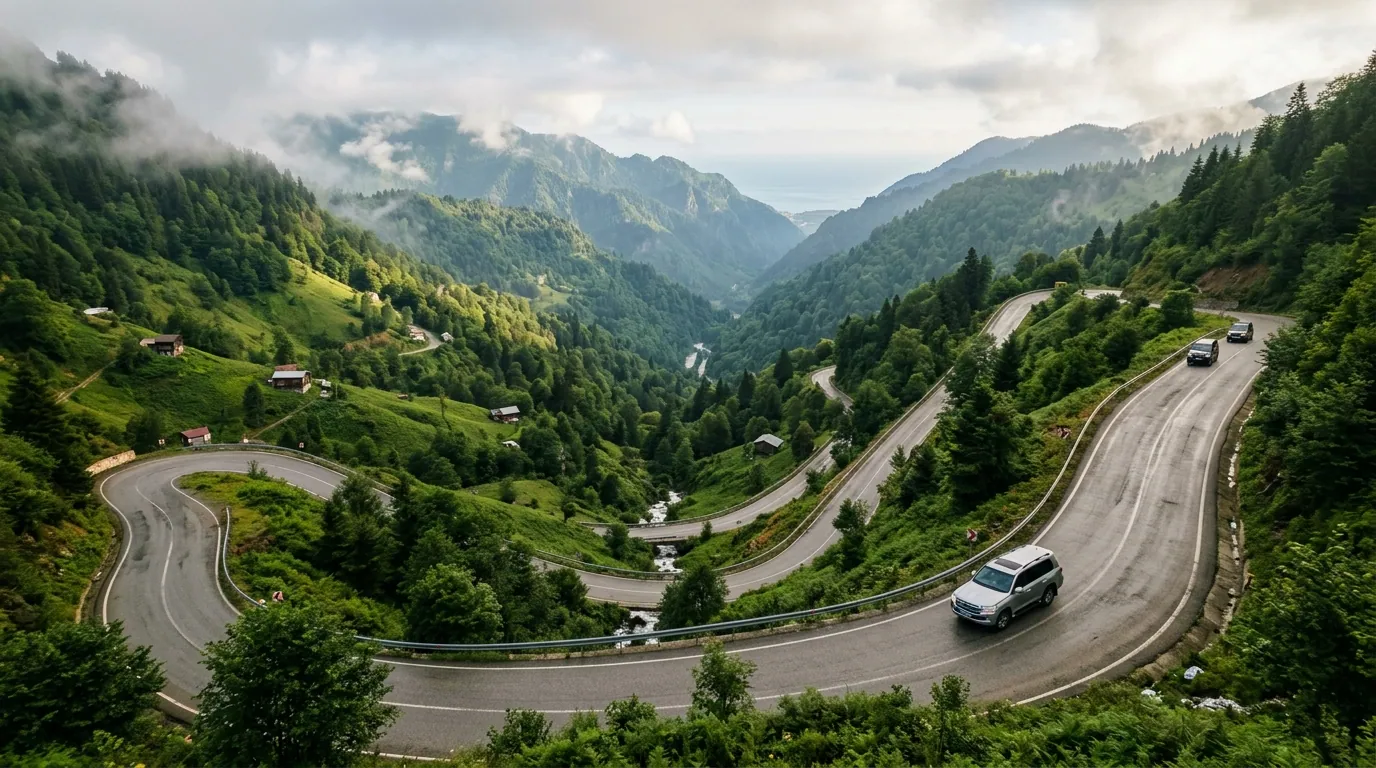
Ayder to Trabzon 2026: about 170 km in roughly three hours — route stages, best stops, transport options compared and estimated costs.
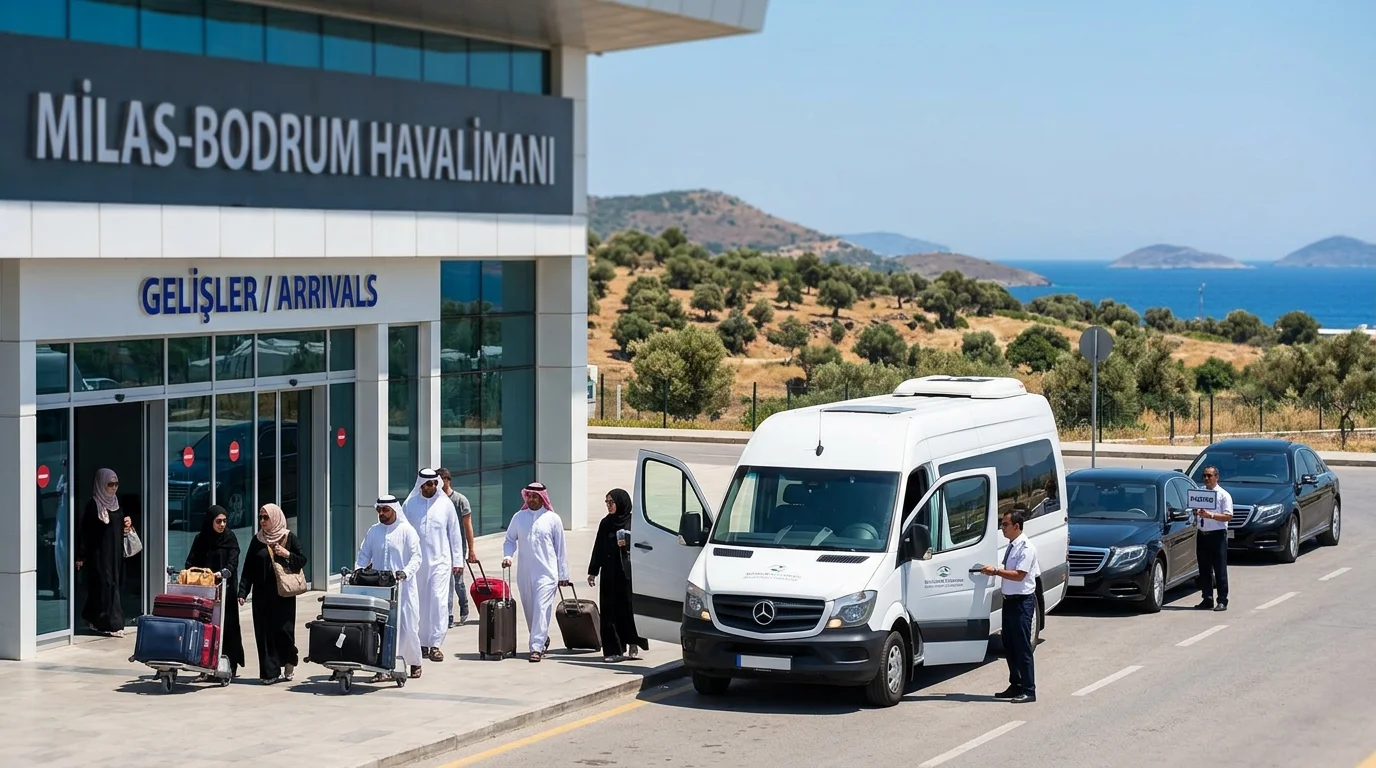
2026 Milas-Bodrum (BJV) transfer guide: private car, HAVAS, taxi. Prices to Bodrum center, Yalikavak and Turgutreis, and the best pick for Gulf families.
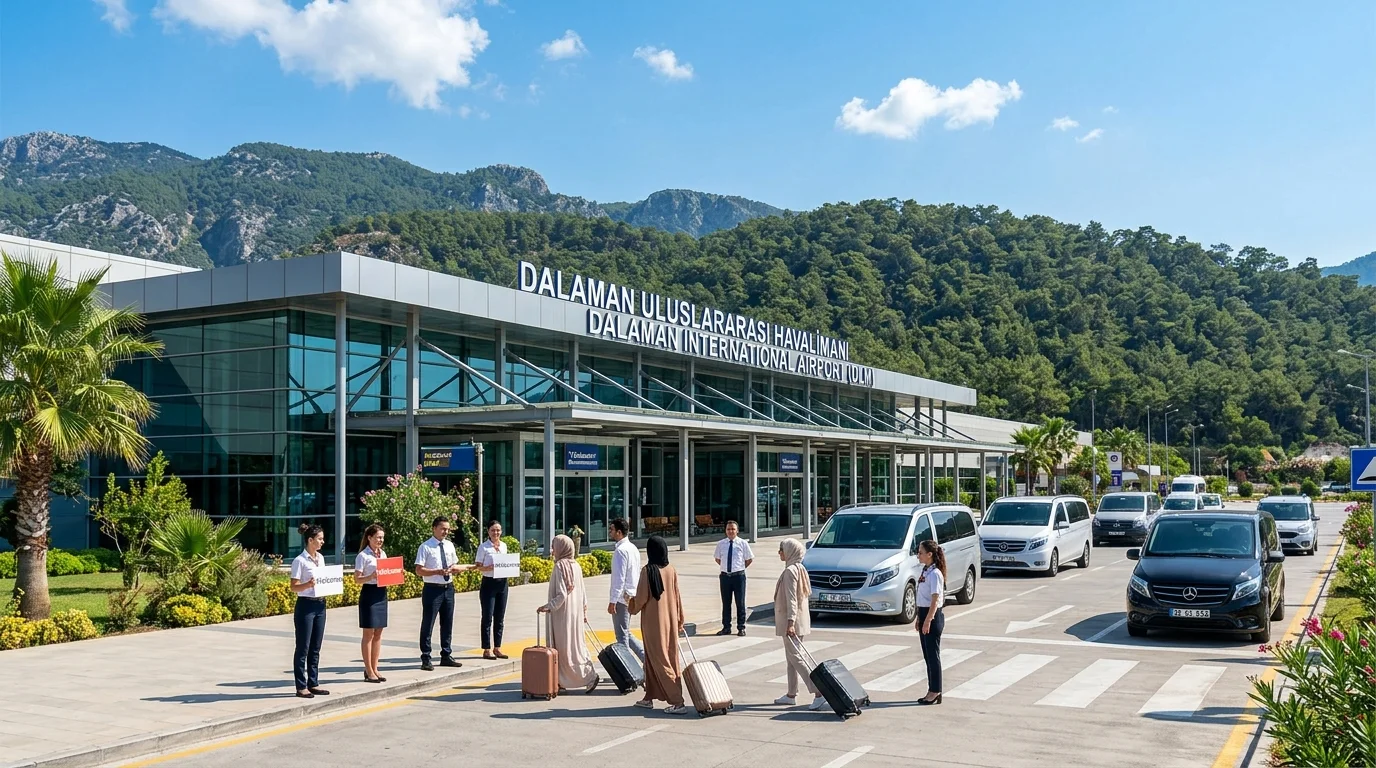
2026 Dalaman (DLM) transfer guide: private car, HAVAS, taxi. Prices to Fethiye, Marmaris, Oludeniz and Gocek, and the best pick for Gulf families.
Ready to explore Turkey?
Voyago brings together hotels, tours and transfers to help you plan the perfect trip to Turkey.