
Quick Answer for Gulf Visitors
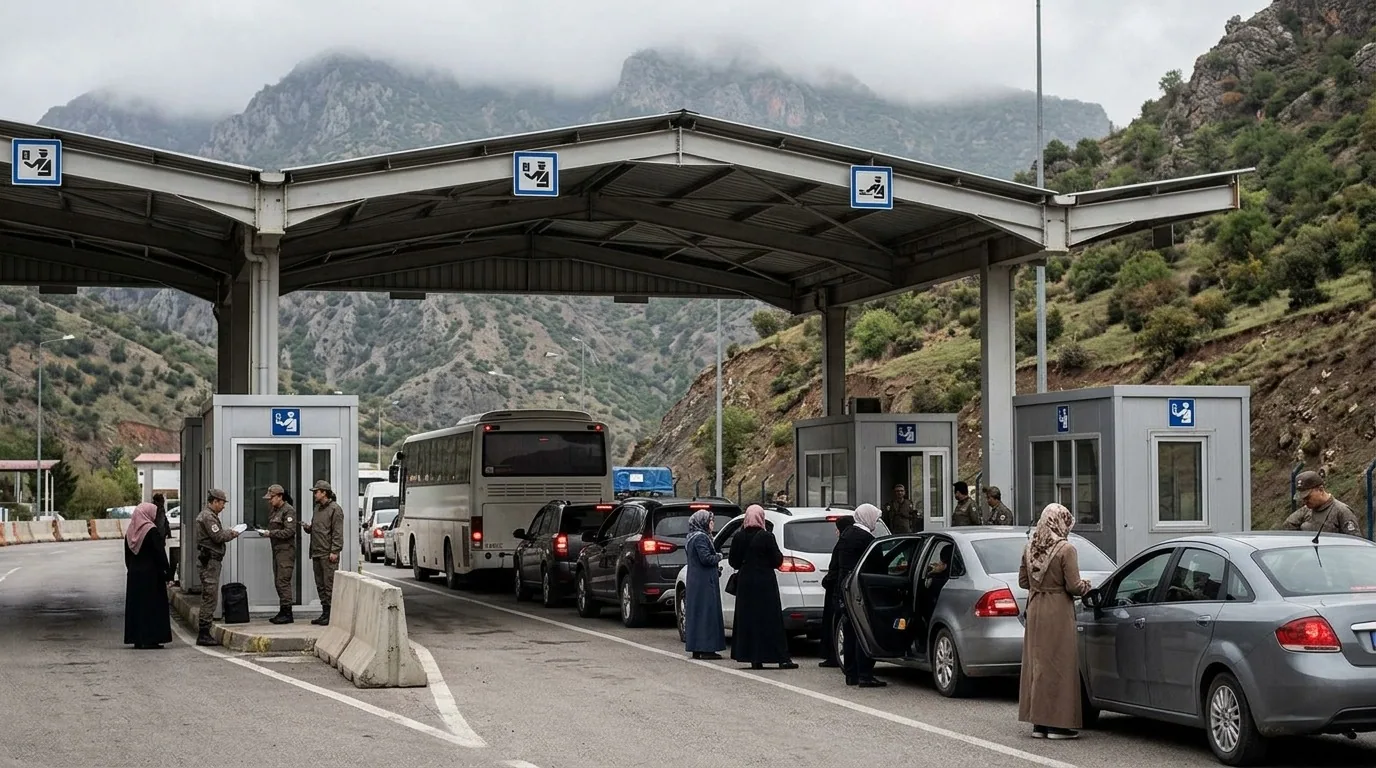
What is a visa run? A short exit from Turkey to a neighbouring country followed by re-entry, intended to start a fresh count of tourist days for anyone who has used up their allowance under the 90-days-in-180 rule. The trip itself is completely lawful; crossing a border and returning is ordinary travel.
Does exiting guarantee a fresh allowance? Not always; the final call belongs to the border officer at re-entry, and tight, repeated patterns raise the odds of extra questions or even refused entry. A single exit after exhausting your balance usually passes without friction, while a pattern of exits every couple of months can read as disguised residence.
What is the lawful alternative? A short-term residence permit for tourism, property ownership or study, processed through the official government gateway — the correct path for anyone intending a long stay. The rule and the alternatives are laid out across this guide.
Hotels near border crossings · Private transfer to the border · Batumi and Trabzon tours
Who Actually Needs a Visa Run?
The need depends on your nationality, not your address. GCC citizens enter Turkey visa-free under the 90/180 rule as detailed in the Turkey visa-free entry guide, and most of them never need a visa run because their visits last weeks, not months. Three groups genuinely do: tourist-status residents in Turkey whose nationality carries short visa or exemption limits; anyone who has exhausted a 90-day balance but wants to complete a long programme such as a summer contract or a language term; and those awaiting a residence permit under processing who need to regularise their interim position.
For these groups — and with Arab nationalities and Gulf residents concentrated in Istanbul, Trabzon and Antalya — the visa run has become part of expat culture: a one- or two-day trip to a nearby country, an exit stamp and an entry stamp, then home. But cultural familiarity does not cancel the legal reality: patterns are monitored, the final word belongs to the border, and the official alternative exists at modest cost.
The 90/180 Rule: The Foundation of Everything
The tourist entry stamp grants up to 90 days inside a rolling 180-day window — not 90 days per visit. Count back six months from any planned return date, and your total days in Turkey within that span must not exceed 90. Exiting stops the count but does not reset the window; old days only drop out of the calculation once 180 days have passed since each of them.
A practical example: a visitor completes 85 days between March and June, exits on 20 June, and plans to return on 10 August. Days from 20 March onward still sit inside the window, leaving only a handful available. Waiting until mid-September pushes most of March outside the window and frees a large balance. A successful visa run is therefore not "exit and return in two days"; it is exiting and returning at the timing that genuinely opens a balance — which is the calculation to make before booking any ticket.
Visa Run Destinations: The Neighbourhood Options
| Destination | Distance and time | Visa for most Arab nationalities | Approximate trip cost | Note |
|---|---|---|---|---|
| Batumi (Georgia) | 4–6 hours overland from Trabzon | Exemption or easy e-visa | $40–100 | The classic, cheapest option |
| Baku (Azerbaijan) | Direct flight from Istanbul | Easy e-visa | $120–250 | Comfortable and enjoyable |
| Sofia (Bulgaria) | 6–8 hours overland from Istanbul | Schengen/Bulgarian visa required | $60–150 | For holders of a European visa |
| Greek islands | Ferry from Cesme and Kusadasi | Schengen required | $80–200 | Seasonal and quick |
| Northern Cyprus | Flight from Istanbul | Broad exemptions | $80–180 | May not count as an exit for some official purposes — verify first |
| Beirut (Lebanon) | 1.5-hour flight | Exemptions for most Gulf citizens | $100–200 | Comfortable for Gulf travellers |
One essential note before choosing: Northern Cyprus is a lovely short break, but entering it from Turkey may not count as leaving Turkish territory under some administrations' rules, so anyone relying on it for a specific official purpose should verify the stamp's effect before travelling. The safest choices are destinations that produce an unambiguous Turkish exit stamp.
Batumi: The Classic Trip Step by Step
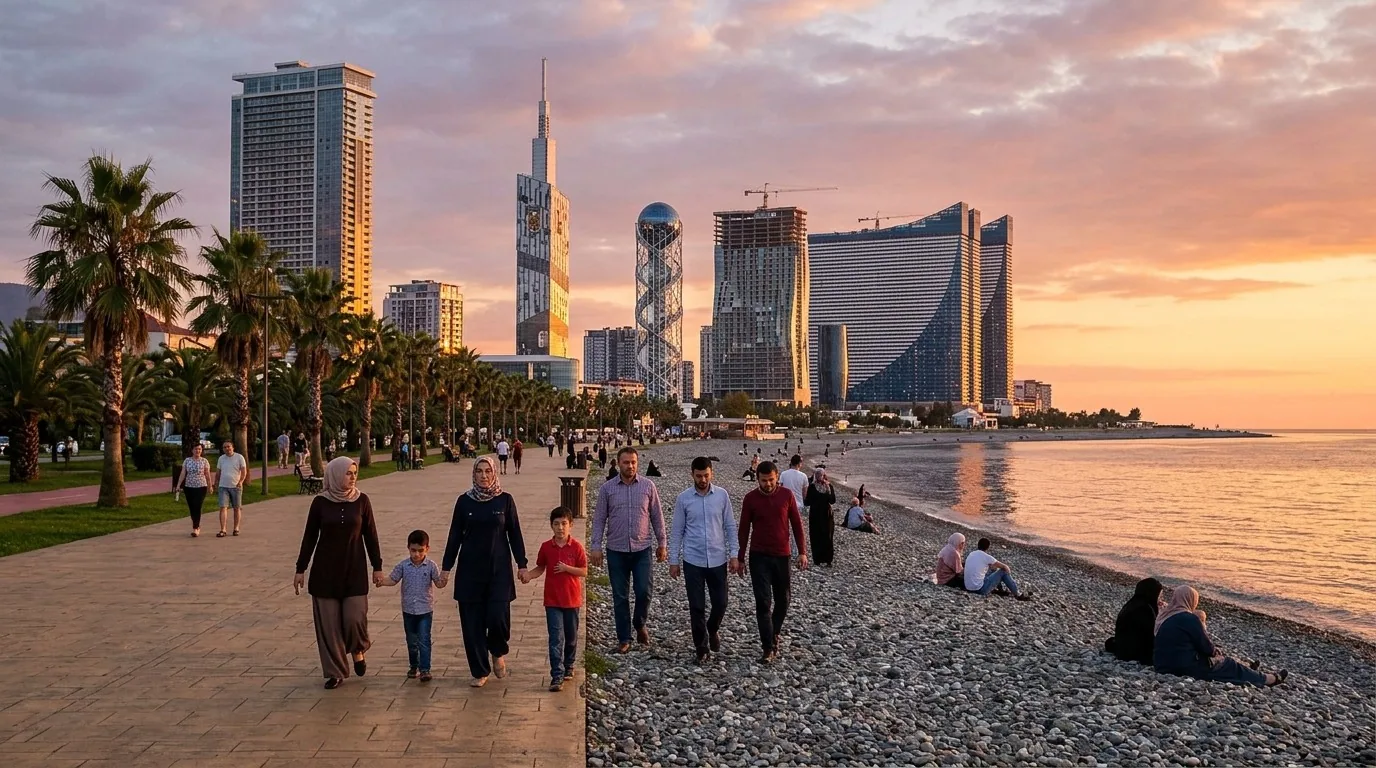
Batumi is the queen of the Turkish visa run for three reasons: the land border a short drive from Trabzon and Hopa, Georgia's broad exemptions for Arab nationalities and Gulf residents, and a seaside city pretty enough to turn routine paperwork into a two-day holiday. The standard route: a morning bus or private car from Trabzon, the Sarp border around midday, one or two nights in Batumi, then the return the following afternoon. The all-in cost, mid-range hotel included, usually stays under $120.
Step by step in practice: book the morning departure from Trabzon or arrange a private car with driver if travelling with family; at Sarp, complete the Turkish exit stamp then the Georgian entry stamp (confirm your nationality is exempt or carry a printed Georgian e-visa); in Batumi, keep your hotel card because the returning officer occasionally asks where you spent the night. On the way back, the Turkish side may ask for your passport plus an eventual onward ticket home and proof of funds — carry them printed in your hand luggage, not on a dead phone battery.
Anyone pairing the visa run with northern sightseeing gets a double deal: a night in Trabzon before the crossing and a night in Batumi after it, covering Uzungol and the Georgian plateau in one loop. The full northern itinerary lives in the comprehensive Trabzon guide.
The Family Visa Run: Worth the Effort?
Travelling with children changes the arithmetic completely. What is a one-day errand for a single traveller becomes, for a family of five, a luggage transfer, two overnight stays and five passports at every border window. The advice from experienced families: make it a genuine short holiday, not a tense stamp dash — two nights in a Batumi seafront hotel, a games arcade for the children, Georgian restaurants for the adults, then a relaxed return. In that spirit the administrative task becomes a pleasant memory, and the hotel bookings and receipts stand as evidence of real tourism rather than a formality.
With infants and small children: an individual passport for every child without exception, a translated birth certificate sometimes requested at crossings when surnames differ, and extra time at the windows since every passport is stamped by hand. Choose the late-morning crossing (after nine) when freight and worker traffic calms down, and keep a flexible day after your return before any commitments. And if a family member's residence application is under processing, verify that a dependent child's exit does not pause the file — an oversight that has delayed processing by weeks for many.
Batumi vs Baku vs Sofia: The Decision Compared
| Criterion | Batumi | Baku | Sofia |
|---|---|---|---|
| Total cost | Lowest | Medium | Medium |
| Visa ease | Highest for Arab nationalities | Easy e-visa | Requires a prior European visa |
| Time from Istanbul | Half a day overland after a domestic hop | 3-hour direct flight | A day by road or a short flight |
| Tourism value of the trip | A pretty seaside city | A polished capital | A wintery European break |
| Best for | Northern residents and overland lovers | Istanbul-based with a flexible budget | Schengen visa holders |
The practical rule: from Istanbul with little time, Baku is easiest on the schedule; from Turkey's north, Batumi has no rival; with a valid European visa, Sofia adds an EU stamp to your passport.
The Risks of Repetition: What Actually Happens at the Border
Lawful exit and re-entry are not an offence, but Turkish border policy gives the officer discretion to refuse entry to anyone whose pattern suggests continuous residence under tourist cover. The flags that raise questions: five or more close-spaced exit-entry cycles, immediate returns after a day or two on a monthly rhythm, no eventual onward ticket, and long hotel stays resembling housing rather than tourism. The usual questions on return: how long will you stay, where are you staying, and why these frequent visits — honest answers with supporting documents usually pass.
The worst-case scenario is rare but real: refused entry with return on the next flight, and the refusal on record influencing later applications including residence permits. Hence the golden rule of the visa run: use it once to organise an interim position, and do not make it a permanent residence style; if you catch yourself planning a third exit within a single year, the system's message is clear — what you need is a residence permit, not an entry stamp.
The Lawful Alternatives: Residence Permits
The official door is wider than many assume. The short-term tourist residence permit generally grants up to 90 additional days, usually once, for most nationalities, and is filed from inside Turkey at least two weeks before your balance runs out via the official government gateway. The property permit grants owners longer periods against a title deed. Student residence comes through certified enrolment at a language institute or university, and work residence through a documented employment contract. Each route has its documents, but all of them leave a cleaner trace in your passport than a chain of back-to-back exits.
For anyone planning a long stay: start with the Ministry of Foreign Affairs site and your nationality's requirements, have your financial documents certified through a sworn translator, and do not rely on the promises of informal intermediaries — residence applications are personal and their responsibility is yours. Baseline entry information per nationality sits in the Turkey visa guide for Saudi citizens and the Turkey visa guide for UAE citizens.
Visa Run Day: A Pre-Departure Checklist
A passport valid at least six months with a blank stamp page; a printed eventual return ticket to your home country (even a month out); proof of the outside night's stay and the first night after return; a bank statement or credit card showing your name; and a photo of every document in your email as backup. Do not carry large undeclared sums or goods resembling trade stock — customs at land crossings inspects tourist profiles with interest.
The ideal crossing time: mornings before the border-worker rush, or shortly after midday. Expect the land border to take one to three hours in season, and book a return with enough flexibility. If you travel in a rental car, confirm the contract permits cross-border driving and carries the company's written authorisation — a detail unpacked in the Turkey car rental contract guide.
Practical Info for Gulf Visitors
| Item | Details |
|---|---|
| The base rule | 90 days inside every 180-day window |
| Nearest land crossing | Sarp (Georgia) from Hopa |
| Cheapest travel window | Outside July–August and school holidays |
| Typical crossing time | 1–3 hours depending on season |
| Georgian stamp | Exemption or e-visa for most nationalities |
| The alternative permit | Short-term tourist residence via the official gateway |
| Documents on return | Passport + eventual ticket + proof of stay |
| Smart timing | Calculate the window before booking dates |
FAQ (12 Questions)
- Is the visa run legal? Exiting and re-entering is lawful travel in itself; the breach never lies in the trip but in using it as a pattern of undeclared permanent residence, and that is where border discretion begins.
- How many times can it be repeated safely? There is no official number; in practice one or two exits a year pass quietly, and beyond that the door opens to questions and possible refusal.
- Do the exit and return days count against the balance? They usually count as days present in Turkey; add two extra days to your plan.
- Do GCC citizens ever need a visa run? Rarely, since their exemption covers repeatable 90-day stays; those spending more than 90 continuous summer days are the main users.
- What is the cheapest exit from Istanbul? Baku by air in fare-sale weeks, and Batumi overland for anyone already in the north; the full comparison is in the destinations table above.
- Does Georgia sometimes refuse entry? Rarely for holders of a valid exemption or e-visa; refusal usually follow an almost-expired passport or a missing stamp.
- Does a Northern Cyprus stamp count as an exit? Administratively debated; for official purposes the safer choice is a destination producing an unambiguous Turkish exit stamp.
- What do I answer if asked about frequent visits? The truth with a supporting document: a study programme, a notarised lease for a defined period, or imminent final return tickets.
- Can I apply for tourist residence after exiting? Filing generally happens from inside Turkey before the balance ends; after exit the channel shifts to consulates, so timing is critical.
- Will I be asked about money on return? Rarely; the common question is where you are staying and for how long, and printed proof shortens the conversation.
- Do visa runs affect future visa applications? Repeated recorded patterns may require explanation in later applications; a clean file of official permits carries far more weight.
- What is the best time of year for the trip? May, June, September and October: lower fares, calmer crossings, and the nicest Batumi and Baku weather.
Conclusion
The visa run from Turkey in 2026 is a temporary fix, not a residence strategy: a short exit to Batumi or Baku opens a balance of days for anyone planning a long summer or a study term, but heavy repetition turns each stamp into a question mark at every return. Calculate your 180-day window precisely before booking any ticket, carry your return documents printed, and treat the neighbouring destination as a small holiday rather than a stamp. And anyone whose days in Turkey have become a home rather than a visit should take the correct road — an official residence permit, cleaner in your passport and steadier in your future.
Trabzon and Batumi hotels · Private transfer to the crossing · Northern Turkey and Georgia tours
Sources
- Turkish Ministry of Foreign Affairs — official residence and visa rules per nationality.
- Turkish government gateway — filing and tracking residence permit applications.
- Turkey e-Visa portal — entry eligibility checks before planning.
- Current travel status for Turkey — the latest travel guidance for visitors.
Related travel guides

Ayder highlands 5-day itinerary 2026: a day-by-day plan for Arab families covering thermal pools, valleys, and Trabzon.
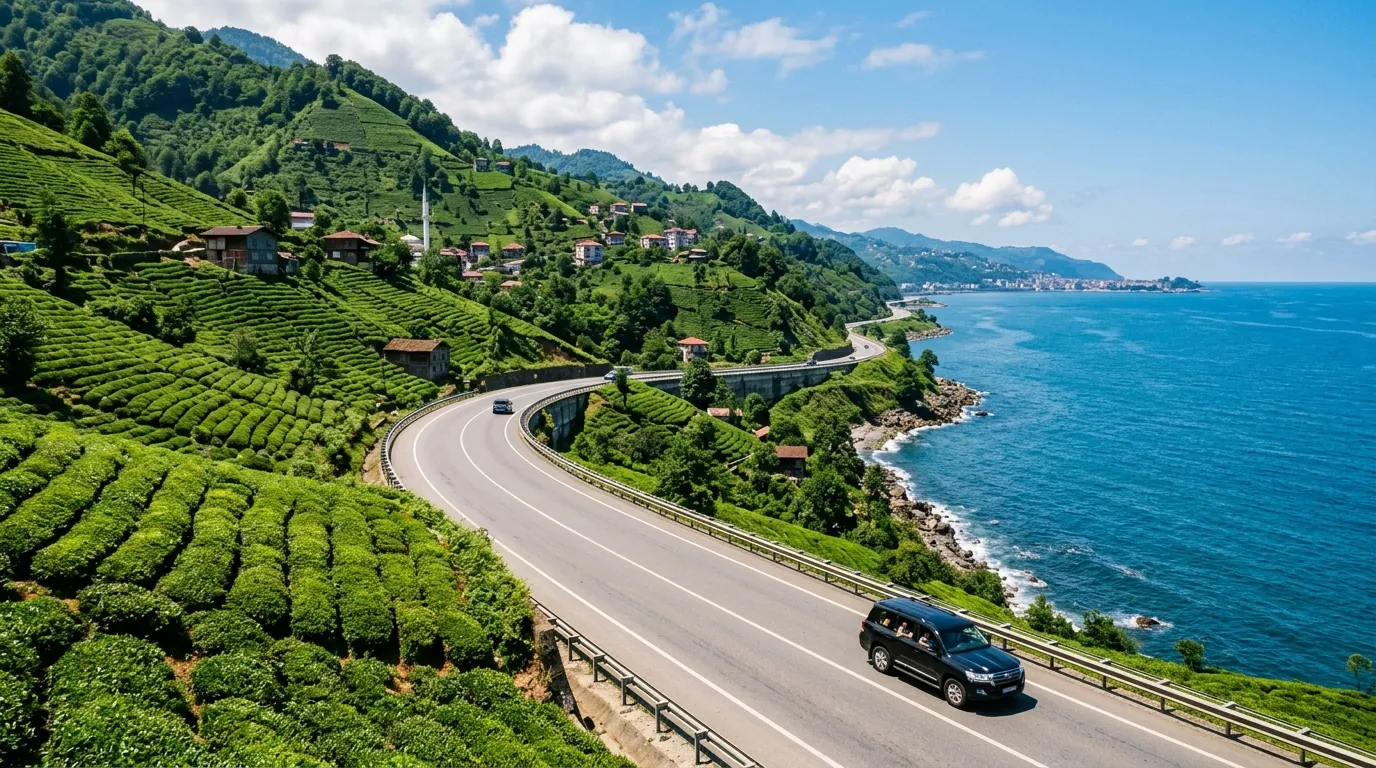
Ayder Trabzon distance 5-day itinerary 2026: a day-by-day plan for Arab families covering the transfer route.
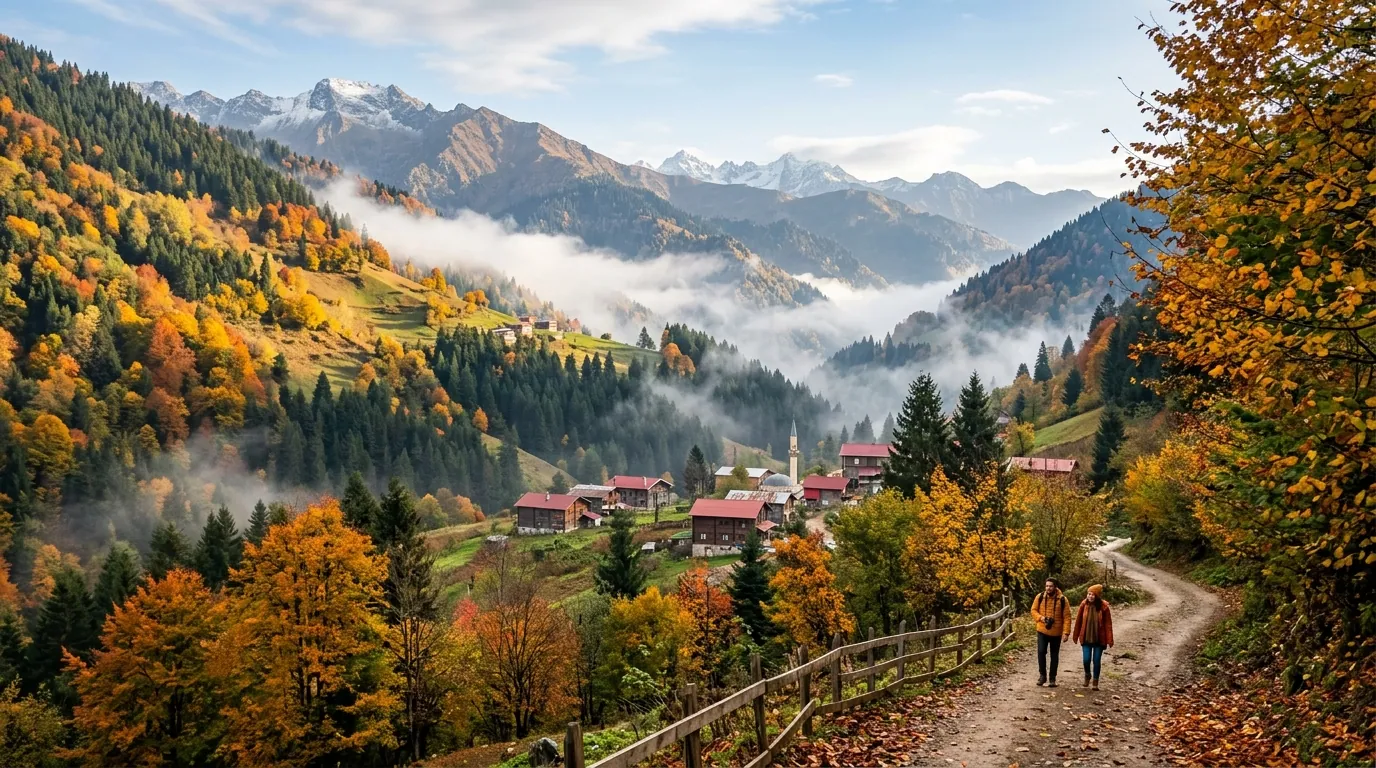
Ayder Turkey weather 2026: monthly averages, rain patterns, best months to visit, and packing tips for Gulf families.
Ready to explore Turkey?
Voyago brings together hotels, tours and transfers to help you plan the perfect trip to Turkey.