
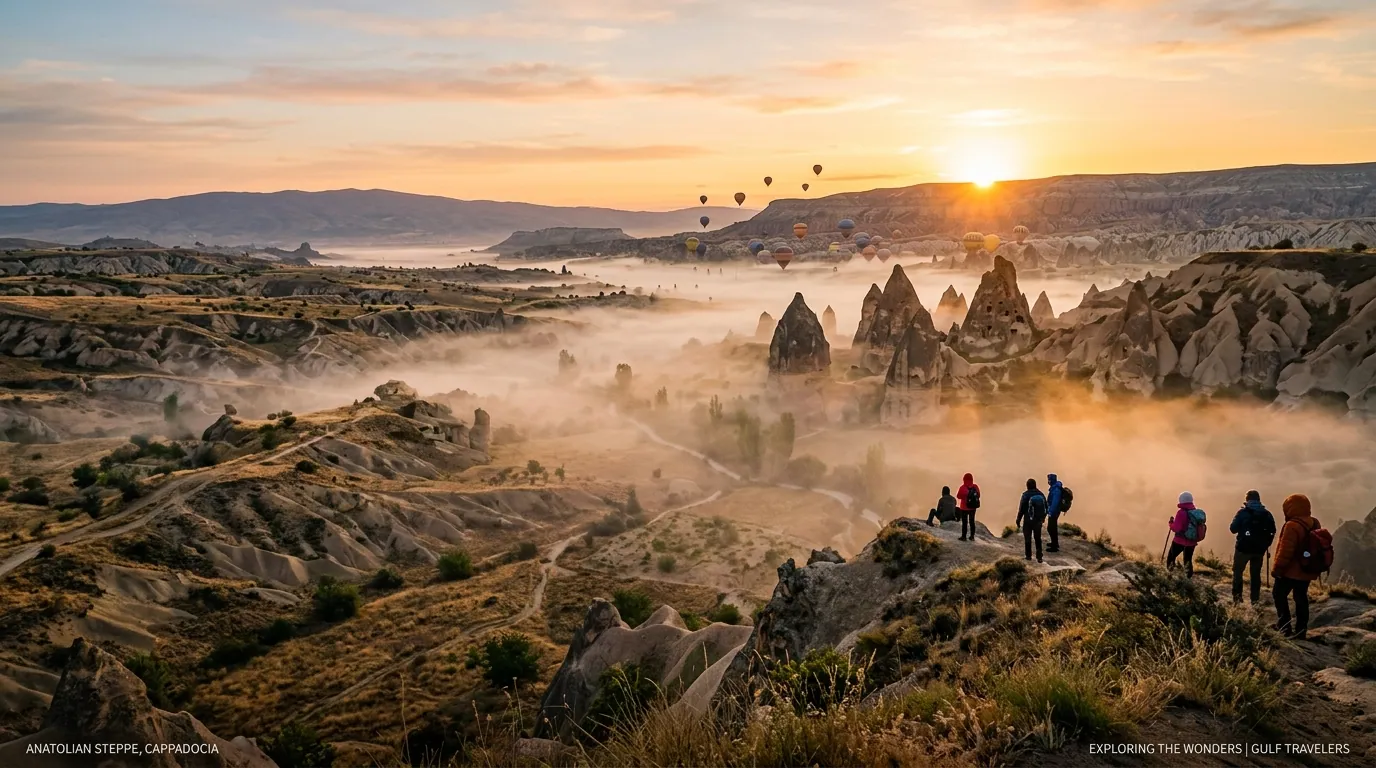
Quick Answer for Gulf Visitors
What is Anatolia? The Asian heart of Turkey, a vast peninsula between the Black Sea, the Aegean and the Mediterranean, home to the oldest cities and the deepest civilizations in the world.
Why does it matter? Because it gathers Cappadocia, Troy, Ephesus, Pamukkale, Mount Ararat and Konya within a single flight radius — a rich itinerary without exhausting transfers.
Where does a practical trip start? Istanbul as the gateway, then Cappadocia by domestic flight, then the western coast for Ephesus and Pamukkale, then back to Istanbul for the return.
Anatolia: The Asian Heart of Turkey
Anatolia is an ancient Greek word meaning "the East" or "sunrise," given to the Asian peninsula that forms 97 % of Turkey's area. This land has witnessed the greatest civilizations of history: the Hittites in the Bronze Age, the Greeks and Romans in the classical era, the Byzantines in the Middle Ages, then the Ottomans who made it the base of their world conquests. Each civilization left its mark in monuments and museums — you can find a Roman temple on a Hittite hill beside an Ottoman mosque and a Byzantine church. The practical guide for travelers is the Turkey map guide and the full Turkey guide.
The Basic Geography of Anatolia
| Element | Detail |
|---|---|
| Area | about 756,000 km² (97 % of Turkey) |
| Average elevation | 1,130 m (a high plateau) |
| Highest peak | Mount Ararat 5,137 m (eastern Turkey) |
| Longest river | Kizilirmak 1,355 km (Black Sea) |
| Largest lake | Lake Van 3,755 km² (eastern Turkey) |
| Climate | continental inland, Mediterranean on the coasts |
| Oldest settlement | Catalhoyuk 7,500 BC |
Civilizations That Passed Through Anatolia
Hittites (1650-1200 BC): the first empire in Anatolia, capital Hattusha near modern Kayseri. Masters of iron, they fought the Egyptians at the Battle of Kadesh.
Persians and Greeks: after the fall of the Hittites, the two empires alternated over Anatolia. The Greek temples at Ephesus, Didyma and Aphrodisias are the finest relics of that era.
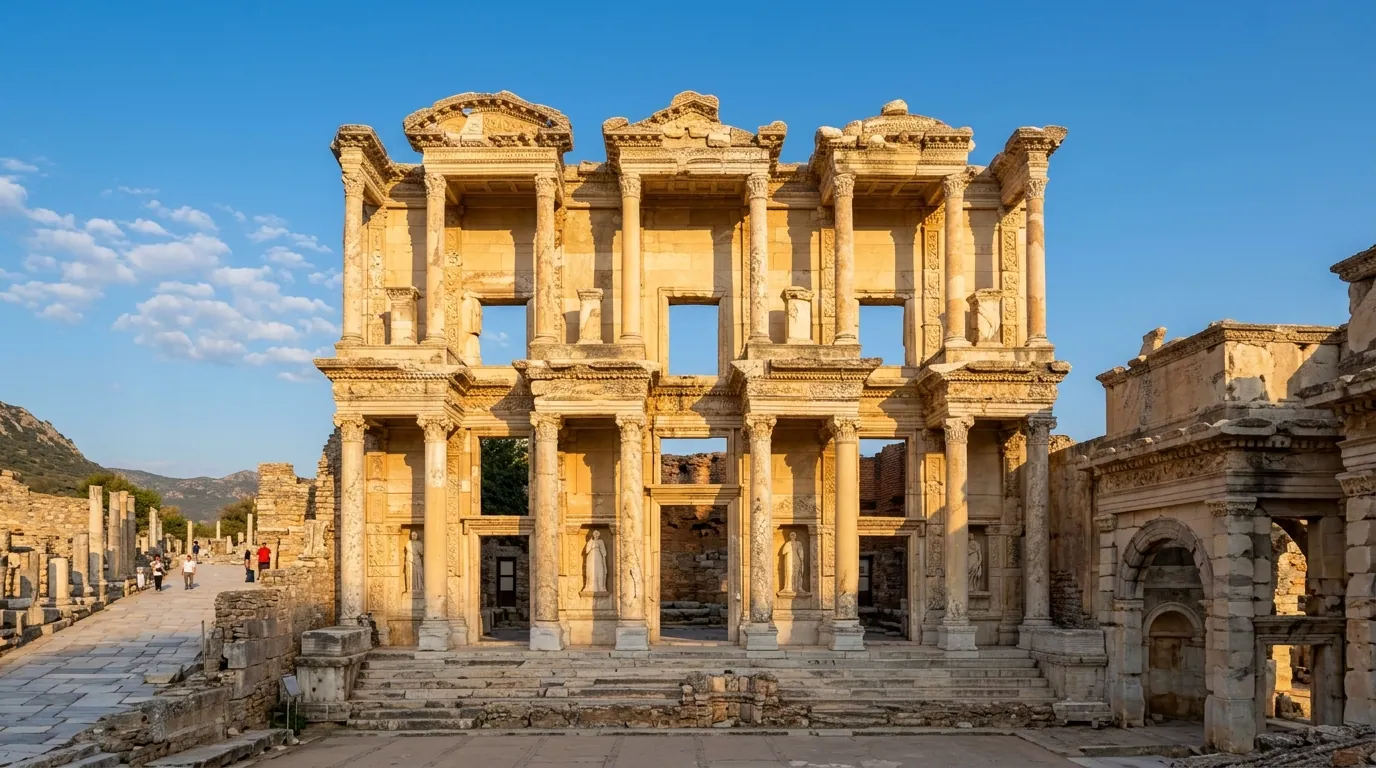
Romans: they turned Ephesus into the second largest city of the empire. Remains of the Temple of Artemis and the Library at Ephesus bear witness.
Byzantines: after the division of the Roman Empire, Constantinople (Istanbul) became the capital of the Byzantine East. The Church of Hagia Sophia is the most eloquent witness.
Seljuks: Turkish tribes entered Anatolia in the 11th century and established a powerful sultanate in Konya. Their traces are in Mevlana and the cupolas and tombs in every Anatolian city.
Ottomans: from a small emirate in Bursa, they took all of Anatolia and built a world empire. Mosques and palaces in every major city.
The Iconic Sites of Anatolia for the Gulf Visitor
Cappadocia: Wonders of Nature and History
- Fairy chimneys of Pasabag: unique rock formations.
- Open-air museum of Goreme: a museum under the open sky.
- Derinkuyu underground city: homes carved into the rock.
- Hot air balloon ride: a unique experience. Full detail in Cappadocia guide.
Ephesus: Greek-Roman Splendor
- Library of Ephesus: an iconic facade.
- Temple of Artemis: one of the seven wonders.
- Theatre of Ephesus: seats 25,000 spectators.
Pamukkale: White Travertine
- Travertine terraces: natural warm pools.
- Hierapolis: an ancient city above the springs.
Troy: Myth Made Real
- Nine layers: reaching back 4,000 years.
- Wooden Trojan horse: the symbol of the war.
Mount Nemrut: Kings on a Summit
- King statues: 10 m tall at 2,150 m.
- The view: sunrise above the clouds.
The Green North: Trabzon, Ayder and Uzungol
- Trabzon: the small Hagia Sophia on the Black Sea and the cliff-hanging Sumela Monastery.
- Ayder: a green highland with thermal springs and tea by the river.
- Uzungol: a quiet lake ringed by pine forest, like a postcard.
- Full detail in the Ayder guide and the complete Uzungol guide — this region is the ideal escape for Gulf families at the height of summer.
A Practical 10-Day Itinerary Through Anatolia
| Day | Destination | Main activity |
|---|---|---|
| 1-2 | Istanbul | Hagia Sophia, Bazaar, Bosphorus |
| 3-5 | Cappadocia | Balloon, Ihlara valley, Derinkuyu |
| 6 | Konya | Mevlana, Seljuk tombs |
| 7 | Ephesus | Library of Ephesus, Temple of Artemis |
| 8 | Pamukkale | Travertine, Hierapolis |
| 9 | Antalya | Old town, Düden waterfalls |
| 10 | Return to Istanbul | domestic flight |
A Compressed 7-Day Version
No ten days to spare? Drop Antalya and the two extra Istanbul nights, and turn Konya into a daytime stop on the way back from Cappadocia to Kayseri airport. You still get the essence of Anatolia — two civilizational capitals, the fairy chimneys, a balloon over the valley — without rushing anything.
What to Add if You Have More Time?
- Western Istanbul: Bursa and Uludag (one extra day).
- South: Antalya and Fethiye (two extra days).
- East: Nusaybin and Ararat (one extra week).
- North: Trabzon and Ayder (two extra days).
Practical Info for Gulf Visitors
| Item | Detail |
|---|---|
| Best season | April-June and September-October |
| Domestic flights | Pegasus and Turkish Airlines to every major city |
| Overland transport | a modern road network between cities |
| Food | authentic Anatolian kitchen in every city |
| Language | Turkish officially; English works at major sites and hotels |
| Prayer times | mosques in every district with ablution facilities |
| Practical guide | 5-day Cappadocia itinerary |
| Cultural information | GoTürkiye |
Practical Tips for Gulf Visitors
- Prayer times: mosques with ablution facilities in every district.
- Money: the lira is official; USD works in major hotels — track the rate on the Central Bank of Turkey site.
- Weather: check the Turkish Meteorological Service before crossing regions — Istanbul and the east differ sharply.
- Transport: Havaist buses, or a private car with driver when travelling with family.
- Connectivity: a Turkcell or Vodafone SIM, or an eSIM.
- Hospitals: major hospitals in Istanbul, Ankara and Konya, around the clock.
- Emergencies: 112 covers police, ambulance and fire in Turkey.
- Visa: GCC citizens are visa-exempt for up to 90 days in any 180-day period; other nationalities should check the official e-visa portal — details in the UAE visa guide.
- Stays: compare hotels from guesthouses to 5 stars.
- Tours: book organized tours ahead in busy seasons.
Budgeting a Trip Across Anatolia
The ranges below are approximate, in Turkish lira, and vary with season, city and class — higher in summer and on the coasts, lower inland.
Budget
- simple guesthouse: roughly 1,500-3,500 lira a night.
- popular meals: 150-350 lira.
- intercity buses: 100-300 lira.
- group tours: 500-1,500 lira per person.
Mid-range
- 3-4 star hotel: 4,000-9,000 lira a night.
- mid-range restaurants: 400-800 lira per person.
- private car with driver: 2,000-4,000 lira a day.
- private tours: 3,000-6,000 lira per person.
Comfortable
- 5-star hotel: 10,000-25,000 lira a night.
- fine dining: 1,000-2,500 lira per person.
- VIP private driver: 4,000-7,000 lira a day.
Compare hotel booking and tours before locking in domestic flights.
Anatolia with the Family: Why Gulf Families Fit Right In
- Open space without crowds: the valleys of Cappadocia give children safe room to roam.
- Half-day sites: most headline monuments take half a day at most, leaving room for naps.
- Easy halal eating: the Anatolian kitchen runs on grilled meats, and family lounges are standard in restaurants everywhere.
- Escaping Gulf heat: the plateau runs cooler than the coasts, and Trabzon and Ayder offer spring-like summers.
- Privacy: cave hotels and city suites come with family rooms and private bathrooms.
Plan a ready-made route through organized tours, or start with the Turkey with family guide.
Common Mistakes to Avoid
- Cramming four regions into one week: Anatolia is wider than it looks.
- Underestimating the east: Erzurum and Agri need a domestic flight, not a drive.
- Booking the balloon late: dawn flights sell out weeks ahead in season.
- Assuming trains go everywhere: the YHT covers the west only.
- Ignoring the exchange rate: check the lira before changing large amounts.
- Scattering the hotels: stay near the sites to cut daily transfers.
- Skipping insurance: simple cover saves real trouble.
- Last-minute bookings in July-August: the summer peak is crowded.
When Not to Go Deep into Anatolia
- December-February: snow sometimes closes eastern roads, and Cappadocia is bitterly cold at dawn.
- Ramadan in inland towns: daytime dining is quieter, though Konya and Sanliurfa gain a special atmosphere.
- Mid-Shaban and the two Eids: higher prices and a visible Gulf crowd.
- March: intermittent rain in the west.
The best windows are May-June and September-October; families tied to school holidays should pick July in the green north — see the best time for the Turkish north.
UNESCO World Heritage Sites in Anatolia
Turkey lists more than 20 sites on the UNESCO register, and most of them sit in Anatolia:
| Site | Listed | Why it deserves a visit |
|---|---|---|
| Goreme and Cappadocia | 1985 | fairy chimneys and churches carved into rock |
| Hattusha | 1986 | capital of the first Hittite empire |
| Mount Nemrut | 1987 | statues of gods and kings at 2,150 m |
| Pamukkale and Hierapolis | 1988 | white travertine terraces above a Roman city |
| Troy | 1998 | nine cities stacked over 4,000 years |
| Ephesus | 2015 | the Library of Celsus and an almost complete Roman city |
| Gobeklitepe | 2018 | the oldest known temple in the world (about 9,500 BC) |
Islamic and Biblical Sites That Matter to Gulf Visitors
- Sanliurfa: by local tradition the birthplace of the Prophet Ibrahim, home to the sacred carp pools of Balikligol, with Gobeklitepe only 20 minutes away by car.
- Cave of the Seven Sleepers: the best-known tradition places the cave of Ashab al-Kahf near Ephesus, with a second site at Afsin near Maras; both are open to visitors.
- Mount Ararat: in the far east of Anatolia, tied to the story of Noah's ark; the summit stands 5,137 m high.
- Konya: the shrine and museum of Mevlana Jalaluddin Rumi, the natural stop on the road to or from Cappadocia.
Quick Facts About the Anatolian Kitchen
- Testi kebab: slow-cooked in a clay pot that is cracked open at the table - the Cappadocia signature.
- Kayseri manti: tiny meat-filled dumplings served in yogurt, the Anatolian answer to ravioli.
- Gaziantep: a UNESCO City of Gastronomy and the home of pistachio baklava.
- Kunefe and humus in Antakya to the south, and tea served glass after glass on the green plateaus of the north.
Domestic Flights vs Buses: Getting Around Anatolia
| Factor | Domestic flight | Intercity bus | YHT high-speed train |
|---|---|---|---|
| Speed between major cities | fastest (1-2 hours) | slowest (5-12 hours) | fast on the Istanbul-Ankara-Konya axis |
| Family comfort | excellent when booked early | good, wide seats | excellent, easier for children to move |
| Luggage | weight limits on low-cost carriers | generous bays | generous bays |
| Rough cost | mid to high | cheapest | mid |
| Reaches Cappadocia? | yes (Kayseri or Nevsehir airports) | yes | not directly (Ankara, then bus) |
The practical verdict: a Gulf family with seven days or less saves a full day in each direction by flying; buses suit long, comfortable legs on a tighter budget; and the YHT between Istanbul and Konya removes the airport from the plan entirely.
Distances and Travel Times
| Route | Best mode | Time |
|---|---|---|
| Istanbul - Cappadocia | domestic flight | about 1.5 hours |
| Istanbul - Izmir (for Ephesus) | domestic flight | about 1 hour |
| Izmir - Pamukkale | bus or private transfer | about 3.5 hours |
| Istanbul - Konya | high-speed train | about 4.5-5 hours |
| Cappadocia - Konya | bus or private transfer | about 4 hours |
The high-speed train (YHT) links Istanbul, Ankara and Konya and is a comfortable, weather-proof alternative to flying; elsewhere, domestic flights connect every major Anatolian city for roughly the price of a long taxi ride.
Anatolia Through the Seasons: Which Region in Which Month?
| Season | Best regions | Why |
|---|---|---|
| Spring (March-May) | Istanbul, western Anatolia, Ephesus | mild temperatures, plateau flowers, thin crowds before summer |
| Summer (June-August) | the green north: Trabzon, Ayder, Uzungol | escape from Gulf heat and the southern coasts |
| Autumn (September-November) | Cappadocia, Konya, the east | autumn colours and sunny weather without peak prices |
| Winter (December-February) | Istanbul, Bursa and Uludag | magical Cappadocia snow, ski season and lower rates |
The practical rule for a Gulf family: travel against the heat — head north to the green mountains in July and August, and open up the west and south in spring and autumn.
FAQ (12 Questions)
- Where is Anatolia? in the Asian part of Turkey, between three seas.
- What is its area? about 756,000 km².
- Highest peak? Mount Ararat 5,137 m.
- Oldest civilization? the Hittites in the second millennium BC.
- Does Cappadocia deserve a full week? yes, and the surrounding towns deserve extra days.
- Best base city? Istanbul, with a domestic flight to Cappadocia.
- Is Anatolia family-friendly? yes, with open-air sites and child-friendly monuments.
- The signature dish? kebab, baklava, the rare Anatolian kitchen.
- Day tours available? yes, most hotels organize them.
- Bus routes? yes, between major cities.
- How many days are enough? 10 days for the main sites (Istanbul + Cappadocia + Ephesus + Pamukkale).
- Where to start reading? The full Turkey guide.
Conclusion
Anatolia is not a geography — it is the open playground of world history. In 10 days you can see a Hittite civilization, a Byzantine church, an Ottoman palace, a Greek city and a natural park — all in one country, all easily reached from Istanbul. Start at Hagia Sophia and end in Ihlara Valley, and you will leave with unforgettable memories. Fix your season first (the north in summer, the west in spring and autumn), book the balloon and the domestic flights early, and keep one full day unplanned to wander an Anatolian town at your own pace.
Sources
Related travel guides
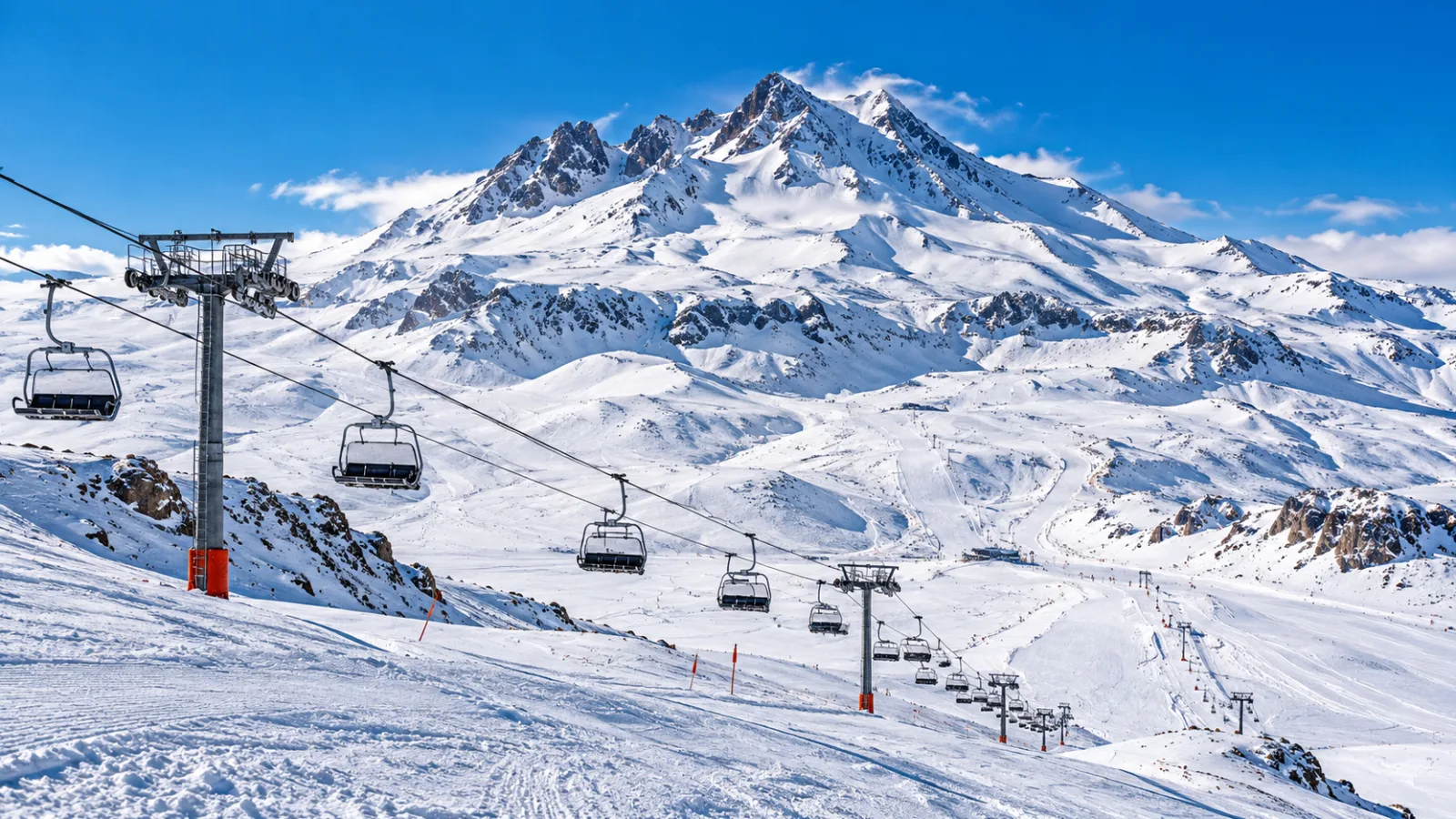
Erciyes is one of Turkey's biggest and highest ski areas, near Kayseri and within reach of Cappadocia — season timing, elevation and what to expect.
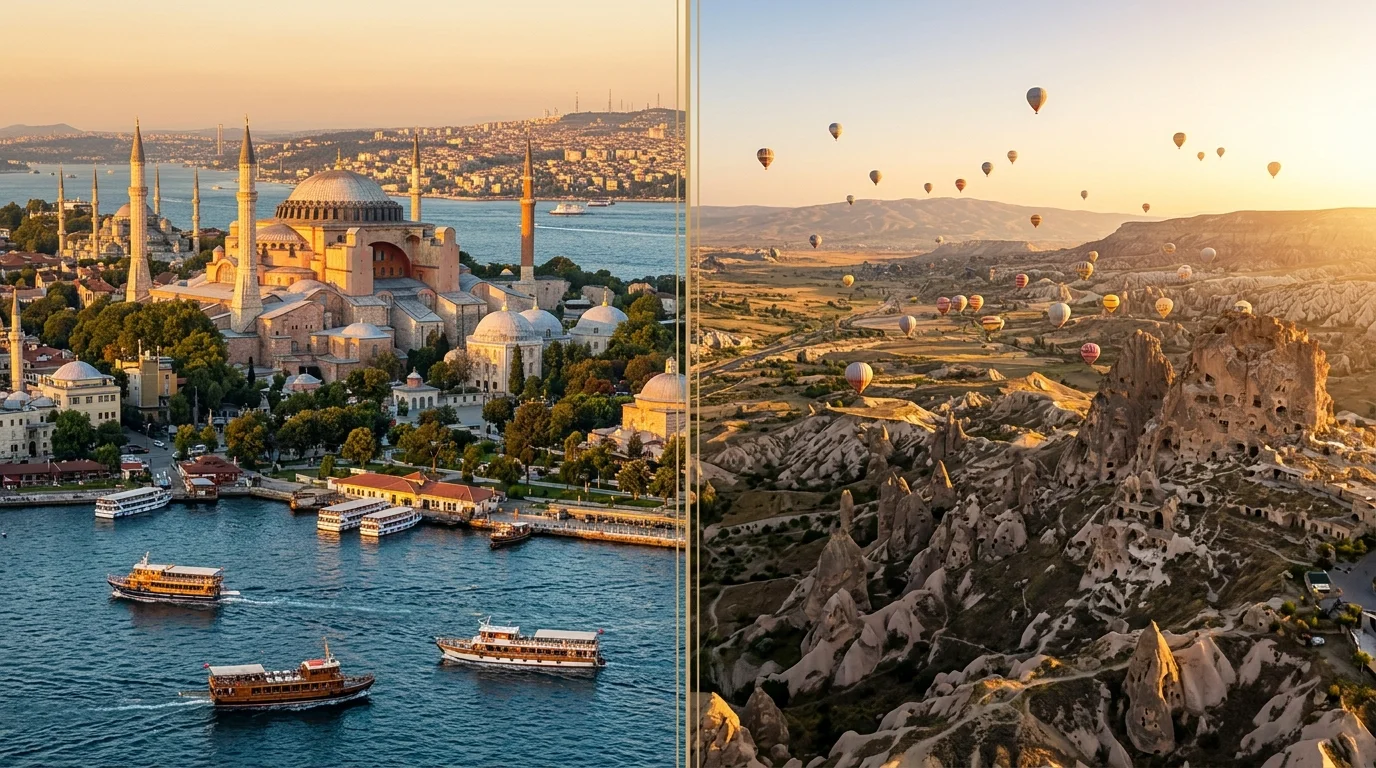
Istanbul to Cappadocia 2026: flights, buses, and private cars compared, complete 3-day and 5-day itineraries, cave hotels, balloon ride details, and Gulf family tips.
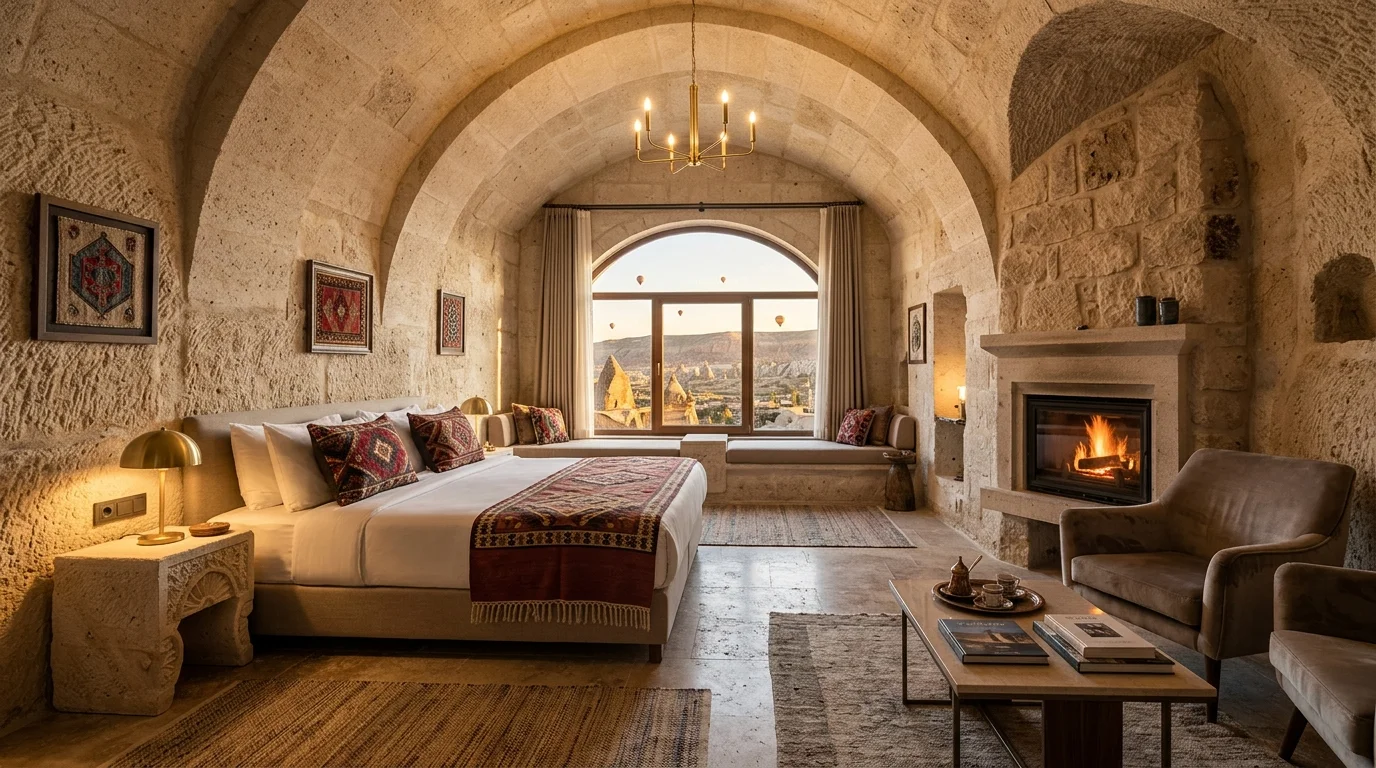
Cave hotels in Cappadocia 2026: Goreme, Urgup and Uchisar compared, balloon-view terraces, price bands, booking windows, and key pre-booking checks.
Ready to explore Turkey?
Voyago brings together airport transfers, guided tours and car rental to help you plan the perfect trip to Turkey.