
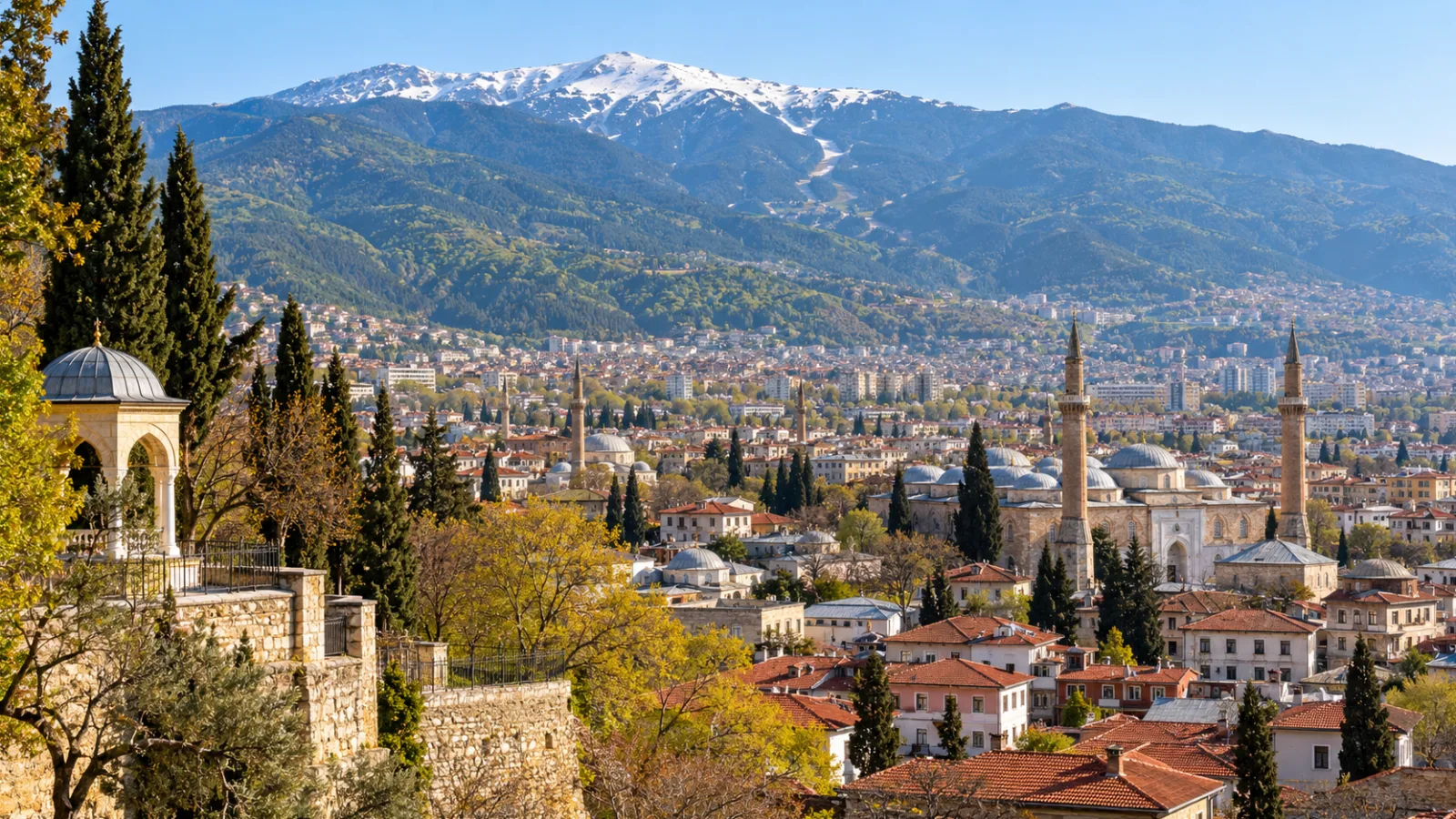
Bursa's weather in general
Bursa sits at the foot of Uludağ mountain in Turkey's Marmara region, which gives it a clear four-season climate: a warm, relatively dry summer and a cold, rainy winter, with the mountain standing directly behind the city often running 15–20°C colder than the streets below on the same afternoon.
According to Turkey's State Meteorological Service (MGM) long-term averages (1991–2020), Bursa's mean temperature ranges from around 5–6°C in January to a peak near 24–25°C in July and August, with average highs reaching roughly 28–31°C at the height of summer.
Monthly averages (MGM long-term data)
| Month | Average | Average High | Average Low |
|---|---|---|---|
| January | 5.4° | 9.6° | 1.8° |
| February | 6.2° | 10.9° | 2.2° |
| March | 8.4° | 13.9° | 3.6° |
| April | 13.0° | 19.0° | 7.2° |
| May | 17.7° | 23.9° | 11.4° |
| June | 22.1° | 28.4° | 15.0° |
| July | 24.6° | 31.0° | 17.3° |
| August | 24.4° | 31.1° | 17.4° |
| September | 20.4° | 27.3° | 13.8° |
| October | 15.7° | 22.0° | 10.2° |
| November | 11.2° | 16.7° | 6.5° |
| December | 7.4° | 11.7° | 3.6° |
Source: Turkish State Meteorological Service (MGM) — Bursa statistics, long-term averages, accessed October 2026.
What this means for your trip
- June through September is the warm, relatively dry stretch — good for walking the old city (Koza Han, the Grand Mosque, Cumalıkızık village) without the intense heat of southern Turkey, though direct-sun afternoons in July and August still run hot.
- October through April carries most of Bursa's rain and its coldest days; a light-to-medium coat is enough in the city center outside the depths of winter.
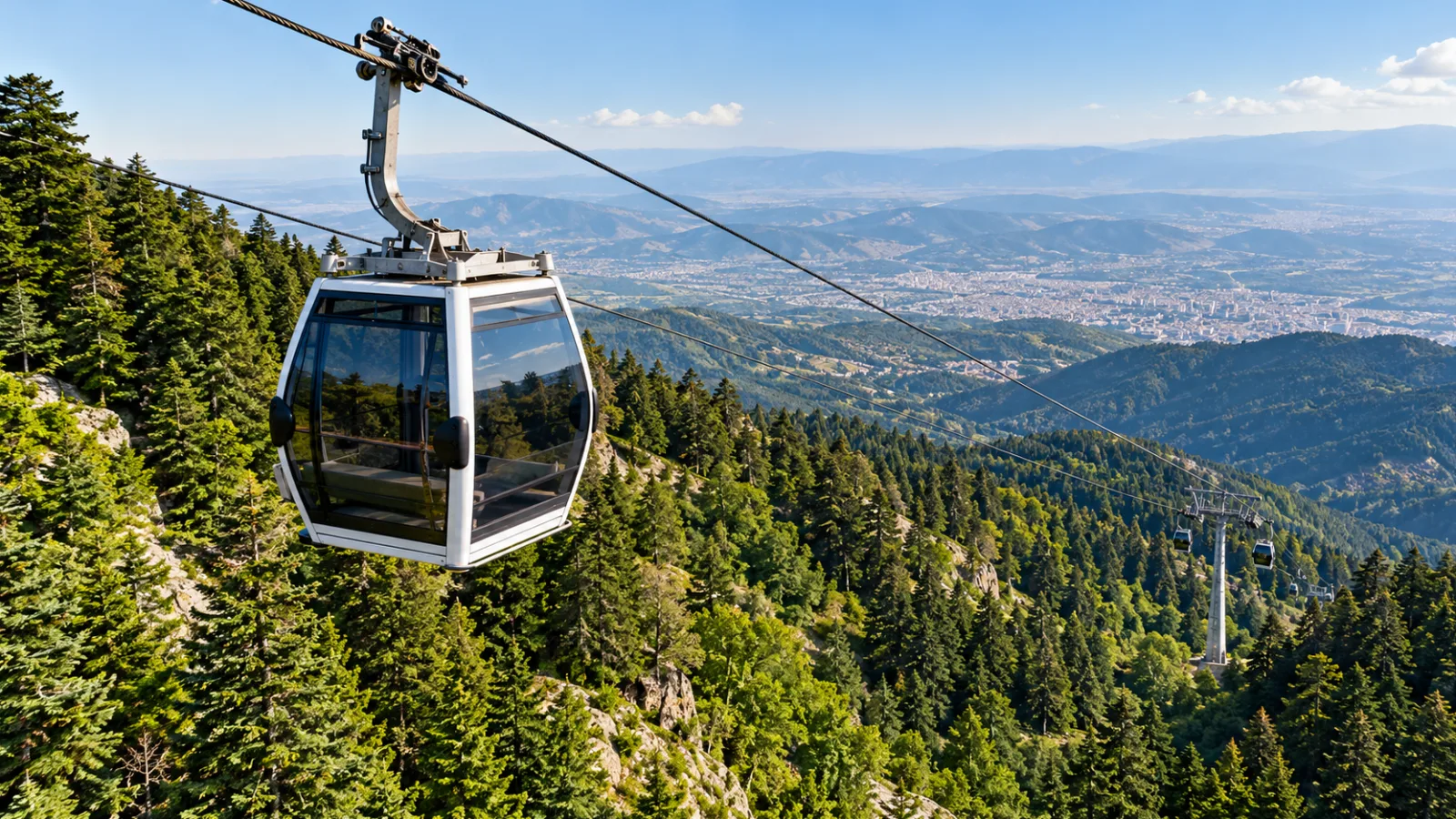
- Uludağ changes everything. The mountain overlooking Bursa has its own microclimate: summer there is a genuine escape from the heat (city temperatures drop to a spring-like feel on the plateau), while winter turns it into a full ski resort with reliable snowfall, usually from December through March. For runs, lift passes and season details, see our Uludağ ski guide.
Best months to visit
May, June and September balance mild temperatures, low rainfall and manageable crowds. If Uludağ skiing is the goal, January and February offer the most reliable snow.
For the rest of the city — sights, food, thermal hotels and a side trip to Sapanca — see our complete Bursa guide.
FAQ
Is Bursa hot in summer?
Warm rather than extreme: July and August average around 24–25°C with highs near 31°C, cooler than Antalya or southeastern Turkey, with relatively little rain in those two months.
Does it snow in Bursa city itself?
Occasionally, for a day or two at the height of winter, but it rarely settles for long at street level. Reliable snow is up on Uludağ, one cable-car ride above the city.
When should I check the forecast before a cable-car day?
Close to your travel date — the Uludağ cable car can suspend service in strong winds in any season. Check the Turkish State Meteorological Service a few days before you travel.
Related travel guides
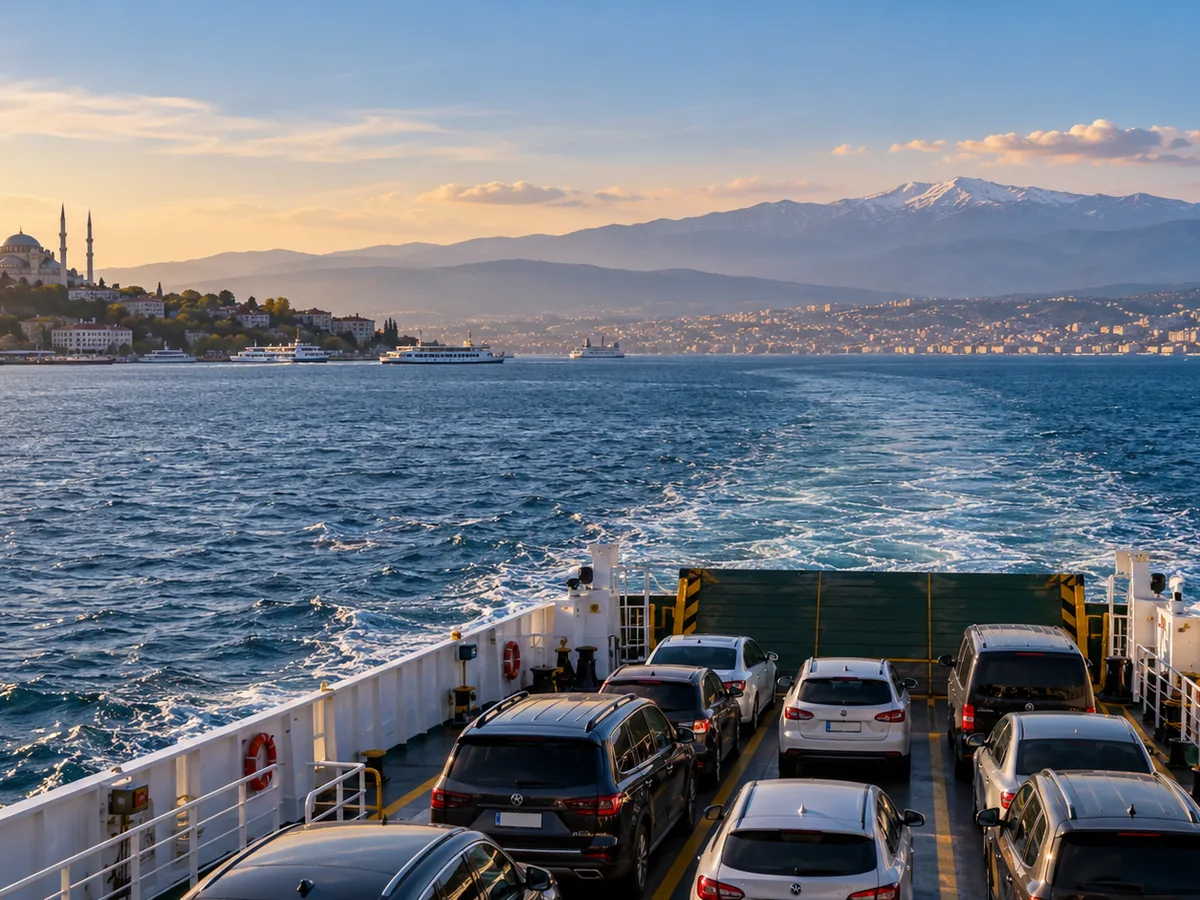
How far is Bursa from Istanbul and what's the best way there? The Osmangazi bridge road (~2.5h), the Yenikapi ferry (~2h), the bus (3-4h), plus a ready one-day plan.
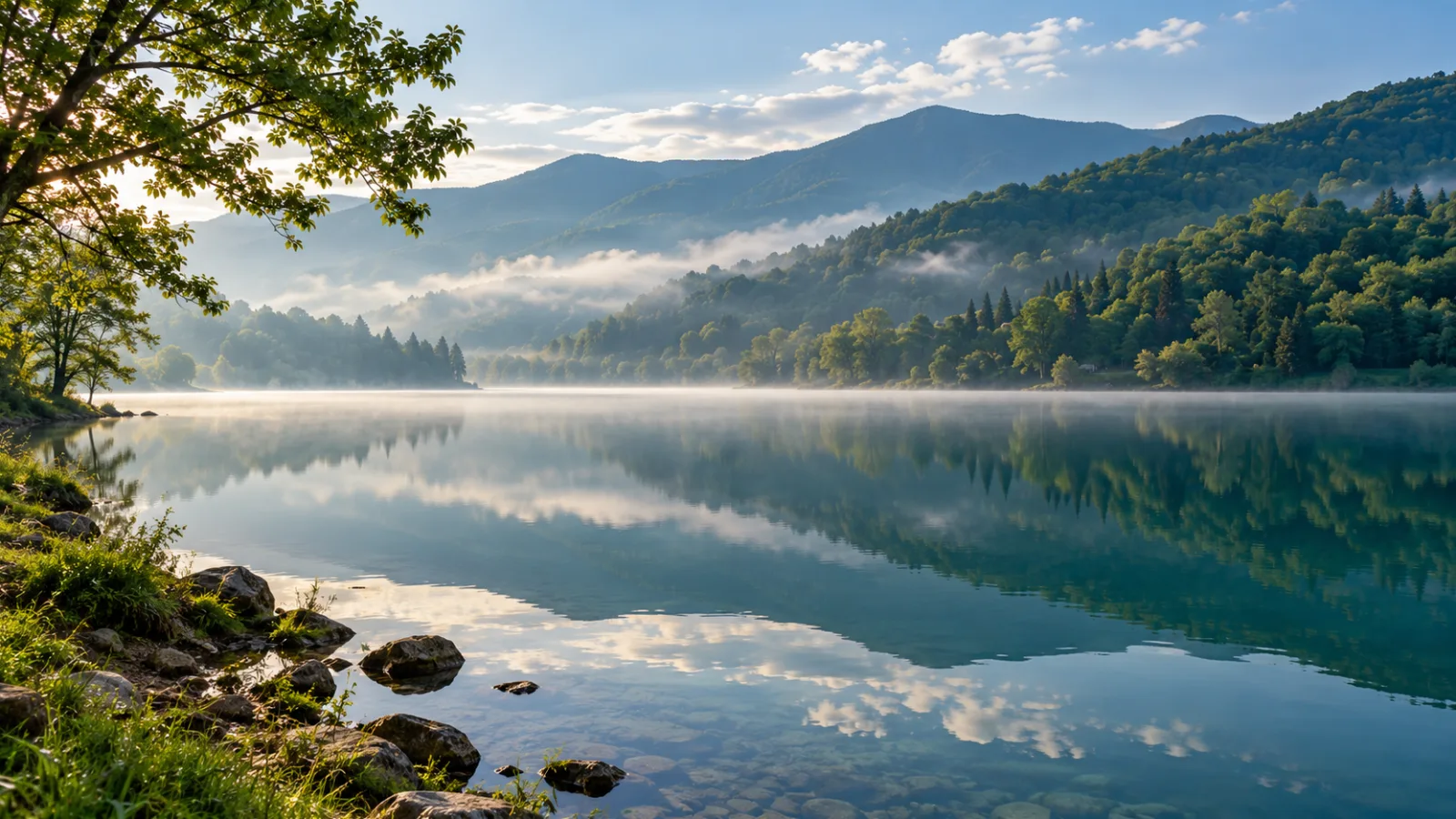
Sapanca's monthly temperatures and rain from official Turkish records, and how this general climate picture differs from a winter-specific Sapanca and Kartepe visit.
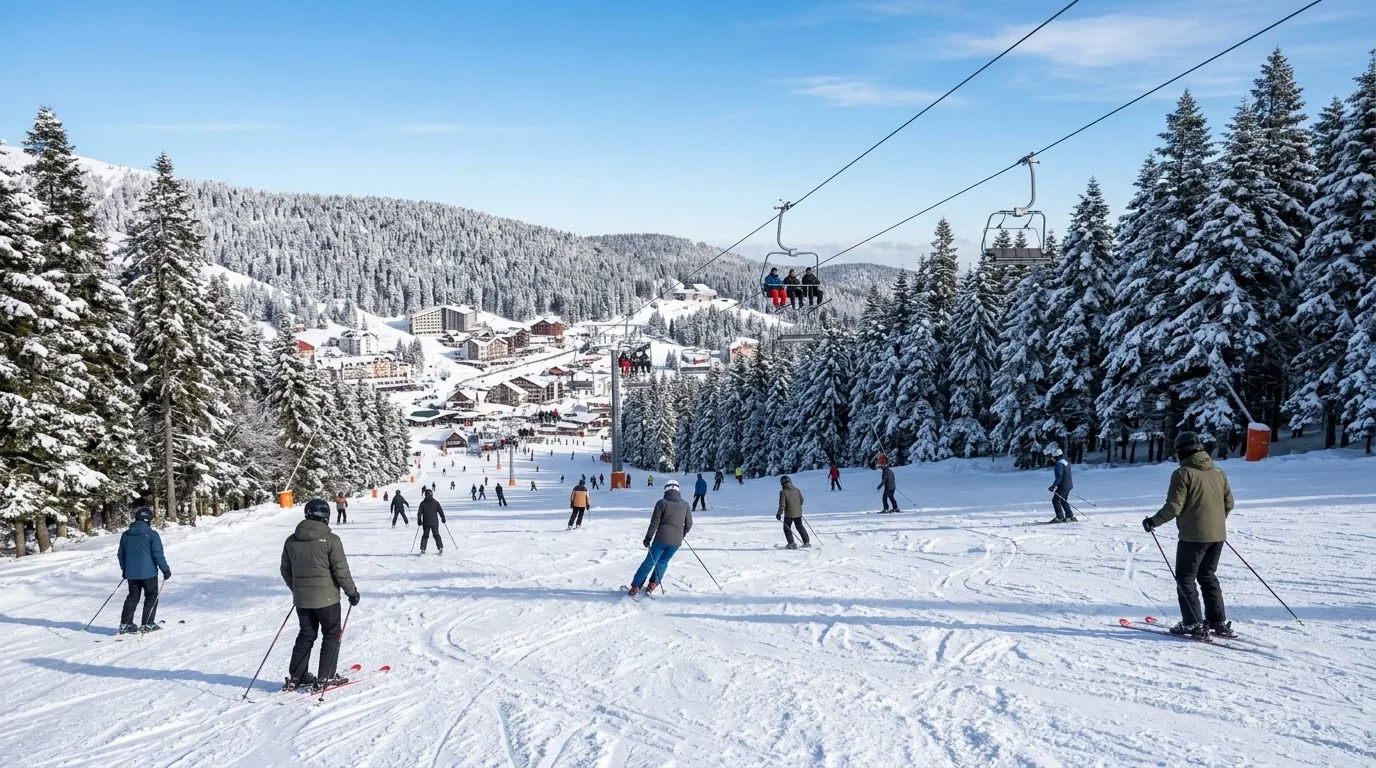
Uludag usually opens in mid-December, snow permitting, and peaks in January–February. Last season's day pass was 1,700–1,950 TL; about 3 hours from Istanbul.
Ready to explore Turkey?
Voyago brings together airport transfers, guided tours and car rental to help you plan the perfect trip to Turkey.