
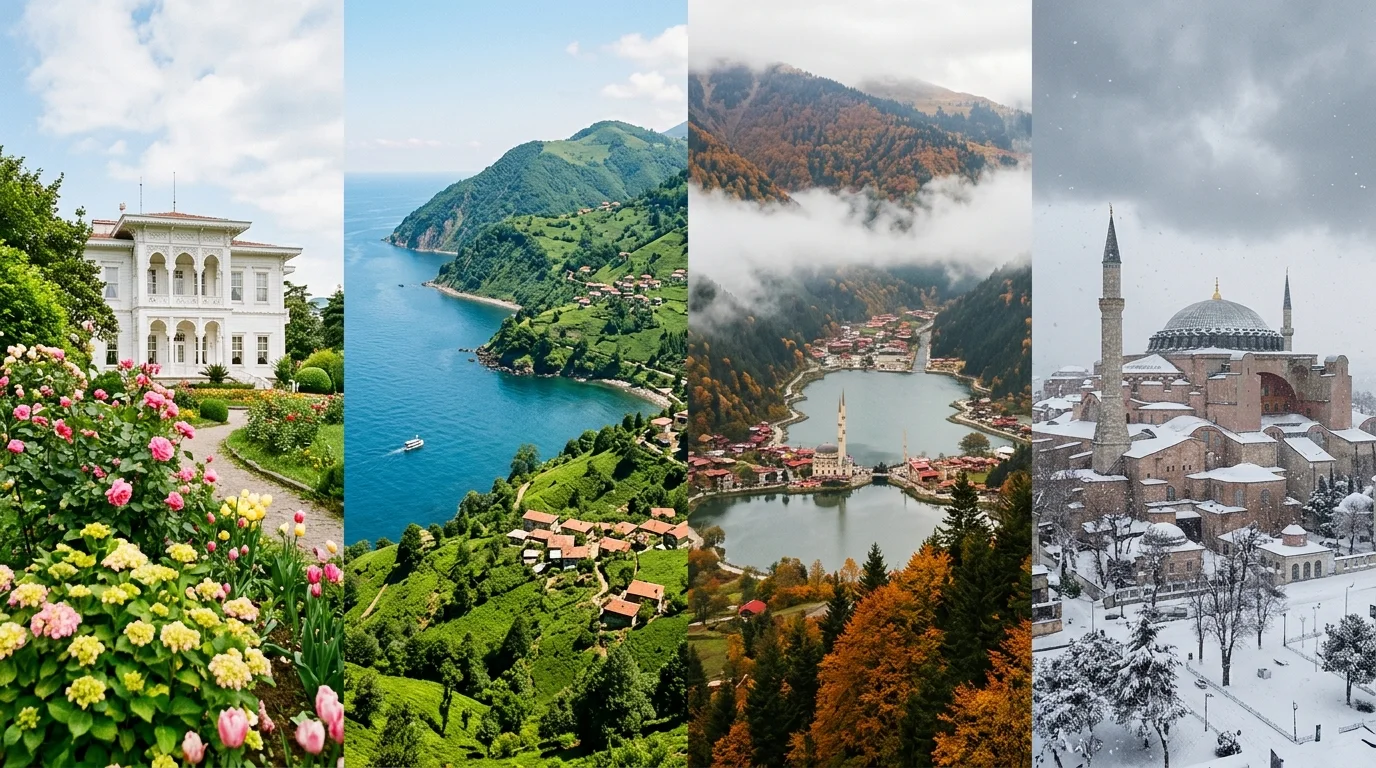
Quick Answer for Gulf Visitors
What is Trabzon's summer weather like? Mild and humid: 24-28°C daytime and 18-22°C at night, with 70-80% humidity and brief scattered showers — a real escape from Gulf heat that exceeds 45°C in July and August.
When does Trabzon rain most? October through February at 80-130 mm monthly, while its summer alone is relatively dry (June-September under 60 mm) — so rain exists in all 12 months, but tilts toward autumn and winter.
What is the single best weather month? June: 23°C daytime, 17°C at night, light rain, and plateaus at peak green — for a full seasonal comparison see the best time to visit Trabzon guide.
Why Trabzon's Weather Differs from the Rest of Turkey
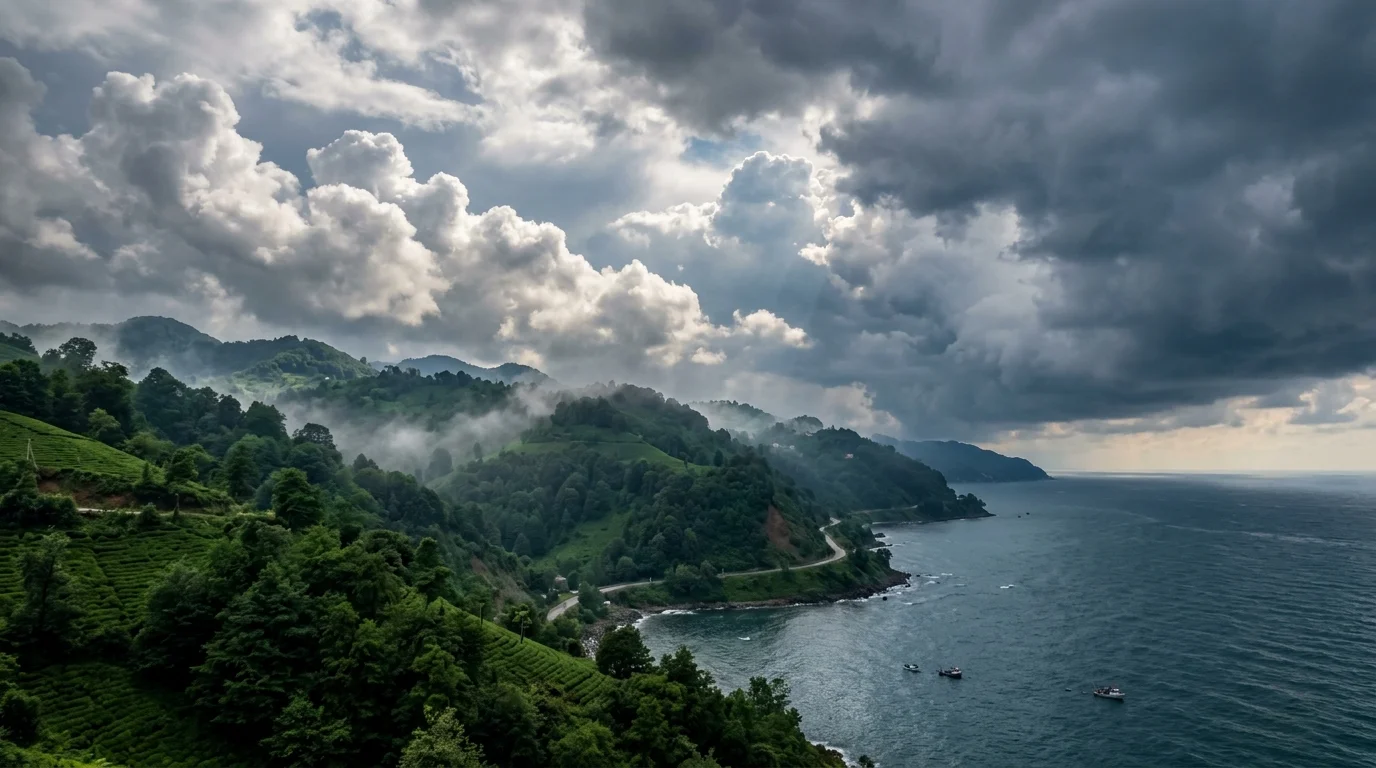
Trabzon is not Antalya and not Istanbul: it sits on the eastern Black Sea coast, hemmed in between a mountain chain that reaches 3,000 meters and a narrow coast no more than a few kilometers wide. This geography creates a unique climate unlike any other Turkish tourism city: high humidity year-round, rain spread across every month rather than concentrated in winter, and a summer that is relatively cool compared with the hot southern cities. Because the moist air coming off the sea hits the mountains head-on, clouds form over the city and dump their brief showers before crossing the ridges — you hear the thunder and smell the rain within minutes.
Because most Gulf visitors come to Trabzon in summer to escape their home heat, understanding these climate differences becomes a priority before booking: you do not come to find the same weather as Riyadh or Doha, you come to find 20-28°C with possible humidity, plus plateau greenery you will not find in any other Turkish Mediterranean city. In winter the picture flips: Trabzon becomes a cold, rainy city (5-12°C) with snow on the plateaus, turning it into a snow-tourism destination unlike any other Turkish spot — for those planning a visit outside summer, the Turkey weather year-round guide places Trabzon in its wider context.
The Four Seasons in Trabzon: A Detailed Reading
Spring (March - May)
Spring in Trabzon is a gentle staircase: March still has winter's soul (12/6°C) and heavy rain, April opens buds on the pastures and lifts temperatures toward 15°C, and finally May arrives with warm sun, a more open sky (19/13°C), and prices that have not yet woken from winter. Many families pick May for the city, the coast and walking between sights, but the plateaus stay cold in the morning and evening, and anyone planning a Uzungol or Ayder visit in May needs a wool layer under a rain jacket. Rain in this season falls from 90 mm in March to about 60 mm in May, mostly as short showers followed by sun.
Summer (June - August)
Summer is the Gulf's golden season: 24-28°C daytime on the coast, 16-22°C on the plateaus, and humidity of 70-80% that you feel in the afternoon. June combines the best of summer before peak arrives: 23°C, little rain, and plateaus at peak green. July and August are warmer and more humid, with temperatures between 26 and 28°C but only crossing 30 in short waves. Rainfall drops to 30-50 mm monthly, mostly as 30-60 minute evening thunderstorms that do not ruin the day. The big summer win for Gulf families: Trabzon's sea is relatively warm (22-25°C) compared to Istanbul's beaches, and Ayder's hot springs are at their most welcoming. For the full summer activities table, the complete Trabzon guide places every sight in its best season.
Autumn (September - November)
September earns the title "second summer": 23/17°C, medium rain, and greenery still full before autumn colors take over. October (19/13°C) brings regular rain and higher humidity, and the plateaus start to lose some of their green, but the morning fog views over Uzungol become some of the year's finest scenes. November (15/10°C) is colder and wetter, and the sea begins losing its warmth (16-18°C), but this month is among the quietest and cheapest for travelers who do not mind rain. Trees on the heights turn yellow and orange, making it one of the best photography seasons for landscape lovers.
Winter (December - February)
Winter turns Trabzon into another city: 11/5°C on the coast, heavy rain of 100-130 mm monthly, and fog sitting over the plateaus in the morning. Snow falls regularly above 800 meters, turning Uzungol and Ayder into ski destinations and magical white scenes. The city itself rarely sees snow, but the damp cold deceives the body more than dry cold. This season is best for those seeking an economic deal (hotels drop 40-50%) and accepting quiet and snow, and is unsuitable for those wanting open plateaus safely or planning long drives between sights.
Trabzon's Rain in Numbers: What Does "High" and "Medium" Mean?
Trabzon's annual rainfall averages about 830 mm spread across the year, but the monthly distribution matters more than the total: June through September sees less than 60 mm per month, October through February pushes the figure to 80-130 mm, while March, April and September sit in the medium range of 60-80 mm. What makes Black Sea rain distinctive is that it usually falls in short showers (15-45 minutes) followed by sun, not the continuous rain of northern Europe. Thunder and lightning are common in summer, and the light morning fog on the plateaus usually clears before 10 a.m.
Because "high" and "medium" in weather tables mean different things to different readers, the practical yardstick for a Gulf family is this: "high" rain means expecting an outdoor plan to break for a full day, "medium" means one or two hours in the day that you can fill with an indoor activity, and "low" means you may not see rain for your whole trip. By this measure, Trabzon's summer falls into the "low" category in practice, even though the monthly figure does not look like zero.
Plateau Weather: Uzungol, Ayder and Hidirnebi
Anyone visiting Trabzon will spend roughly half a day above 1,000 meters, where the weather differs fundamentally from the coast:
| Location | Elevation | Summer (Jul-Aug) | Winter (Jan-Feb) | Note |
|---|---|---|---|---|
| Central Trabzon | 0-50 m | 26-28°C | 10-12°C | Humid year-round |
| Yomra | 100 m | 25-27°C | 9-11°C | Slightly warmer than center |
| Uzungol | 1,090 m | 18-22°C | -2 to 2°C | Cold nights even in summer |
| Ayder (Rize) | 1,350 m | 16-20°C | -3 to 1°C | Recurring morning fog |
| Hidirnebi | 1,650 m | 14-18°C | -5 to -1°C | Snow from November to April |
The practical rule: for every 200 meters of elevation, the temperature drops about one degree, so the plateaus are 5-8°C cooler than the coast in summer. This difference is a treasure for Gulf families in August: when coastal heat passes 26°C with humidity, the plateaus stay at 18-20°C daytime and 8-12°C at night — a layered clothing set is enough, plus a light wool sweater for evening. In winter the story reverses: the plateaus sit under snow and are cut off from December to March, and the mountain roads can close temporarily after storms. For the lake in real time, see our Uzungöl weather today and 7-day forecast.
Humidity, Wind and the Sea
Trabzon is among Turkey's most humid cities: the annual relative humidity average is 75%, reaching 85% in summer and 65% in winter. This means that 26°C on the coast feels like 30 in the afternoon, and sweat does not evaporate quickly so you must drink water regularly. On the other hand, humidity gives the plateaus their permanent green and fills the valleys with small lakes in summer, and it is also what keeps the Black Sea relatively warm year-round (12-25°C).
Winds in the city are calm most of the year, but the autumn marine storms (November-December) can disrupt ferry services. The sea itself in July-August reaches 24-25°C, warm enough for family swimming on Yomra's beaches, though cooler than Antalya's shores. A note for families: currents on Black Sea beaches are stronger than the Turkish average, so swim only at lifeguarded beaches, and children need floaters at all times.
Weather and Clothing by Visit Month
| Month | Temp (H/L) | Rain | Core clothing | Notes |
|---|---|---|---|---|
| January | 11/5 | High | Heavy coat, rain jacket, hat | Snow on plateaus |
| February | 11/5 | High | Same as January | Snow steady above 1,000 m |
| March | 12/6 | High | Mid coat, umbrella | Damp cold lingers |
| April | 15/9 | Medium | Light jacket, layers | Scattered rain, early spring |
| May | 19/13 | Medium | Morning jacket, daytime T-shirt | Evening needs a sweater |
| June | 23/17 | Low | T-shirt, light evening jacket | Best balance |
| July | 26/20 | Low | Summer clothes, small umbrella | High humidity |
| August | 26/20 | Low | Same as July | Sea warm at 24-25°C |
| September | 23/17 | Medium | T-shirt, evening jacket | Early autumn |
| October | 19/13 | High | Jacket, umbrella, layers | Morning fog on plateaus |
| November | 15/10 | High | Coat, rain jacket | Plateaus start to snow |
| December | 12/7 | High | Heavy coat, gloves | Coldest month |
The general rule: always pack a packable light rain jacket, even in June and July. Unexpected rain comes especially in Uzungol and Ayder, where clouds form fast on the slopes.
How Weather Shapes Your Itinerary
Understanding the weather helps build a smart plan that adapts to reality:
- Morning fog on the plateaus: May, October and November — fog forms after dawn and stays until 10-11 a.m. on some days. Rule: plateaus in the afternoon, city and coast in the morning.
- Heavy winter rain: December-February — some mountain roads close temporarily, and Uzungol services scale back. Keep two flexible days in your plan for any contingency.
- Heat waves: rare in Trabzon, but some July-August waves push the temperature to 30-32°C with stifling humidity. In that case, midday activities (12-15) move indoors (Forum Trabzon mall, Hagia Sophia museum, Atatürk Pavilion).
- Summer thunderstorms: June-August — usually arrive in the afternoon and last 30-60 minutes. Backup plan: Hagia Sophia museum, shopping at Forum, or a long Turkish breakfast in the old town.
- Early snow on the plateaus: sometimes in November — check weather forecasts before travel and adjust day one in case of closures.
For a ready-made plan that adapts to weather, the Trabzon 5-day itinerary includes indoor backups for every day.
Trabzon vs Antalya vs Istanbul: A Weather Face-Off
| Criterion | Trabzon | Antalya | Istanbul |
|---|---|---|---|
| Summer (July) | 26/20 humid | 34/24 dry | 29/20 humid |
| Winter (January) | 11/5 rainy | 15/7 mild | 9/4 rainy |
| Rainy days per year | 150+ | 80 | 130 |
| Annual humidity | 75% | 60% | 73% |
| Sea temp in summer | 24-25°C | 27-28°C | 22-23°C |
| Best month | June | May or October | May or September |
| Big surprise | Green 12 months | Guaranteed sun | Rapid variety |
The bottom line: visitors coming from Antalya to Trabzon in summer feel the pleasant cool and are surprised by the rain; those coming from Istanbul notice a warmer sea and greener views. Those coming from the Gulf (Riyadh or Doha) find both cities far cooler, but Trabzon is the greenest and closest to a European summer climate on their trip.
Official Sources for Trabzon Weather
- Turkish State Meteorological Service - Trabzon
- Official Turkish tourism portal - GoTürkiye
- Turkish Ministry of Culture and Tourism
- Turkey e-visa
- Trabzon Airport official
Practical Info for Gulf Visitors
| Item | Detail |
|---|---|
| Best month | June (23/17°C, little rain, green plateaus) |
| Hottest month | August (26/20°C, humid) |
| Coldest month | February (11/5°C, snow on plateaus) |
| Highest rain | October-January (80-130 mm) |
| Lowest rain | June-September (30-60 mm) |
| Annual humidity | About 75% |
| Sea temp in summer | 24-25°C (warm for swimming) |
| Time gap to Gulf | None (UTC+3) |
| Core clothing | Layers + packable rain jacket + evening jacket |
| Forecast | Follow MGM 3 days before travel |
FAQ (12 Questions)
- What is Trabzon's weather like in August? Hot and humid on the coast (26-28°C day, 20°C night) with 75-80% humidity and rare short showers; plateaus are 6-8°C cooler.
- Does it rain in Trabzon in summer? Light scattered rain, mostly as 30-60 minute evening thunderstorms; they rarely ruin a full day.
- When is the snow at Uzungol? December to early April, with the deepest accumulation in January-February; the city itself rarely sees snow.
- Is the sea warm enough to swim? Yes, from June to September the sea is 22-25°C, fine for children; but currents are stronger than the Turkish average, so watch the kids.
- What is the best month for a family trip? June combines mild weather, warm sea and little rain, followed by September for those who accept cooler temperatures.
- Do I need an umbrella in summer? A small packable umbrella is enough; most rain is short showers that do not require a heavy raincoat.
- What is the difference between city and plateau weather? Temperature drops about one degree per 200 m; Uzungol is 6-8°C cooler than the coast in summer, and nights are 10-12°C.
- Is the humidity uncomfortable in summer? High (75-80%) but milder than the Gulf because of the cool; the only requirement is drinking water often.
- When do the mountain roads close? Usually after snowstorms in January-February; check the General Directorate of Highways before travel.
- Is the weather suitable for seniors? June and September are best for mild cool and lower humidity; avoid January-February because of the damp cold and fog.
- What are the core clothes for any month? Layers (shirt + light sweater + jacket) + packable rain jacket + comfortable waterproof shoes for outdoor sights.
- How do I check today's Trabzon weather? Via the Turkish Met Service MGM, or the Yahoo Weather or Apple Weather app with Trabzon set as the city.
Conclusion
Trabzon's summer is a green escape from Gulf heat: 24-28°C with possible humidity and green plateaus, while in winter it becomes a quiet snow destination at low prices. The best months are June then September, and the best activity for each season matches its climate. Always pack a packable rain jacket, follow Turkish Met Service three days before travel, and leave the rest to a city that welcomes its visitors in every season.
Related Articles
For deeper planning, see these guides:
Related travel guides
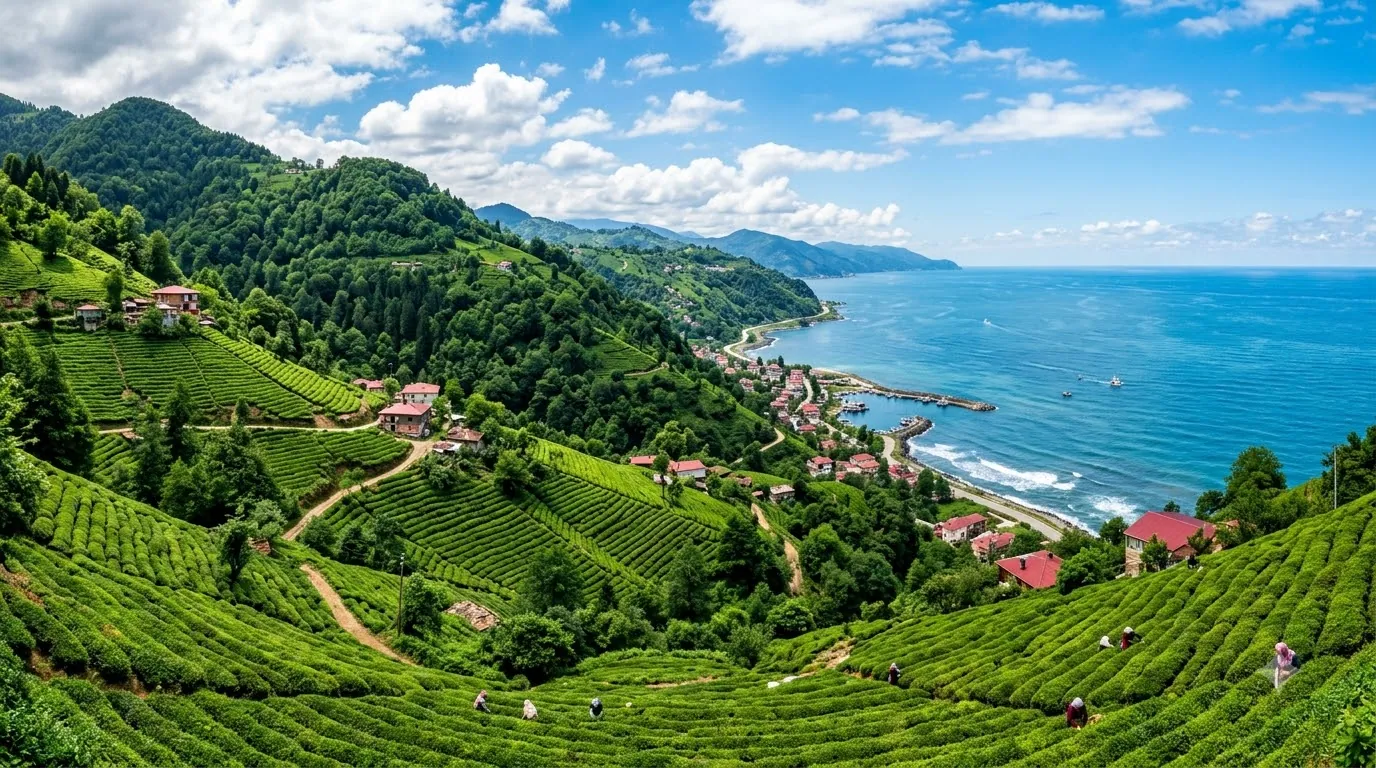
The best months to visit Trabzon for Gulf families: seasons compared, month-by-month prices and crowds, Eid booking windows, and the right pick for every trip type.
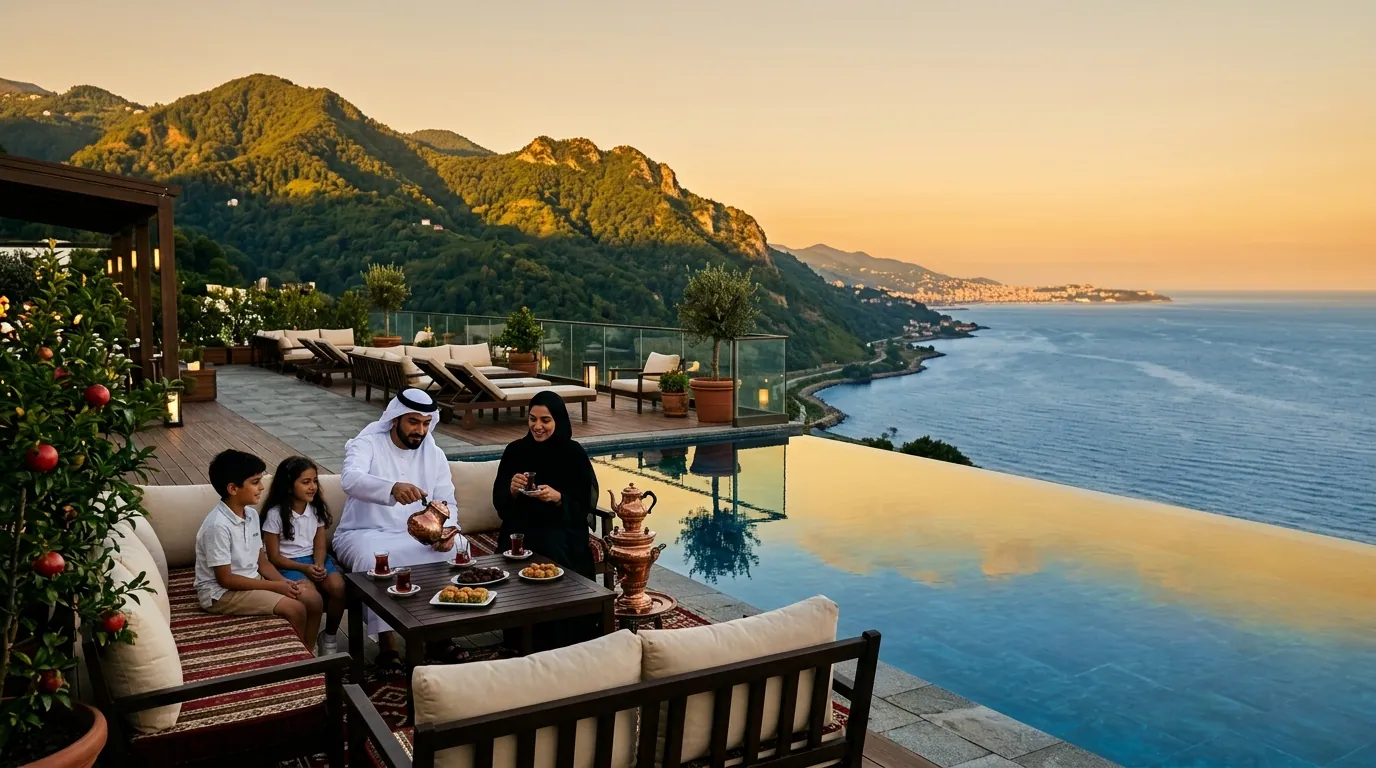
5-star hotels in Trabzon 2026: the finest luxury and family-friendly options on the Black Sea, with prices and tips.
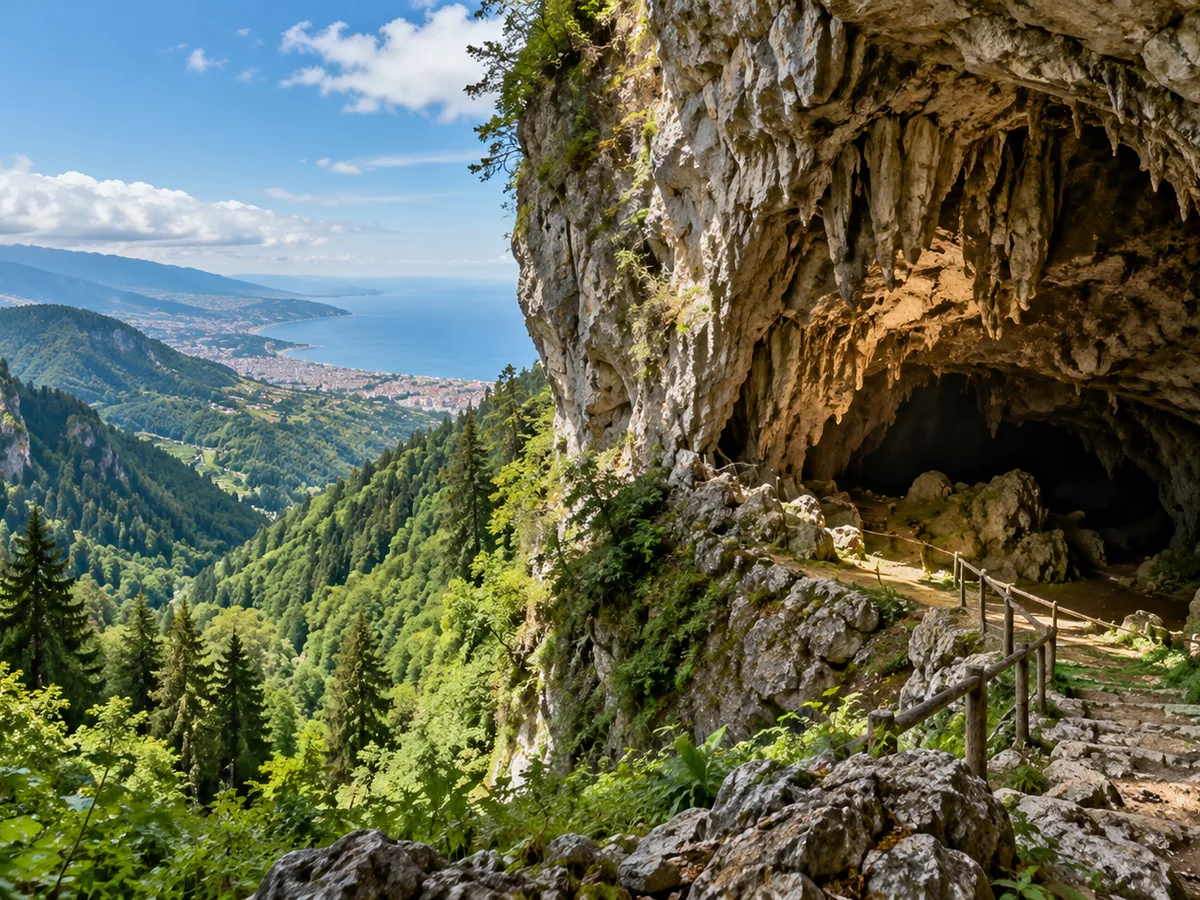
Cal Cave in Duzkoy, Trabzon: location, how to get there, typical visiting hours, and how to pair it with Hidirnebi plateau for a full highland day.
Ready to explore Turkey?
Voyago brings together airport transfers, guided tours and car rental to help you plan the perfect trip to Turkey.