
Quick Answer for Gulf Visitors
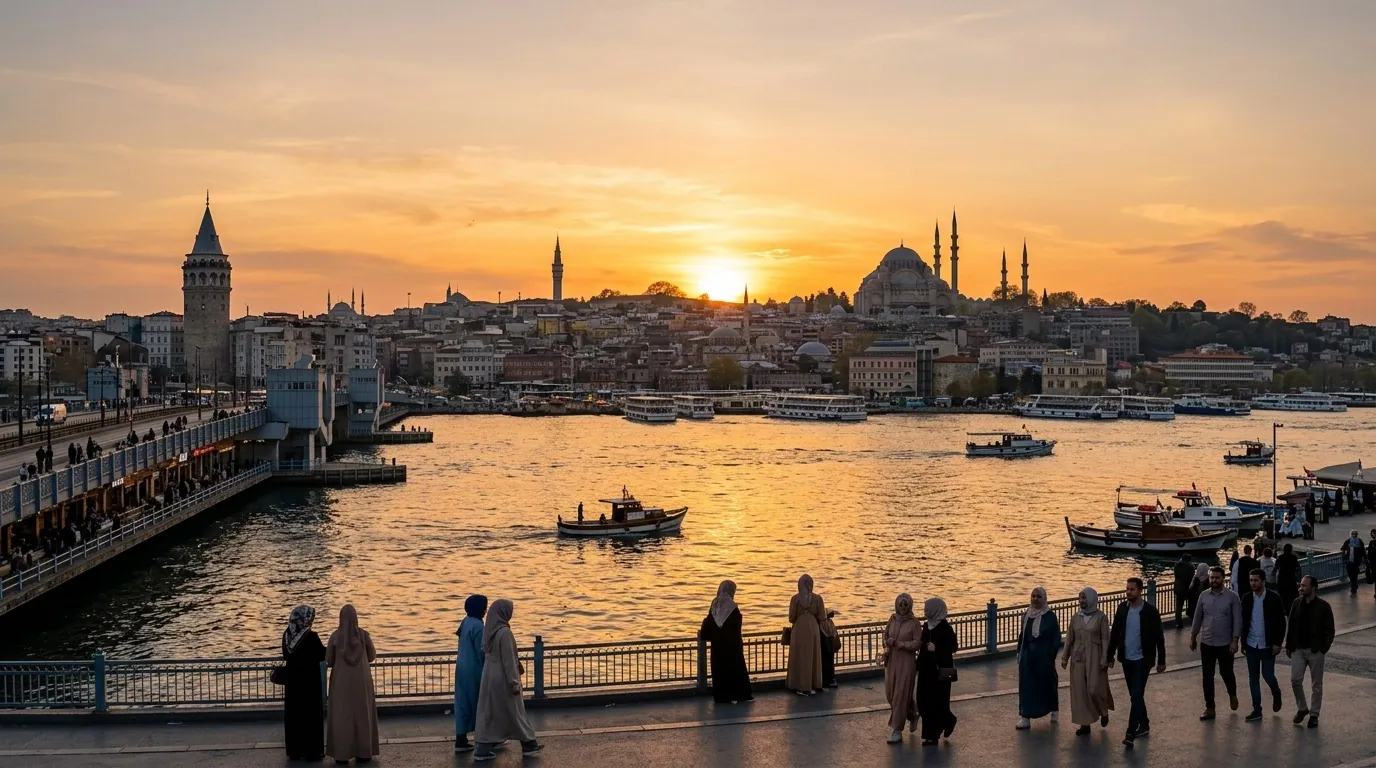
What is Turkey, in short? A country spanning two continents, combining historic Istanbul, Mediterranean coasts, Black Sea mountains and the volcanic valleys of Cappadocia, all three to five flying hours from the Gulf capitals.
Is it suitable for a Gulf family? Emphatically yes: halal food everywhere, mosques in every district, a fast e-visa for most GCC nationalities, and a tourism industry that has hosted Arab visitors for decades.
How much time do you need? One visit gives you a first picture of a city or two; Turkey is a country discovered in instalments: the sea in summer, the mountains to escape the heat, and history in spring and autumn.
What currency and language? The currency is the Turkish lira, the official language is Turkish, English is understood across the tourism sector, and Arabic is present in season in the districts popular with Gulf visitors.
Turkey at a Glance
| Item | The fact |
|---|---|
| Area | About 783,000 square kilometres across two continents |
| Population | About 85 million, roughly half under thirty |
| Capital | Ankara, while Istanbul is the largest city and economic heart |
| Language | Turkish officially, with wide English use in tourism |
| Currency | Turkish lira |
| Time difference | Aligned with Saudi time or one hour behind |
| Dialling code | Plus 90, with 112 as the emergency number |
| Electricity | 220 volts with European type F and C plugs |
These numbers are not trivia: Turkey's vast area explains why a trip changes completely from one region to another, with the full detail in our file on Turkey's area and location. The young population explains the energy of the cities and the spread of modern facilities, broken down in Turkey population facts.
Geography: One Country on Two Continents and Four Seas
Turkey spreads across 81 provinces and borders eight countries: Greece and Bulgaria to the west, Georgia, Armenia and Iran to the east, and Iraq and Syria to the south. Four seas surround it: the Black Sea in the north, the Sea of Marmara between the Bosphorus and the Dardanelles straits, the Aegean in the west, and the Mediterranean along a southern coastline exceeding seven thousand kilometres. Its highest peak is Mount Ararat in the east at over five thousand metres, and the Tigris and Euphrates rivers rise on its eastern plateaus.
This position has made Turkey a civilisational and commercial bridge since the dawn of history, which explains the wealth of its ancient cities from Ephesus to Dara, and explains something else for the Gulf visitor: within a single trip you can cross a strait between two continents and climb from a hot Mediterranean shore to a cool Anatolian plateau in a few hours. Understanding this diversity is the first step to choosing your destination, as we arrange it in the complete Turkey guide.
Climate: Several Countries of Weather in One
The Aegean and Mediterranean coasts have a textbook Mediterranean climate: hot dry summers and mild rainy winters. The Black Sea region is the country's wettest and greenest all year round. Central Anatolia is continental: hot dry summers and harsh snowy winters in cities such as Kayseri and Konya. The east is mountainous with long cold winters, and the southeast is hot and dry in summer.
In practice, choose your dates by your region. May in Istanbul coincides with an excellent season almost everywhere, while July suits the Antalya coast and the Black Sea but not Mardin and Urfa in the heat. Watch the Gulf school calendar too: the summer holiday is the price peak, and the September return to school brings prices down while the sea stays warm. Checking live forecasts on the Turkish State Meteorological Service before locking dates is a smart habit.
Turkey's Regions Compared: Where Do Gulf Visitors Go?
| Region | Leading destinations | Character | Best seasons |
|---|---|---|---|
| Marmara and Istanbul | Istanbul, Bursa, Sapanca | History, city life, nearby nature | All year; best in spring and autumn |
| Mediterranean | Antalya, Alanya, Fethiye | Beaches and family resorts | May to October |
| Aegean | Izmir, Bodrum, Kusadasi | Quieter coasts and ancient cities | May to October |
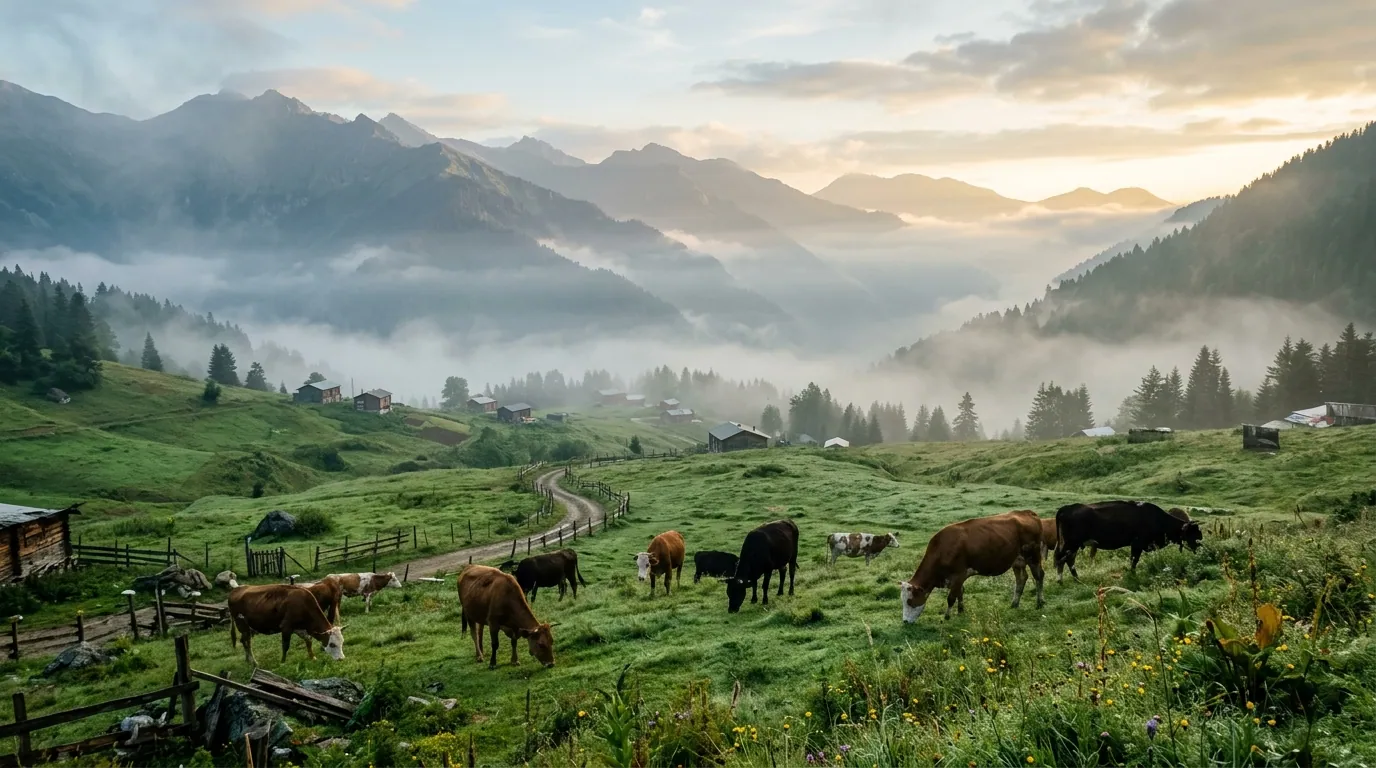
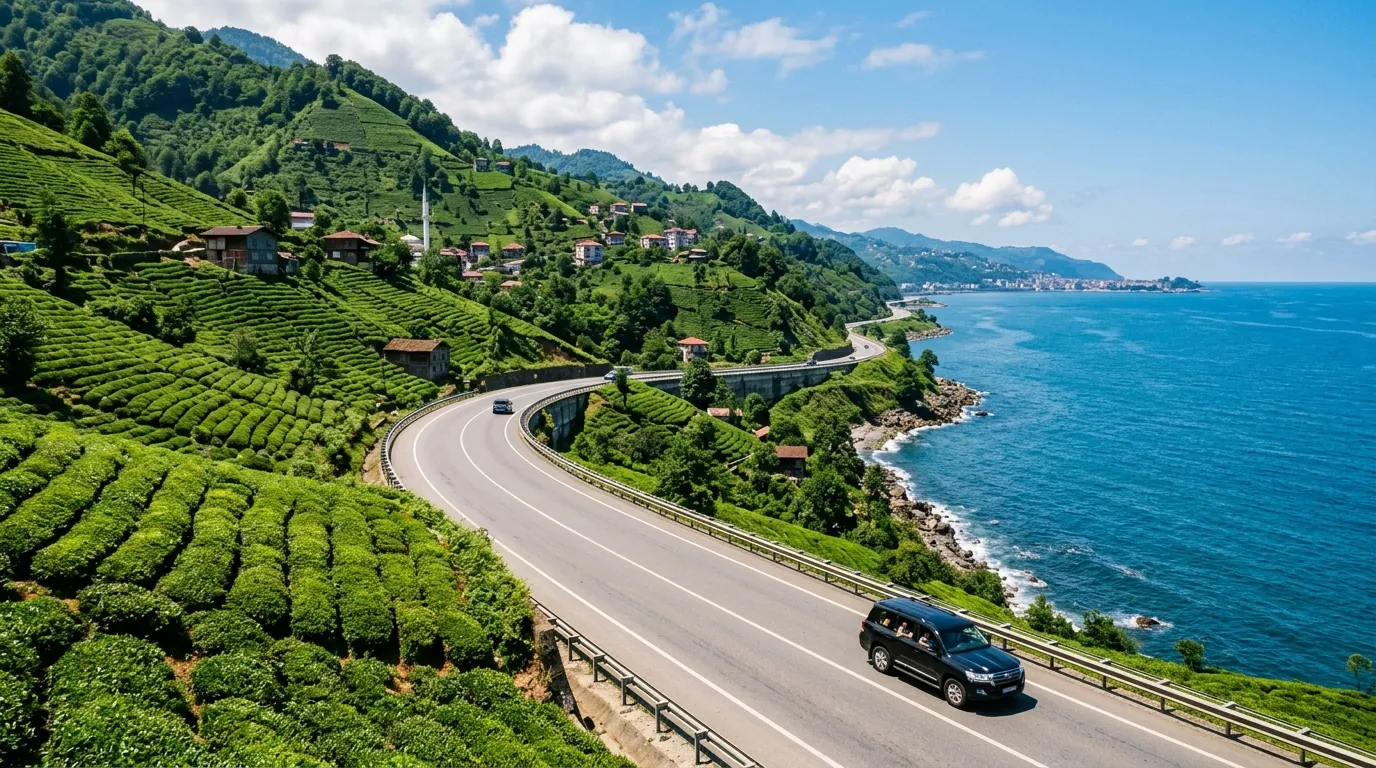
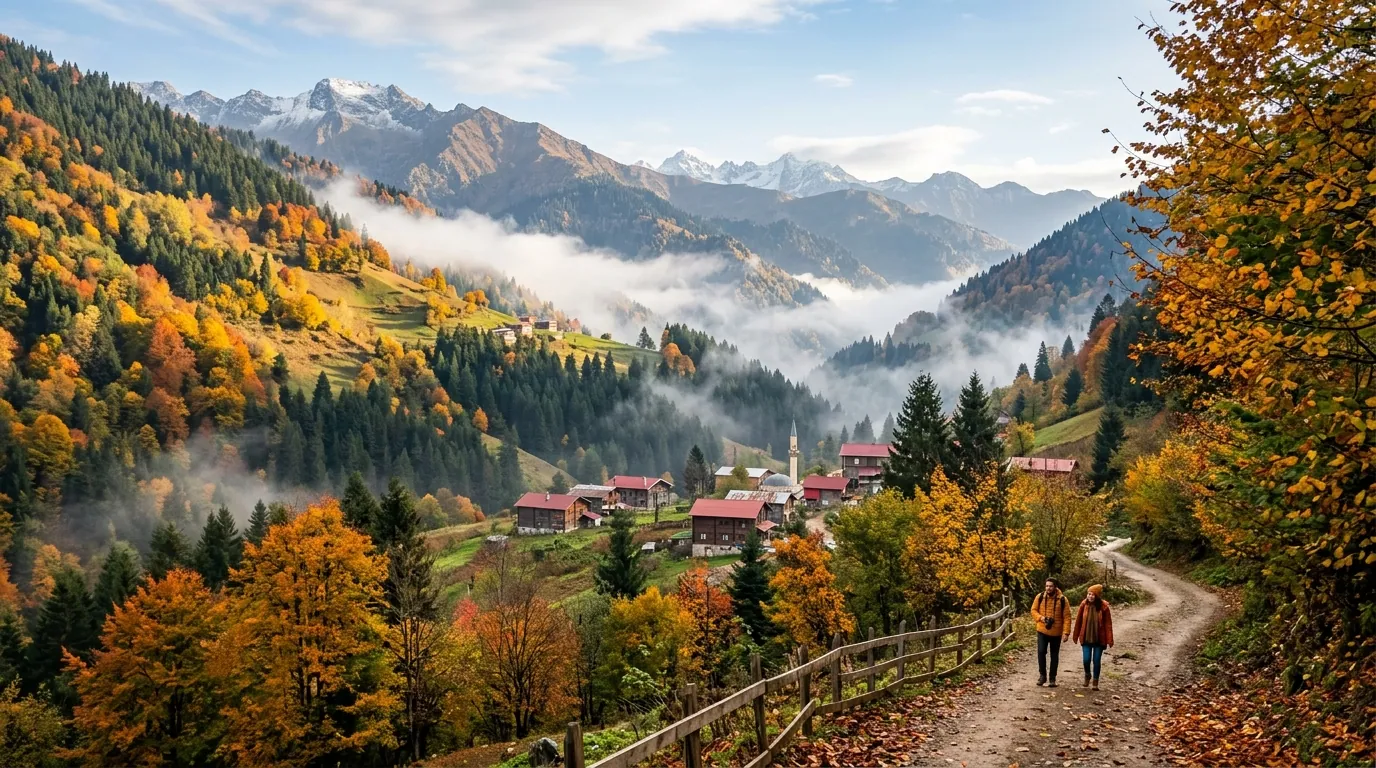
| Black Sea | Trabzon, Uzungol, Ayder | Green mountains and lakes | June to September |
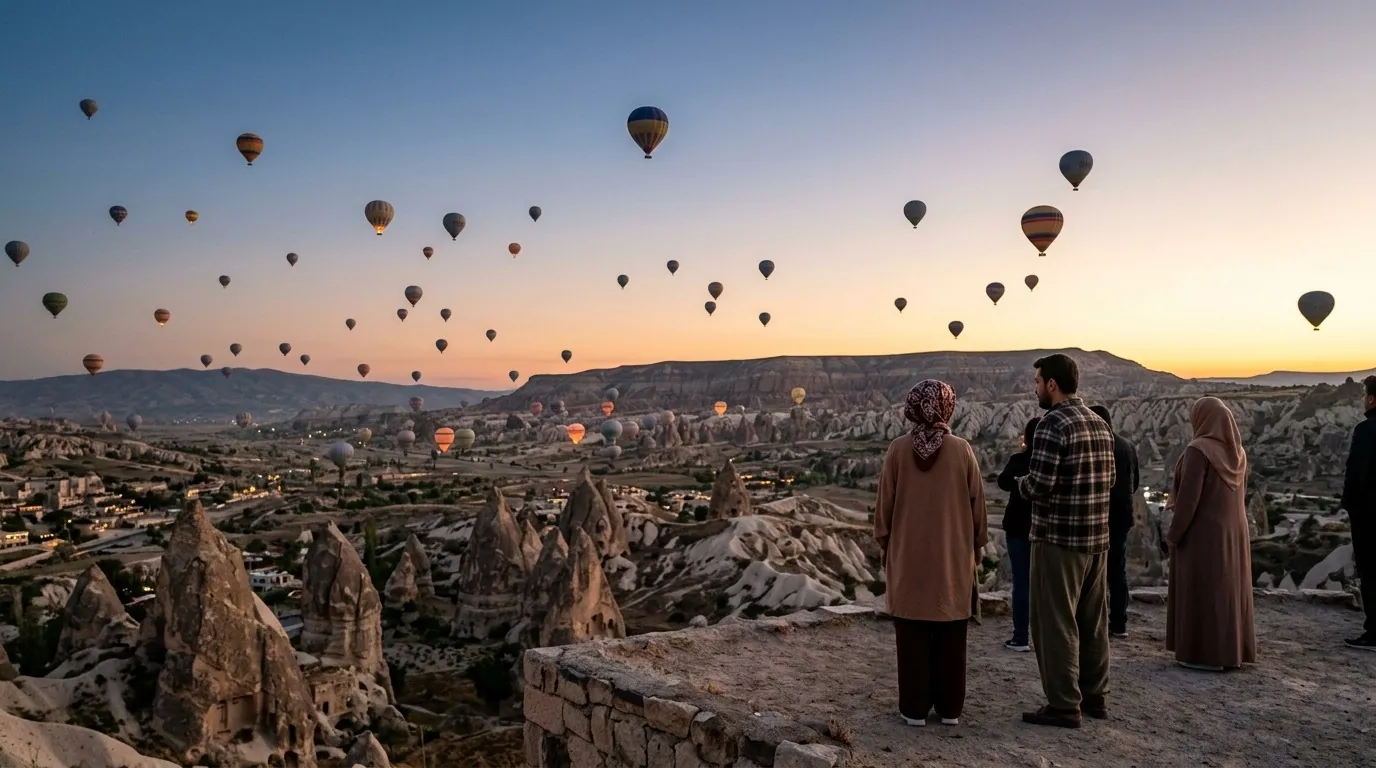
| Central Anatolia | Cappadocia, Ankara, Konya | Volcanic valleys and capital history | Spring and autumn |
| Southeast | Mardin, Gaziantep, Urfa | Stone heritage and a deep cuisine | March-May and October-November |
The rule that organises all of it: the sea in summer, the mountains to escape August's furnace, and history in spring and autumn when the sun softens the walking. This timing is not theory: a family visiting Cappadocia in July faces midday heat in the valleys, and one visiting Trabzon in January finds mountain roads closed by snow. Turkish seasons are real and specific, and respecting them removes half a trip's problems before they begin. As an example of one region in depth, the complete Trabzon guide covers the Black Sea, while the capital's story is told in Ankara, capital of Turkey.
Population, Language and Society
Turkey's population is about 85 million, roughly half under thirty, an advantage that keeps its cities alive past midnight. The official language is Turkish; Arabic and Kurdish are widely spoken in the southeast, and English functions across the tourism sector. Istanbul alone holds more than fifteen million people on the two shores of the strait, followed by Ankara the capital, then Izmir, Bursa and Antalya.
Turkish society is family-oriented and hospitable: the guest holds a special status you will feel in shops and restaurants, tea in tulip glasses is a daily ritual offered everywhere, and the weekend family breakfast is a fixed habit in Turkish gatherings and family restaurants alike. Inland districts are more conservative than the touristy coasts, something Gulf families find practically reassuring in dress and privacy.
A Short History That Unlocks the Sights
One thread of Turkish history doubles the pleasure of your visit: Anatolia was the cradle of successive civilisations from the Hittites to the Lydians, then the Roman theatres that still stand at Ephesus, Aspendos and Aphrodisias, then the Byzantine era that left Hagia Sophia and the walls of Constantinople, and then six centuries of Ottoman rule that built Istanbul's mosques, bazaars and palaces.
The founding of the Turkish Republic in 1923 by Mustafa Kemal Ataturk is the modern dividing line: a new state with new institutions and a new capital in Ankara. For the Gulf visitor this thread explains the scenery: an Ottoman mosque, a Byzantine palace and a modern tower on one street, and a modern capital without an overwhelming Ottoman character. Most major museums are interactive and translated into Arabic and English, so use them to shorten the distance between the stone and the story.
Economy and Tourism
Turkey is among the world's twenty largest economies, and tourism is a foundational pillar: the country receives tens of millions of visitors a year and ranks near the top globally in arrivals, as documented by the official Turkish tourism portal. Its key industries include automotive, home appliances, textiles and steel, and agriculturally it grows the largest share of the world's hazelnuts.
The accommodation, transport and tourism-services sector is mature, with Turkish cities competing with their European counterparts at generally lower prices, and this maturity is what the Gulf visitor taps directly: modern airports, intercity highways, and family resorts with decades of experience hosting Arab guests. The industry also understands the Gulf market's particular needs: resort programmes with certified family facilities, Arabic-language seasonal services in the major areas, and clear sensitivity to privacy and halal requirements in the family-oriented property categories.
Turkey and the Gulf: A Deepening Relationship
Relations between Turkey and the Gulf are close and growing: daily direct flights from Riyadh, Jeddah, Doha, Dubai and Kuwait to Istanbul, expanding in summer to Antalya and Trabzon, with flying times between three and five hours. Most Gulf nationalities obtain the entry e-visa quickly through the official portal, with the precise country-by-country details in the Turkey visa guide for Saudi citizens.
Turkish drama played its part in drawing Gulf tastes toward Turkey, and trade and investment between the two sides keep growing. In practice you will find Arabic restaurants in the major cities, shopkeepers speaking Arabic in tourist districts, and Arabic-speaking guides in season; we collect each season's updates in our travelling to Turkey this year report.
Transport and Infrastructure
Istanbul Airport is among the world's busiest and is your closest gateway from the Gulf; a domestic network branches from it to nearly every province at competitive prices when booked early, with flight and service information documented on the airport's official site. High-speed trains link Istanbul to Ankara in about four to five hours and Ankara to Konya in about two. Intercity coaches are modern and comfortable across the whole country, and ferries connect Istanbul's two shores all day.
From your arrival airport you can arrange a private transfer to your hotel in advance with a car equipped for children and families, the choice that shortens the first hour of any trip; arrival from the Asian-side airport is detailed in the Sabiha Gokcen transfer guide. Within the cities, organised tours cover family programmes in every major destination.
Daily Life: Money, Manners and Apps
Daily life in Turkish cities is easy for visitors: cards are accepted in restaurants, shops and modern transit, ATMs are everywhere, and bargaining is an accepted custom in the traditional bazaars, not in official stores. Prices are generally lower than Western Europe and closer to levels a Gulf visitor finds familiar in mid-range hotels and restaurants, dropping noticeably outside the first-ring tourist districts. Large stores accept international cards with negligible fees, while the traditional bazaars need lira in cash, so prepare a mix of the two before a big shopping day.
In everyday manners: personal space is respected, welcoming children in restaurants, transit and parks is rooted culture, and modest dress in inland districts and mosques is a local courtesy. Practical apps work well: mapping apps, ride-hailing and food apps in English, and prayer-time and qibla apps accurate across Turkey. Always drink bottled water; it is cheap and available everywhere.
Practical Info for Gulf Visitors
These collected facts answer the everyday questions families send us before a first trip: money, connectivity, prayer, dress and emergencies in one table, with the seasonal detail in the sections above.
| Item | Detail |
|---|---|
| Currency | Turkish lira; cards accepted in cities, cash better for bazaars |
| Connectivity | Buy a tourist SIM at the airport or activate an eSIM before flying |
| Language | Turkish officially; English in tourism, Arabic in season |
| Prayer | Mosques in every district; precise times in the apps |
| Dress | Modest in cities; more freedom at coastal resorts |
| Emergencies | 112 for all emergencies, free from any phone |
| Insurance | Recommended for every family member before travel |
| Children | Family facilities everywhere; welcoming children is general culture |
FAQ (12 Questions)
- Is Turkey suitable for Gulf families? Yes; it is among the easiest nearby destinations: short flights, halal food, widespread family facilities and daily familiarity with Arab visitors. The difference between regions is distance, not quality: every region delivers its complete experience on its own.
- What is the difference between Istanbul and Ankara? Istanbul is the country's largest city and economic and tourist heart; Ankara is the political capital, home of government and the national museums.
- How many people live in Turkey? About 85 million, roughly half under thirty, and Istanbul alone holds more than fifteen million.
- How many continents does Turkey sit on? Two: a small section in eastern Europe and the larger part in Asia, separated by the Bosphorus strait in the heart of Istanbul.
- What is the currency and how should I exchange money? The Turkish lira; best exchanged in instalments at licensed city offices rather than at the airport.
- Do I need a visa from the Gulf? Most GCC nationalities obtain the e-visa quickly; the details differ by nationality.
- When is the best time to visit? Spring and autumn for sights and cities, summer for the coasts, and winter for skiing in Uludag and the thermal springs of Bursa.
- Is English enough to get around? Yes in tourist areas, hotels and airports; translation apps cover simple daily situations.
- Is Turkey safe? The major tourist zones have a strong security presence and professional services, and tens of millions of visitors move around yearly without notable incidents. The usual precautions suffice: digital copies of documents, emergency numbers in your phone, and travel insurance for the family.
- Where do I start on a first trip? Three nights in Istanbul, then one domestic destination: Cappadocia, Antalya or Trabzon depending on the season.
- How long is the flight from the Gulf? Between three and five hours direct depending on departure and arrival city. Most morning flights land in Istanbul before noon, giving you a full first day.
- Can I combine two cities in a week? Easily, via short domestic flights; the common formula is four nights in one city and three in another.
Conclusion
Turkey is a country that exceeds its postcard image: two continents, four seas, eighty-five million people and eighty-one provinces ranging from beach to mountain to deep and recent history. The Gulf family finds geographic closeness, cultural familiarity and mature services, and the difference between an ordinary trip and an excellent one is understanding this diversity before booking: choose the season and the region first, then build your programme on it. Start with the essentials before the details: the right base near what you want to see, comfortable airport transport with children, and one or two organised tours covering what is hard to reach without a car. These three determine a trip's success more than any other detail.
Search accommodation across Turkey · Arrange your private transfers from airports and cities · Discover tours in every region
Sources
Related travel guides
Ayder highlands 5-day itinerary 2026: a day-by-day plan for Arab families covering thermal pools, valleys, and Trabzon.
Ayder Trabzon distance 5-day itinerary 2026: a day-by-day plan for Arab families covering the transfer route.
Ayder Turkey weather 2026: monthly averages, rain patterns, best months to visit, and packing tips for Gulf families.
Ready to explore Turkey?
Voyago brings together hotels, tours and transfers to help you plan the perfect trip to Turkey.