
Quick Answer for Gulf Visitors
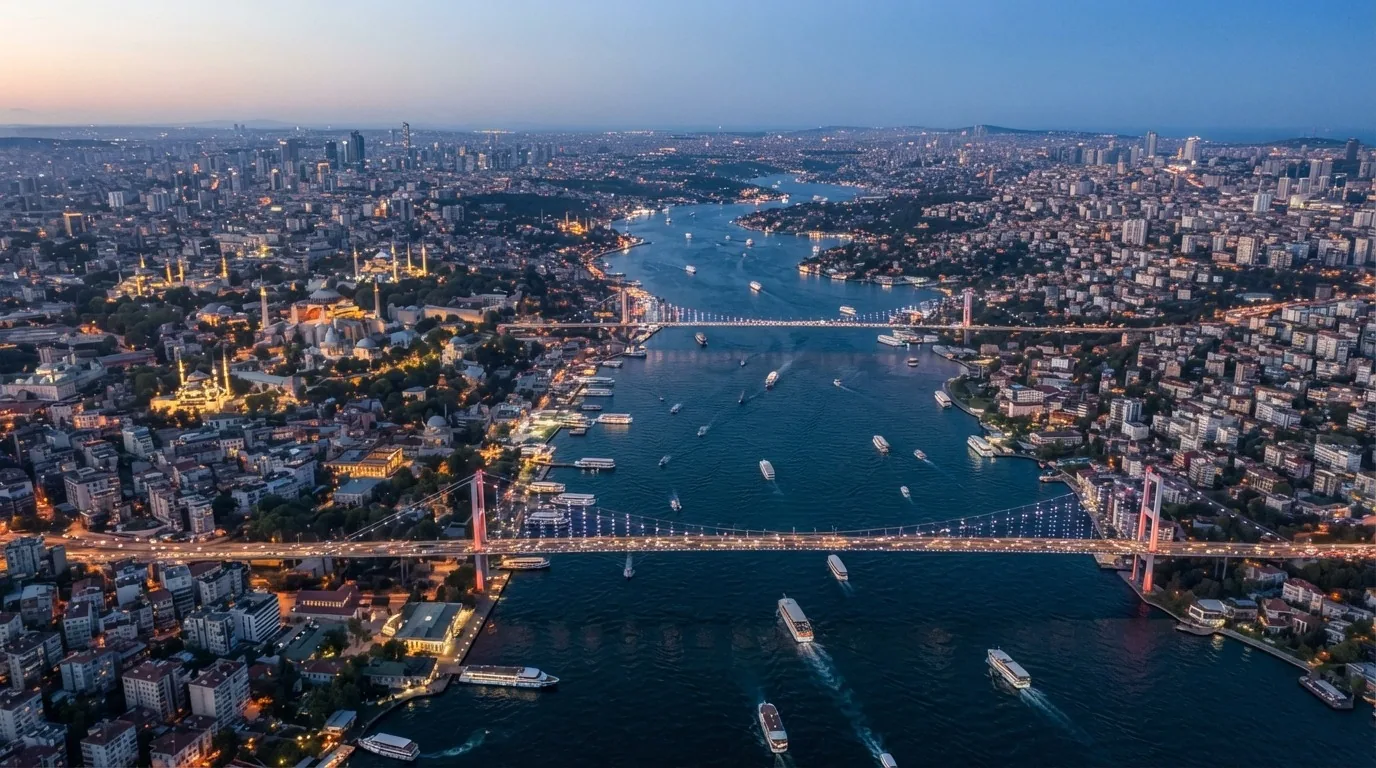
What is Turkey's population? — About 85.7 million according to the Turkish Statistical Institute's latest announcement covering the end of 2024, with estimates pointing above 86 million during 2026.
Where do they live? — Istanbul alone holds about 15.7 million, followed by Ankara near 5.8 million and Izmir at 4.5 million, with more than ten provinces exceeding one million.
What does this mean for travelers? — Turkey is a huge, young service market: an extensive hotel base, dense trains and domestic flights, and real crowds in Istanbul and Antalya at the summer peak.
Why Population Numbers Matter to Gulf Travelers
Imagine traveling to a country whose headcount exceeds the entire Gulf Cooperation Council combined; that is Turkey. The large number means, first, a massive tourism infrastructure: thousands of hotels, halal restaurants, and transport companies competing to serve you at competitive prices. Second, it means the big cities are genuinely crowded in peak seasons, so your timing and city choice directly determine your comfort level. Third, it means a young society: the median age is about 34, and this youth translates into a dynamic service sector that absorbs tourists quickly and professionally. Because the area is large too, read our guide on Turkey's area in square kilometers alongside these numbers to understand how density is distributed.
One more point many miss: the population is unevenly spread across the map. The western and southern coastal strip plus the major inland cities absorb most of the total, while wide areas of the east and the mountains remain low-density, which is why a crowded country still hides completely tranquil destinations if you choose carefully, as we explain in the complete Turkey guide.
The Official Number: Where It Comes From and How It Is Measured
The single official source is the Turkish Statistical Institute, known as TUIK, which publishes address-based population registration results at the start of each year. This method is more precise than a traditional census because it draws data directly from residence records. The latest announcement available when this guide was prepared covered the end of 2024: about 85.7 million people, a slight increase over the previous year, a growth rate that is low compared with earlier decades. Observers expect the slow growth to continue, keeping the number near 86-87 million across 2025 and 2026. You can always check the fresher figures on the institute's official site, since demographic data updates annually.
A comparison worth keeping: Turkey's population roughly equals Saudi Arabia plus Iraq combined, or about four times the UAE's, and this human mass is what lets the Turkish market operate fifty airports, a high-speed rail network, and a tourism sector receiving more than sixty million visitors a year.
The Largest Cities: Distribution Table
| Rank | City | Approximate population | Meaning for travelers |
|---|---|---|---|
| 1 | Istanbul | 15.7 million | Most crowded, most services, most variety |
| 2 | Ankara | 5.8 million | Administrative capital, official hotels |
| 3 | Izmir | 4.5 million | Third city, calm Aegean coast |
| 4 | Bursa | 3.2 million | Uludag mountain, shopping near Istanbul |
| 5 | Antalya | 2.7 million | Capital of all-inclusive tourism |
| 6 | Konya | 2.3 million | The city of Rumi's mysticism |
| 7 | Gaziantep | 2.2 million | Gateway to the southern cuisine |
| - | Trabzon | 0.8 million | Green heart of the north |
Notice the huge gap between Istanbul and the rest: the first city is roughly three times the second, which is why Istanbul feels like a world of its own while the other cities offer a calmer rhythm at gentler prices. Destination details are in our guides to Ankara, the capital and Trabzon.
Comparison: Turkey's Population Versus the Gulf and Neighbors
| Country | Approximate population | Comparison with Turkey |
|---|---|---|
| Turkey | 85.7 million | The reference in this table |
| Iran | About 90 million | Slightly larger than Turkey |
| Egypt | Over 107 million | Turkey plus a quarter |
| Germany | About 84 million | Close to Turkey |
| Iraq | About 46 million | Roughly half of Turkey |
| Saudi Arabia | About 35 million | Under half of Turkey |
| UAE | About 11 million | About one-eighth of Turkey |
| Qatar | About 3 million | A small fraction |
The table shows why Turkey is a giant market in its region: its human numbers sit with the major leagues, yet service costs stay below European equivalents, and that equation is the secret of its appeal to Gulf families. Neighbor figures are estimates that shift, so rely on each country's official sources when precision matters, while Turkey's figures trace back to the institute cited above.
What the Numbers Mean for Your Trip in Practice
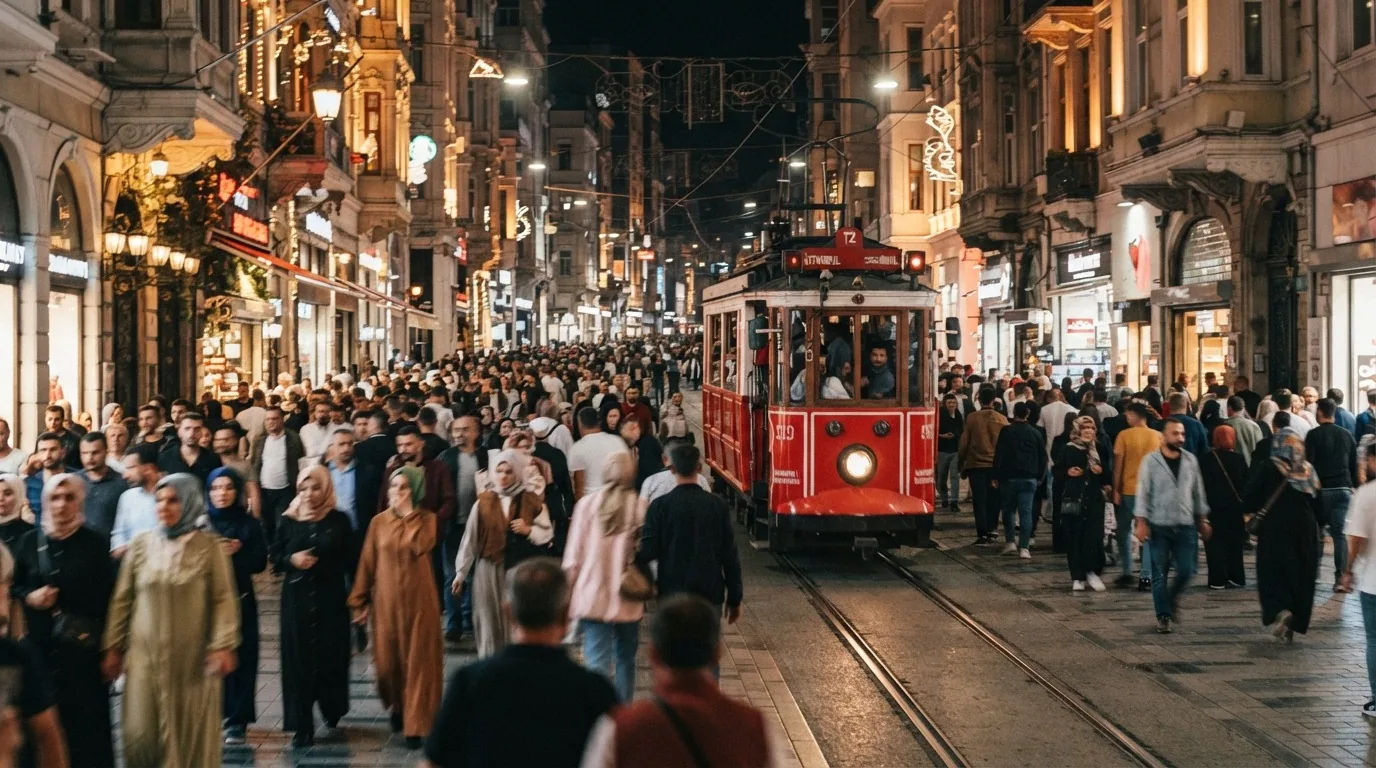
First, book early for summer: cities of millions receive multiples of their population in visitors, and Istanbul and Antalya peak in July and August. Second, exploit the dense domestic network: fifty airports serving a country of this size means cheap domestic tickets when booked ahead through carriers such as Turkish Airlines. Third, consider second-tier cities: Bursa, Konya, and Iskenderun are smaller, cheaper, and more authentic, with less-crowded hotels than Istanbul's, whose booking tactics we cover in the Istanbul hotel booking guide. Fourth, expect a young society in which tourism staff generally handle English, while you stay respectful of customs in conservative districts.
Practical Info for Gulf Visitors
| Item | Details | Gulf note |
|---|---|---|
| Data source | Turkish Statistical Institute | Annual update each new year |
| Median age | About 34 years | Young society, lively services |
| Provinces | 81 | Each a service center |
| Annual visitors | Over 60 million | Book summers early |
| Airports | Over 50 | Dense domestic flights |
| Tourist peak | July-August | May and September are smarter |
Demographics and Travel: How to Read the Composition in Practice
Turkey's demographic composition is not just numbers; it is a key to understanding the services you will meet as a traveler. The age structure is young with a median of 34, which means most hotel, restaurant, and transport staff are young, usually speak English, hold university degrees, and some studied tourism specifically. The youth also explains the energy you see in the big cities, especially Istanbul and Antalya where restaurants, cafes, and shopping centers do not sleep.
The professional mix is diverse: services, agriculture, industry, and tourism are all major sectors. Gulf tourists meet in hotels a multilingual Turkish team, in restaurants award-winning chefs, and in markets craftsmen who bargain with skill. Ethnic compositions also vary: Istanbul and Antalya host large Russian, German, Arab, and Ukrainian communities, while Trabzon has a Georgian, Arab, and Azerbaijani community, and Mersin has a Kurdish and Arab community. Understanding the mix helps you gauge the expected services.
The practical reading of this composition: all-inclusive resorts in Antalya and Alanya draw 70 percent of their staff from young workers, boutique hotels in Cappadocia are sometimes run by a two-generation family, and the popular bazaars in Istanbul are managed by merchants who inherited the trade from their fathers and grandfathers. These professional and social layers make the trip rich and deserve to be noticed while you move around, adding a human layer you do not find in a regular travel guide. You can deepen the geographic understanding via Turkey's area in square kilometers and its relation to population density. For those interested in more official statistics, the Turkish Statistical Institute provides detailed data on internal and external migration, the labor force, and educational indicators, all an excellent reference for understanding Turkish society before travel.
FAQ (12 Questions)
- What is Turkey's population in 2026?
The latest official figure is about 85.7 million for the end of 2024, and estimates point to continued slow growth toward 86-87 million in 2026. The ever-updated source is the Turkish Statistical Institute's site.
- How many people live in Istanbul?
About 15.7 million within the city's boundaries, the largest city in Europe by population within a single municipal border, receiving multiples of that number in annual visitors.
- What is Turkey's second largest city?
Ankara, the capital, with about 5.8 million, followed by Izmir at about 4.5 million, as detailed in the distribution table above and our Ankara guide.
- Why has Turkey's population growth slowed?
Birth rates declined with rising living standards and women's education, as in many countries, pushing annual growth below half a percent while keeping the society young with a median age near 34.
- Is Turkey bigger than the Gulf countries in population?
Yes, by a wide margin: its headcount equals all GCC states combined and more, roughly four times the UAE and a little over double Saudi Arabia.
- How many Turkish cities exceed one million people?
More than ten provinces, led by Istanbul, Ankara, Izmir, Bursa, Antalya, Konya, Gaziantep, Diyarbakir, Mersin, and Adana.
- How many visitors does Turkey receive per year?
Visitor numbers passed sixty million in recent years according to official figures, placing it among the world's top five destinations, with most arrivals in summer.
- What share of the population is urban versus rural?
More than three quarters live in cities and provincial centers while the countryside concentrates in farming villages, which explains strong in-city services and quiet rural areas.
- Are there Arab residents in Turkey?
Yes, a broad Arab community of students, investors, and families centered in Istanbul, Antalya, and Trabzon; you will find Arabic restaurants, schools, and services that sometimes erase the language barrier.
- Which cities are calmer for a family avoiding crowds?
Second-tier cities such as Bursa, Konya, Mersin, and Iskenderun, plus the north such as Trabzon outside the late-July and August peak, where hotels are cheaper and less crowded.
- Does population size affect hotel prices?
It works through supply and demand: residents plus visitors together lift Istanbul and Antalya prices in summer and lower them in smaller cities and shoulder months like May, September, and October.
- Where do I find the latest official population data?
On the Turkish Statistical Institute site in Turkish and English, and we share its updates across Voyago guides such as Turkey map facts.
Extra Context: Demographics and Tourism
Looking beyond the headline figure, the age structure matters. About 31% of Turks are under 18, 67% are working-age, and only 9.7% are over 65, which means the tourism workforce is young, multilingual, and increasingly Arabic-speaking in Istanbul, Antalya, Bursa, and the Black Sea coast. Population density averages 110 per km², but the variation is huge: Istanbul packs roughly 3,000 people per km² while eastern Anatolian provinces stay below 30. That disparity is exactly why Gulf travelers prefer the Aegean, the Black Sea, and the highlands for relaxed family trips. Turkey also hosts around 4 million registered Syrian refugees plus migrant communities from Iraq, Iran, Afghanistan, Russia, and Ukraine, and this mix enriches the cuisine of Gaziantep, Hatay, and Urfa. For cross-reading, our Turkey area km² guide connects land size, population, and the seven regions.
Conclusion
Turkey's population of roughly 86 million makes it the demographic giant of its European-Middle Eastern neighborhood, and the distribution numbers draw your trip map: giant Istanbul for the full experience, smaller cities of millions for a calmer rhythm, and natural destinations for serenity. Use these numbers to choose your city and season and to book early, then complete the plan through hotel bookings, private transfers, and organized tours on the Voyago platform, and follow the editorial team's guides for more useful figures.
Sources
Related travel guides
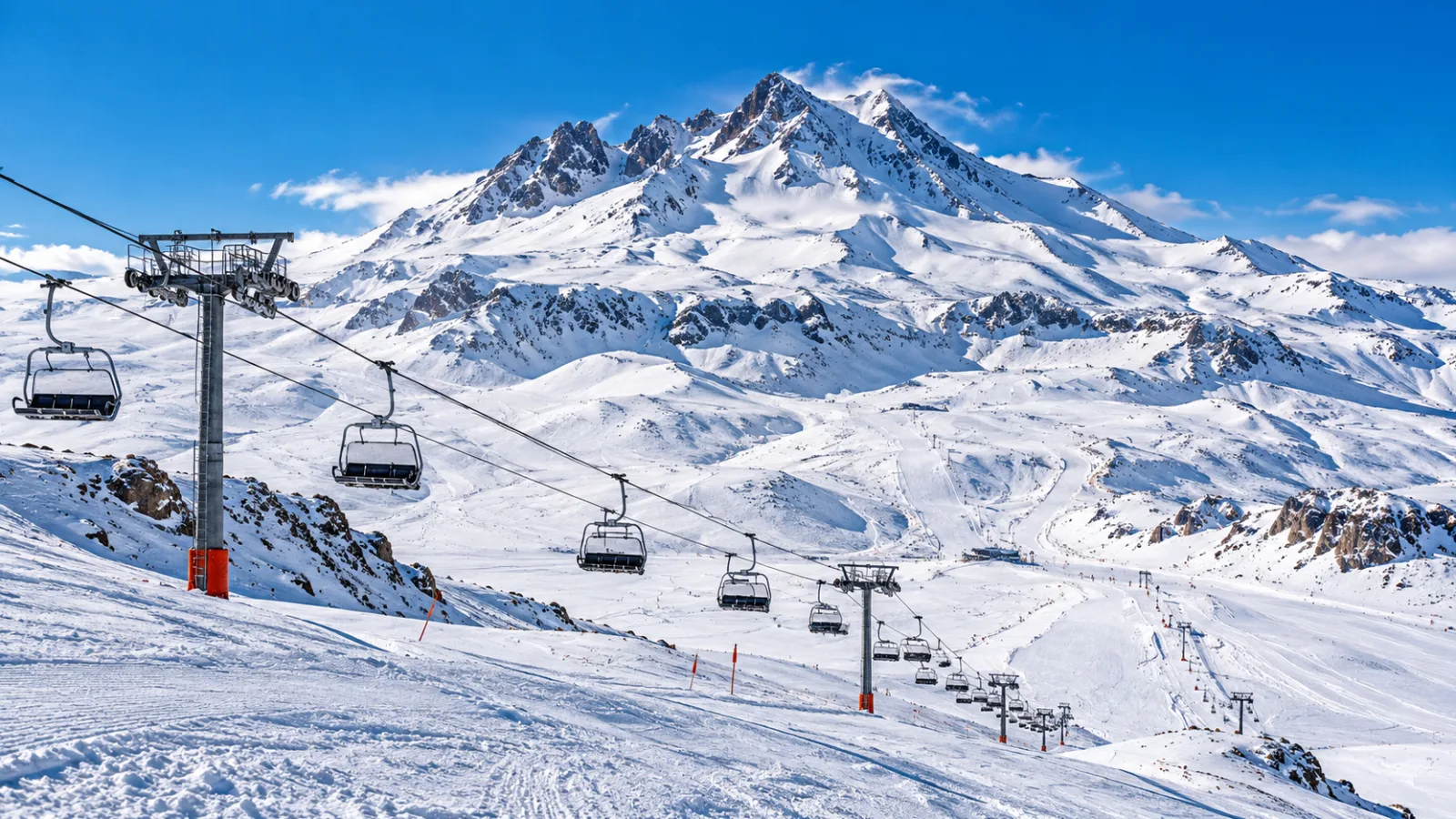
Erciyes is one of Turkey's biggest and highest ski areas, near Kayseri and within reach of Cappadocia — season timing, elevation and what to expect.
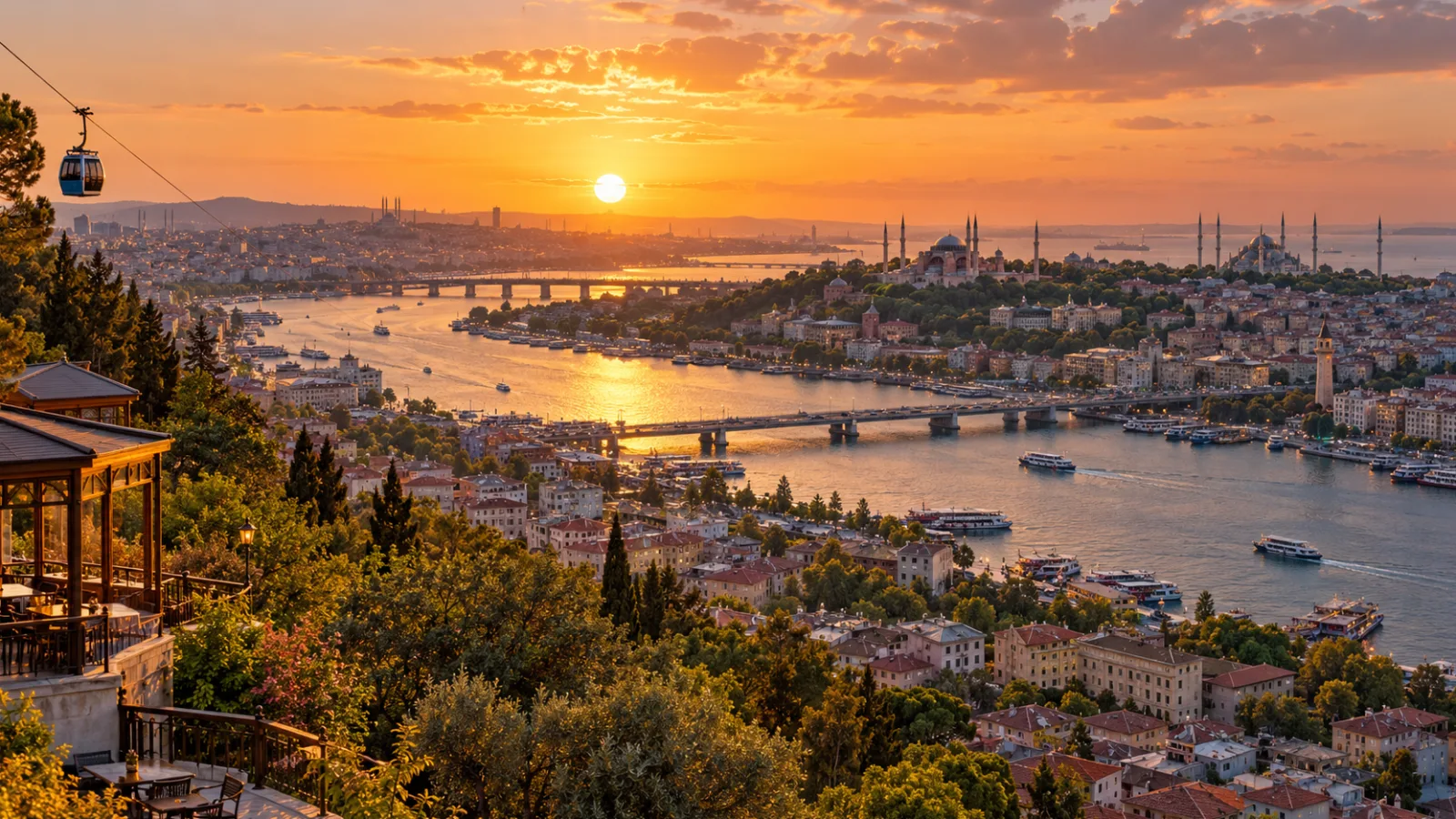
How the Eyup-Pierre Loti cable car actually works, what it costs, and how to pair the mosque, the hilltop view and the historic cemetery into one half-day.
Sapanca's monthly temperatures and rain from official Turkish records, and how this general climate picture differs from a winter-specific Sapanca and Kartepe visit.
Ready to explore Turkey?
Voyago brings together airport transfers, guided tours and car rental to help you plan the perfect trip to Turkey.