
Quick Answer for Gulf Visitors
Is Turkey a Muslim country? — Yes. State records classify more than 99% of the population as Muslim, mostly Sunni with a large Alevi community, but since 1923 Turkey has been a secular republic with no official state religion.
Is daily life comfortable for a Muslim family? — Yes. The adhan sounds five times a day, mosques stand in every district, halal slaughter is the market standard, and alcohol-free hotel floors and family pools keep spreading.
How do I plan around this? — Read the numbers below, check the halal and prayer sections, use the one-day Islamic itinerary in Istanbul, and book early for Ramadan and Eid windows.
The Direct Answer: Yes, With an Important Nuance
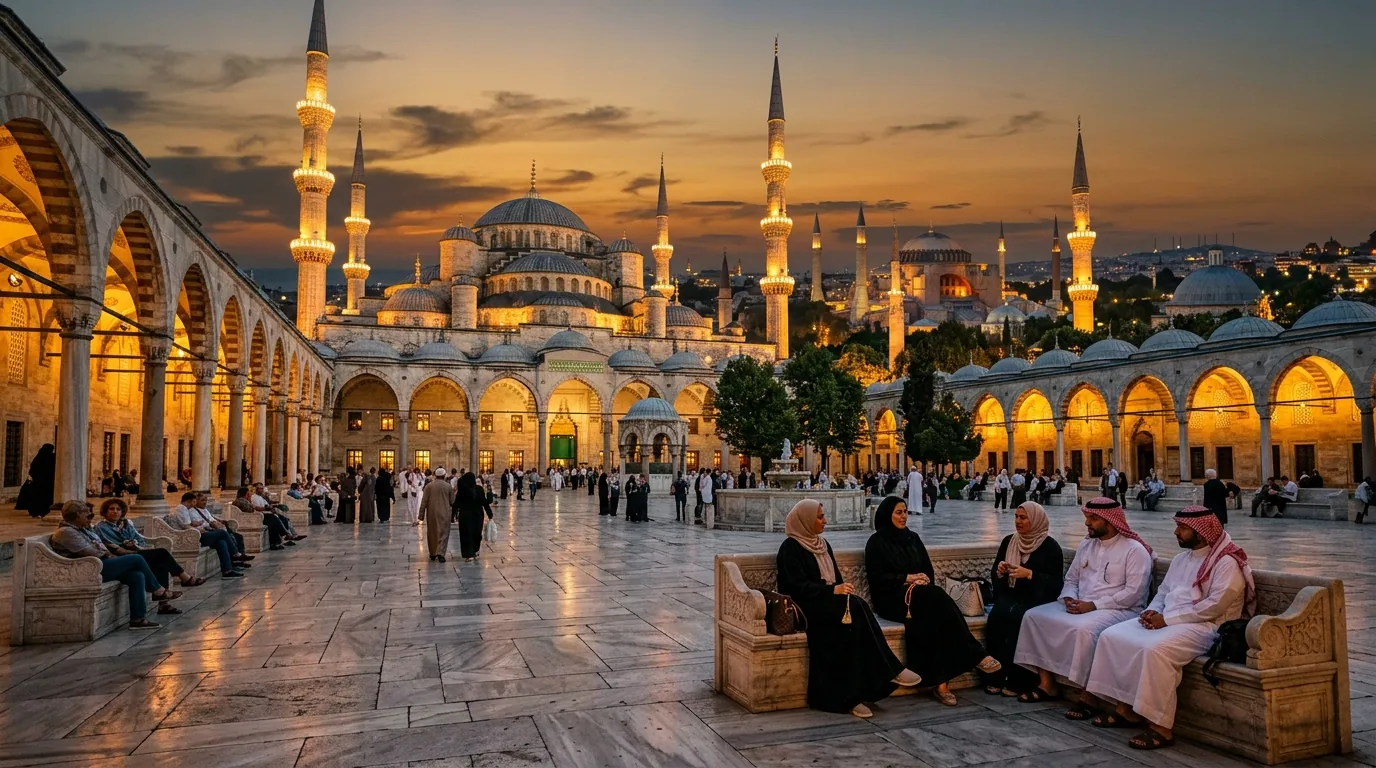
Turkey is a country whose overwhelming majority is Muslim: official records classify more than 99% of the population as such, and Islamic life is visible in every city — mosques, the adhan, Friday prayers, and a mass-participation Ramadan. At the same time, Turkey has been a secular republic since 1923: there is no official state religion, and Islamic affairs are administered by the Turkish Presidency of Religious Affairs (Diyanet), which oversees more than eighty thousand mosques, appoints imams, and organises Friday sermons nationwide.
This mix matters for Gulf visitors. Your family will find a country that feels familiar in religious and social rhythm, paired with a European openness in the big cities. Families arriving from Saudi Arabia, the UAE, or Qatar find halal restaurants on every corner, prayer rooms in hotels, airports, and malls, women's sections in the major mosques, and quiet family districts away from the bustle of tourist strips. With the right booking choices — the suitable hotel and well-planned transfers — this cultural background becomes a genuine advantage for your trip.
Religion in Turkey by the Numbers
Islam is the overwhelming majority faith in Turkey: state records classify more than 99% of the population as Muslim, mostly Sunni with a large Alevi community, alongside old Christian and Jewish minorities that have lived in the major cities for centuries. This fabric is not new; it continues more than a thousand years of Seljuk and then Ottoman rule, which made Istanbul the seat of the caliphate for centuries before the republic turned the country toward a secular, western-facing model in the 1920s.
What does this mean for Gulf visitors in practice? Daily life is closer to what you know at home than the stereotype suggests: the adhan rises five times a day from every district, mosques fill on Fridays, Ramadan fasting is a mass social phenomenon, and hospitality and modesty norms feel familiar. For deeper demographic context, see our guide to Turkey population facts, and for current entry conditions, our updates on whether travel to Turkey is allowed.
On the other side of the ledger: alcohol is sold in licensed outlets and some tourist-area restaurants, some beaches are mixed, and hijab is a personal choice common in both big cities and conservative towns. None of it is imposed on you, and conservative options — family hotels, alcohol-free restaurants and cafés — are easy to find.
Islam in the Visitor's Daily Life
You will meet these scenes from day one: the dawn adhan across Istanbul, Friday prayer rows spilling outside mosques, and bazaars pausing at prayer time in local districts while running normally in tourist zones. Modest dress is accepted everywhere and draws no attention, restaurants serve halal meat by default, and the staples of Turkish popular cuisine — kebab, pide, gözleme, and the lentil soups — suit a Muslim family without exception.
Muslim women travellers also find clear facilities: ready women's sections in the major mosques such as Süleymaniye, Hagia Sophia, and the Blue Mosque; family pools reserved for women and children at Antalya and Bodrum resorts; and entire alcohol-free floors at several large Istanbul hotels. These are requested at booking, not at check-in — our Istanbul hotel booking guide walks you through the options.
Turkey vs European Destinations: A Comfort Comparison
Why should a Gulf family pick Turkey over a European capital? The table summarises the practical differences:
| Criterion | Turkey | European destinations | Family note |
|---|---|---|---|
| Halal food | The default everywhere | Limited, needs research | No meal planning needed in Turkey |
| Prayer facilities | Mosque in every district, prayer rooms in malls | Usually airport rooms only | Five prayers without advance arranging |
| Ramadan atmosphere | Mass and festive | Limited to Muslim quarters | Ramadan in Turkey is an experience itself |
| Flight from the Gulf | 3-5 hours | 6-8 hours | A real difference with children |
| Overall cost | Mid to high range | Generally high | Gentler on larger families |
| Cultural proximity | Familiar hospitality and modesty | A noticeable cultural gap | Communication is far easier |
The practical conclusion: Turkey offers Muslim families the closest thing to home comfort with world-class tourism infrastructure, which is why it tops Gulf destination lists year after year.
Top Mosques and Islamic Landmarks
| Landmark | City | Why It Is Worth It |
|---|---|---|
| Hagia Sophia | Istanbul | Byzantine masterpiece, a functioning mosque since 2020 |
| Blue Mosque | Istanbul | Six minarets and famous Iznik tiles |
| Süleymaniye Mosque | Istanbul | Architect Sinan's peak, Golden Horn views |
| Eyüp Sultan Mosque | Istanbul | The Companion's tomb and first Ottoman mosque |
| Kocatepe Mosque | Ankara | The capital's largest and finest |
| Mevlana (Rumi) Shrine | Konya | The world-famous Sufi poet's mausoleum |
| Topkapı Palace | Istanbul | The Sacred Relics department |
The Sacred Relics department inside Topkapı Palace holds a revered collection of Prophetic relics and manuscripts, a moving stop for Gulf families that deserves dedicated time within the palace visit. Eyüp Sultan likewise holds a special place in the hearts of Muslim visitors from the Gulf. If your itinerary also covers the Turkish north, read where Trabzon is located while planning.
Ramadan and the Eids in Turkey
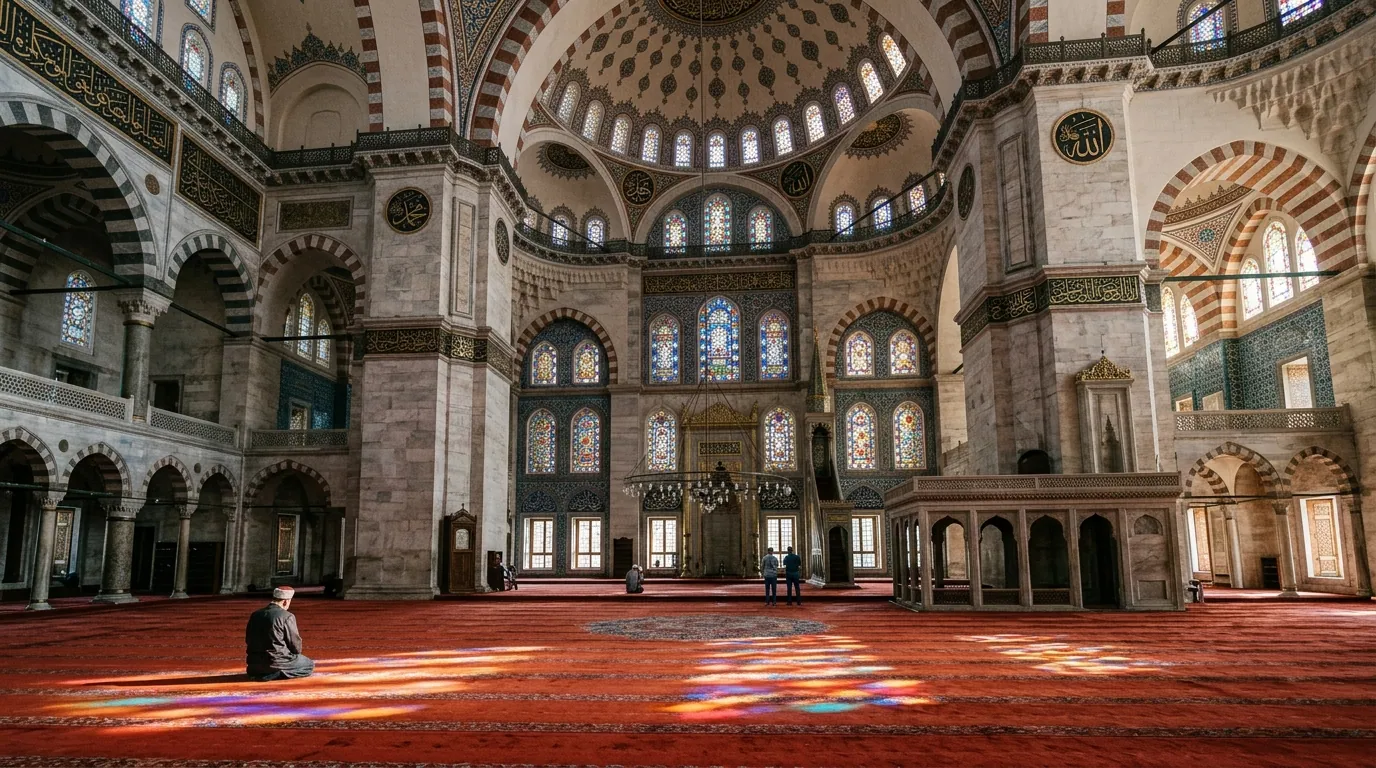
Ramadan in Turkey feels nothing like Ramadan in Western cities: iftar tents spread across public squares, the traditional drummer walks old neighbourhoods before dawn, and fresh Ramadan pide bread draws queues before sunset. Restaurants stay open during the day in tourist districts and city centres, so non-fasting family members — especially small children — face no awkwardness.
The two Eids are official holidays with city events and family programmes in major hotels; book early, because the Ramadan-Eid window has become a peak season for Gulf families in Istanbul, Antalya, and Trabzon. The Istanbul family hotels guide helps you lock in the right property before prices climb.
Halal Food and Prayer: The Short Answer
Meat across Turkish markets and restaurants is halal-slaughtered by the prevailing standard; pork is sold in clearly marked licensed outlets, not in mainstream restaurant chains. For full peace of mind, look for hotels and restaurants holding certified halal accreditation, widespread in the luxury tier. For prayer: mosques stand in every district with regular times, prayer rooms exist in major hotels, airports, and malls, and prayer-time apps work accurately nationwide.
Women find dedicated sections in most large mosques, and visits are welcome outside prayer times with modest dress and shoes removed, exactly as at home. In recent years, alcohol-free floors and wings have spread across Istanbul and Antalya's larger hotels, along with family pools reserved for women and children — a service to request at booking rather than on arrival.
A One-Day Islamic Itinerary in Istanbul
This plan covers the famous Islamic landmarks of Sultanahmet and its surroundings on foot, with a total walking distance under 3 kilometres:
| Time | Stop | Practical note |
|---|---|---|
| 9:00 | Hagia Sophia | Early arrival beats the queue; foreign-visitor ticket about $25 |
| 10:30 | Blue Mosque | Free entry outside prayer times; women's sections ready |
| 12:00 | Dhuhr prayer, then lunch | Surrounding restaurants are halal; try kebab, pide, and gözleme |
| 14:00 | Gülhane Park | Coffee and a children's break under the trees |
| 15:30 | Süleymaniye Mosque | Asr prayer among Sinan's masterworks and Golden Horn views |
| 17:00 | Grand Bazaar | Closes at 19:00; bargain calmly over carpets and gifts |
On Fridays the mosques open late to visitors because of the sermon and prayer; if your visit falls on a Friday, pray Jumu'ah at Süleymaniye or Eyüp Sultan and experience an atmosphere photos cannot convey. The Grand Bazaar closes entirely on Sundays, so plan around it. For families with strollers: the route is paved and stroller-friendly except the climb toward Süleymaniye, tram T1 links the stops, and clean restrooms and water kiosks line the parks. To reach this district from the airport smoothly, arrange a private transfer that takes you directly to Sultanahmet.
Practical Info for Gulf Visitors
| Item | Details | Gulf visitor note |
|---|---|---|
| Currency | Turkish Lira (TRY) | 1 USD ≈ 38-40 TRY (2026) |
| Calling code | +90 | For calls to Turkey |
| Emergency | 112 (police, ambulance, fire) | Free from any phone |
| Language | Turkish | English common in cities; Arabic present in tourist areas |
| Time zone | UTC+3 (TRT) | Nearly the same as the Gulf |
| Electricity | Type C/F | 220V, 50Hz (like the Gulf) |
| Prayer | Mosque in every district | Most large hotels have a prayer room |
| Halal food | Widely available | The prevailing market standard |
| Prayer times | Five daily | Prayer-time apps work accurately |
| Internet | SIM or eSIM at the airport | Turkcell and Vodafone have the widest coverage |
| Visa for GCC citizens | Exempt up to 90 days | Details in our visa guide |
Related Articles and Sources
To keep planning, explore these guides:
- Updated entry conditions in the Turkey visa for Saudi citizens guide
- A wider demographic picture in Turkey population facts
- Choosing where to stay from the best Istanbul hotels
- Search and book through hotels in Turkey, transfer services, and tours
To verify official information:
- Entry visa: evisa.gov.tr
- Turkish Ministry of Foreign Affairs: mfa.gov.tr
- Official tourism portal: goturkiye.com
FAQ
- Is Turkey an Islamic or a secular state?
Turkey's overwhelming majority is Muslim, but the state has been secular since 1923: no official religion, with the Presidency of Religious Affairs (Diyanet) administering mosques and imams. That combination is the key to understanding life there.
- What percentage of Turks are Muslim?
State records classify more than 99% of the population as Muslim, mostly Sunni with a large Alevi community, alongside historic Christian and Jewish minorities in the major cities.
- Is food in Turkey halal?
Yes. Halal slaughter is the prevailing standard in markets and restaurants, and pork is sold only in clearly marked licensed outlets. Hotels and restaurants with certified halal accreditation are plentiful in the luxury tier for complete peace of mind.
- Is it easy to pray while travelling around Turkey?
Yes. There is a mosque in almost every district, prayer rooms in major hotels, airports, and malls, and prayer-time apps work accurately nationwide. Ten extra minutes in your daily plan is usually enough.
- Are there alcohol-free hotels or family-only sections?
Yes. Entire alcohol-free floors exist at several Istanbul and Antalya hotels, and selected resorts offer family pools reserved for women and children. Request these at booking rather than at check-in.
- What is Ramadan like in Turkey?
Ramadan is a mass, social occasion: iftar tents in public squares, neighbourhood drummers before dawn, and fresh pide bread before sunset. Restaurants stay open during the day in tourist areas, so children and elders who do not fast face no awkwardness.
- Are mosques open to women visitors?
Yes. Most major mosques have equipped women's sections, and visits are welcome outside the five prayer times with modest dress and shoes removed, exactly as customary in the Gulf.
- What are the etiquette rules for Hagia Sophia and the Blue Mosque?
Wear modest clothing (head covers are provided at the entrance for women), remove your shoes, and avoid prayer times, especially the Friday sermon. Hagia Sophia charges foreign visitors about $25; the Blue Mosque is free.
- Is hijab accepted in Turkey?
Yes. Hijab is a common personal choice, visible in both big cities and conservative towns, and draws no attention on the street, in hotels, or at tourist sites.
- Is travelling during the Eids a good idea?
The two Eids are official holidays filled with city events and hotel family programmes, but they are peak periods for Gulf families; book your hotel and transfers two to three months ahead for the best rates and rooms.
- Which areas suit a quiet family stay?
In Istanbul, Sultanahmet and its surroundings suit families focused on the landmarks, while areas like Bebek and Zeytinburnu offer calmer stays. In Antalya, family resorts provide private sections and full services.
- Do Gulf citizens need a visa for Turkey?
GCC citizens are visa-exempt for short stays, while residents of the Gulf holding other nationalities need an e-visa; updated details are in the Turkey visa for Saudi citizens guide.
Conclusion
Turkey is a country where more than 99% of the population is Muslim, governed by a secular system that guarantees freedom of religious practice. For your family this means a familiar environment — adhan, mosques, halal food, and respected modesty norms — with world-class tourism infrastructure and conservative options easy to find. Build your itinerary around Istanbul's great Islamic landmarks and book early for the Ramadan and Eid seasons.
To move from planning to booking, start here:
Family hotels in Turkey · Private airport transfers · Islamic and landmark tours
Related travel guides
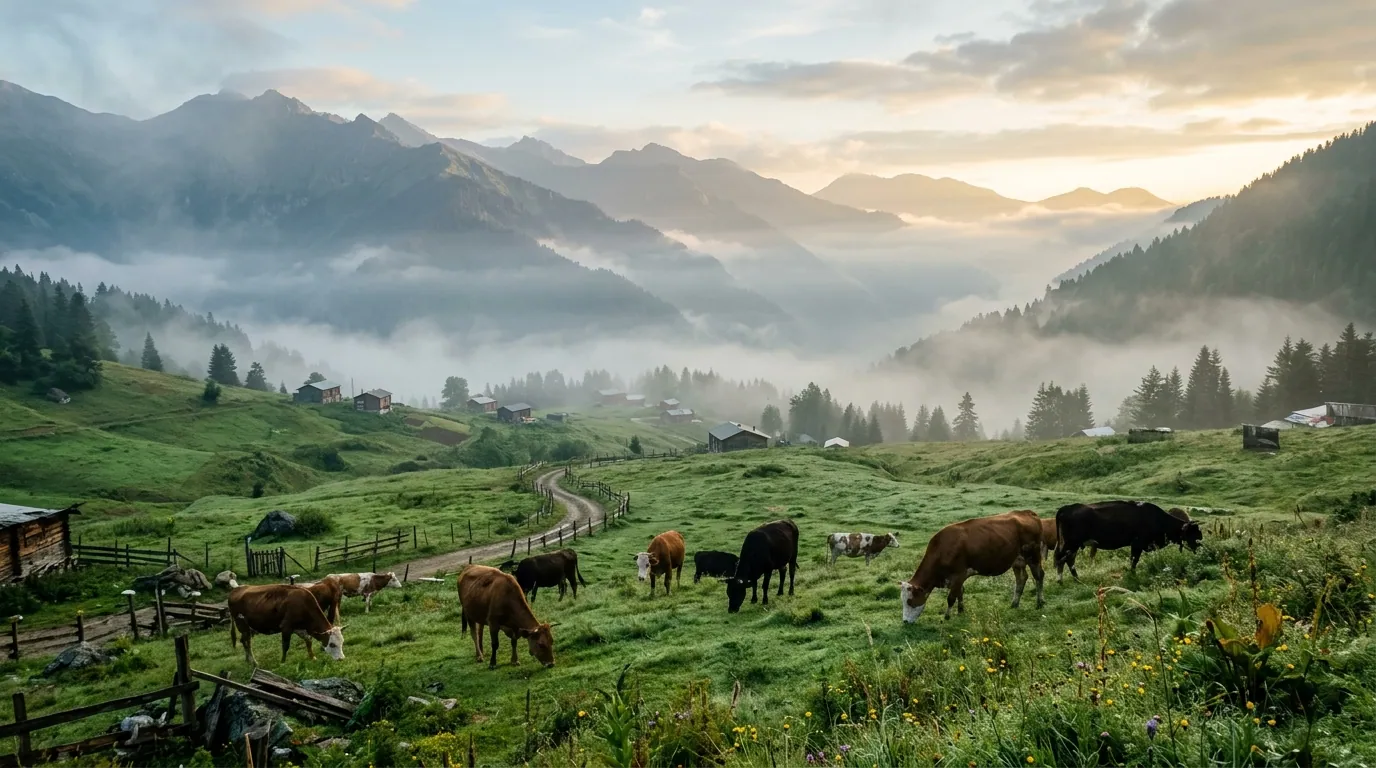
Ayder highlands 5-day itinerary 2026: a day-by-day plan for Arab families covering thermal pools, valleys, and Trabzon.
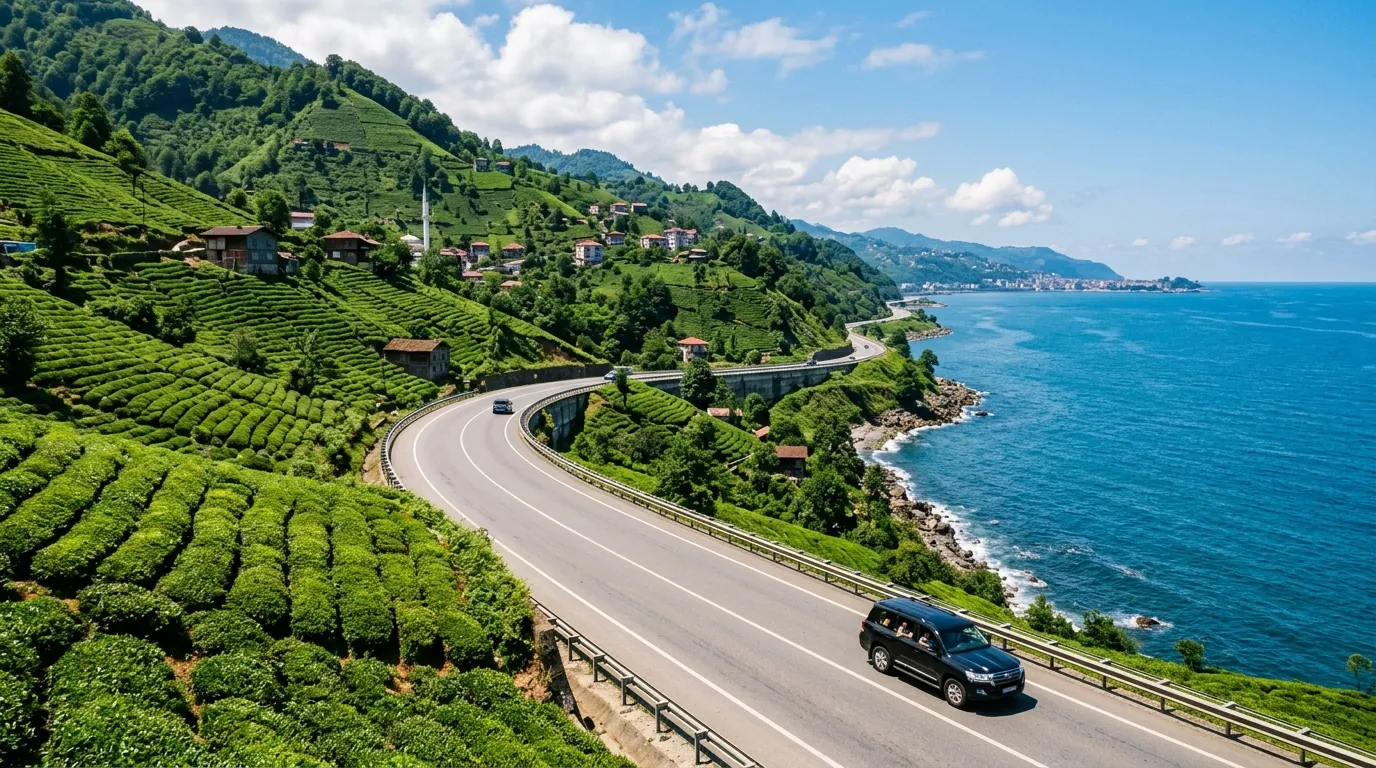
Ayder Trabzon distance 5-day itinerary 2026: a day-by-day plan for Arab families covering the transfer route.
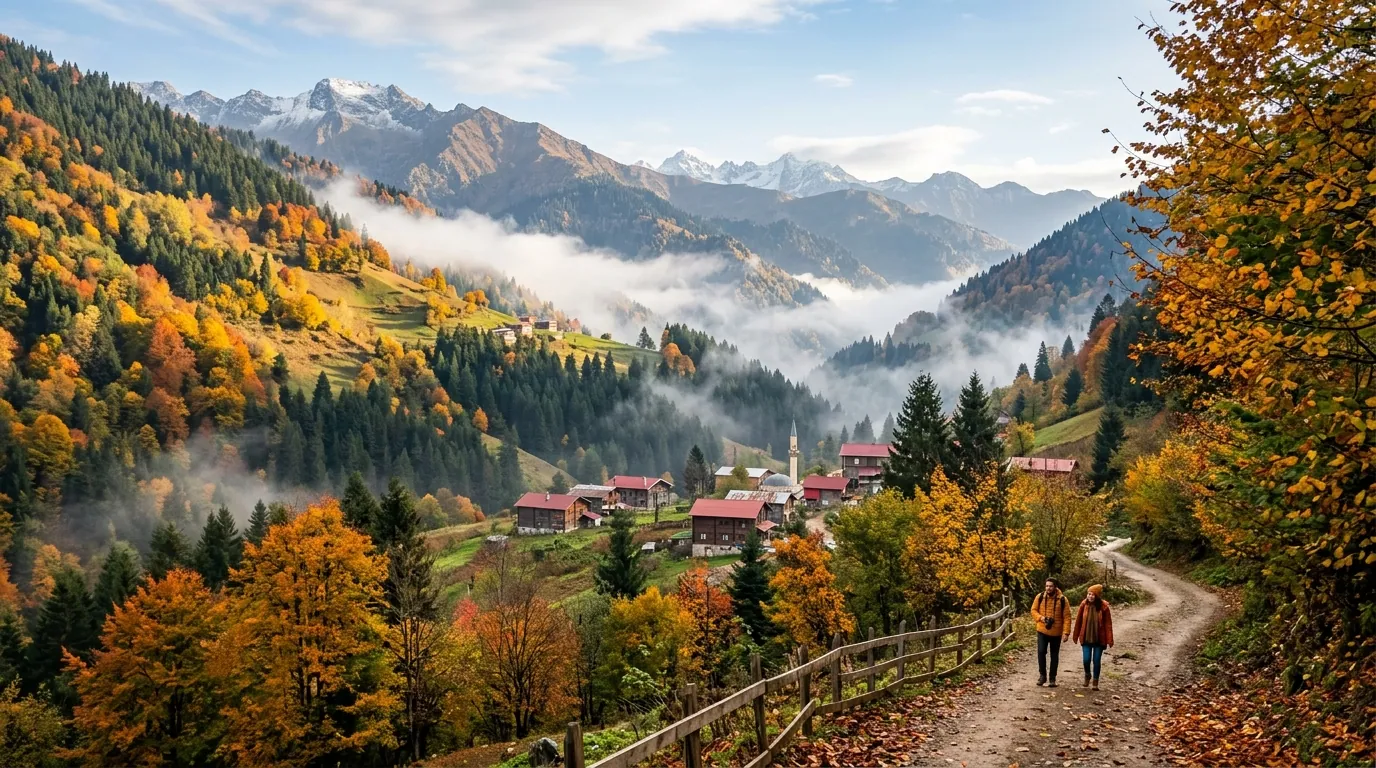
Ayder Turkey weather 2026: monthly averages, rain patterns, best months to visit, and packing tips for Gulf families.
Ready to explore Turkey?
Voyago brings together hotels, tours and transfers to help you plan the perfect trip to Turkey.