
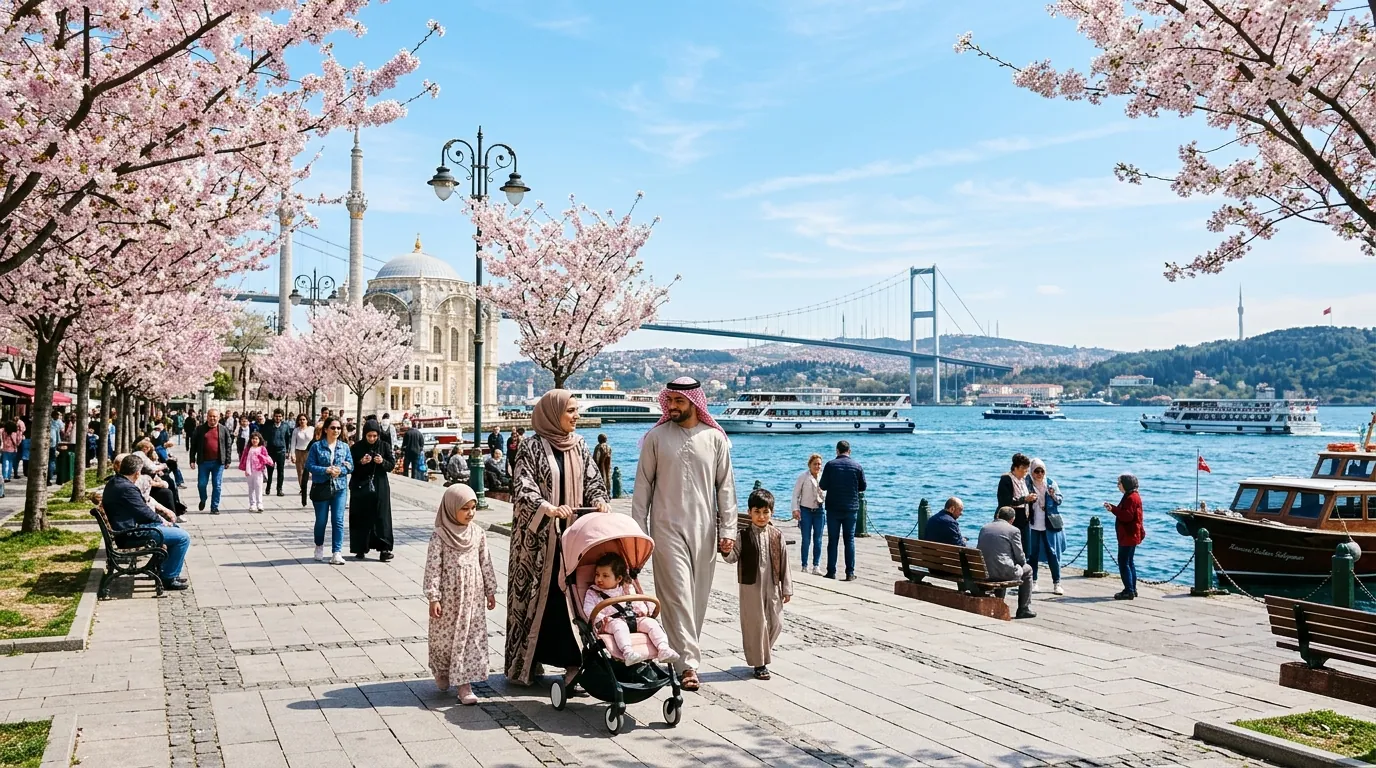
Quick Answer for Gulf Visitors
What is Istanbul weather like year-round? The city passes through four full, distinct seasons: a cold, rainy winter between 3 and 11 degrees, a gently warming spring between 12 and 21, a warm, humid summer between 21 and 29, and a mild descending autumn between 20 and 9.
Which season is best to visit? Late spring and early autumn wear the crown: May, September, and October combine mild temperatures, clear skies, and prices below the summer peak.
Is summer hot like the Gulf? Not at all. Istanbul summer means sea breezes and gentle evenings rarely above 29 degrees, though coastal humidity lifts the felt temperature slightly, and nights drop about ten degrees, so a light jacket helps outdoors.
Istanbul's Climate: A City Between Two Systems
Istanbul is not a single-climate city but the seam where the warm Mediterranean system meets the humid Black Sea system. The result is a city that breathes all four seasons completely: a winter that reminds you of northern Europe, a summer closer to the Mediterranean coast, and two short shoulder seasons that locals consider the most beautiful of all.
Its position between two seas adds a crucial detail: the breeze. A permanent air current runs through the Bosphorus strait, softening summer and sharpening winter wind, which is why the bridges and ferries feel two degrees cooler than inner streets. Locals track the wind direction the way other cities track traffic. Gulf visitors coming from a stable climate need to understand that a single day here can carry sun, chill, and breeze across twelve hours.
This guide explains each season month by month with its practical reality. For detailed day-and-night figures, see the Istanbul temperature in Celsius table, and for the wider country picture the complete Turkey guide is your reference.
Practical Info for Gulf Visitors
| Item | Detail |
|---|---|
| Climate type | Transitional Mediterranean - maritime |
| Warmest months | July and August (28-29 by day) |
| Coldest months | January and February (3-5 at night) |
| Wettest season | Winter (November - March) |
| Finest seasons | Spring and autumn |
| Peak tourist season | June - August |
| Quietest season | Winter |
| Best photo month | May |
Winter Month by Month: December, January, February
Istanbul winter is cold and damp, never extreme. Average days sit between 9 and 11 degrees, nights between 3 and 6, and rain is frequent but rarely lasts a full day. Snow is a recurring guest, once or twice per season, melting within days, and when it settles over Hagia Sophia and the Blue Mosque the city produces its finest postcards.
The practical upside of winter is maximum saving: hotels at their lowest, queues nearly gone, and the indoor shopping season at full swing. A typical winter day starts late under light fog, opens at noon into pale warming sun, and closes early with the half-past-four sunset.
For clothing, the key is layering: a warm base, a wool mid-layer, and a wind-and-waterproof outer coat. Dry, well-gripped shoes are the single most important item in the entire suitcase.
Spring: March, April, May
Spring begins with hesitant coolness in March, then April detonates the country's most famous bloom season: the tulips. Emirgan, Gulhane, and Sogutlucesme parks plant millions of bulbs and turn hillsides into living canvases, a photography season no camera lover should miss.
May is the peak of spring and one of the best months of the entire year: 21 by day, 13 at night, little rain, and nature in full green. It is ideal for every open-air itinerary: the Tunel funicular, Pierre Loti and Camlica hills, long Bosphorus cruises, and the Princes' Islands before summer crowds.
Spring wardrobe intelligence is removability: a t-shirt at noon converts to a comfortable evening with a light jacket, and in March keep a heavier coat because nights still hover near five degrees.
Summer: June, July, August
Summer is the undisputed peak season. Temperatures run 26 to 29 by day and 18 to 21 at night, and the sea passes twenty degrees from late June. Humidity is the hidden player: near the coast it makes 28 feel like 32, while inland hills and shade keep the same day pleasant.
July and August are the Gulf school-holiday months, so hotels peak in price and the islands and Bosphorus peak in crowds. The winning summer plan: book two months ahead, start the day before ten in the morning, park the midday hours in a museum or covered bazaar, and re-emerge after four in the afternoon.
A detail many overlook: even in August, a long evening on the waterfront may need a long-sleeved shirt. The sea breeze turns lightly cool after sunset, a charm Gulf visitors adore after a fifty-degree summer at home.
Autumn: September, October, November
Autumn opens with a gentle summer: September averages 25 by day with the sea at 22 degrees, arguably the best practical swimming month. October then eases to 20 and 13 with golden leaves across the parks and rare clarity over the Bosphorus.
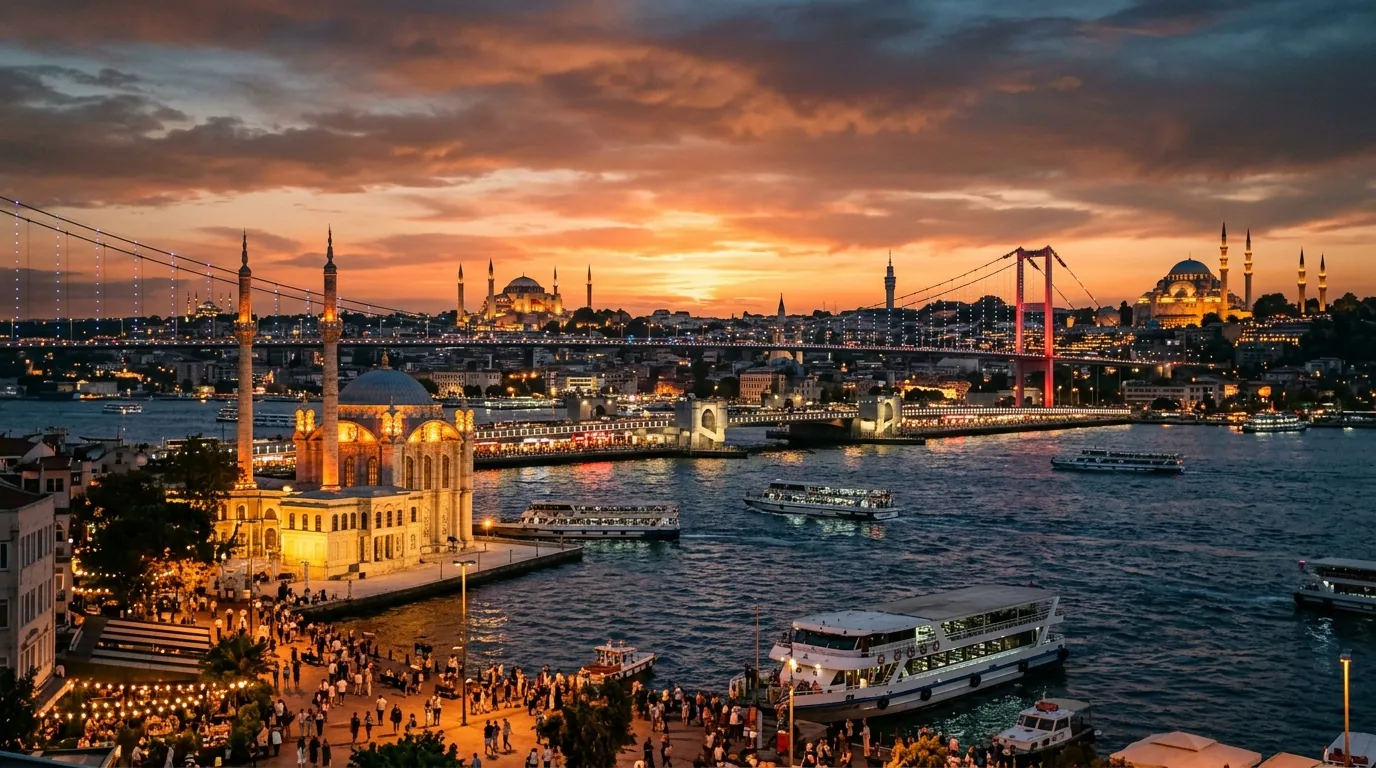
October specifically is this guide's first recommendation for Gulf families: no oppressive heat, no peak crowds, no November rain, and hotel rates normalising after summer. November opens the rainy season properly, though its first half usually stays pleasant and beautiful for walking between uncrowded monuments.
Follow the same layering logic in autumn with a compact umbrella from mid-October and a mid-weight coat in November. Tea on the Bosphorus in an autumn evening is among the city's finest rituals.
Comparison of Istanbul Months: Which Suits You?
| Month | Daytime temperature | Crowds | Prices | Best for |
|---|---|---|---|---|
| January | 9 | Low | Lowest | Budget and museum season |
| March | 12 | Low | Low | Quiet budget trips |
| May | 21 | Medium | Medium | Couples and photography |
| July | 28 | Highest | Highest | Families on summer break |
| September | 25 | Medium | Medium | Swimming and the islands |
| October | 20 | Medium | Medium | Families and full visits |
| December | 11 | Low | Low | Winter mood and shopping |
Reading the table reveals a simple equation: temperature, crowds, and prices move up and down together. Maximum value lives in October or May, swimmers should take September, and anyone unbothered by cold harvests January's cheapest rates and calmest monuments.
European or Asian Side: Subtle Climate Differences
Micro-climates exist even inside the city. The historic European shore facing the strait receives the Bosphorus breeze, cooler in summer and sharper-feeling in winter wind. The Asian side around Kadikoy and Uskudar runs a degree or two warmer in summer in its inland neighbourhoods and warms a few days earlier each spring.
The northern Black Sea suburbs such as Polonezkoy and Sile are a separate world: about a quarter more rain, two to three degrees cooler in summer, and the locals' own refuge from August heat. The northern forests extend the day in a green quiet that exceeds most Gulf visitors' expectations.
The practical payoff of this small map: heat-tolerant travellers can base on the Asian side in summer for less money, breeze-chasers should stay on the strait, and anyone wanting a completely different day can ride north to a Black Sea beach even in July.
The Four-Seasons-in-One-Day Phenomenon
Istanbul's famous quirk, mocked by residents and loved by visiting cameras: a single day can pass through four weather types. A foggy cold morning, a warm sunny noon, a windy rainy late afternoon, and a clear cool night. The phenomenon peaks in April and October when air masses collide over the city.
Its practical application belongs in your day bag, not your suitcase: carry a foldable jacket and a compact umbrella however sunny the morning looks, and trust that rain usually changes its mind within the hour. Visitors who learn this rule move confidently all day; those who ignore it spend the day grumbling between museums.
This is also why we recommend flexible daily plans: pick two outdoor activities and one indoor backup, so you can swap the order with the morning sky without cancelling anything.
A Seasonal Events Calendar
Weather in Istanbul is not just a clothing frame; it is a full events calendar. April brings the national tulip festival with displays across the major parks, and June opens the open-air music festival season, including the famous Galata step performances.
July and August are waterfront season on the corniche and children's festival season in the great parks as family holidays arrive, while September carries the back-to-school calm with the sea's warmth fully intact.
In December the city dresses in lights and winter installations across the main squares, winter markets open, and hot Bosphorus tea plus the warm enclosed Golden Horn boats become the finest evening options. Choose your season by the events you love, not by temperature alone.
Planning Tips by Trip Type
For families with small children: target May, September, and October, when outdoor children's programmes need mild air, cooler evenings ease early bedtimes, and the city is kinder to strollers on pavements and monument paths. For couples and honeymoons: May with its blooms and October with its colours are the two most romantic months on the Bosphorus.
For shoppers: November and December bring the big winter sales, and the cold is manageable with a good coat. For photographers: April for tulips, May for clear skies, December for the rare chance of snow on the minarets. Travellers combining Istanbul with other cities should first read the travel to Turkey guide and the Istanbul hotel booking guide.
For travellers from the UAE and Qatar specifically: October is perfect, escaping the late-summer Gulf heat into full Istanbul moderation, with paperwork details in the UAE visa guide, while Saudis find theirs in the Saudi visa guide. Anyone asking whether travel is currently open finds the answer in the Turkey travel rules guide.
FAQ (12 Questions)
1. Does Istanbul really have four seasons?
Yes, fully and clearly; it is a transitional city between two climate systems, and you feel the seasons change perceptibly rather than as a faint drift as in other cities.
2. What is the single best month of the year?
May, by most visitors' verdict, with ideal temperatures, full greenery, and lighter crowds than summer; October follows closely, then September for warm-sea lovers before the season closes.
3. Is winter a bad time to visit?
Not bad, just different: lower prices, shorter queues, and festive bazaars, in exchange for cold, rain, and an early sunset that demands smarter planning of short daylight hours.
4. When does the rainy season end?
Around the end of April; May opens the dry season that peaks in July and August with fewer than four rain days, before rain returns gradually from mid-October.
5. What is the coldest it can feel in Istanbul?
A clear January night with a northern wind on the bridge can feel near zero despite a reading of six degrees, which is why we repeat the windproof-coat advice in every winter guide.
6. Is humidity high all summer?
High specifically near the shores in July and August, lighter inland and on the hills, with the breeze softening it; seafront evenings remain comfortable for long outdoor sittings.
7. Which month is best for swimming with children?
September, with the sea near its warmest, air gentler than July, and beaches calmer after schools return; August follows for those who accept the family crowds.
8. Do temperatures change much year to year?
Averages shift only mildly, but exceptional waves occur, like the June 2024 heat that beat averages by four degrees and the December 2021 snow that stilled the city for days in a rare scene.
9. Which season suits a Bosphorus cruise best?
May through September, with calm seas, clear skies, and open waterfront cafes; May and October offer the finest clarity, yet winter's enclosed-boat trips remain a warm, enjoyable experience.
10. Do tours stop in winter?
Most tours run all year on lighter schedules, and sea trips continue in warm enclosed boats most days, with only January and February seeing reduced daily departures.
11. How do I plan a day that mixes rain and sun?
Keep the morning indoor in a museum or bazaar, save the open-air tour for late afternoon; Istanbul rain is heavy but short and rarely swallows the whole day, and a waterproof jacket often beats an umbrella.
12. What is the reliable forecast source before travelling?
The official Turkish meteorology portal is the most accurate reference, checked alongside global apps for hourly detail in the final days before your flight.
Conclusion
Istanbul weather year-round is the story of four complete seasons: a cold, rainy winter with golden prices, a mild flowery spring, a warm humid summer with peak crowds, and an autumn that balances everything. Choose your season by budget and trip purpose, pack in removable layers, and check the forecast shortly before departure. For the best rates in the ideal seasons, browse Istanbul hotels, tours, and our transfer service.
Sources
Related travel guides
Ayder highlands 5-day itinerary 2026: a day-by-day plan for Arab families covering thermal pools, valleys, and Trabzon.
Ayder Trabzon distance 5-day itinerary 2026: a day-by-day plan for Arab families covering the transfer route.
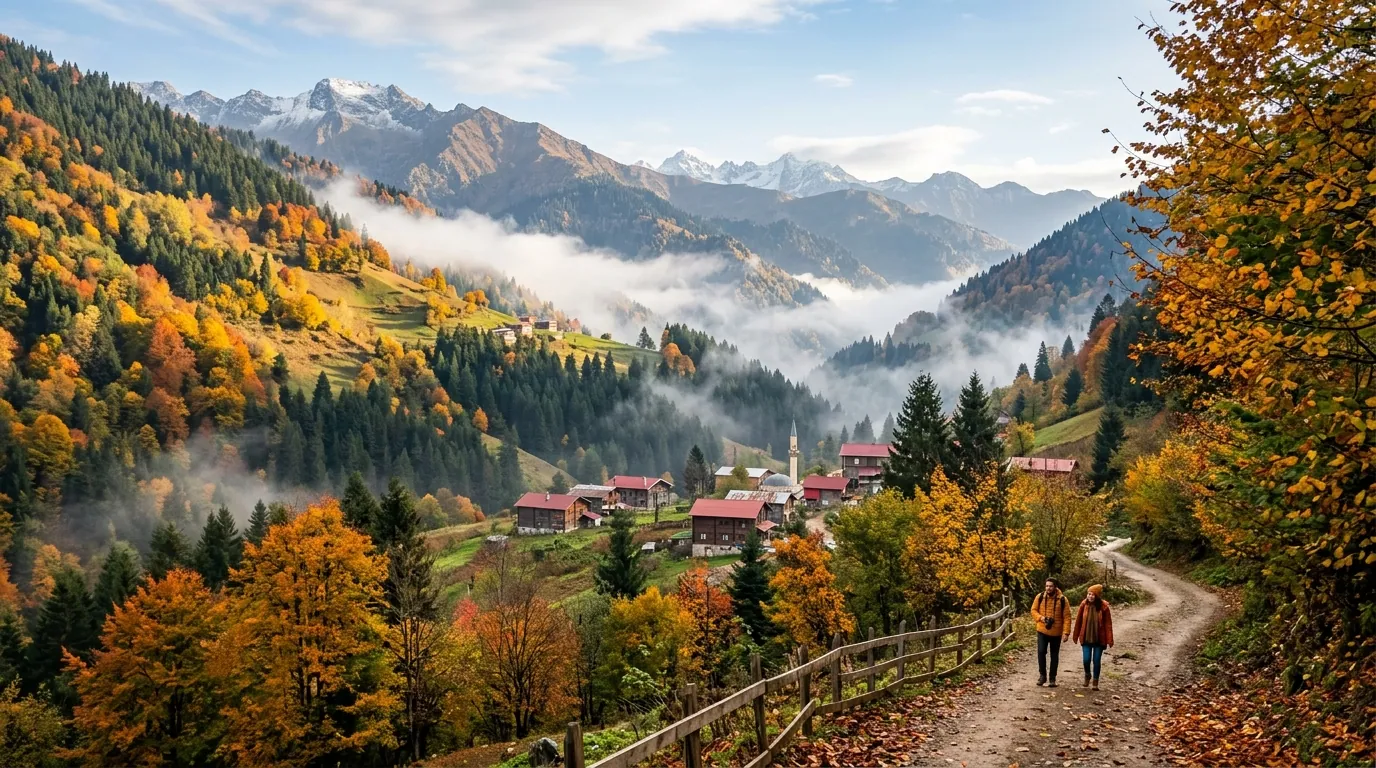
Ayder Turkey weather 2026: monthly averages, rain patterns, best months to visit, and packing tips for Gulf families.
Ready to explore Turkey?
Voyago brings together hotels, tours and transfers to help you plan the perfect trip to Turkey.