
Quick Answer for Gulf Visitors
What is the temperature in Istanbul? Monthly averages run from 3 degrees at night in January to 29 degrees by day in August. The coldest months are January and February, the warmest July and August, while spring and autumn hold the ideal band between 12 and 22 degrees.
When should Gulf travellers visit? May, June, September, and October. Days are mild, evenings lightly cool, skies clearer, rain scarcer, and hotel rates friendlier than the summer peak.
Is summer worth it? Yes. Istanbul summers are gentler than Riyadh or Jeddah thanks to the sea breeze, though July and August bring crowds and peak pricing.
Why Gulf Travellers Ask About Celsius in Istanbul
Anyone arriving from Riyadh, Dammam, or Doha plans a trip around the climate gap. In the Gulf, summer means fifty degrees and dry desert air, while Istanbul sits in a temperate, humid climate shaped by the Bosphorus and the Black Sea. The same calendar month can therefore mean two completely different experiences.
The key difference is not the absolute number but the day-night swing. In Istanbul the temperature can drop ten degrees after sunset even in summer, so a morning in a t-shirt may need a light jacket at dinner. That specific pattern is what catches unprepared Gulf visitors off guard.
The figures in this guide rest on long-term climate averages published by the Turkish State Meteorological Service, the most reliable planning tool months before travel. For the near-term outlook, see our Istanbul weather next 15 days guide, and for the full seasonal picture read Istanbul temperature year-round.
Practical Info for Gulf Visitors
| Item | Detail |
|---|---|
| Coldest month | January (3 - 9 degrees) |
| Warmest month | August (21 - 29 degrees) |
| Wettest months | December and January |
| Swimming season | June - September |
| Best visiting months | May, June, September, October |
| Day-night difference | 8 - 10 degrees |
| Summer humidity | High near the coast |
| Data source | Turkish State Meteorological Service |
Istanbul Temperature Table, Month by Month
| Month | Day | Night | Sea temperature | Rain days |
|---|---|---|---|---|
| January | 9 | 3 | 8 | 17 |
| February | 10 | 3 | 8 | 15 |
| March | 12 | 5 | 9 | 13 |
| April | 17 | 9 | 11 | 10 |
| May | 21 | 13 | 15 | 7 |
| June | 26 | 18 | 20 | 5 |
| July | 28 | 21 | 23 | 3 |
| August | 29 | 21 | 24 | 3 |
| September | 25 | 17 | 22 | 6 |
| October | 20 | 13 | 18 | 10 |
| November | 15 | 9 | 14 | 13 |
| December | 11 | 6 | 11 | 16 |
Three practical truths emerge from the table. First, no Istanbul month reaches Gulf summer territory. Second, roughly half the year calls for an evening jacket. Third, the November-to-March rainy season means more frequent wet days, not daily downpours.
Winter in Istanbul: December to February
Winter here is cold and damp rather than harsh. Days sit between 9 and 11 degrees, and clear January nights can brush freezing. Snow usually falls once or twice a season and melts within days, though when it settles the city turns into a rare white canvas best admired from Pierre Loti Hill. For sunset times, rainy days and a packing list for the start of winter, see Istanbul weather in December.
The winter advantage for Gulf visitors is rock-bottom pricing and empty monuments. You can walk into Hagia Sophia without queues and browse the Grand Bazaar in calm. The trade-off is short daylight, with sunset before five, and reduced ferry timetables.
The right winter kit: a waterproof coat, comfortable non-soaking shoes, and warm base layers. With those three, winter becomes a magical season rather than an obstacle.
Spring: March to May
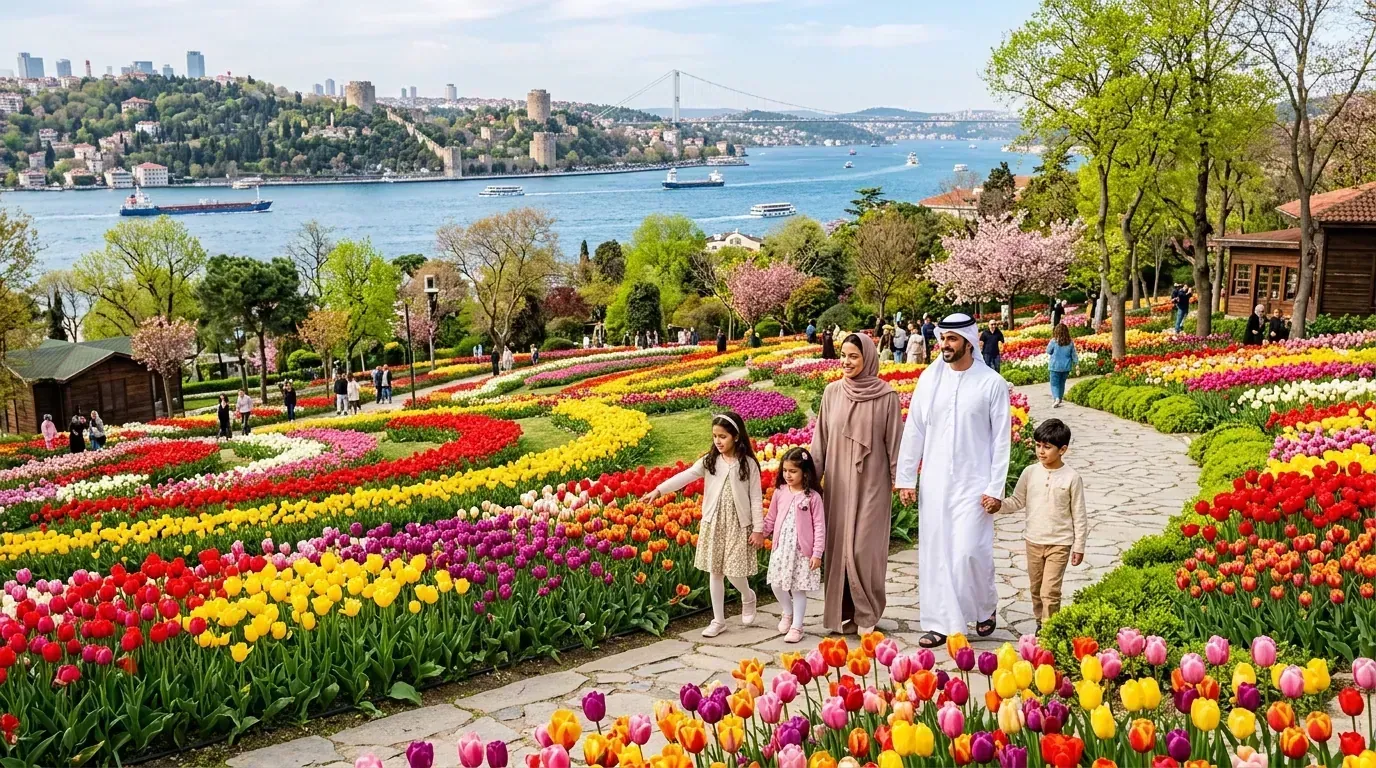
Spring is the first recommendation for any first Istanbul plan. March starts cool at 12 degrees by day but warms steadily, and April erupts into bloom, especially the tulip season in Emirgan and Gulhane parks, where millions of bulbs create unforgettable photo scenes.
May is close to the perfect month: 21 by day, 13 at night, scarce rain, and Bosphorus cruises at their most enjoyable under clear skies. Rates begin climbing late in the month, so booking two months ahead locks the best numbers.
Spring packing calls for mid-weight layers with an evening jacket, plus a warmer coat in March when nights still hover near five degrees. Travellers combining cities on one trip will find season details across the country in the complete Turkey guide.
Summer: June to August
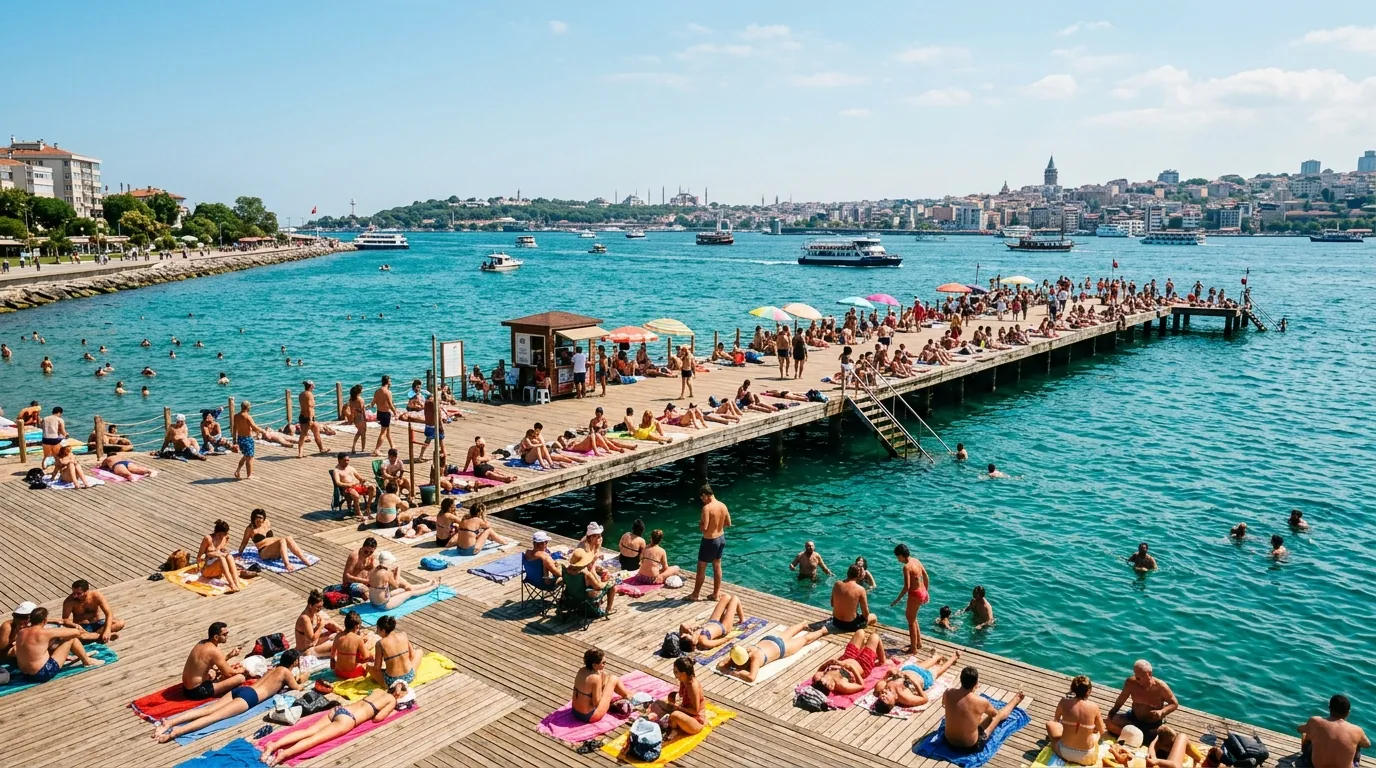
Istanbul summer is pleasantly warm, never desert-hot. Days run 26 to 29 degrees, nights rarely fall below 20, and coastal humidity makes the air feel warmer than the number. The sea peaks at 24 degrees in August, and the practical swim season runs from late June to mid-September.
This is peak season for Arab visitors, especially July and August with school holidays. Hotels hit top rates and monuments hit top crowds, so summer travellers should book early and start days before eleven in the morning, when the sites fill.
A practical summer tip: alternate indoor and outdoor blocks. A shady museum at noon and Bosphorus-side tea in the evening is the ideal rhythm, and always carry water on long walks around Sultanahmet and the bazaar district.
Autumn: September to November
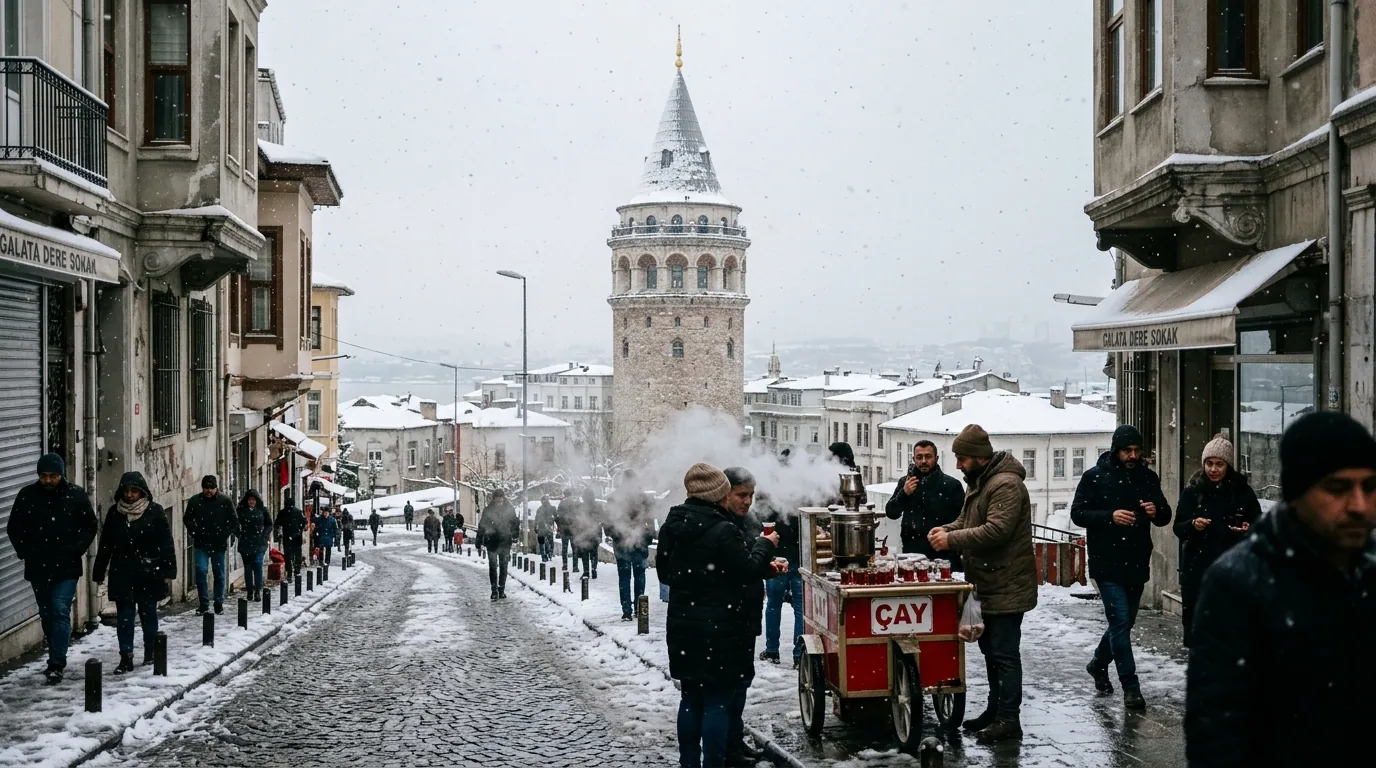
Autumn is Istanbul's other season of perfection. September keeps summery warmth at 25 by day with the sea still at 22 degrees, October eases to 20 and 13, and it is among the most recommended months for Gulf visitors seeking balance.
November opens the rainy season in earnest, though its start stays gentle and its greatest gift is the crisp autumn clarity over the Bosphorus and the golden leaves across city parks. Prices through autumn all sit twenty to thirty percent below summer.
Autumn wardrobe logic: removable layers win. A t-shirt by day, a jacket and scarf in the evening, a light coat in November, and a compact umbrella in the bag.
Comparison: Istanbul Versus Gulf Cities
| Month | Istanbul daytime | Riyadh | Dubai | Doha |
|---|---|---|---|---|
| January | 9 | 20 | 24 | 22 |
| April | 17 | 32 | 33 | 34 |
| July | 28 | 43 | 41 | 42 |
| October | 20 | 35 | 36 | 36 |
This comparison explains Istanbul's summer popularity in the Gulf: a fifteen-degree gap from home cities makes it a natural heat refuge. In winter the equation reverses and Gulf cities run warmer, which is why Gulf demand holds strongest through summer rather than January.
One planning nuance: travellers arriving in July from fifty-degree heat will find 28 degrees almost cool, but returning from a six-degree Istanbul January into Gulf summer requires bracing for the thermal shock in both directions.
A question that recurs: do the Princes' Islands or the ski halls offset the difference? Partly. The islands run cooler with sea breezes, while the Maska cable car and the Bosphorus-side hills offer genuinely cool air even in August, and in January the city's indoor bazaars and hammams become the perfect warm stops for families.
Best Activities by Temperature Band
Each temperature band has its ideal activities in this city. Between three and ten degrees, the winners are open-air heritage walks through Sultanahmet, Pierre Loti Hill, and the bazaar, where cold turns long walks into a pleasure.
Between ten and eighteen degrees, the semi-open season flourishes: Emirgan and Gulhane gardens, ferry hops between the two shores, and terrace cafes welcoming spring. This band offers the widest variety of all.
Above twenty degrees the focus shifts to water: long Bosphorus cruises, swim stops at nearby beaches like Kilyos and Sile on the Black Sea, and cold-tea sessions at waterfront houses. Above twenty-five, early-morning and evening sightseeing beats the midday sun.
Common Mistakes When Reading Istanbul Numbers
The first mistake is trusting the daytime figure alone. A visitor who reads 22 degrees in May and packs only t-shirts will freeze at a Bosphorus dinner where breezes sit near fifteen. The rule: always budget nights at ten degrees below days.
The second is ignoring wind. Istanbul is a windy city, and a report of 8 degrees with a northern blow feels near zero on the bridges and ferries. A windproof coat beats a thick ordinary one here.
The third is counting rainy days as lost days. November and December wet days usually include full sunny hours, so a morning-indoor, afternoon-outdoor plan succeeds on most calm winter days.
How Temperature Shapes Your Budget
Temperature in Istanbul is not just a clothing matter; it is a direct price driver. At the July-August peak, hotel rates can run thirty percent above neighbouring May with nearly identical weather, so the smart play is buying May weather at a lower price and smaller crowds.
Winter flips the equation: January and February deliver the year's cheapest nights and shortest monument queues, and a good winter coat costs less than the difference of two summer nights. Even shoulder months like March and November trim five to ten percent off peak pricing.
A third, subtler factor is activity cost. Summer tempts toward paid boat trips and island excursions, while the best spring and autumn activities are free walks between monuments and parks, so mild weather lowers the tours bill as well as the hotel bill.
Packing Tips by Temperature
Between 3 and 10 degrees (December - February): a waterproof wool coat, gloves, a scarf, warm base layers, and gripped shoes for wet pavements. Between 10 and 17 (March, April, November): a mid jacket, layered clothing, and a light cap for evening breezes.
Between 17 and 25 (May, October): a t-shirt with a light evening jacket, the finest walking weather of the year. Above 25 (June - September): light cotton clothing, sunglasses, and skin moisturiser, since the sea breeze dries the skin. In every season: comfortable, durable walking shoes, because Istanbul is a city of hills, ferries, and stairways.
Before final packing, check the latest days on the official MGM portal, and find what you need for the go decision in the Turkey travel rules guide and the Saudi visa guide.
FAQ (12 Questions)
1. What is the coldest month in Istanbul?
January, averaging 3 degrees at night and 9 by day; clear nights can dip just below freezing, though lasting frost is rare in the city.
2. What is the warmest month?
August, averaging 29 by day and 21 at night, with higher coastal humidity making the air feel warmer than the raw figure.
3. Does it snow in Istanbul?
Yes, typically once or twice each winter, melting within days; the exceptional December 2021 snowfall remains the strongest wave in years.
4. When does swimming season start?
Late June, once the sea passes twenty degrees, and it runs to mid-September, peaking at 24 degrees in August.
5. Does rain ruin the itinerary?
Rarely a full day; most rain arrives in short heavy bursts, and hotels, bazaars, and museums offer excellent indoor alternatives.
6. Which month suits Gulf families best?
May, September, and October, for balanced day-and-night temperatures, smaller crowds than the summer peak, friendlier hotel rates, and clear skies for photography and family ferry rides.
7. What should I wear in July?
Light cotton clothing, a hat, and sunglasses by day, with a thin jacket for evenings, especially at waterfront terraces.
8. What about a December visit?
A waterproof winter coat, wool layers, dry shoes, plus a scarf and gloves for evening walks along the Bosphorus.
9. Is Istanbul colder than Antalya?
Yes, by three to five degrees on average; Antalya is southern and coastal, warmer in winter with a swimming season about two months longer, though Istanbul compensates with unmatched cultural variety.
10. When does the sun set in Istanbul?
Between about half past four in December and half past eight in June and July, which reshapes daily planning; a winter visit means early dusk and longer evening sessions.
11. Does temperature vary across neighbourhoods?
Noticeably: seafront districts stay cooler in summer and warmer in winter, while inland hills run two to three degrees colder at night, a gap you can feel fully between a Sultanahmet noon and a Golden Horn hillside evening.
12. What is the best weather app for Istanbul?
The official Turkish meteorology app is most accurate locally, followed by the major global apps for short-range forecasts; cross-check both two days before departure to catch sudden systems arriving from the Black Sea.
Conclusion
Istanbul temperatures in Celsius stretch from 3 at night in January to 29 by day in August, and the golden band for Gulf visitors is May, June, September, and October without question. Plan clothing around the day-night gap rather than the daytime figure alone, and check the near-term forecast just before packing. For the widest preparation read the travel to Turkey guide and the Istanbul hotel booking guide, then lock friendlier rates in the ideal seasons through Istanbul hotels, city tours, and our transfer service.
Sources
Related travel guides

Istanbul in December: about 11–12°C by day, 5–6°C at night, rain on 13–15 days, sunset around 5:40 pm. Live forecast, what to wear, New Year, Uludağ.
Best time to visit Istanbul 2026: month-by-month weather, crowds and prices, Gulf school holiday dates, Ramadan timing and season tips.
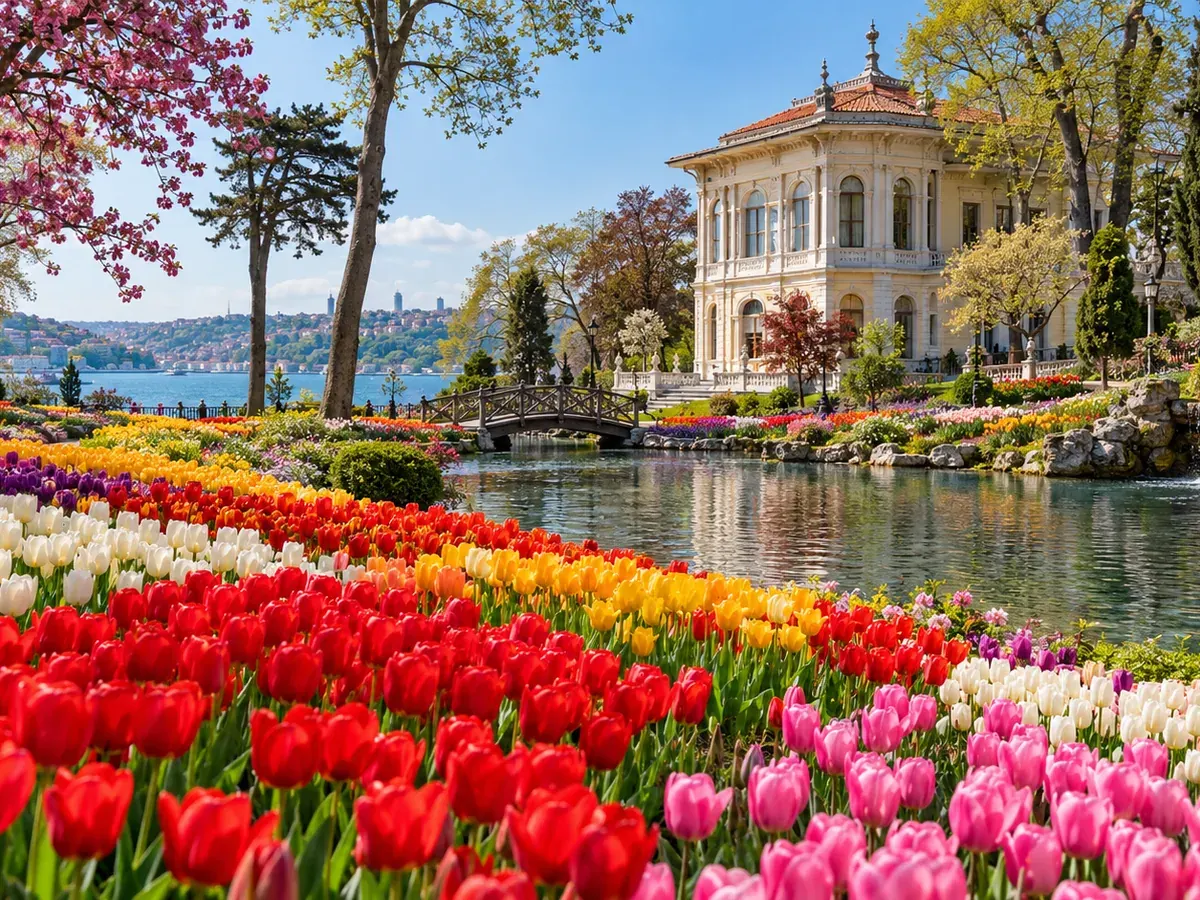
Emirgan Park Istanbul: the tulip festival, the three historic pavilions, Bosphorus-side breakfast cafes and nearby sights for the same day.
Ready to explore Turkey?
Voyago brings together airport transfers, guided tours and car rental to help you plan the perfect trip to Turkey.