
Quick Answer for Gulf Visitors
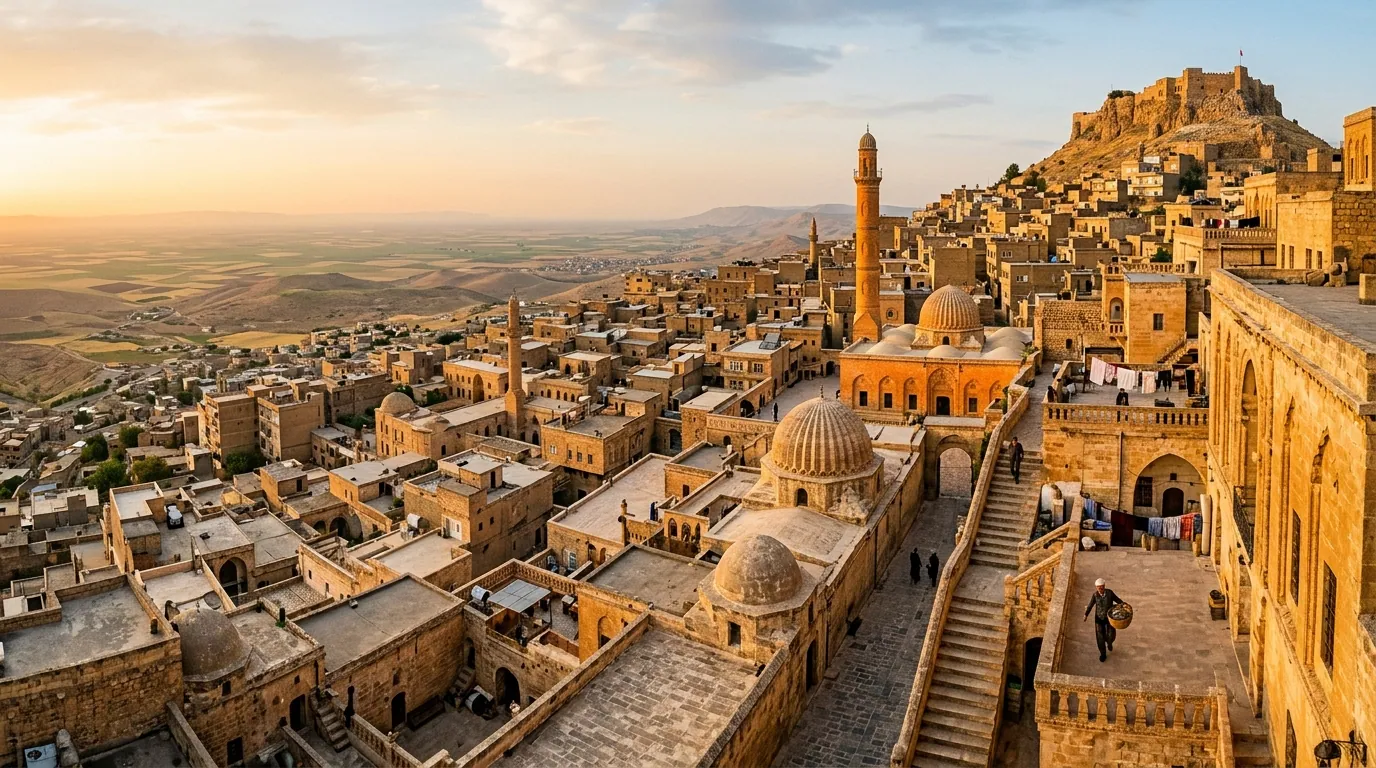
What is Mardin? — A historic city in southeastern Turkey built entirely of golden limestone on a hillside overlooking the Mesopotamian plains, weaving mosques, churches, and traditional bazaars into a single unique fabric.
How many days do you need? — Three comfortable days, or five if you add Midyat, Dara, and Hasankeyf; see the Mardin 5-day itinerary for the detailed program.
Is it suitable for Gulf families? — Outstandingly so; halal food everywhere, mosques nearby, a conservative city, and an almost familiar Arabic atmosphere.
Where is Mardin and Why is it Famous?
Mardin sits in southeastern Turkey about 150 km from the Syrian border, built in terraces on the southern slope of the Mardin massif so that every house faces the plain stretching to the horizon. That cascading stone facade is the secret of its beauty: the whole city is carved from local honey-toned limestone that turns gold at sunset, earning it the nickname of the capital of golden stone.
The city is a meeting point of successive civilizations — Syriacs, Arabs, Sassanids, Romans, Ayyubids, and Ottomans — and each left medreses, mosques, churches, and monasteries that still live. Its native inhabitants speak a local Arabic close to Levantine dialects, so a Gulf visitor finds a semi-familiar environment unlike anywhere else in the country, as the complete Turkey guide details.
Neighborhoods: Where to Wander
| Neighborhood | Character | Highlights |
|---|---|---|
| Old city | magical heritage | Great Mosque, bazaars, stone houses |
| Ergani district | modern commercial | modern hotels and family restaurants |
| New center | practical | daily shopping and transit |
| Deyrulzafaran | quiet rural | the famous monastery and olive villages |
| Midyat (about 1 hour) | heritage | the region's most beautiful stone town |
The old city is the heart of any visit without contest; it is an open-air museum you can wander for hours, where every alley opens onto a new view, a carved wooden door, or an old mosque courtyard.
Top Sights in Detail
The Great Mosque
Mardin's icon and oldest mosque, built in the twelfth century, its ornate square minaret the most photographed silhouette in the city. It stands amid the bazaars, so make it your morning start and your pre-sunset finish line.
Zinciriye Medrese
A fourteenth-century religious school with a finely carved facade, quiet courtyards, and a terrace over the plains. The short stair climb and the late-afternoon stand on its terrace condense all of Mardin into minutes.
Kasimiye Medrese
Its smaller, calmer sister on the opposite end of the city, with its distinctive dome and overlooking garden. Visit in the afternoon when crowds thin and you will have the view and the breeze almost to yourself.
Deyrulzafaran Monastery
Five kilometers east of the city, seat of the Syriac Orthodox Patriarchate for six centuries. Its underground church, stone corridors, and the monks' stories make the guided tour (90 minutes, $3-5 ticket) one of the trip's highlights.
Mardin Museum and Sabanci City Museum
Mardin Museum, in a heritage mansion near the government house, displays regional finds from the Stone Age to the Ottomans; the Sabanci museum next door covers folk architecture, costumes, and crafts. An hour each suffices, and both are excellent shelter in the hot midday or on rainy days.
Comparison: Mardin vs Other Turkish Cities
| Criterion | Mardin | Istanbul | Antalya | Trabzon |
|---|---|---|---|---|
| Character | warm desert history | world empire | coast and sea | green mountains |
| Best season | spring and autumn | spring and summer | summer | summer |
| Crowds | very low | high | high | medium |
| Family cost per day | $150-300 | $250-500 | $200-450 | $180-350 |
| Arabic feel | very strong | medium | medium | medium |
This is why many Gulf travelers choose Mardin as an escape from crowds and prices; travel to Turkey tips expand on the differences.
Bazaars: Where and What to Buy
- Coppersmiths' bazaar: copper hammered by hand before your eyes; the best kitchen gifts
- Wood bazaar: spices, mountain honey, pomegranate molasses, natural soap
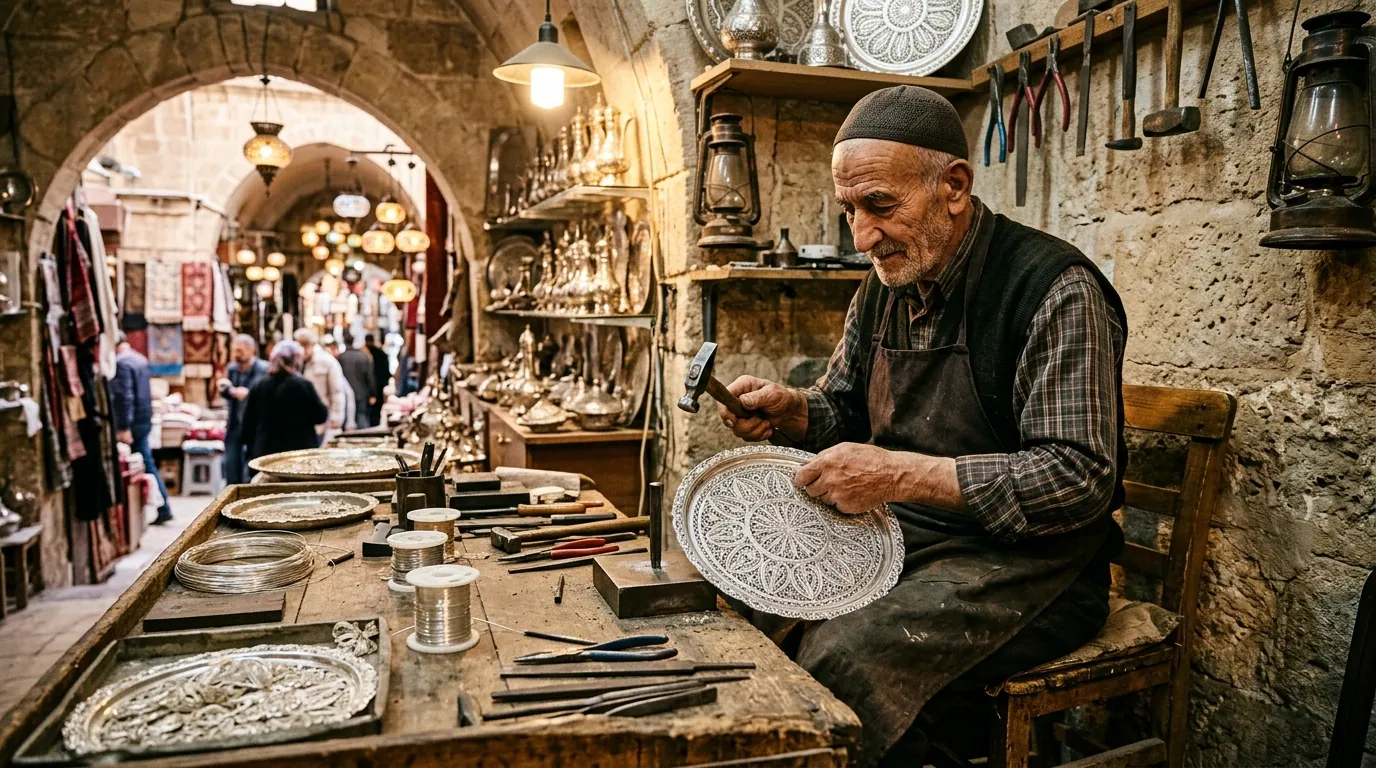
- Telkari shops: delicate filigree silver, a craft purely Mardin's own
- Walnut stalls: walnut sweets in grape molasses for the flight home
Bargaining is welcome in moderation, shopkeepers welcome families, and many deals are struck in Arabic. Prices run noticeably cheaper than Istanbul or Antalya.
Halal Food and Mardin Cuisine
Mardin's restaurants are halal practically without exception, so no special search is needed. Signature dishes are lamb ribs stuffed with rice and nuts, icli kofte, fried Mardin sambusek, and fine bulgur-shell kofte. Local sweets are semolina halva with clotted cream and walnut ropes in molasses, and the two signature drinks are strong mirra coffee and menengic coffee from wild pistachio. The Mardin breakfast on your hotel terrace is an experience in itself: local cheeses, olives, pastries, grape-molasses jam, and a bundle of mountain herbs.
Practical Info for Gulf Visitors
| Item | Details |
|---|---|
| Access | Mardin Airport via Istanbul; details in the 5-day plan |
| Visa | GCC citizens exempt; Saudis covered in this guide |
| Currency | Turkish lira; check the live rate before you travel (it moves often) |
| Best season | March-May and September-November |
| Summer heat | 35-40C at midday; plan walks morning and evening |
| Language | Arabic understood in bazaars; translation available |
| Clothing | modest; a conservative city by nature |
| Walking | many stairs; comfortable shoes mandatory |
| Internet | good coverage; buy a local SIM at the airport |
| Insurance | recommended for every family member |
Where to Stay
The heritage stone hotels inside the old city are half the Mardin experience: very old houses restored with taste, rooms smaller than modern chains but views over the plains that are priceless. Family price range: $60-120 mid-range and $120-250 for luxury mansions. Note three points when booking: many houses have no elevator and many stairs, bathrooms run smaller than usual, and the view is worth every extra lira. Book through the hotel booking service early for spring and autumn before the view rooms sell out.
Getting Around the City
The old city is explored strictly on foot; cars cannot enter its narrow lanes, and that is part of its charm. For moving between districts and outlying sights (the monastery, Dara, Midyat) use a private car with driver, the most family-friendly formula at $60-140 per day depending on distance and program. Public buses exist but do not serve the archaeological sites, and for airport runs pre-book a private transfer ($25-40) so the driver handles the luggage burden for you.
A Perfect Day in Mardin
After breakfast start at the Great Mosque, then slip through the coppersmiths' bazaar up to Zinciriye Medrese and its terrace. A family lunch in a nearby Mardini house, then a midday nap at the hotel. In the late afternoon, the quieter Kasimiye, sunset from the citadel or the Kahzrovan terrace, then a heritage dinner and a cup of mirra before bed. That single day hands you the city's essence; remaining days spread over the monastery, Midyat, and Dara as laid out in the detailed itinerary, or over a guided tour that organizes everything for you.
A Brief History: From the Artukids to Today
The Artukids ruled Mardin from the eleventh century and built the Great Mosque and carved out the bazaars; the Ayyubids added medreses and fortifications; then Mamluks and Ottomans layered the architecture you now see standing side by side in strange harmony. In the nineteenth century the city was a busy commercial station on the Mosul-Aleppo road, and from that era it inherited its covered markets and grand merchant mansions. This long layered past is why Mardin differs from anywhere else: not a dead archaeological site but a living fabric inhabited today by old families who pass down the houses, the crafts, and the bitter mirra coffee together.
Mardin Climate Through the Seasons
| Season | Daytime range | Character |
|---|---|---|
| Spring (Mar-May) | 15-25C | loveliest; green plains and almond blossom |
| Summer (Jun-Aug) | 32-40C | hot and dry; tour mornings and evenings |
| Autumn (Sep-Nov) | 15-27C | ideal; golden light on the stone |
| Winter (Dec-Feb) | 5-12C | cool, occasional rain and light snow |
The practical rule: spring and autumn are the undisputed peak seasons; summer works with smart scheduling that avoids midday, while winter is quiet and cheaper, though some heritage guesthouses close for heating and the choice narrows.
Day Trips from Mardin
Mardin's position makes it a perfect base for the whole southeast: Deyrulzafaran Monastery is fifteen minutes away, Midyat and Savur one to 1.25 hours, ancient Dara forty-five minutes, Hasankeyf on the Tigris two hours, and Urfa, the city of Abraham, two and a half. Every one of these works as a comfortable single-day loop by private car with driver that returns you to your Mardin bed in the evening; the full program for them all is in the 5-day itinerary.
Prayer and Ramadan in Mardin
Prayer could hardly be easier; mosques stand in every alley with the Great Mosque at the city's heart, and times are announced, so rely on an app or the hotel clock. During Ramadan the Turkish southeast turns remarkably Gulf-like: communal iftar tables in the squares, bakeries opening before dawn for suhoor, and bazaars alive late into the night. Tell your hotel in advance about iftar and suhoor and they will prepare both gladly; Mardin's hosts are used to Ramadan guests from the Gulf and delight in them.
Visit Etiquette in a Conservative City
Mardin is conservative and modest dress is comfortable for everyone, men and women. Ask before photographing faces in the bazaars, especially women and the elderly; locals are warm but privacy is a settled custom. On Fridays many shops close between noon and mid-afternoon for prayers, so give that window to an architecture walk or a terrace coffee instead of shopping. Mosques welcome visitors outside prayer times with modest dress and shoes off at the door, and the living churches and monasteries receive guests with complete ease.
Photography Tips from the Locals' Angle
The old city's best light comes in the first hour after sunrise, when the alleys are empty and the air is clean, and ninety minutes before sunset when the golden stone turns most golden of all. Climb to the Zinciriye terrace or the citadel hill for a frame that stacks every layer of the city, or drop down to the plains below for the bottom-up panorama. Avoid the midday glare of July and August, when harsh overhead light erases the carved detail on the stone.
Three-Day Family Budget
| Item | Budget | Comfort |
|---|---|---|
| 2 nights accommodation | $180-300 | $350-500 |
| Private car and tours | $150-250 | $250-400 |
| Food | $120-250 | $250-450 |
| Tickets | $40-70 | $60-100 |
| Total without flights | $500-870 | $900-1,450 |
Figures are for a family of four in normal season; they rise roughly twenty percent at spring and autumn peak and drop in winter when guesthouses discount. Add Gulf airfare ($200-450 per person round trip depending on season and departure city) for the realistic all-in total.
FAQ (12 Questions)
- Is Mardin safe for tourists? — Yes; the city is calm and tourism is stable, crimes against visitors are near zero, and daily life flows normally in the bazaars and sights.
- Do Gulf citizens need a visa? — GCC nationals are mostly exempt; details are covered in the visa guide for Saudi citizens.
- What is the best number of days? — Three for the essentials, five for comfort including Midyat, Dara, and Hasankeyf.
- Do locals speak Arabic? — Many native residents speak the local Arabic, and bazaar dealings mostly run in Arabic.
- Is the city suitable for seniors? — The tourist core is stairs and climbs; choose a hotel near an entrance and split walks into short sessions.
- What are the hottest and coldest months? — July and August the hottest (35-40C), December and February the coldest (near zero at night with occasional light snow).
- Is halal food difficult? — Not at all; every restaurant is practically halal and the local cuisine is rich in meats, rice, and familiar stuffings.
- Should I sleep inside the old city or outside? — Old city for experience and views, outside for elevators and parking; mixing both is the optimal choice.
- How do I take the best photos? — Morning light for empty alleys, late-afternoon light for views from Zinciriye; avoid the scorching midday that flattens contrast.
- Should I take children to Dara? — Yes, they will love it; caves, passages, and carved tombs feel like an adventure, while you watch the open wells.
- What is the signature Mardin gift? — Filigree silver (telkari), hand-hammered copper, pomegranate molasses, mountain honey, and natural soap.
- Can I combine Mardin and Urfa? — Yes; 2.5 hours apart by car, and the practical formula is a night in each with a Hasankeyf stop between them.
Conclusion
Mardin is a city to be lived slowly: golden stone, artisans' bazaars, minarets and bells, and a view over the Mesopotamian plains that never repeats itself. Three days reveal its essence and five open all of southeastern Turkey. Pack comfortable shoes, book your stone house early, and let the city handle the rest with its customary generosity.
Sources
Related travel guides
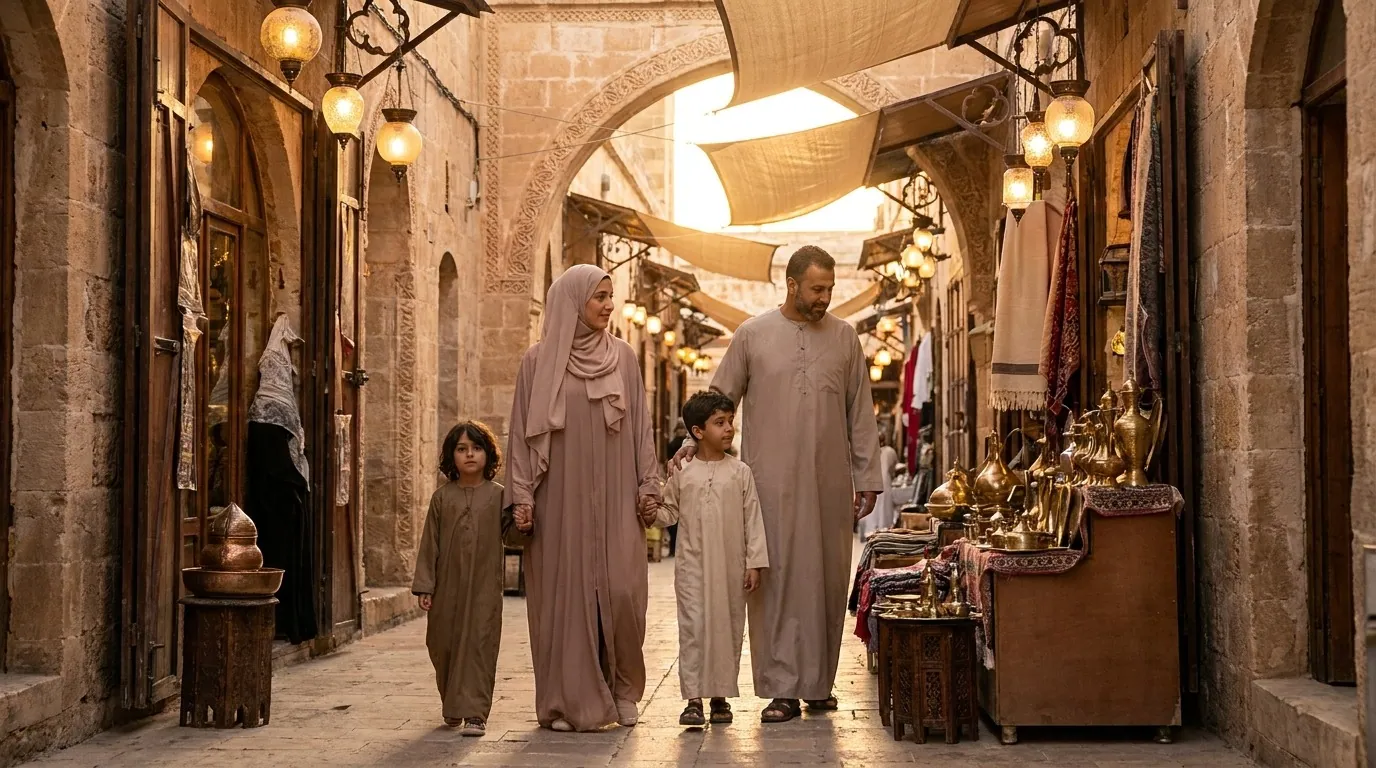
Mardin Turkey 5-day trip 2026: a regional circuit pairing Mardin with Hasankeyf, Batman and an Urfa option, with budgets, distances and family tips.
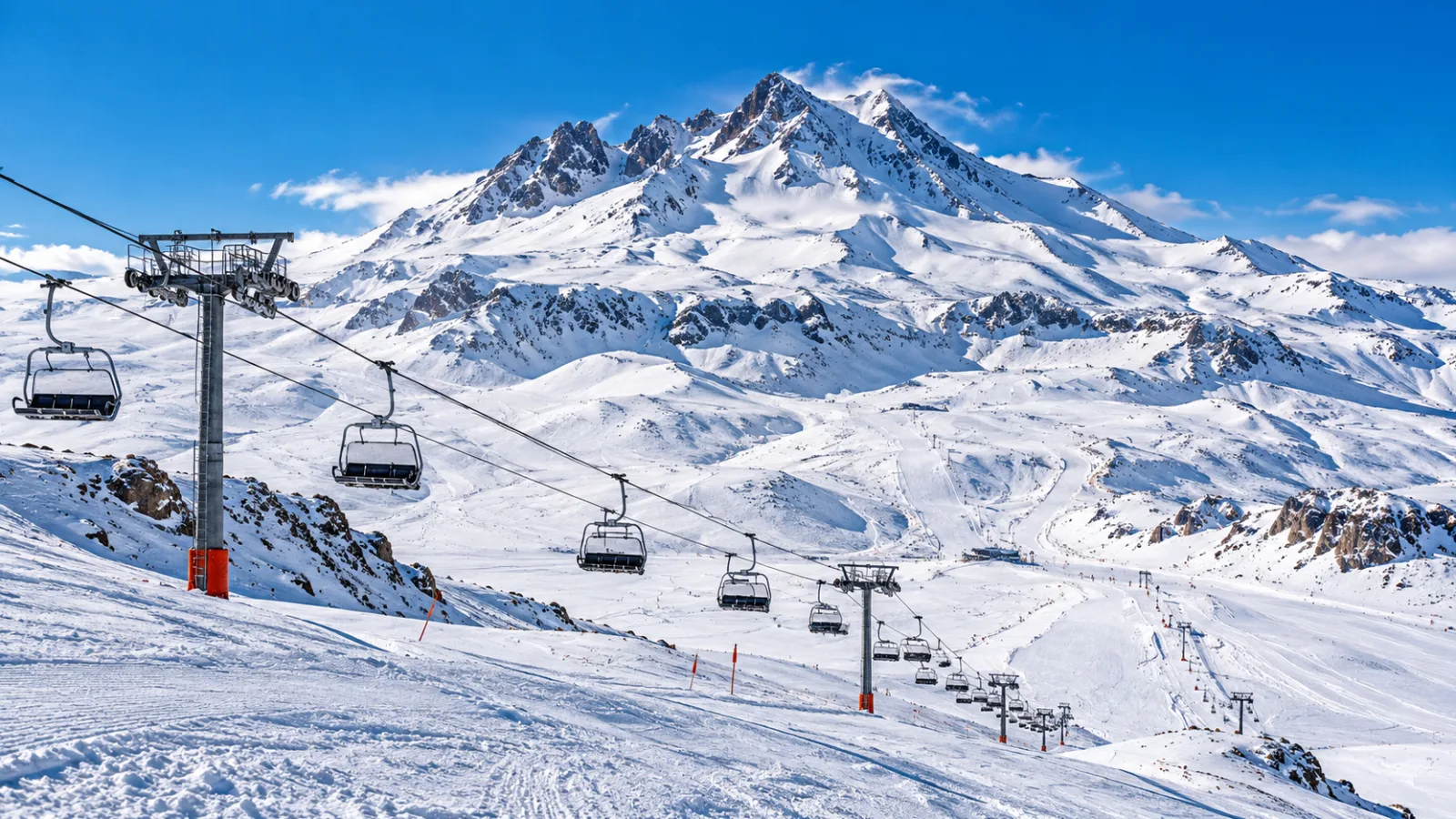
Erciyes is one of Turkey's biggest and highest ski areas, near Kayseri and within reach of Cappadocia — season timing, elevation and what to expect.
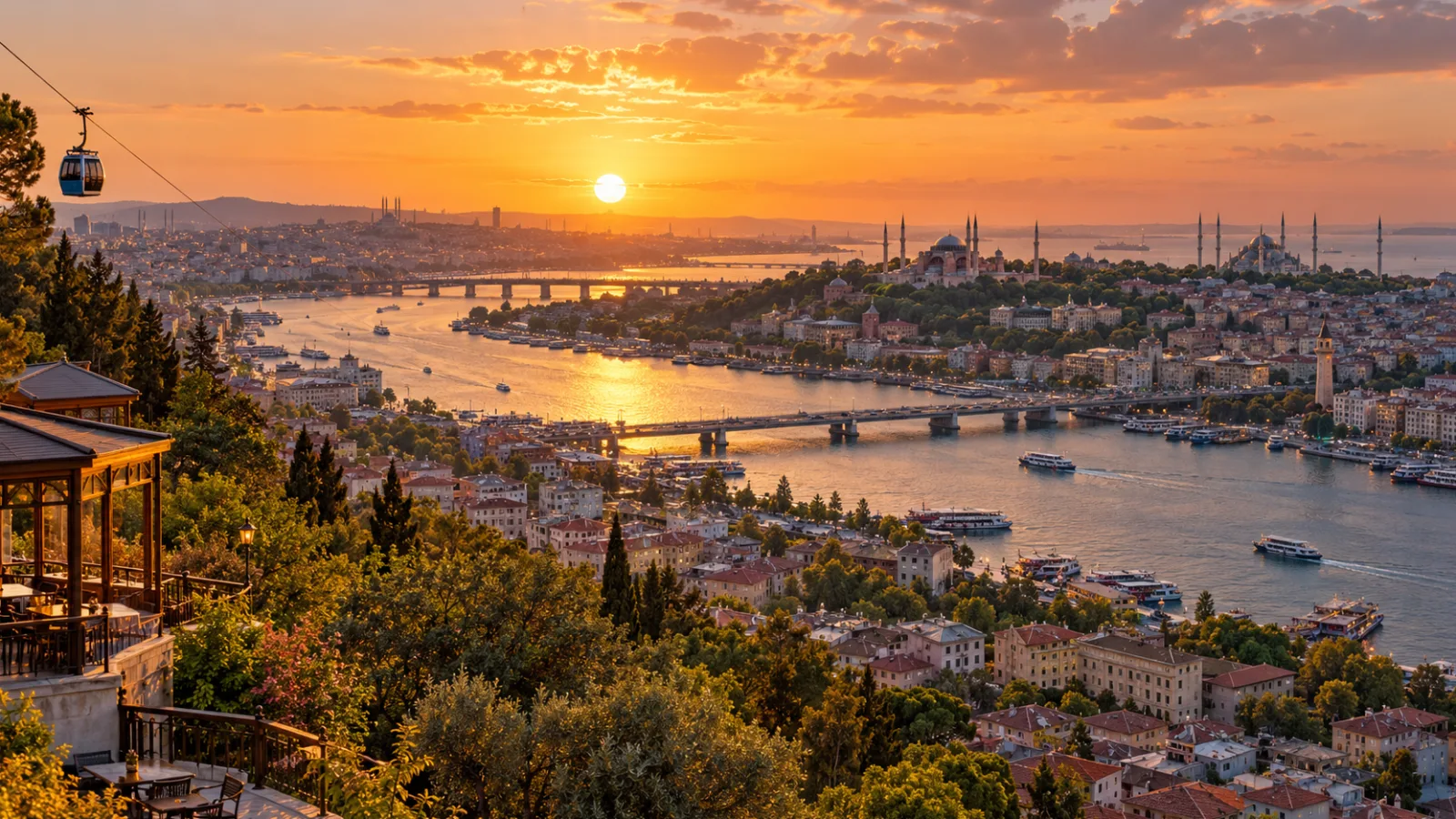
How the Eyup-Pierre Loti cable car actually works, what it costs, and how to pair the mosque, the hilltop view and the historic cemetery into one half-day.
Ready to explore Turkey?
Voyago brings together airport transfers, guided tours and car rental to help you plan the perfect trip to Turkey.