
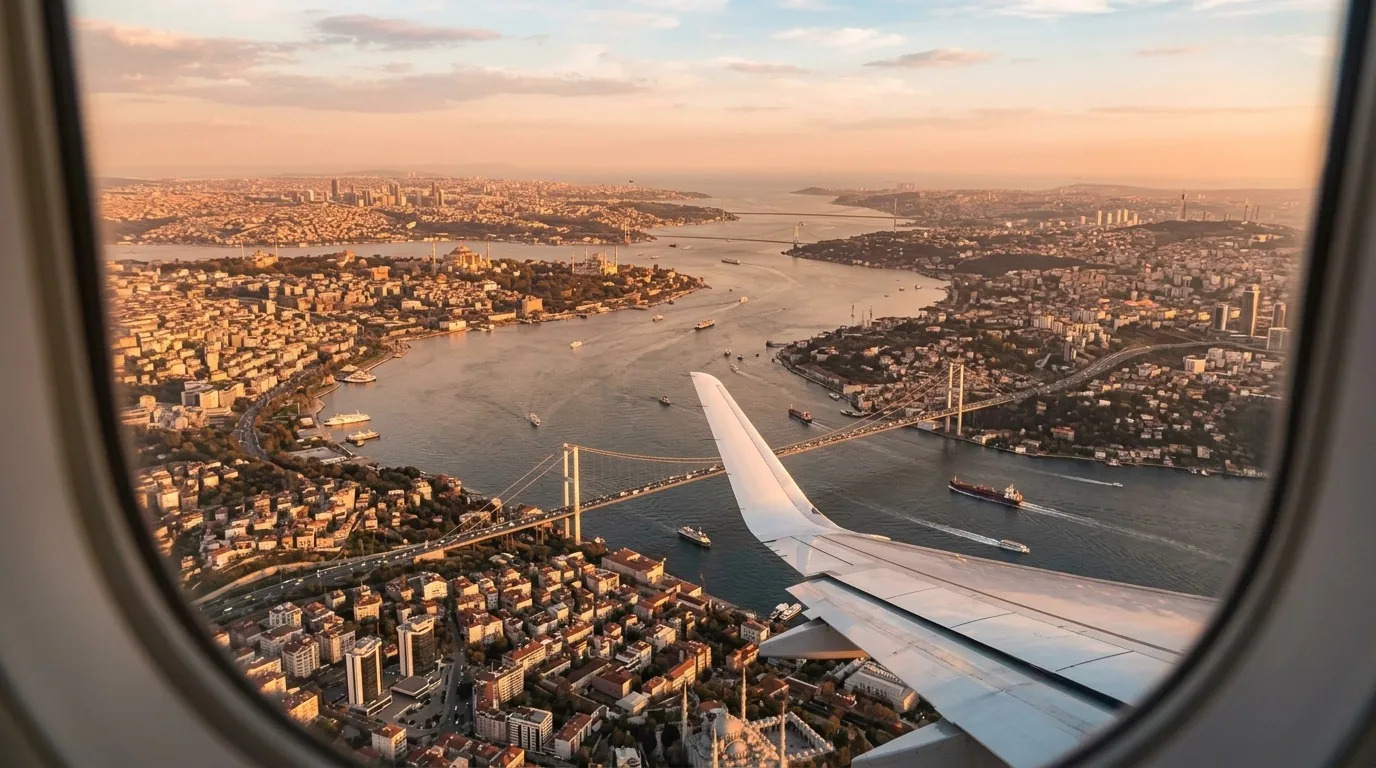
Turkey tops the Gulf family travel list year after year, and the reason is simple: barely four hours of flying separates Riyadh, Jeddah or Dubai from a world of historic mosques, green mountains, beaches and modern cities, at prices still below Europe and inside a familiar cultural frame. But a successful Turkey trip needs correct planning: when to fly, which airport to land at, how to split your days between cities, and what you actually pay. This guide answers those questions in a practical order — entry, flights, destinations, budget — and hands you off to a specialist guide at every step, starting with the Turkey visa guide for Saudis.
Quick Answer for Gulf Visitors
Is Turkey open and easy to enter? Yes; Gulf passports are visa-exempt for up to 90 days and the situation is stable for visitors, as detailed in is Turkey open for travel.
How many days do I need? A week to combine two cities (Istanbul and Trabzon, for example), ten days for three cities at a relaxed pace.
What budget? 900-1,500 USD per person for a mid-range week excluding the international ticket.
Entry and Visas for Every Nationality
Saudi Arabia, the UAE, Kuwait, Qatar, Bahrain and Oman: entry without a visa for up to 90 days with a passport valid six months, completed at arrivals with a simple passport stamp. Other Arab nationalities vary: some are exempt, some get an e-visa in minutes through the official e-Visa portal, and some apply at the embassy — the updated details for every case, including family and business situations, are documented in the visa guide for Saudis. One practical tip: carry your hotel confirmation for the first two nights and the return ticket; border officers occasionally ask for them, especially with families.
Flights from the Gulf: Routes and Prices
Direct flights from Riyadh, Jeddah, Dammam, Dubai, Doha and Kuwait to Istanbul take four to five hours on Turkish Airlines, Gulf carriers and low-cost competitors, so round trips start near 250 USD in sales and average 350-500 USD. Seasonal summer flights reach Trabzon and Antalya directly from Saudi Arabia and the Emirates; otherwise the smartest route is a direct flight to Istanbul plus a domestic leg at 40-100 USD. The golden rule: book the domestic leg on the same ticket as the international one so the airline owns the connection during delays, and if you land at the Asian-side airport, the Sabiha Gokcen transfer guide explains the transfer options.
Comparison: Turkey's Best Family Destinations
| Destination | Character | Ideal length | Best for |
|---|---|---|---|
| Istanbul | history, shopping, a world city | 3-4 days | everyone, first time |
| Trabzon | mountains, nature, cool summers | 4-5 days | families escaping the heat |
| Antalya | beaches and resorts | 4-7 days | sea and relaxation lovers |
| Cappadocia | balloons and rock valleys | 2-3 days | adventurers and couples |
| Ankara, the capital | museums and Ataturk's mausoleum | 1-2 days | history lovers, quiet cities |
| Bursa | Ottoman history and Uludag highlands | one to two days | short trips from Istanbul |
The classic Gulf summer combo is three nights in Istanbul then three in Trabzon following the complete Trabzon guide. To understand the country's makeup before splitting your days, Turkey population facts gives a quick useful picture.
Seasons: How to Dodge the Crowds
Turkey's seasons mirror the Gulf's: the big peak is July and August plus the Eid holidays, when prices jump 30-60% and headline sights get dense. September and October are the hidden gems: warm seas in Antalya, golden nature in Trabzon and post-season prices. Winter suits Cappadocia under snow and the historic bathhouses without queues, if you accept cold in Istanbul and the north. A proven rule: book flights and hotels two months ahead for the peak and one month for quiet periods, and the family saves hundreds of dollars. For splitting cities: never combine more than two cities in a week or three in ten days — every transfer eats half a day with children, and one city known deeply beats three known superficially.
Halal Food and Prayer
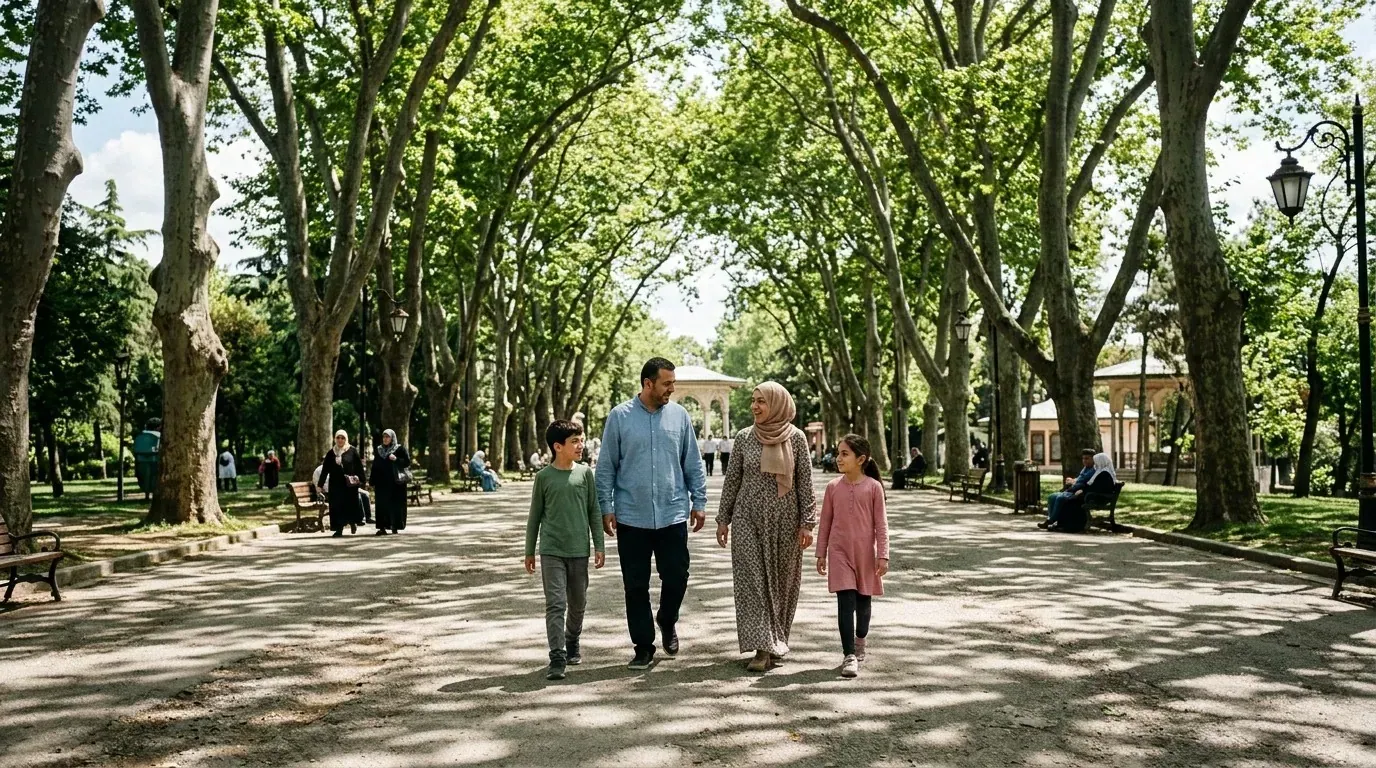
Turkish cuisine is halal in practice everywhere: kebabs, pide, manti, kofte, fish and mezes, and the famous Turkish breakfast with its cheese, olives and honey all on one reasonably priced table. Arab restaurants are growing in the big cities, and whole Istanbul districts serve Gulf visitors with Arabic menus. Mosques stand in every neighbourhood and landmark, prayer times are in every app, and the major sights all have prayer rooms nearby. The one exception: some large resort hotels in Antalya serve alcohol to their guests — if that matters to your family, choose the family hotels that do not, and you will find plenty.
Getting Between and Around Cities
Three options link the major cities: domestic flights (best for long hops like Istanbul-Trabzon and Istanbul-Antalya, from 30-50 USD booked early), luxury intercity buses (very comfortable between close cities like Istanbul-Bursa, with wide seats and a snack), and a private car with driver (pricier but ideal for families with children and elders, available daily or for long routes through the transfer service). Inside the cities themselves: Istanbul's transit card covers metro, tram, buses and ferries; taxis and private cars are the practical choice in Trabzon and Antalya; and small-city centres are entirely walkable.
A Realistic Family Budget
One week for a family of four, mid-range:
| Item | Average | Notes |
|---|---|---|
| Seven nights of hotels | 500-900 USD | 4-star hotels with family rooms |
| Food | 350-550 USD | mid-range restaurants plus hotel breakfast |
| Domestic transport | 150-300 USD | one domestic flight and private transfers |
| Sights and tours | 200-400 USD | passes, guided tours, museums |
| Shopping and gifts | 150-500 USD | taste-dependent |
| Total without international flights | 1,350-2,650 USD | for the whole family |
The smart squeeze: travelling in May, September or October cuts accommodation and tours by roughly a third with excellent weather, and early booking shrinks the domestic flight line considerably.
Ready-Made Itineraries by Holiday Length
One week: either Istanbul (four days) plus Trabzon (three days) — city and history then mountains and nature, the classic Gulf summer taste — or Istanbul plus Antalya for beach resorts. Ten days: Istanbul, Trabzon and Cappadocia in a circular order that minimises backtracking, or Istanbul and Antalya with Bursa on the way. Two weeks: add two days in the capital Ankara on the Cappadocia road, and the full southern coast from Antalya to Fethiye. The rule for every combo: start with the city farthest from your arrival airport and finish in the one closest to your departure airport, trimming domestic flying hours.
Day Trips from Istanbul
If you stay only in Istanbul, excellent day trips break the city's rhythm: Bursa and Uludag, two hours by ferry and car, mix Ottoman history with green highlands and famous kofte; the Princes' Islands, a short ferry ride away, offer car-free streets and horse carriages — the best day with small children; Agva on the Black Sea brings beaches and fish streets; and the Sultanahmet district alone needs two full days. All these trips leave early and return by evening and need no advance booking outside peak periods.
Tips for Travelling with Children
Turkey is one of the easiest destinations for families: restaurants welcome children, major sights admit foldable strollers, and many museums are free under a certain age. Field-tested advice: protect a daily swim or play slot however busy the itinerary; start long travel days in the morning, not at night; carry familiar snacks because local biscuits do not always satisfy small children; and hand them a small budget to choose their own souvenirs, which cuts random purchase demands. Standout kid activities: Bosphorus cruises in Istanbul, Uzungol lake in Trabzon and the water-sport beaches of Antalya.
Shopping and Tax Refunds
Shopping in Turkey is a genuine pleasure: the historic bazaars like the Grand Bazaar for gifts and crafts, modern malls for global brands usually cheaper than the Gulf, and local shops for tea, honey and sweets. An expert tip: buy Turkish chocolate from the big chain stores, not the airports — the gap is significant — and buy leather and clothes from licensed shops that issue tax-refund invoices. The refund for purchases above the threshold is claimed at the airport before departure; request the refund form at purchase and keep the invoice and goods unused.
Health and Pharmacies
Healthcare in the big cities is excellent, private hospitals receive visitors quickly, and most doctors there speak English, some Arabic. Pharmacies are dense and the Turkish pharmacist is expert at substitutes — showing the box or a photo of your medicine is enough. The emergency number is 112. With children, pack the familiar fever and diarrhoea medicines and always buy bottled water for the little ones. Travel insurance at 20-40 USD per person per week covers most risks and buys real peace of mind.
Common Mistakes to Avoid
The biggest mistake: cramming five cities into a week and leaving exhausted. Second: landing with no lira and no arranged car, paying airport exchange rates and queuing with the family. Third: booking a domestic connection with only an hour in Istanbul — the airport is huge and inter-terminal transfer takes time, so allow at least three hours. Fourth: skipping the afternoon nap in peak heat with children; midday in July and August is for rest and swimming, not sights. Fifth: leaving tax-refund paperwork to the last moment at the airport. Avoiding these five alone lifts your trip more than any other advice here.
Your First 24 Hours in Turkey
A tested sequence saves the fatigue: at arrivals, buy a SIM from the Turkcell or Vodafone counter (10-20 USD for a week of ample data), withdraw lira from the ATMs for better rates than exchange desks, then head to your pre-booked car. Check in, rest, and keep the first evening light — a short walk near the hotel, an early dinner and early sleep to absorb the two-hour difference from the Gulf. Start the dense programme on day two after an early breakfast. To arrange your first Istanbul night see the Istanbul hotel booking guide.
Practical Info for Gulf Visitors
| Item | Detail |
|---|---|
| Currency | Turkish lira |
| Time difference | about two hours behind Saudi Arabia and the UAE |
| Language | Turkish; English at tourist sites |
| Electricity | 220V with European plugs |
| Emergency | 112 for all services |
| Best transit apps | Google Maps and taxi apps |
| Internet | SIM or eSIM at the airport |
| Prayer | mosques in every neighbourhood, prayer rooms at sights |
| Best seasons | May-June and September-October |
| Payments | cards widely accepted; keep backup cash |
FAQ
- Is Turkey safe for Arab families now? Yes; the major tourist areas are safe, the Arab presence is dense in Istanbul, Trabzon and Antalya, street security is high, and the official entry status is documented in travel status.
- What is the best month to travel? May, June, September and October for weather and prices together; July and August for the cool north despite peak prices and southern heat.
- Do I need a visa? Gulf passports are exempt up to 90 days; other nationalities use the e-visa portal or the embassy depending on citizenship — full detail in the visa guide.
- How many days for Istanbul and Trabzon together? Seven days are ideal in practice: four for Istanbul and three for Trabzon, or the reverse, depending on your international and domestic timings.
- What is a sensible budget for a family of four? Between 1,350 and 2,650 USD for a mid-range week without international tickets, dropping sharply in May, September and October.
- Is food halal everywhere in Turkey? Practically yes in city restaurants; rare exceptions exist at certain resorts and are known in advance — pick family hotels to avoid them.
- Is Ankara worth visiting? One or two days for lovers of quiet history and Ataturk's mausoleum; details in the Ankara capital guide.
- How do we travel between cities? Domestic flights save time on long distances, luxury buses are the comfortable economy option between close cities, and a private car suits families best.
- Which airport should we land at? Istanbul for the widest and usually cheapest fares, or the seasonal direct flights to Trabzon and Antalya when available from your city in summer.
- Is travel comfortable with elders? Yes; major sights are accessible, distances can be shortened, a private car is the best option, and short tours beat long ones.
- Do we need insurance? Recommended, not mandatory; comprehensive cover costs little and covers the excellent private hospitals plus trip cancellation.
- What should we buy from Turkey? Chocolate, sweets, leather goods, clothes, honey, tea and nuts; big stores and fixed shops always beat the airports.
Conclusion
Travelling to Turkey in 2026 is easier than you expect: visa-free entry for Gulf citizens, a short direct flight, and destinations spanning history, nature and sea. The keys are smart planning: choose a good season, split your days between two cities rather than five, book domestic flights early and prepare the first night carefully. Start by arranging your stay and your transfer for day one.
Hotels across Turkey · Private transfers between cities and airports · Guided tours
Related travel guides
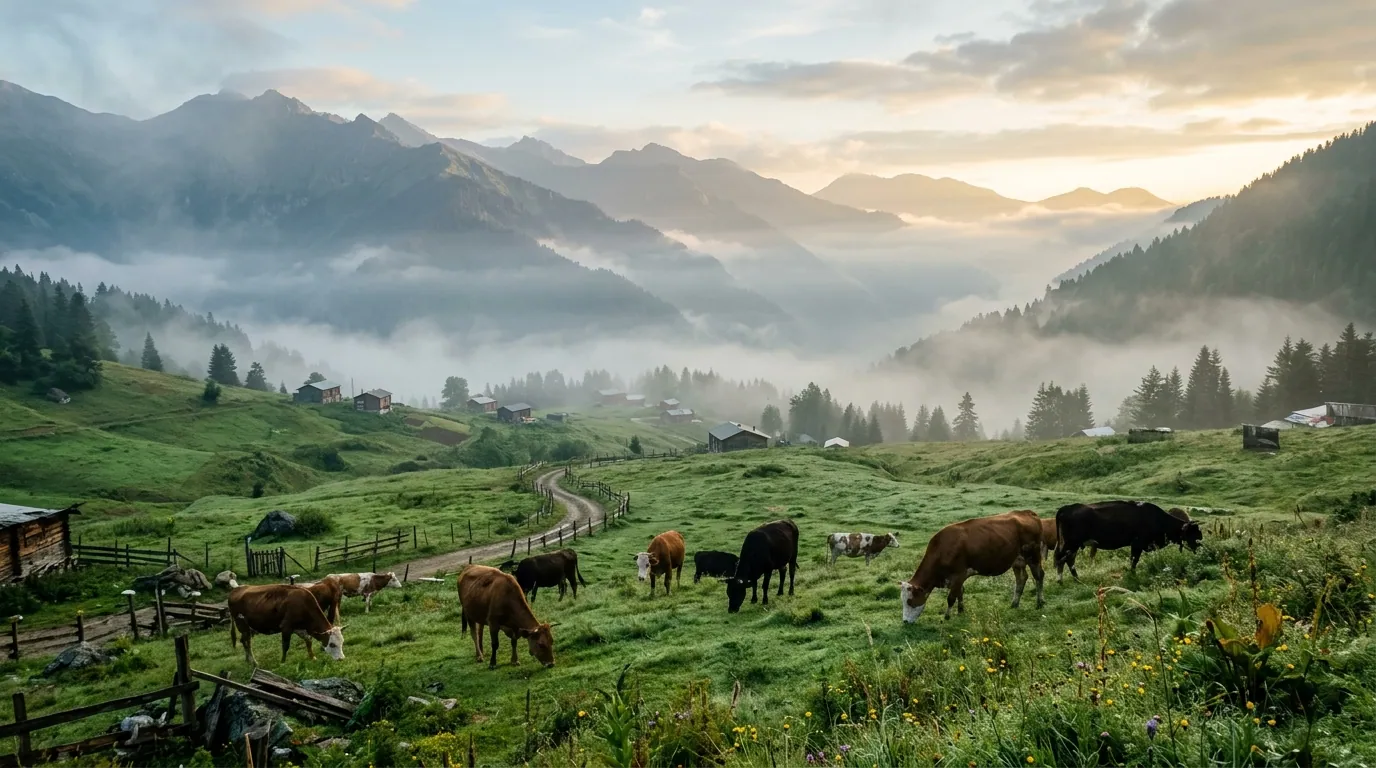
Ayder highlands 5-day itinerary 2026: a day-by-day plan for Arab families covering thermal pools, valleys, and Trabzon.
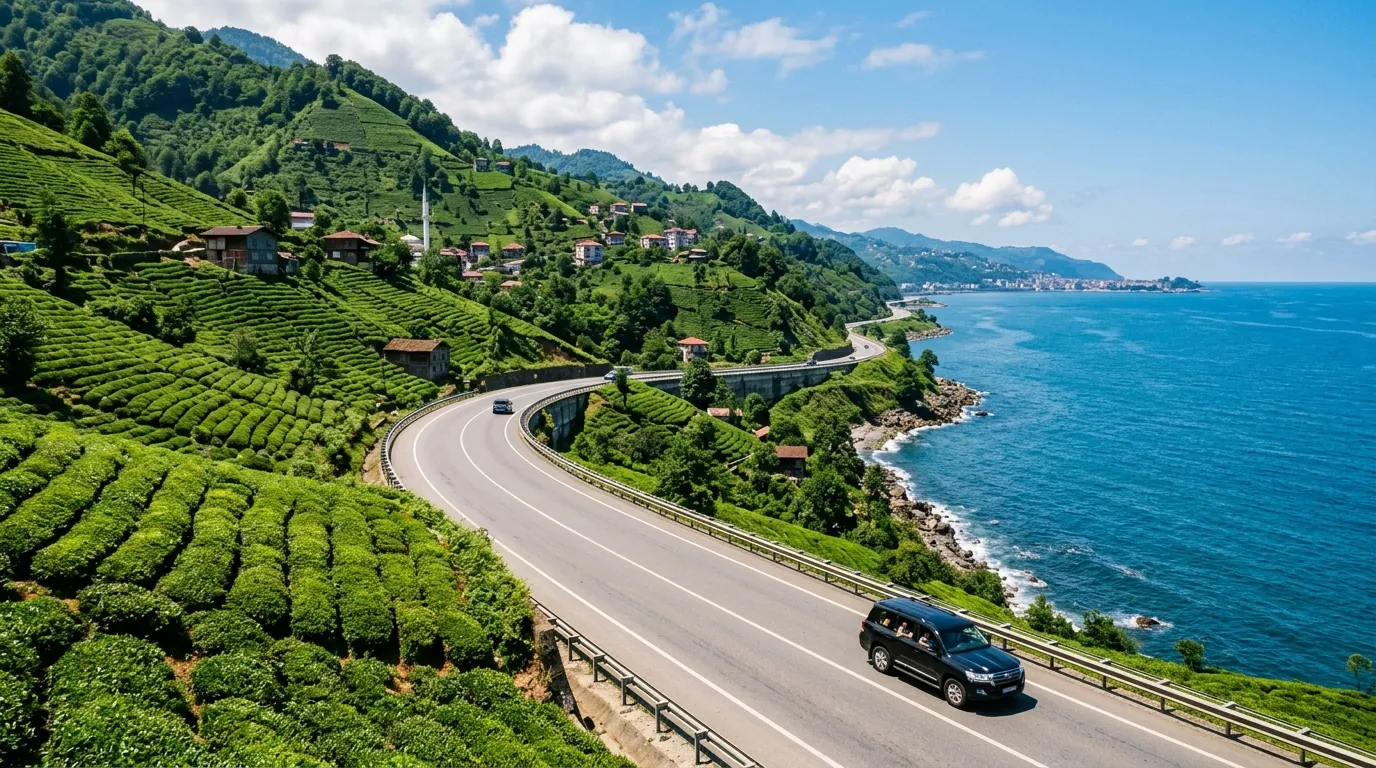
Ayder Trabzon distance 5-day itinerary 2026: a day-by-day plan for Arab families covering the transfer route.
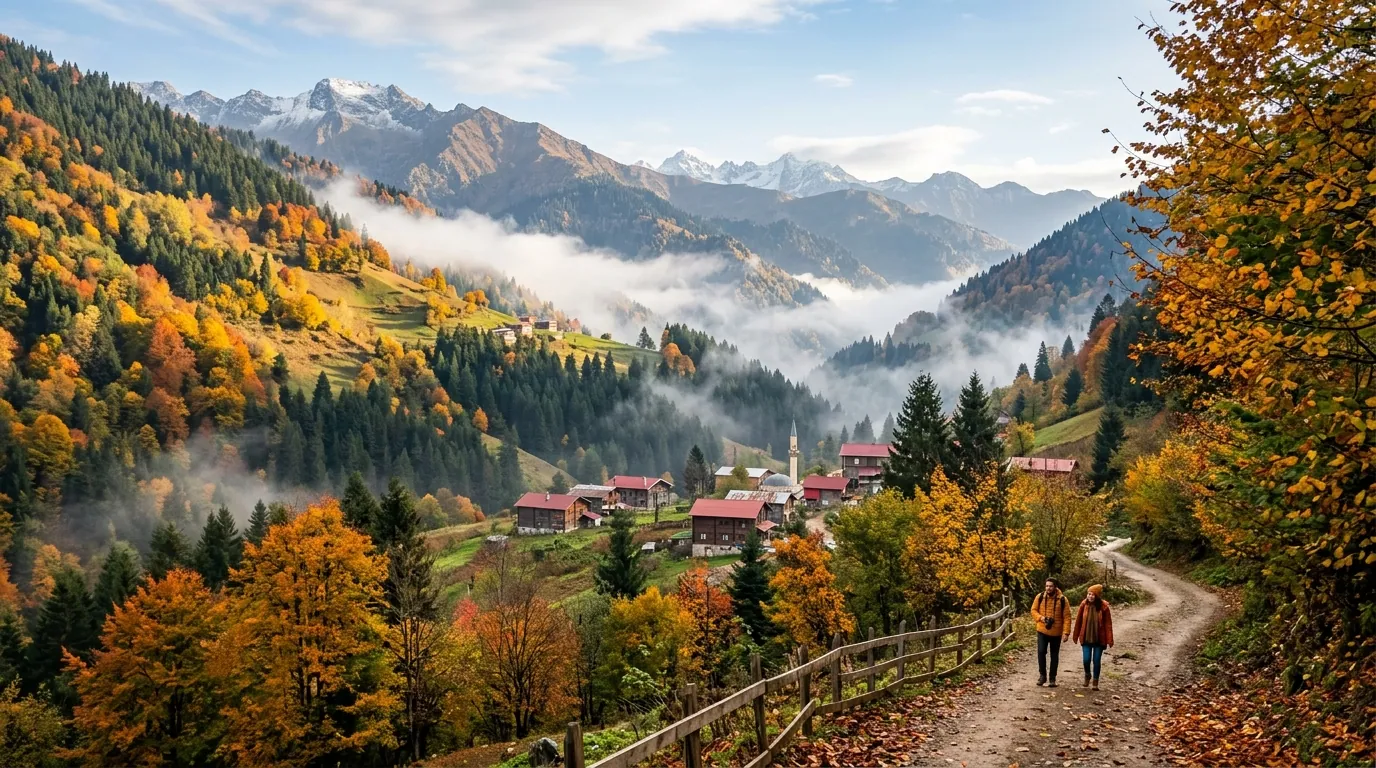
Ayder Turkey weather 2026: monthly averages, rain patterns, best months to visit, and packing tips for Gulf families.
Ready to explore Turkey?
Voyago brings together hotels, tours and transfers to help you plan the perfect trip to Turkey.