
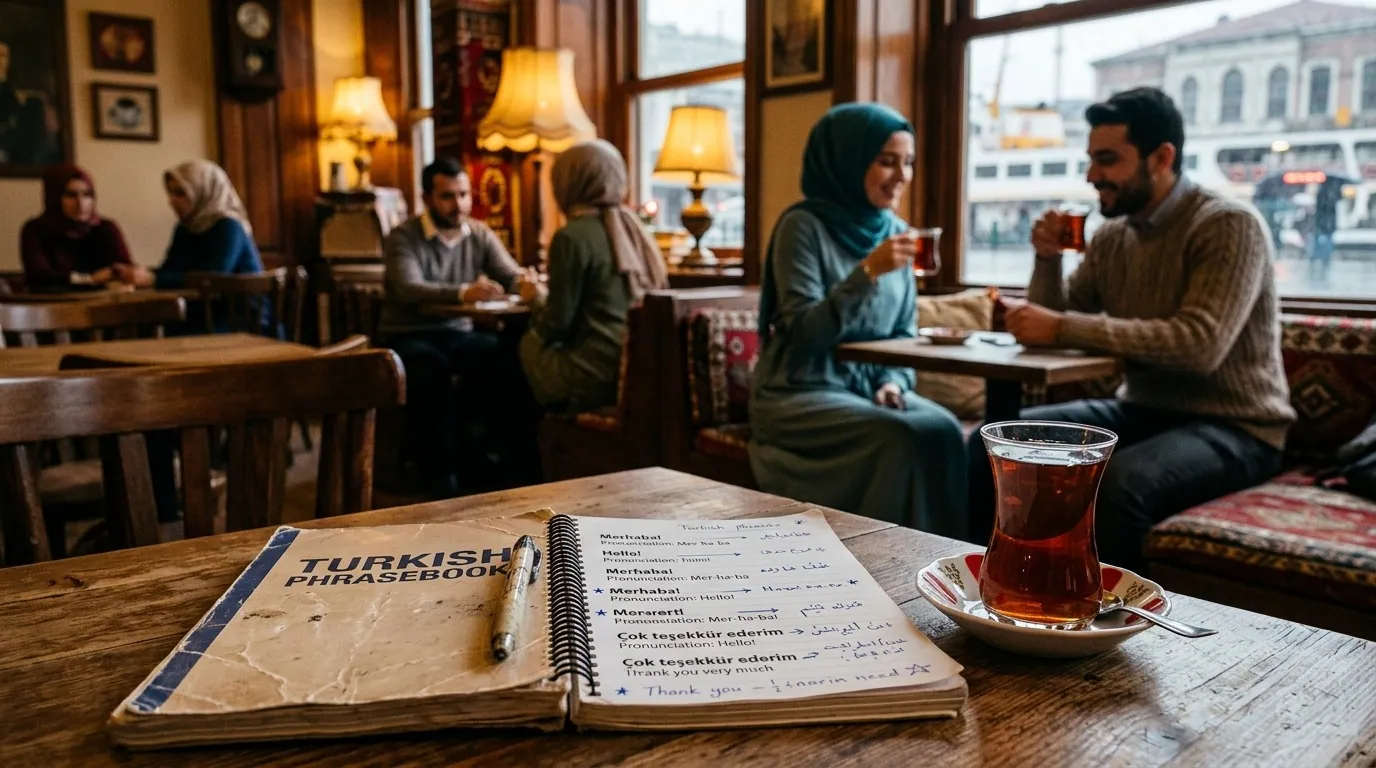
Quick Answer for Gulf Visitors
Is the Turkish language a barrier for Arab visitors? — No; English covers major hotels, landmarks, and airports, and a handful of Turkish words plus a translation app open up taxis, bazaars, and mountain restaurants with ease.
Which words should I learn before flying? — Just ten: Merhaba, Teşekkürler, Lütfen, Ne kadar, Nerede, Hesap, Afiyet olsun — together they cover about eighty percent of daily situations.
Which translation app works best in Turkey? — Google Translate with the offline Turkish pack and camera mode for menus and signs; Yandex Translate is more accurate for full sentences.
Comprehensive Introduction
Translation in Turkey is not a problem for Gulf families to worry about; it is a small skill that lifts the whole trip. Airports, major hotels, and famous landmarks run on English without friction, but local taxis, the Grand Bazaar, pharmacies, and the mountain restaurants of Uzungol and Ayder improve instantly with ten Turkish words and an offline translation app in your pocket. The good news is that many Turkish words come from Arabic roots — Hesap, Doktor, Bahsis — so Gulf visitors pick them up faster than any other travelers. This guide gathers the words, signs, restaurant phrases, pharmacy terms, and emergency sentences into one page ready to memorize before you fly.
Details for Arab Travelers
When Do You Actually Need Translation?
In four-star-and-above hotels, airports, and top landmarks, English alone works fine. In local taxis, folk bazaars, pharmacies, and village restaurants, a few Turkish words make the difference between a smooth request and a tiring exchange. The practical rule: memorize price, direction, and food phrases first, because they cover a third of all translation moments on any trip.
English and Arabic in the Big Cities
English is understood across Istanbul, Antalya, and Trabzon in the tourist zones specifically, and Arabic is partly understood in Istanbul, Trabzon, and Bursa thanks to Arab communities and the heavy Gulf summer traffic. In smaller inland cities you will lean on the translation app more, but a smile and a few courtesy words always break the ice.
The Practical Rule for Gulf Families
Prepare only three things before departure: the offline Turkish pack in your translation app, a photo of your hotel's name and address in Turkish to show any driver, and the ten phrases from this guide saved in your phone notes. This trio solves ninety percent of the language moments of the entire trip.
Comparison: English Alone, Basic Turkish, or a Translation App?
| Situation | English alone | A few Turkish words | Translation app |
|---|---|---|---|
| Hotel and airport | Good | Enough | Unneeded |
| Local taxi | Weak | Strong | Medium (type the destination) |
| Bazaar and bargaining | Weak | Very strong | Weak (no help in haggling) |
| Pharmacy and medical needs | Medium | Strong | Strong (photograph the box) |
| Mountain restaurants in Uzungol and Ayder | Weak | Strong | Medium |
| Museum and road signs | Medium | Strong | Strong with camera mode |
The practical takeaway from the table: never rely on a single solution. Combining a few memorized phrases with an offline translation app covers every situation above at once.
Practical Tips for Gulf Visitors
Tips for Gulf Visitors from Saudi Arabia and UAE
- Carry some Turkish Lira for small payments (taxi, groceries), though cards are widely accepted
- Keep a copy of your passport on your phone and cloud storage, along with booking documents
- Use helpful apps: Google Maps, BiTaksi (for Istanbul taxis), Moovit (public transport), Yemeksepeti (food delivery)
- Learn basic Turkish words: Merhaba (hello), Teşekkürler (thank you), Evet (yes), Hayır (no)
- Shop at local markets (Grand Bazaar, Spice Bazaar) for better prices and authentic experience
Family Tips
- Book family-friendly hotels in advance during high season (June-August, Ramadan, holidays) 2-3 months ahead
- Choose connecting rooms or family suites for greater comfort
- Use kids club services in major hotels for relaxation
- Carry snacks for children, though most familiar foods are available in Turkey
- Plan a flexible schedule, especially with young children, to avoid fatigue
Budget Tips
- Use public transport instead of taxis, especially in Istanbul
- Eat at lokanta (local restaurants) instead of tourist restaurants
- Book hotels 4-6 weeks before travel for best prices
- Avoid tourist menu traps, and order freshly prepared dishes directly from the kitchen
- Buy at bazaars instead of malls, and learn to bargain
Practical Info for Gulf Visitors
| Item | Details | Note for Gulf Visitors |
|---|---|---|
| Currency | Turkish Lira (TRY) | Check the live rate before you travel (it moves often) |
| Calling Code | +90 | To call Turkey |
| Istanbul Code | 212 (European), 216 (Asian) | For local calls |
| Emergency | 112 (police, ambulance, fire) | Free from any phone |
| Language | Turkish | English common in cities |
| Time | UTC+3 (TRT) | Same as Gulf (or -1) |
| Electricity | Type C/F | 220V, 50Hz (like Gulf) |
| Water | Drinkable in most cities | Bottled preferred |
| Insurance | Highly recommended | $30-100/person |
| Prayer | Mosques everywhere | Most 5-star hotels have prayer room |
| Halal Food | Widely available | Most restaurants are halal |
| Prayer Times | 5 times daily | Adhan, Muslim Pro apps |
Related Articles and Resources
For a complete trip to Turkey, explore these helpful resources:
- Reserve private transfer services
- Book guided tours and excursions
- Read more: Turkey visa for Saudi citizens
- Read more: Istanbul hotel guide
- Read more: Istanbul 5-star hotels
- Read more: Turkey country guide
- Read more: Turkey travel costs
- Read more: Best areas to stay in Turkey
Official Sources
Verify travel information through these official channels:
- Visa application: evisa.gov.tr
- Weather updates: mgm.gov.tr
- Tourism portal: goturkiye.com
- Foreign affairs: mfa.gov.tr
- Maps: yandex.com.tr/maps
The Turkish Words Every Arab Visitor Needs
| In Turkish | Pronounced | Meaning |
|---|---|---|
| Merhaba | mehr-HA-ba | Hello |
| Teşekkürler | te-shek-ker-LER | Thank you |
| Lütfen | LUTE-fen | Please |
| Evet / Hayır | e-VET / ha-YIR | Yes / No |
| Ne kadar? | neh ka-DAR | How much? |
| Nerede? | ne-re-DE | Where? |
| Hesap | he-SAP | The bill |
| Afiyet olsun | a-fi-YET ol-SUN | Enjoy your meal |
| Güle güle | gue-le GUE-le | Goodbye |
These words alone unlock eighty percent of daily situations; smiles and gestures cover much of the rest. The good news for Arab visitors is that many Turkish words share Arabic roots: Hesap (bill), Doktor, and Ayran (yogurt drink) sound familiar the moment you hear them.
Reading Road and Shop Signs
| Sign | Meaning | Where You See It |
|---|---|---|
| Giriş | Entrance | Metro and store doors |
| Çıkış | Exit | Roads and parking |
| Yasak | Forbidden | Everywhere |
| Otopark | Car park | Streets and malls |
| Dur | Stop | Traffic signs |
| Yavaş | Slow | Mountain bends |
| Açık / Kapalı | Open / Closed | Shops and museums |
| Boş / Dolu | Available / Full | Parking and restrooms |
| İndirim | Discount | Store windows |
| Nöbetçi Eczane | Night-duty pharmacy | Pharmacy doors |
In the Restaurant: Read the Menu Like a Local
Turkish menus repeat a small vocabulary that you learn once and use everywhere: Izgara means grilled, Tavuk is chicken, Et is beef, Köfte is meatball, Çorba is soup, Tatlı is dessert, Su is water, and Çay is tea. Add Lütfen (please) to any dish name and your sentence is complete, and at the end say Hesap lütfen to get the bill promptly. The practical family rule: seek out lokanta restaurants with the open display counter, where you see the food before ordering and simply point at what you like — the fastest translation there is.
At the Pharmacy and in a Medical Pinch
| Word | Pronounced | Meaning |
|---|---|---|
| Eczane | ej-ZHA-ne | Pharmacy |
| Hastane | has-TA-ne | Hospital |
| Ateş | a-TESH | Fever |
| Baş ağrısı | bash a-ri-SI | Headache |
| Reçete | re-CHE-te | Prescription |
| Doktor | dok-TOR | Doctor |
| Ambulans | am-bu-LANS | Ambulance |
Pharmacies in Turkey are dense and marked with a green crescent; most pharmacists in tourist cities understand English, and many pick up basic Arabic phrases during Gulf seasons. After midnight a single duty pharmacy (nöbetçi eczane) serves each district, and every closed pharmacy posts a sign with the address of the nearest open one — photograph the sign and show it to your taxi driver. The unified emergency number 112 connects you to English-speaking operators.
Numbers and Bargaining in the Bazaar
| Number | Turkish | Pronounced |
|---|---|---|
| 1 | Bir | bir |
| 2 | İki | i-KI |
| 3 | Üç | uch |
| 4 | Dört | durt |
| 5 | Beş | besh |
| 6 | Altı | al-TUH |
| 7 | Yedi | ye-DI |
| 8 | Sekiz | se-KIZ |
| 9 | Dokuz | do-KUZ |
| 10 | On | on |
Three phrases compress all bazaar bargaining: Kaç para? (how much?), Pahalı (expensive), and Son fiyat (final price) — turning negotiation into a friendly game Turkish sellers know well and enjoy. In fixed shops and malls prices are final, so save your energy there.
Translation Apps That Work in Turkey
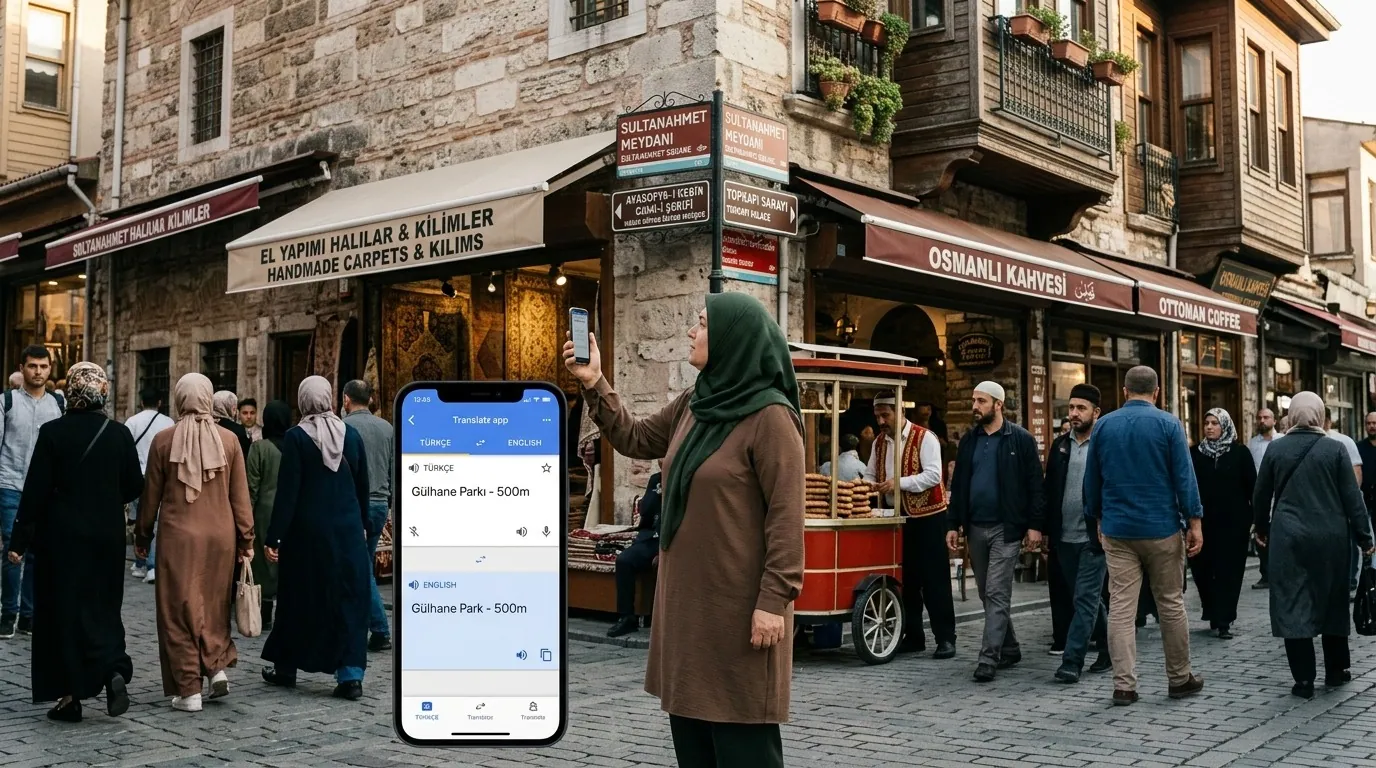
Google Translate covers most needs with its offline Turkish pack, and its camera mode is the traveler's best friend: point your phone at a menu or sign and the translation appears directly on the paper. Yandex Translate handles Turkish more accurately for full sentences, given its home-market strength. Before flying, save a photo of your hotel's name and address in Turkish — with no connectivity, it is enough to get any taxi to the door.
At the Museum and Landmarks: Ticket Words
| Word | Pronounced | Meaning |
|---|---|---|
| Müze | meu-ZE | Museum |
| Giriş ücreti | i-RESH uch-re-TI | Entrance fee |
| Ücretsiz | uch-ret-SIZ | Free |
| Müzekart | meu-ZE-kart | Official museum pass |
| Öğrenci | oren-JI | Student (discount) |
| Kapalı | ka-pa-LUH | Closed (usually Mondays) |
A tiny pack that shortens landmark queues: ask Giriş ücreti? to learn the family price before entering, and ask Ücretsiz mi? about the children, since many sites waive entry below a certain age. The official museum pass skips the ticket lines at Istanbul's most visited sites and can be bought online before you fly whenever your visits number more than three on the trip.
Hotel Phrases for Daily Use
Three sentences serve you in every Turkish hotel: Oda hazır mı? (is the room ready?) for early arrivals, Valizayı bırakabilir miyiz? (can we leave the luggage?) for late departures, and Resepsiyon nerede? (where is reception?) when hunting the breakfast hall or the prayer room. Staff at mid-range hotels and above generally understand English, so keep the Turkish sentences for the small moments — they charm more than they inform. The Turkish honorifics Bey for men and Hanım for women open every door: Çay lütfen, Hanım (tea please, madam) brings the smile before the tea.
In the Mall: A Few Words Go Far
Malls need almost no translation — prices are digital, fitting rooms are marked, and food courts are visual — but three words still earn their place: Fiyat (price) on the tags, Kasa (cashier) when hunting the till, and İade (return or exchange) at the customer service desk. Keep the receipts for any gift purchases; returns run smoothly within two weeks with the receipt and original packaging at the same store where you bought the item.
FAQ
- Does a Turkey trip need advance booking?
Yes, advance booking is recommended especially in high season (June-September) for best prices and room choice. Booking 4-6 weeks before travel is ideal for Gulf families.
- How much does a Turkey trip cost for a family?
Costs vary by chosen level, but average 5-day budget for a family of 4 ranges from $1,500-4,000 covering hotels, food, transport, and tours. Luxury hotels can raise the cost to $6,000-10,000.
- When is the best time to visit Turkey?
Best times are April-May and September-October (spring and autumn) with mild weather and fewer crowds. Summer (June-August) is hot but peak season with more events. Winter is cold and cheaper but some places may be closed.
- Is Turkey suitable for children?
Yes, Turkey is very family-friendly destination. Most hotels offer children's services (kids club, babysitting, pools), Turkish cuisine is appealing to children, and landmarks suit all ages. Halal meals and babysitters are available at major hotels.
- How do I reach Turkey from the Gulf?
Direct flights are available from all Gulf countries to Istanbul (IST/SAW), Antalya (AYT), and Trabzon (TZX) via major airlines: Turkish Airlines, Pegasus, Emirates, Qatar Airways, Saudia, flydubai. Flight duration is 3-4 hours from Riyadh/Dubai, 4-5 hours from Kuwait/Doha.
- Do I need a visa for Turkey?
GCC citizens do not need a pre-arrival visa (visa-free) for stays up to 90 days. Residents of Gulf countries (expatriates) follow the rules of their own passport; e-visa eligibility varies by nationality, so check evisa.gov.tr. Ensure your passport is valid for at least 60 days beyond your stay — at least 150 days from entry for a full 90-day visit; many airlines advise 6 months to be safe.
- Is Turkey safe for Arab tourists?
Yes, Turkey is very safe for Arab tourists. Crime rates are low, police are friendly, and Turkish people are known for hospitality. Avoid remote areas at night, and keep valuables in hotel safe.
- What language is spoken in Turkey, and is English enough?
The official language is Turkish. English is understood in major cities, especially in hotels, restaurants, and shops. In rural areas, you may need a translation app or local guide. Learning basic Turkish words is helpful and earns respect from locals.
- Is food halal in Turkey?
Yes, Turkey is 99% Muslim and halal slaughter is the standard. Most restaurants and hotels serve halal food. Some luxury hotels hold Halal Standard certification. Avoid pork and alcohol if you prefer.
- How do I pay in Turkey?
Credit cards (Visa, Mastercard) are widely accepted in cities. But carry some Turkish Lira for small payments and local markets. ATMs are plentiful. Mobile payment (Apple Pay, Samsung Pay) is accepted in major stores.
- Can I use a SIM card in Turkey?
Yes, you can buy a local SIM (Turkcell, Vodafone, Türk Telekom) from the airport or stores, or activate eSIM via Airalo or Holafly apps. Local SIM starts at $15-30 for 10GB. Ensure your phone is unlocked before travel.
- What nearby places can I visit from the main cities?
Many nearby destinations are easily accessible: historical landmarks, beaches, resorts, and traditional markets. Plan 2-3 day trips to explore the area.
Conclusion
The Turkish language is not a barrier for Gulf families in Turkey; it is a small opportunity to raise the quality of the trip. Ten memorized words, an offline translation app, and a photo of your hotel address are enough to cover taxis, bazaars, pharmacies, and mountain restaurants with confidence — and many of the words come from Arabic roots anyway, so you will learn them faster than you expect.
Whether you are in Istanbul, Trabzon, or Antalya, prepare your phrases before you fly, book early in high season, and benefit from the local information provided by the Voyago team.
To complete your trip to Turkey, explore the following services:
We wish you a happy and enjoyable trip!
Related travel guides
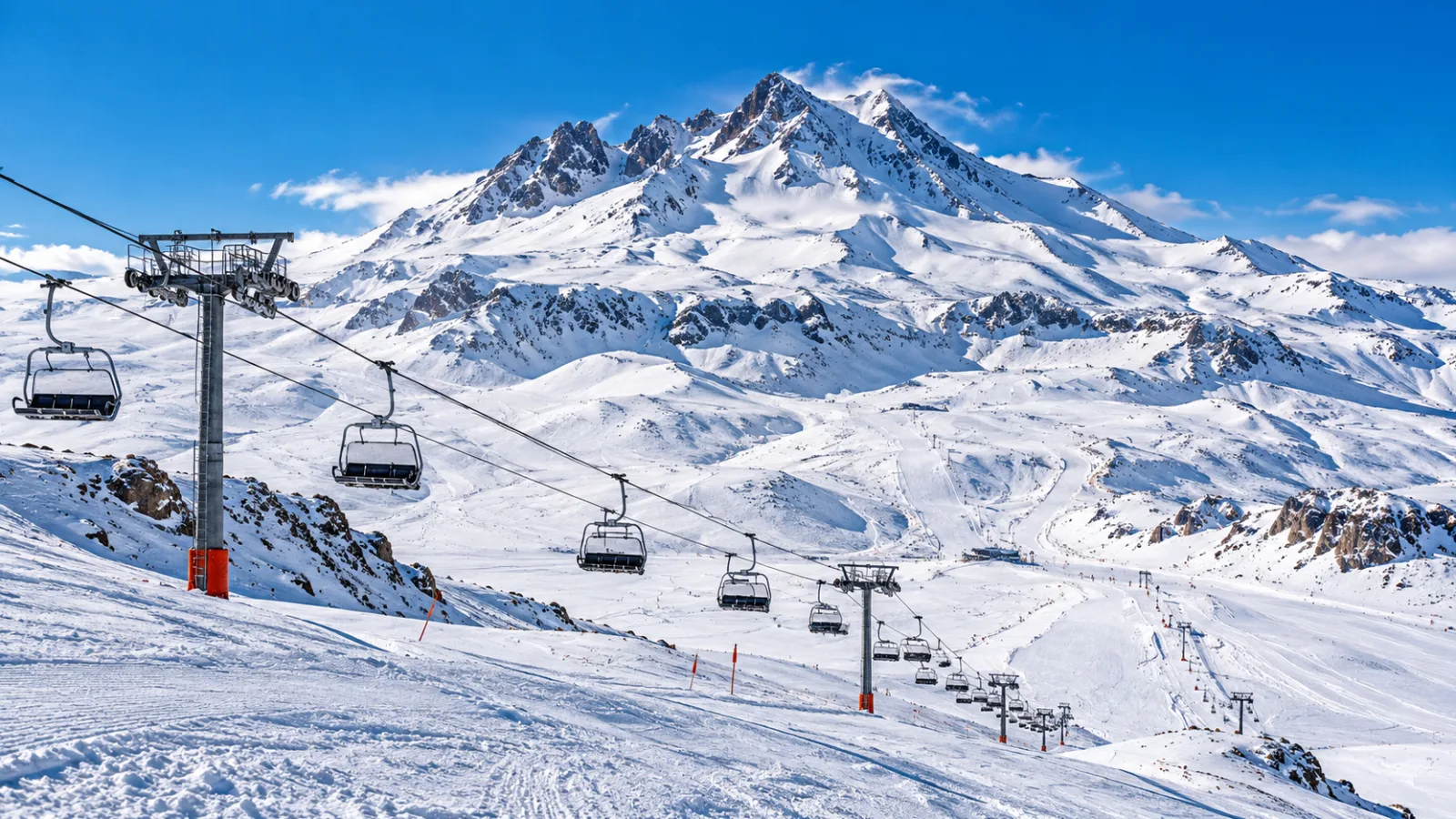
Erciyes is one of Turkey's biggest and highest ski areas, near Kayseri and within reach of Cappadocia — season timing, elevation and what to expect.
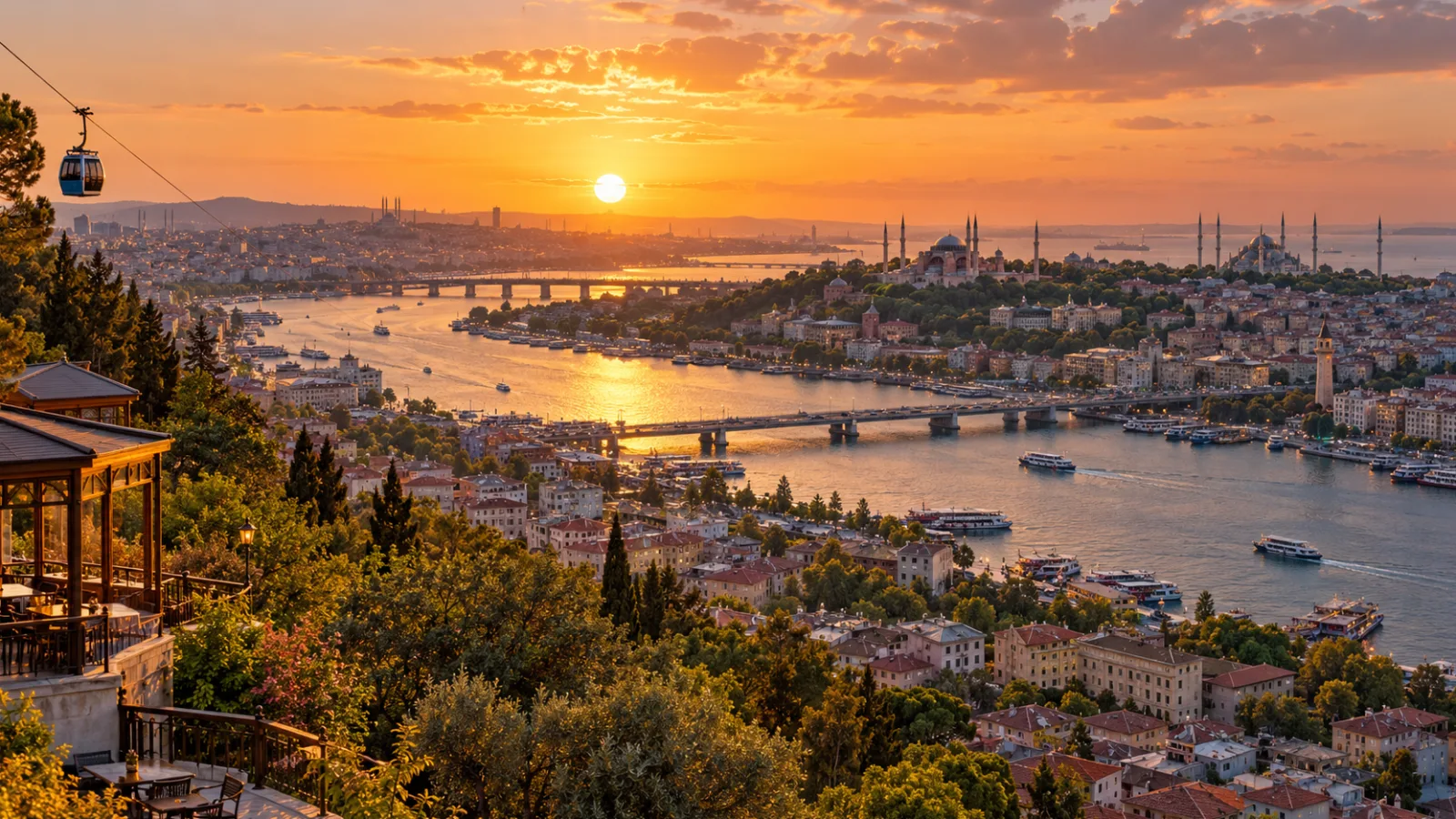
How the Eyup-Pierre Loti cable car actually works, what it costs, and how to pair the mosque, the hilltop view and the historic cemetery into one half-day.

Sapanca's monthly temperatures and rain from official Turkish records, and how this general climate picture differs from a winter-specific Sapanca and Kartepe visit.
Ready to explore Turkey?
Voyago brings together airport transfers, guided tours and car rental to help you plan the perfect trip to Turkey.