
Quick Answer for Gulf Visitors
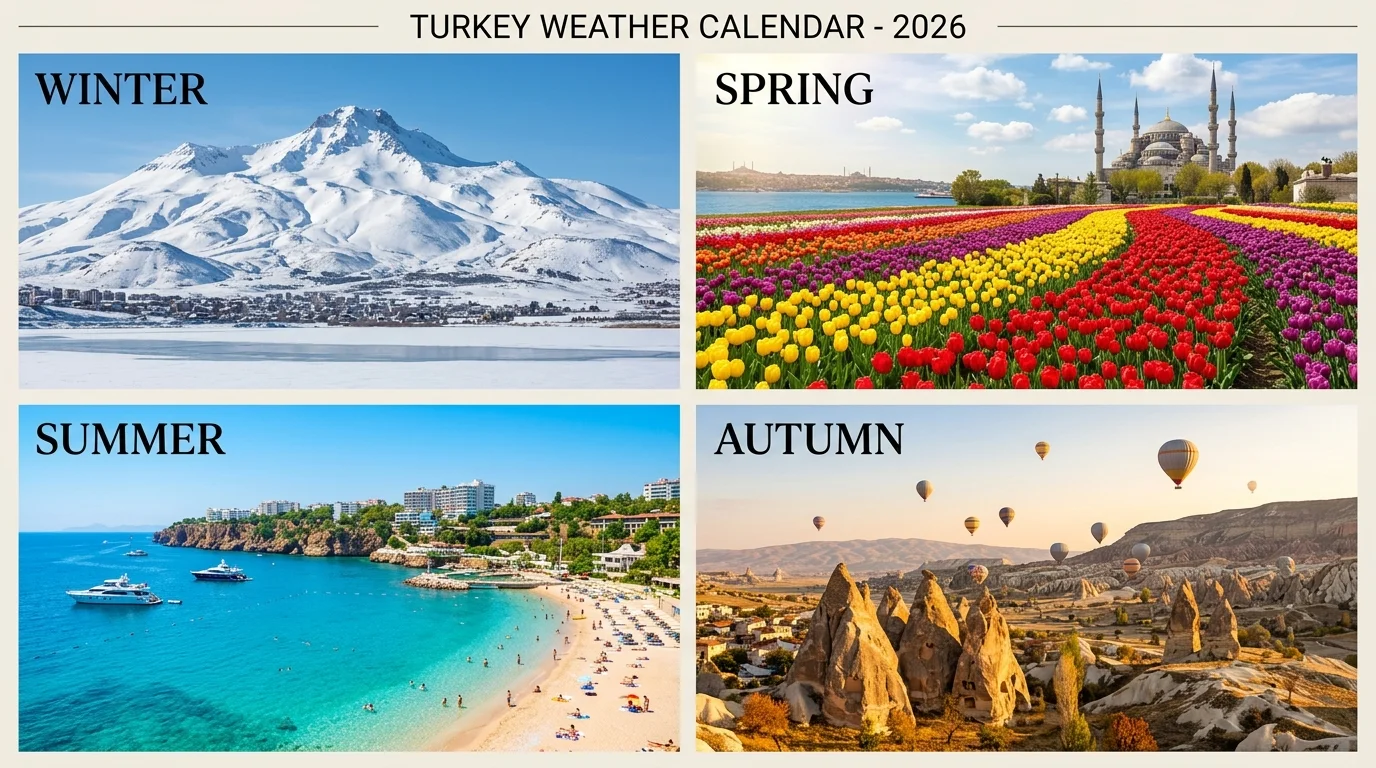
What is the weather like in Turkey? There is no single answer — the country spans three climate zones: the Mediterranean coast is hot and dry in summer, mild and rainy in winter; Marmara and Istanbul enjoy four true seasons; the Black Sea stays green with year-round rain; and the interior is continental, bitterly cold in winter. Two cities can differ by thirteen degrees on the same day, so choosing the destination comes before choosing the month.
The best months overall? April, May, September and October for most destinations: mild days, a warm sea in autumn, and lighter crowds than summer.
And the truest escape from Gulf heat in July and August? The Turkish North alone: Trabzon, Uzungol and Ayder sit between 22 and 28 degrees — the coolest corner of Turkey at peak season.
Why Weather Shapes Your Trip Before Anything Else
Gulf travellers are usually fleeing a 45-50 degree summer or chasing a gentler winter; both goals are fully available in Turkey, but only with the climate map in mind. Pick Antalya in August expecting a breeze and you meet a wall of humid heat; pack a summer suitcase for Cappadocia in October and you find nights grazing five degrees. The rule we always give: first decide what you want from the trip (sea, mountains, city, shopping), then read your destination's month in the table below — the suitcase and the itinerary assemble themselves.
The good news is that Turkey is genuinely a four-season destination: winter brings skiing, shopping and thermal baths; spring brings open-air touring and balloons; summer delivers the green North and the pools; autumn offers a warm sea at tempting prices. The only failure mode is pairing the right month with the wrong city — exactly what this page prevents.
Turkey Weather by Month (2026)
Approximate daytime averages across four reference cities covering the four climate zones:
| Month | Istanbul | Antalya | Trabzon | Cappadocia | Gulf verdict |
|---|---|---|---|---|---|
| January | 9°C | 15°C | 11°C | 2°C | Skiing and thermal springs |
| February | 10°C | 16°C | 11°C | 3°C | Uludag skiing |
| March | 12°C | 18°C | 12°C | 8°C | Comfortable city touring |
| April | 17°C | 22°C | 15°C | 14°C | Excellent everywhere |
| May | 22°C | 26°C | 19°C | 18°C | Excellent; sea warming up |
| June | 27°C | 31°C | 23°C | 23°C | Good; the North is better |
| July | 30°C | 35°C | 26°C | 27°C | North only, for heat escapers |
| August | 30°C | 35°C | 26°C | 27°C | North only; warm sea for lovers of it |
| September | 26°C | 31°C | 23°C | 22°C | Excellent; best sea season |
| October | 20°C | 25°C | 19°C | 16°C | Excellent; prices falling |
| November | 15°C | 20°C | 15°C | 10°C | Good for cities and shopping |
| December | 11°C | 16°C | 12°C | 4°C | City breaks and winter mood |
Two readings matter. First, night-time gaps always exceed daytime gaps: Cappadocia in July reads 27 by day but 12 at balloon-launch dawn, so layers are mandatory. Second, coastal averages hide exceptional days — a Mediterranean warm spell can lift November to 25, and a cold snap can pull April down to 10; the official Turkish Met Service MGM removes surprises in your travel week.
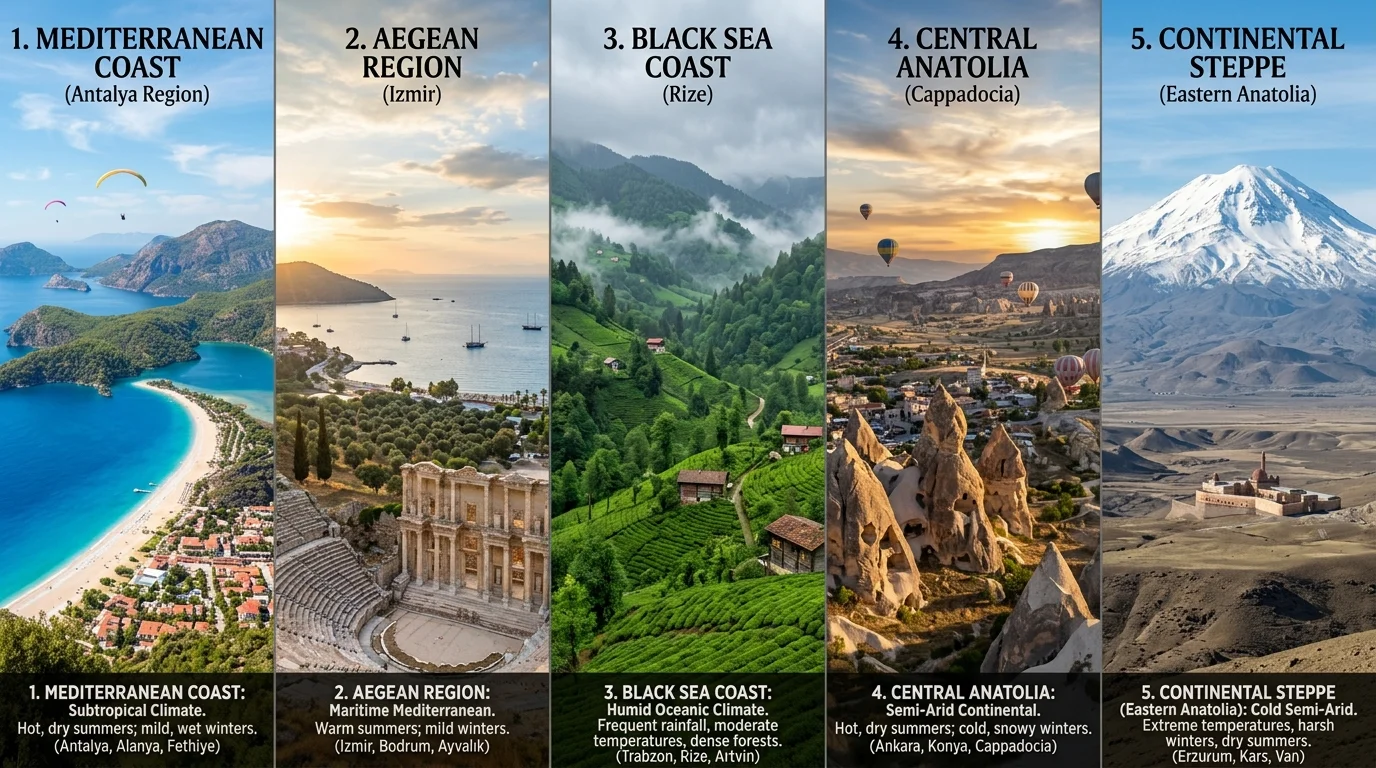
Regional Climate Comparison: Five Turkeys in One Country
| Region | Summer peak | Winter | Rainy season | Best for |
|---|---|---|---|---|
| Mediterranean (Antalya, Alanya) | 35-40°C | 15-16°C | Dec-Feb | Beaches and pools (avoid Jul-Aug if humidity bothers you) |
| Aegean (Bodrum, Izmir) | 33-38°C | 13-14°C | Dec-Jan | Beaches and wind sports |
| Marmara (Istanbul, Bursa) | 29-30°C | 9-10°C | Nov-Feb | Cities, culture, shopping |
| Black Sea (Trabzon, Rize) | 24-28°C | 11-12°C | Spread all year | Summer escape from Gulf heat |
| Central (Cappadocia, Konya) | 27-30°C | 2-4°C | Light spring rain | Balloons and history (always cold nights) |
The single most important line on this page: the Black Sea is Turkey's natural air-conditioner. The only region that stays excellent through July and August is the North, while everything else waits for September. The full family guide to that region is the complete Turkish North travel guide, and Trabzon's position and geography are covered in where is Trabzon located.
Comparison: August in Antalya or August in Trabzon?
The comparison that separates two entirely different trips:
| Comparison point | Antalya in August | Trabzon and the plateaus in August |
|---|---|---|
| Daytime | 33-35°C with heavy humidity | 25-27°C mountain breeze |
| Night-time | 26°C, marine air | 15-18°C; you will want a light jacket |
| The sea | Very warm (28°C), superb for swimming | Cold; for watching, not swimming |
| Programme | Pool, beach, relaxed evenings | Plateaus, waterfalls, green nature |
| Crowds and prices | The year's absolute peak | Moderate peak at kinder prices |
The verdict: for sea and resort life, Antalya is unmatched even in the heat; for cool air and scenery, Trabzon is literally the summer destination. Two weeks? Split the trip with a domestic flight between the two airports.
Best Months by the Activity You Want
- Beaches and pools: late May through June, then September — warm sea, bearable sun, lighter peak.
- Escaping Gulf heat: June through August in the Turkish North alone; nothing else in Turkey matches it then.
- Cappadocia balloons: April, May, September and October — clear skies, calm winds, dawns that are not bitter.
- Skiing (Uludag, Erzurum): January and February — the most reliable snow base, and Uludag's closeness to Istanbul makes it a weekend trip.
- Shopping and city (Istanbul): March to May, then October and November — mild weather, fewer crowds than summer.
- Budget travel: November to February outside ski resorts and holiday weeks — the year's lowest hotel rates.
- Nature at its greenest: May and June in the North — the meadows before late-summer dryness.
A Close Reading of the Months Gulf Families Actually Travel
June: the genuinely clever planner's month. The coasts have entered summer but it is still young summer (29-31 degrees on the Mediterranean) before the peak, and the North is at its greenest before August dryness, with Istanbul pleasant at 27. Want the beach before the crush? This is your month. Want the mountains? No month is lovelier for the meadows. Prices sit mid-range and climbing; booking two months ahead locks the best rate.
July and August: the hard-decision months. Outside the Turkish North, the entire Mediterranean coast sits in a wall of heat and humidity (35 by day, 26 by night that never cools), Bodrum and Izmir trail by barely two degrees, and Istanbul belongs to the Bosphorus and the evenings more than to noon touring. Your realistic choices are three: a full all-inclusive coastal resort lived between pool and air-conditioned restaurant, the northern mountains, or postponement to September.
September and October: when the Mediterranean coast becomes a gem: the sea at its warmest (27-28 degrees), daytime sliding from 31 to 25, mild nights returning, and accommodation prices starting their autumn descent after mid-September. Many Gulf families have made October their one annual coastal month for precisely this reason.
December and January: winter Istanbul is a different character altogether: thinner crowds, lower prices, year-end festivity in the streets and malls, and the chance of snow that beautifies the city without stopping it. Nearby Bursa and Uludag offer day skiing, and the thermal baths of Bursa and Yalova are at their most delicious in the cold. The coasts are quiet and relatively cool (15-16 degrees) — fine for a stroll, not for a swim.
Weather and Your Bookings: Catching the Right Price in the Right Season
First rule: pricing peaks track climate peaks and open early; August coastal inventory rises as flights fill, so deciding three months ahead secures the gap. Second rule: the shoulders between seasons are treasure — early June and late September carry near-peak weather at visibly lower prices. Third rule: the North is inverted; its peak is exactly July and August, making a northern September a quiet bargain with slightly lighter green. Fourth: holiday seasons (the two Eids and the school mid-year break) rise in price regardless of weather, so price your trip by the Gulf calendar as much as by the month.
Weather and Getting Around: Decisions Made Before You Fly
Weather changes transport decisions more than travellers expect. In winter, Cappadocian and central snow can close roads for hours and domestic trains and buses slip behind schedule; a late-night arrival with a family deserves a pre-booked private transfer rather than a cold airport wait. In summer, the coastal airports (Antalya, Dalaman, Bodrum) are at their busiest, and reserving your pickup ahead saves an hour of queueing with tired children.
In the Turkish North, rain is possible on any summer day; schedule plateau tours in the first half of the day, when showers are usually lighter, and keep the evenings for the town and its covered markets. In winter Istanbul, the Bosphorus crossing beats the buses on clear days and warms better than them on wet ones, while the sightseeing tram line serves every major landmark indoors-to-indoors. For more day planning, browse the organised tours — their programmes are sequenced around seasonal weather.
What Gulf Families Pack
| Season and destination | Adults | Children |
|---|---|---|
| Summer coast | Light cotton, hat, SPF 50+ | UV-protective swimwear and a refillable water bottle |
| Summer North | Light layers and an evening fleece | The same, plus a fleece for the plateaus |
| Spring / autumn anywhere | Layers and comfortable walking shoes | Layers and a packable light rain jacket |
| Winter cities | Warm coat, scarf, gloves | Thermal layers and a warm coat |
| Winter Cappadocia and ski | Snow coat and non-slip boots | Ski suits (rental available on site) |
The complete suitcase detail — fabrics and pieces per city — lives in the Turkey clothing guide; read it after fixing your destination's month from this page. And for anyone wondering how far apart these climate zones actually are, the Turkey area and size guide gives the numbers that make city sequencing clearer.
Common Mistakes in Reading Turkey's Weather
The first and biggest: generalising one city's weather to the whole country; read "Antalya 30 degrees" and book Cappadocia for the same week, and a five-degree night will educate you at dawn. The second: trusting the monthly average and forgetting the daily range — Istanbul's 22-degree May average contains 18-degree days and 28-degree days alike. The third: ignoring wind; the summer Bosphorus breeze drops the felt temperature by five degrees, and southern coastal winds raise the felt humidity. The fourth: scheduling outdoor tours for summer noon; the long July day deceives, and the smart plan is a dawn or evening tour with a noon nap. The fifth: skipping the forecast check in the final week because you read one months ago; forecasts master seven days well and stay probabilistic beyond.
Practical Info for Gulf Visitors
| Info | Detail |
|---|---|
| Official forecast source | Turkish Met Service MGM — follow it in your travel week |
| Official tourism portal | GoTürkiye for seasonal events |
| Sunniest months | June-August on the coasts, with the heat described above |
| Wettest months | December-February on the coasts and in Istanbul |
| Daylight hours | 14-15 in summer, 9-10 in winter |
| Time difference | Turkey at UTC+3 matches Saudi Arabia, Kuwait and Qatar |
| Weather and the Hijri calendar | Ramadan moves each year; check the weather of your actual travel month, not a "usual Ramadan" assumption |
| Seasonal accommodation | Search hotels early for the two hard peaks: coastal August and northern July |
FAQ (12 Questions)
- What is the single best month to visit Turkey? April, May, September and October for most regions — most of the country is at its best and prices sit below peak.
- Is Turkey too hot in August? The coasts, yes (35-40 with humidity); heat escapers should head to the Turkish North (24-27 degrees).
- Does it snow in Turkey? Yes; Istanbul receives light snow some winters, while Cappadocia, Uludag and Erzurum get heavy snow and a full ski season.
- When is Cappadocia's balloon season? April, May, September and October give the clearest, calmest mornings; winter carries more wind cancellations.
- Which city is coolest in summer? Trabzon and its plateaus — Uzungol and Ayder — at 22-28 degrees, the coolest of Turkey's tourist destinations at peak.
- Is December a bad time to travel? Not for everyone; it is excellent for Istanbul, shopping and thermal baths, and cold and rainy for the beaches.
- When is the sea warmest for swimming? August and September; the Mediterranean reaches 27-28 degrees and stays swimmable into mid-October.
- Does rain ruin a trip? In Istanbul and the North, rain is usually brief; one indoor plan (a museum or a bazaar) covers a wet day.
- How big is the Istanbul-Antalya gap in winter? Around six degrees; Antalya's winter is like a mild Gulf spring, Istanbul's a proper full winter.
- Which months are cheapest? November, December and February outside holidays and ski resorts — hotel discounts sometimes reach half.
- Is weather uniform inside one city? Not always; in Trabzon the city centre runs about five degrees warmer than the surrounding plateaus in summer.
- How do I follow weather warnings during the trip? The official MGM app or site, and your private transfer team reroutes around closed mountain roads when needed.
Conclusion
Turkey is a country of three climates within one short flight: hot summer coasts, a green and mild North all year, and a continental interior cold at night and in winter. Decide the trip's purpose first (sea, mountains or city), then check your destination's month in the table, and half your packing and planning decisions make themselves. Remember the two golden rules: the July-August heat escaper's destination is the Turkish North, and the warm-sea swimmer's destination is the coast in September. The final step before closing the suitcase: open the official forecast for your exact destination in your travel week — monthly averages are a general guide, and the seven-day forecast is the last word.
Private airport transfers in all conditions · Weather-appropriate tours
Sources
Related travel guides
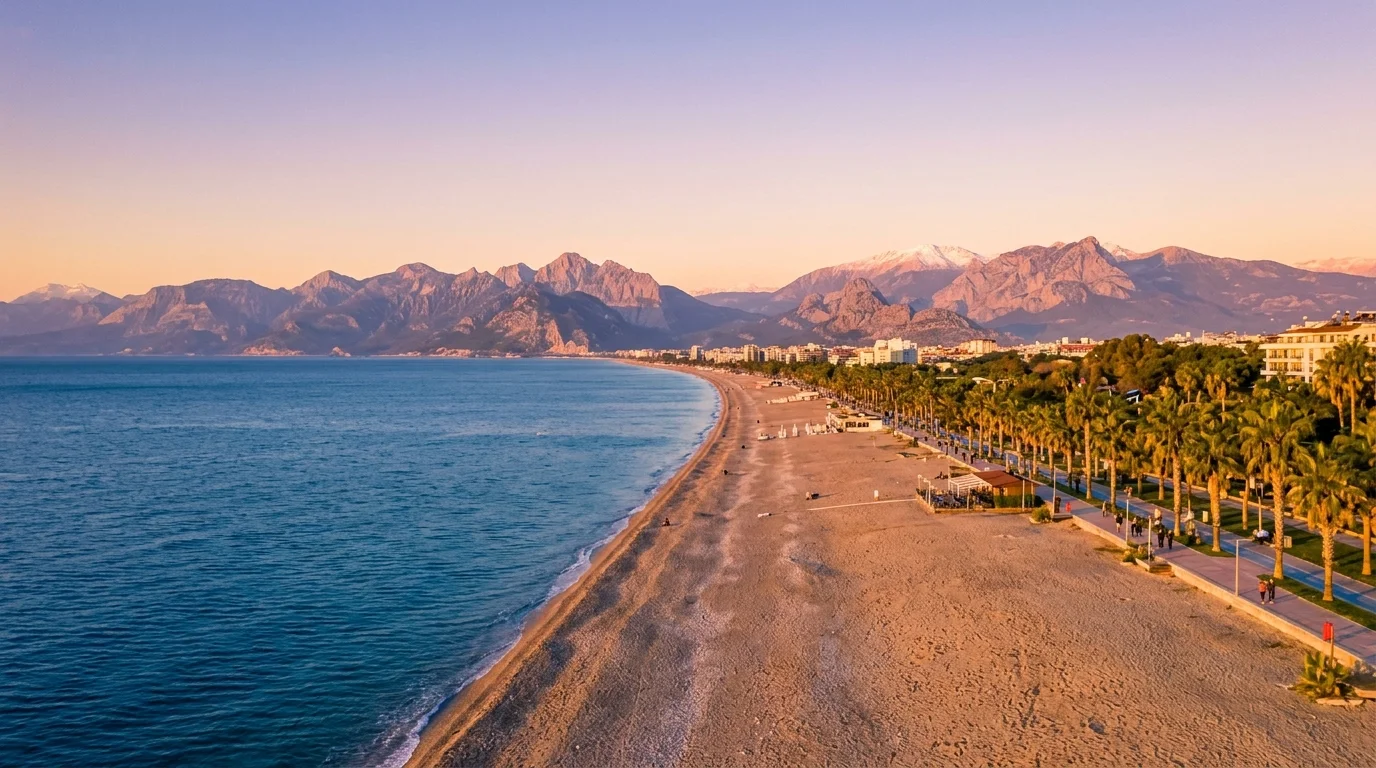
Antalya weather now with a 7-day forecast refreshed every two hours, plus month-by-month air and sea temperatures, the best beach months and what to pack.
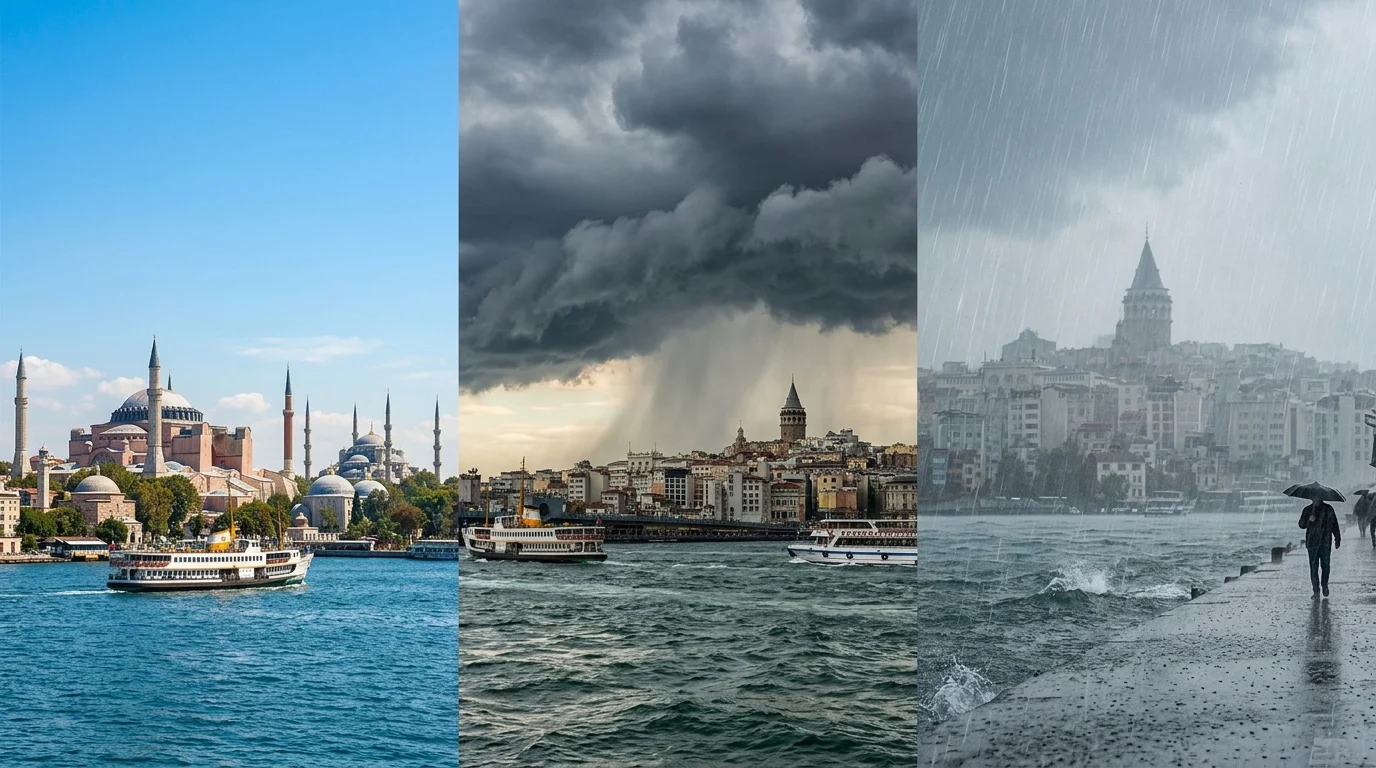
Istanbul weather 2026 month by month: temperatures, rain, humidity, the best months to visit, what to wear in every season, and how weather shapes your plan.
Sapanca's monthly temperatures and rain from official Turkish records, and how this general climate picture differs from a winter-specific Sapanca and Kartepe visit.
Ready to explore Turkey?
Voyago brings together airport transfers, guided tours and car rental to help you plan the perfect trip to Turkey.