
Quick Answer for Gulf Visitors
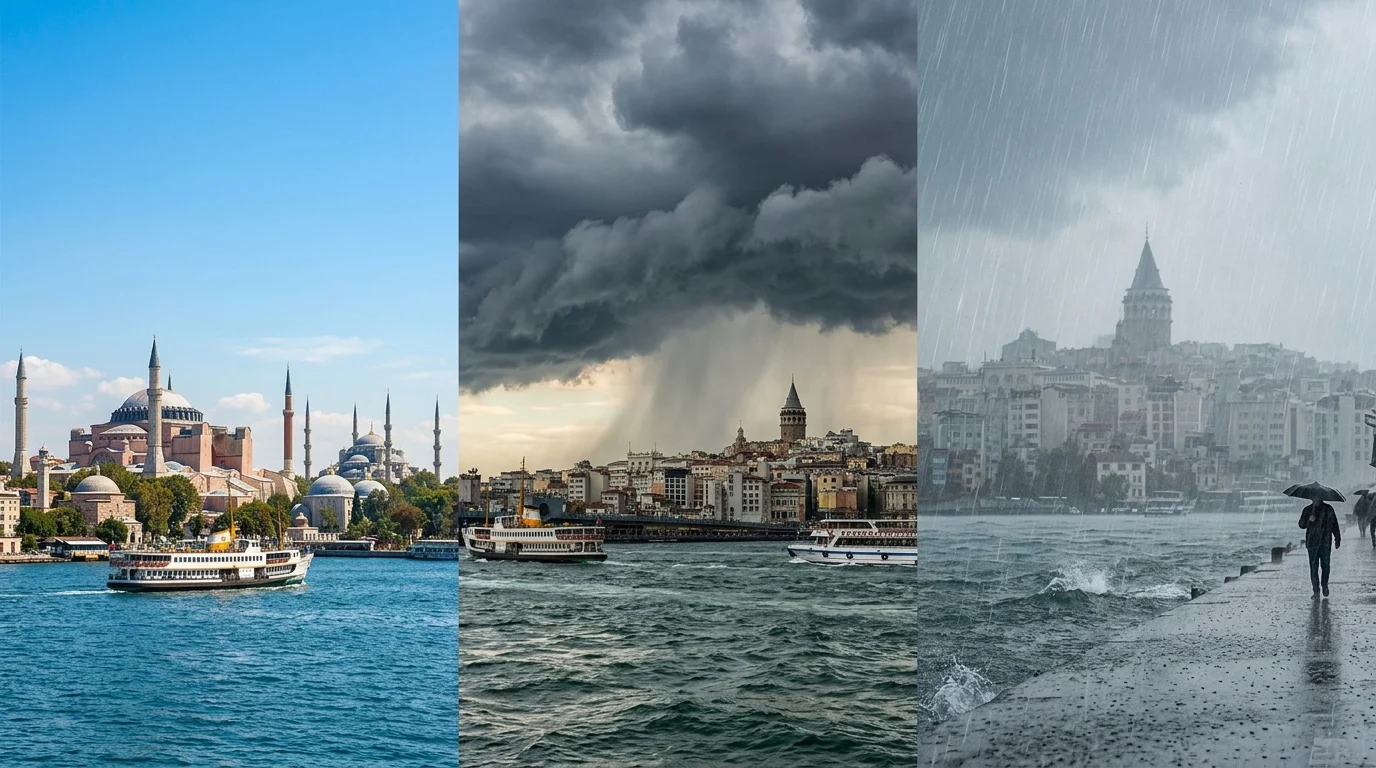
What is Istanbul's weather like? Temperate and humid: a warm summer far milder than the Gulf (28-30C daytime) and a cool, rainy winter (5-10C). There is no scorching Gulf summer and no freezing European winter; seasons are moderate and rain is the defining feature.
Best months to visit: April-May and September-October (17-26C, little rain, smaller crowds than peak summer). June and July are also fine, but with peak prices and crowds.
Does it snow in Istanbul? Rarely — two to four days a year, usually in January or February, and the snow rarely stays longer than a couple of days.
Istanbul Weather Month by Month (2026)
| Month | High/Low | Rain | Sun hours | Rating for Gulf |
|---|---|---|---|---|
| January | 9° / 3° | High | 2-3 | Cold; coats and museums |
| February | 10° / 3° | High | 3 | Cold; budget season |
| March | 12° / 5° | Medium | 4 | City tours with a coat |
| April | 17° / 9° | Low | 6 | Excellent; tulip season |
| May | 22° / 14° | Low | 8 | Excellent; the very best |
| June | 27° / 18° | Very low | 10 | Good; sea acceptable |
| July | 30° / 21° | Very low | 11 | Warm but lighter than the Gulf |
| August | 30° / 21° | Very low | 11 | Warm; peak crowds |
| September | 26° / 17° | Low | 8 | Excellent; best value |
| October | 20° / 13° | Medium | 6 | Excellent; golden light |
| November | 15° / 9° | High | 4 | Good for shopping and museums |
| December | 11° / 5° | High | 2-3 | Cold; pretty winter mood |
Official forecast source: Turkish Met MGM — Istanbul
Reading the table quickly: Gulf families should hunt the "excellent" rows — April, May, September, and October are the golden window of the year. Summer is not forbidden; 30C with moderate humidity and a strait breeze is far lighter than an August in Riyadh or Dammam, but hotels and crowds peak. Winter is no obstacle if your priorities are museums, covered bazaars, and low prices. Travelling in October? Day and night temperatures, rain and a packing list are in our Istanbul weather in October guide. The following months have their own guides with a live forecast: November, December, January, February and March.
Why Does Istanbul Feel Different From Every Other Turkish City?
The city sits between two seas on the Bosphorus strait, and the water works as a natural thermostat: it softens summer heat and eases winter harshness. The same position, though, brings higher humidity and more clouds than inland Anatolia — a fully clear sky is less common here than in Antalya. North-easterly winds dominate winter and make the waterfront feel colder than the numbers suggest, while a gentle southerly breeze cools summer afternoons.
One practical point: rain in Istanbul is usually scattered showers rather than sustained downpours; a typical winter day mixes sunny hours with a single rainy spell. So do not cancel your outing over a rain forecast — instead, arrange the day so the museum or the Grand Bazaar covers the expected rainy hour. For a wider picture of other cities, compare with our complete Izmir guide on the Aegean coast.
Comparison: Istanbul vs Antalya vs Trabzon in August
| City | Daytime temp | Humidity | Character | Best for |
|---|---|---|---|---|
| Istanbul | 30° | Moderate | History, city, water | Families wanting variety |
| Antalya | 35° | High | Beaches and resorts | Swimming holidays |
| Trabzon | 26° | High | Green highlands | Escaping the heat |
The practical takeaway: when Riyadh hits 45C, Istanbul holds 30C with 22C evenings — a difference every family member feels. But if you measure summer by daily swimming, the Bosphorus is no substitute for the Antalya sea; those seeking true coolness find it on the Black Sea. More detail in our piece on where Trabzon is located.
Humidity and the Real Feel
Numbers alone do not tell the whole story. Istanbul's summer humidity is moderate compared with the Gulf (55-65% versus our 80%+), but it rises near the water and makes early afternoon feel heavier than the reading suggests. In winter, damp winds add two to three degrees of perceived chill on the corniche and on boats. The field rule for families: schedule outdoors before 11 am and after 4 pm, and book indoor stops and restaurants for the midday hours.
Small children and seniors react to changes fastest; on stormy winter days a warm cafe and a museum are enough for them, while in peak summer the hotel pool and air-conditioned cafes do the job. Allergy sufferers sometimes notice stronger symptoms in spring from pollen — the usual antihistamines in the bag solve it.
What Should a Gulf Family Wear in Each Season?
| Season | Core clothing | Important extras |
|---|---|---|
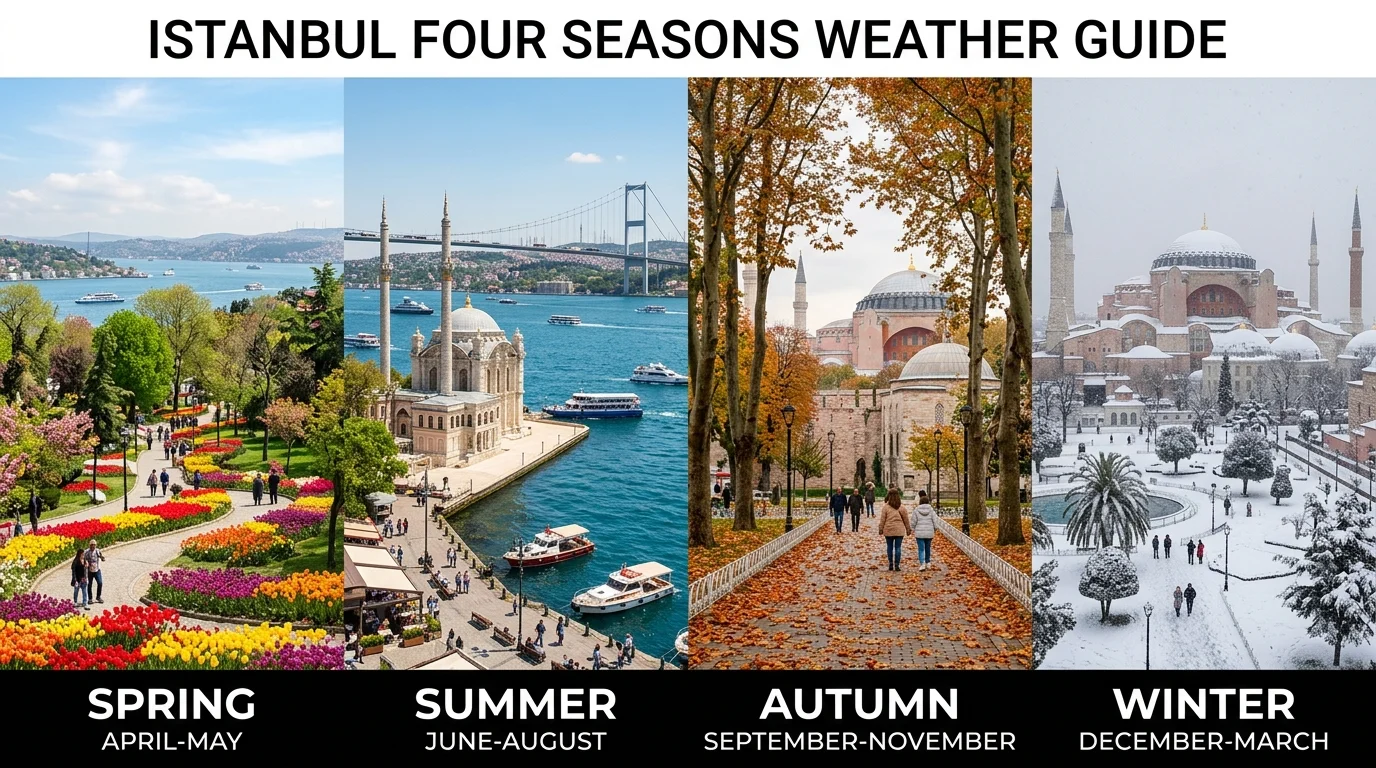
| Spring (Mar-May) | Light layers and a jacket | A rain-proof shell for showers |
| Summer (Jun-Aug) | Light cotton | A thin layer for evenings and chilled cafes |
| Autumn (Sep-Nov) | Mid-weight layers | A light coat from mid-October |
| Winter (Dec-Feb) | Wool coat and scarf | Water-resistant shoes and a small umbrella |
| Mosque visits (all seasons) | Shoulders and knees covered | Headscarf for women, usually lent at entrances |
The footwear truth: Old City streets are cobbled and slippery in rain, so comfortable water-resistant shoes in winter are not a luxury. A hat and sunglasses help from May to September because the sun is sharp and outdoor walking is long. For families combining Istanbul with other cities in one trip: pack each city's clothes in a separate side bag — the gap between Istanbul and Antalya in the same week can reach ten degrees.
How Weather Shapes Your Daily Plan
- Bosphorus cruises: ideal April to October; selected sailings run in winter and the sea is usually calm, but book with a flexible cancellation policy.
- Princes' Islands: best May-September; ferries thin out and winds strengthen outside that window.
- Grand Bazaar, covered markets, malls: the all-season rainy-day option — budget one to three hours each.
- Major museums: Hagia Sophia and Topkapi are crowded even in rain; book skip-the-line or early-morning tours.
- Cappadocia balloon (if added): cancelled by wind more than rain; keep a spare day. Plan details in our Istanbul-Cappadocia route.
- Night walks: pleasant May to October; still possible in winter with warm coats as rain tends to fall in the evening.
The storm-day rule: one rainy day is no loss if it was already your "bazaar, museum, Turkish bath" day. Structure the program in two columns — outdoor and indoor — and swap them by the morning forecast, and Istanbul's changeable weather becomes an organizational advantage rather than a problem.
Weather and Flight Bookings: Know Before You Fly
Winter fog and winds can delay some flights, especially in January and February; the new Istanbul Airport is built for all conditions but brief delays still happen. Leave a three-hour cushion between any domestic connection in winter and track your flight on the airport's official app. On a rainy landing day, a pre-booked private transfer doubles in value; taxi queues stretch in the rain and a car waiting with your name saves the family half an hour of fatigue.
The ideal booking window ties to weather inversely: the peak-weather months (June-August) are the most expensive and crowded, while September and October deliver nine-out-of-ten conditions at less than half the summer crush. April and May suit those wanting maximum value with an awake city; November and March bring the lowest prices with a few showers accepted.
Pick Your Month by Trip Type
Family with small children: May and September win uncontested; the sun is gentle on young skin, walking between sights causes no exhaustion, and bedtimes are not wrecked by noon heat or chilly evenings. In summer, flip the day: outdoors before 11, lunch and a nap in a cooled room, then a second outing after 4. In winter, pick a hotel with an indoor pool so the children never lose a rainy day.
Honeymoon: Late May and early October are the peak of atmospheric romance; warm waterfront evenings, sunset photography in the finest light, and terrace cafes open. Skip the August crush if you dislike crowds in your photo backgrounds. A proven idea: one evening sightseeing boat tour in either month is worth a thousand photos.
First visit to Turkey: Start with Istanbul in April, May, or September — weather that rewards the long walking the Old City demands — then complete the trip with Antalya for the sea or Cappadocia for the balloon. Combining all three regions in two weeks means packing for three climates: Istanbul's spring, Antalya's summer, and Cappadocia's cold mornings.
Escaping Gulf heat: July and August are the classic escape months; Istanbul in both is far milder than the Gulf but not cold. For true coolness, the Black Sea is the answer — details in our piece on where Trabzon is located — while Istanbul offers a balanced mix of culture, shopping, and sea breeze.
Weather and the Price Calendar: When Is Good Weather Cheap?
Air temperature and hotel prices rise and fall together in Istanbul, but not in perfect lockstep — and that is your opening. Prices track European holidays mainly: they climb from mid-June, peak in August, then drop sharply in the first week of September while the sea stays warm and conditions stay excellent — September is the classic "perfect deal" for Gulf families. April offers the mirror-image deal: a city at its tulip-finest at pre-peak prices.
Two light-budget windows: mid-October (excellent weather with prices sliding toward winter) and mid-March (retreating cold and basement-level rates as spring begins). Watch for exceptional spikes inside the cheap season: New Year week around Taksim, and the two Eid weeks when Gulf demand lifts prices temporarily — book those two to three months ahead via the hotel search with free cancellation.
Practical Info for Gulf Visitors
| Item | Detail |
|---|---|
| Warmest month | August (average 30C daytime) |
| Coldest month | January (average 9C daytime) |
| Rainiest months | December-February |
| Best visit window | April-May and September-October |
| Time zone | GMT+3, same as Saudi Arabia and Qatar |
| Currency | Turkish lira; track the rate at the Turkish Central Bank |
| Direct flights | Daily from Gulf capitals, 3-5 hours |
| Pre-trip forecasts | Turkish Met Office or a weather app |
FAQ
- What is the best month to visit Istanbul? May and September — sunny warmth without peak crowds or winter rain, at fairer prices than summer.
- Is Istanbul hot in summer? Moderately; 28-30C with lighter humidity than the Gulf and pleasant evenings around 22C.
- Does it snow in Istanbul? Rarely — two to four days a year, mostly in January and February, and it rarely lasts.
- When does rain peak? December to February; summer is nearly dry with light spring showers.
- Can you swim in the Bosphorus? The water is cold most of the year and it is not a swimming destination; look to Antalya or Cesme for swimming.
- What should we wear for mosques? Shoulders and knees covered for everyone and a headscarf for women; usually provided at the entrances of Hagia Sophia and the Blue Mosque.
- Is winter a good time to visit? Yes for shopping, museums, and baths — visibly calmer and cheaper, with rain accepted.
- When are hotels cheapest? November-February outside holiday weeks and New Year; overall best value in September-October.
- Is the Bosphorus cruise cold? Relatively, in every season; take a light jacket in summer and a heavy one in winter.
- Does weather delay flights? Occasionally in winter fog and wind; leave a three-hour connection cushion in January and February.
- When is the best photography light? April for tulips and spring light, October for golden light and rosy evenings.
- Can we combine Istanbul with other cities? Easily; short domestic flights link it to Antalya, Trabzon, and Izmir, or a private transfer for nearby cities.
Conclusion
Istanbul is a gentle four-season city: a luminous spring, a golden autumn, a reasonable summer, and an economical rainy winter. Gulf families win by taking the golden window — April and May, or September and October — and packing light layers that serve the cool morning and the warm noon alike. Arrange your days between indoor and outdoor by the daily forecast, and pre-book if you travel in peak season.
Related travel guides

Live 7-day Istanbul forecast plus October averages: 20°C days, 13°C nights, rain on 8–10 days, an 18°C sea. What to pack for sunny and rainy days.
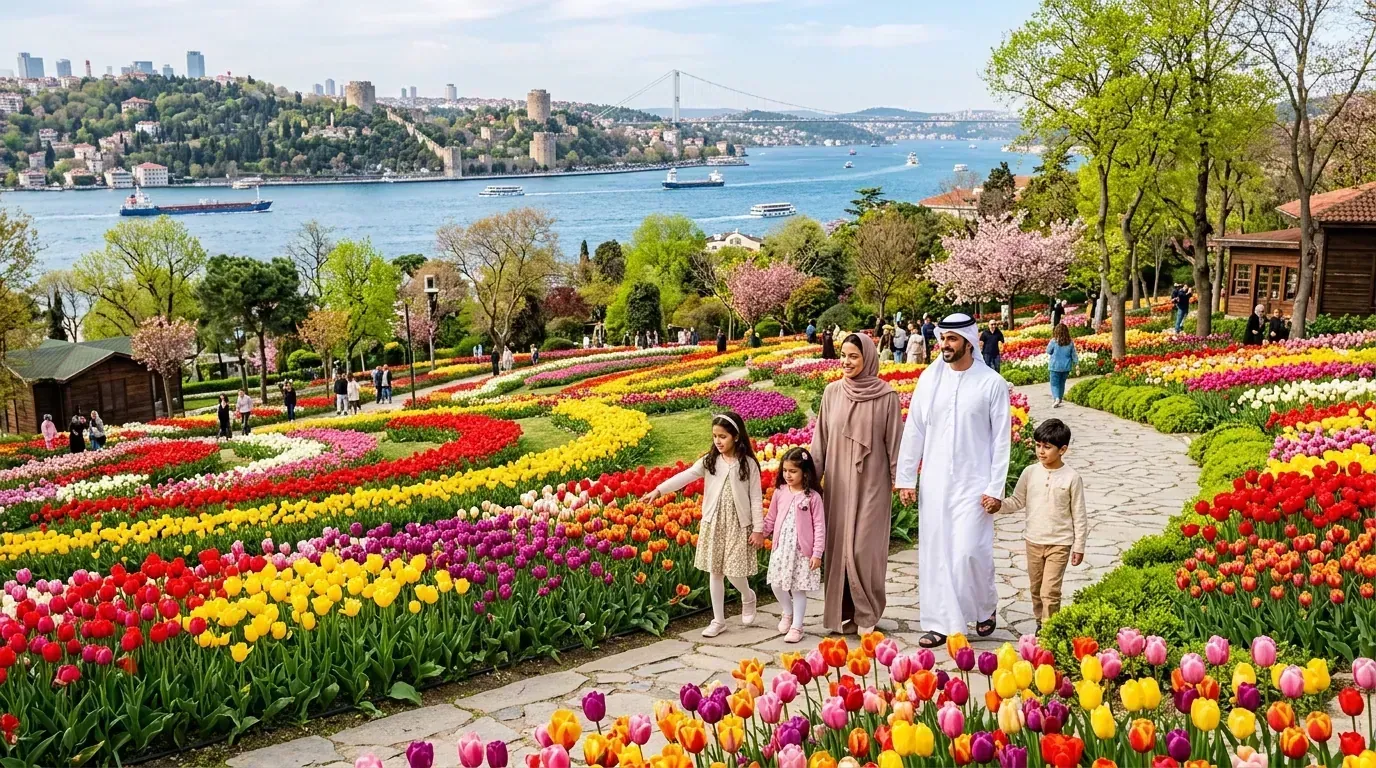
Best time to visit Istanbul 2026: month-by-month weather, crowds and prices, Gulf school holiday dates, Ramadan timing and season tips.
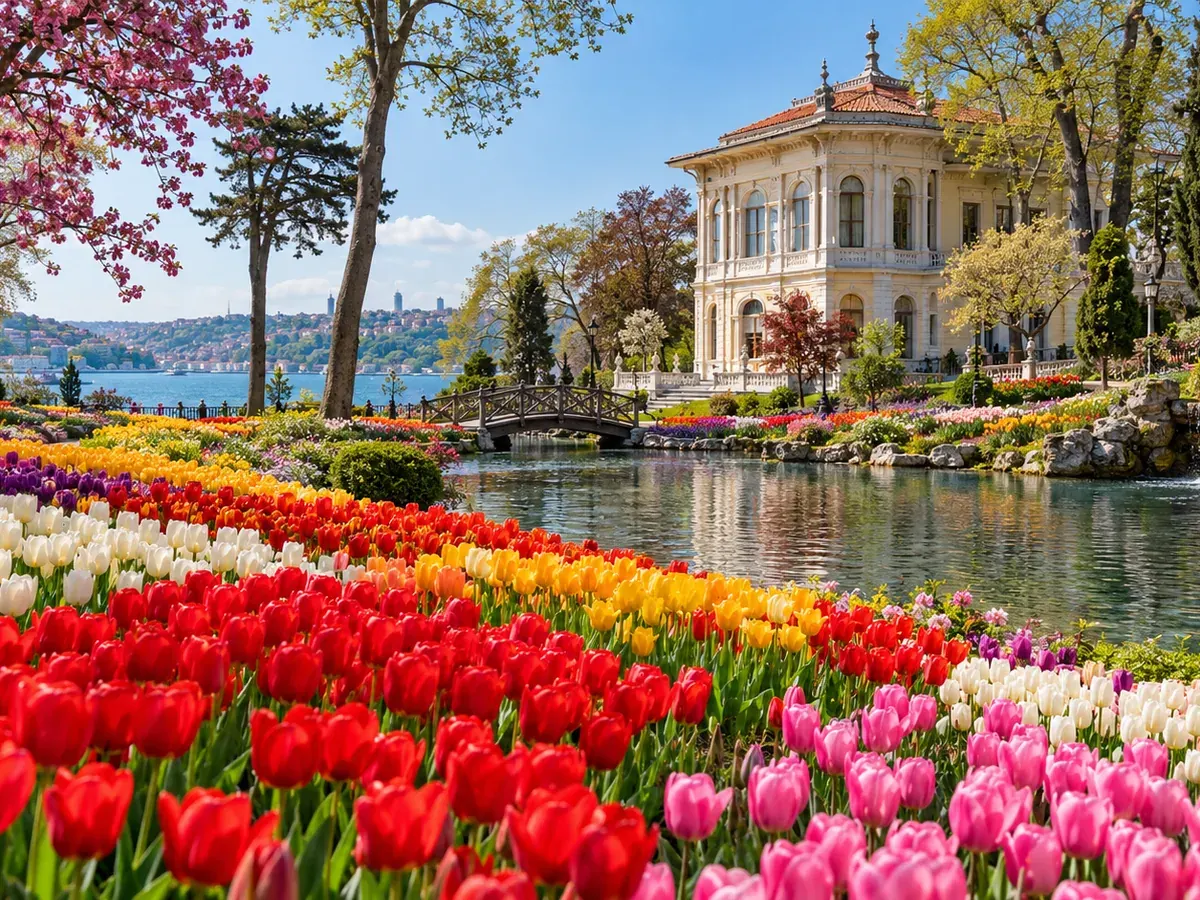
Emirgan Park Istanbul: the tulip festival, the three historic pavilions, Bosphorus-side breakfast cafes and nearby sights for the same day.
Ready to explore Turkey?
Voyago brings together airport transfers, guided tours and car rental to help you plan the perfect trip to Turkey.