
Istanbul in January: The Short Answer
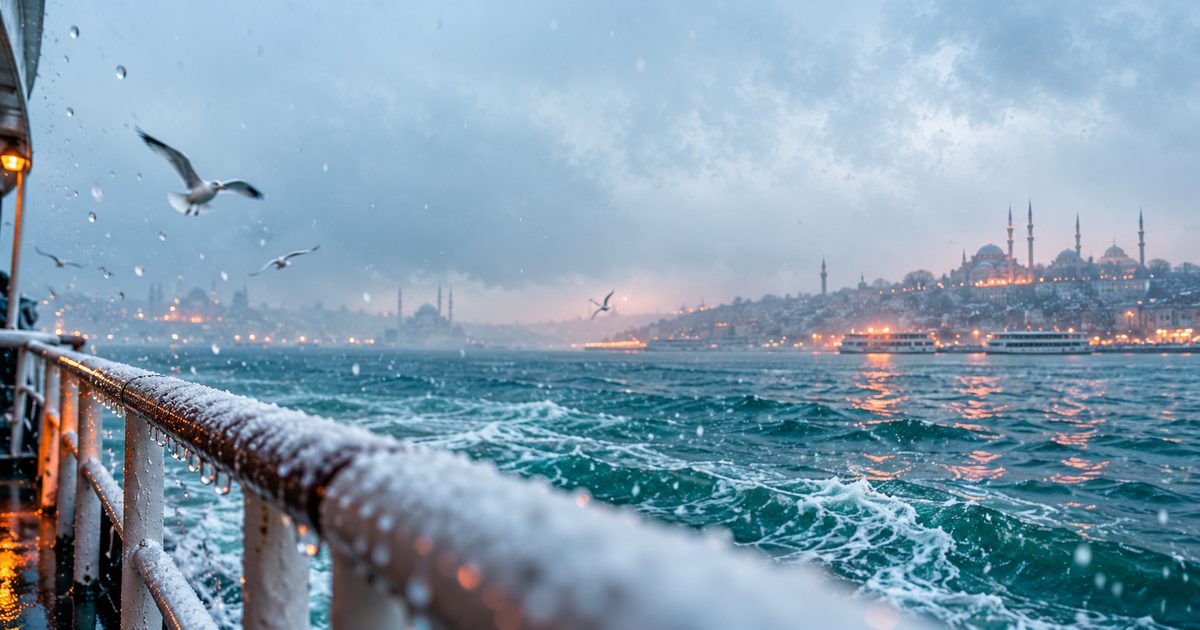
January is the heart of winter in Istanbul and, with February, the coldest month of the year. Days average about 9°C, nights 3-4°C, and rain or drizzle falls on roughly 14 to 17 days. Snow is possible: most winters bring a few snowy days in the city, usually in January or February, though it often melts within a day or two. The sea is around 9-10°C, and the days are short but lengthening: sunset moves from about 5:46 pm on 1 January to 6:18 pm on the 31st.
It is a quiet, good-value month for museums, hammams, winter food and the January sales, and the best time for a snow trip to Uludağ. The live seven-day forecast at the top of this page comes from the Norwegian Meteorological Institute (MET Norway) and refreshes every two hours; use it for your travel days and the averages below for planning.
January in Numbers
These are long-term averages for the city, rounded and shown as ranges because Istanbul's weather stations differ: the Black Sea end of the Bosphorus is colder and windier than the Marmara shore, and the northern districts see snow more often than the old city.
| Item | January average |
|---|---|
| Daytime high | About 8-9°C |
| Night low | About 3-4°C |
| Rainy days | 14-17 |
| Monthly rain | Roughly 90-105 mm |
| Sea temperature | About 10°C falling to 9°C |
| Sunshine | About 2.5-3 hours a day |
| Daylight | About 9 h 15 min on 1 Jan, 10 h on 31 Jan |
| Sunrise / sunset | About 8:29 / 5:46 pm on 1 Jan, 8:16 / 6:18 pm on 31 Jan |
| Snow | A few days in most winters; rarely lasts long in the centre |
Turkey stays on UTC+3 all year, which is why January mornings are dark until almost 8:30. The latest sunrise of the year falls in early January.
Snow in Istanbul
Snow is the question most visitors ask about January. The honest answer is that it varies a lot from year to year. Some winters pass with only a light dusting; others bring a cold spell from the north with heavy snow, as in January 2017 and January 2022, when roads, ferries and flights were disrupted for a day or more.
What usually happens:
- Cold air arrives from the north-east (poyraz) or the Balkans. When it crosses the warmer Black Sea it can produce sudden heavy snow showers, more often on the European side north of the city and in hilly districts than on the Marmara shore.
- Snow rarely settles for long in the old city. Sultanahmet and the Bosphorus shore are often wet rather than white the next day.
- Disruption is short but real. On heavy snow days, schools may close, buses run late and some ferry and flight schedules change. Allow a buffer day before an international flight.
If seeing snow is the goal of your trip, do not rely on Istanbul itself. A day or two at Uludağ or Kartepe, where snow is reliable in January, is the safer plan.
Comparing January With December and February
| December | January | February | |
|---|---|---|---|
| Daytime | About 11-12°C | About 9°C | About 9-10°C |
| Night | About 5-6°C | About 3-4°C | About 3-4°C |
| Rainy days | 13-15 | 14-17 | 12-15 |
| Sea | About 12-13°C | About 9-10°C | About 8-9°C |
| Sunset (mid-month) | About 5:37 pm | About 6:00 pm | About 6:37 pm |
| Feel | Early winter, New Year | Deep winter, ski peak | Winter, days lengthening |
December is milder and has the New Year atmosphere; see the December weather guide. February is just as cold but a little drier and brighter, and in 2027 it includes the start of Ramadan; see the February weather guide.
What to Wear in January
Pack for cold, damp days with occasional frost or snow.
- A warm winter coat: padded or wool, ideally water-resistant and with a hood.
- Layers: thermal or long-sleeved base layers and a sweater or fleece, so you can take a layer off in heated museums, malls and restaurants.
- Waterproof boots with good grip: wet stone streets, stairs and slush after a snowfall are the main hazard.
- Hat, scarf and gloves: essential for evenings and ferry rides.
- For children: warm hats, gloves, and a spare pair of socks and gloves in the day bag.
Visitors from the Gulf, where January days are in the low to mid 20s, should pack as for a European winter, not a cool evening at home. For Uludağ, add waterproof trousers and snow boots, or rent ski clothing on the mountain.
Things to Do on Dry Days
With sunset before 6:20 pm and sunrise after 8 am, plan outdoor sightseeing from about 9:30 am to 3:30 pm.
- Sultanahmet: Hagia Sophia, the Blue Mosque and the Hippodrome are quieter in January than at almost any other time. Check current winter opening hours for Topkapı Palace, which are shorter than in summer.
- The Bosphorus by public ferry: the crossings between Eminönü, Üsküdar, Beşiktaş and Kadıköy are cheap and heated inside. On clear, cold days after a poyraz wind, the views are at their sharpest.
- Süleymaniye and the Golden Horn: the mosque courtyard and the view over the Golden Horn are worth a dry morning; combine with Eyüp and Pierre Loti Hill.
- Snowy viewpoints: if snow has fallen, Emirgan Park, Yıldız Park and Çamlıca Hill are among the prettiest spots, but go early, before paths turn to slush.
Things to Do on Rainy Days
- Museums: Istanbul Archaeology Museums, the Museum of Turkish and Islamic Arts, the Basilica Cistern and the Rahmi M. Koç Museum. Our Turkey museums guide has more options.
- Covered markets: the Grand Bazaar (closed on Sundays) and the Spice Bazaar.
- A hammam: Çemberlitaş, Cağaloğlu or Kılıç Ali Paşa. January is the month when a hot hammam makes the most sense.
- Shopping: winter sales usually run through January in the big malls such as İstinye Park, Zorlu Center and Emaar Square Mall, and on the shopping streets of Nişantaşı and Bağdat Avenue. See our shopping in Turkey guide.
Winter Food and Drink
January is the season of hot salep and boza (a thick fermented millet drink with cinnamon and roasted chickpeas; Vefa Bozacısı near the Süleymaniye Mosque has served it since 1876), roasted chestnuts from street carts and anchovy (hamsi), the Black Sea's winter fish, fried or baked with rice. Fish is halal by nature; for halal restaurants across the city see the Istanbul halal food guide.
Dates to Know in January
- 1 January: New Year's Day is a public holiday. Banks and government offices close, and the city is slow in the morning after the celebrations.
- School holidays: Turkey's mid-year school break usually falls in the second half of January or early February, so domestic travel to ski resorts and hotels near Istanbul gets busier for those two weeks. Check the official calendar for the exact dates.
Apart from that, January is one of the quietest and best-value months for hotels and flights in Istanbul.
Uludağ, Kartepe and Sapanca in January
January and February are the peak of the ski season. Uludağ, above Bursa, is about three hours from Istanbul by road and usually has its most reliable snow cover in these weeks; our Uludağ ski guide covers runs, lift passes and the route. Kartepe, above Sapanca, is closer, and the lake and forest around Sapanca and Maşukiye are a calm winter escape with fireplaces and bungalows; see the Sapanca and Maşukiye guide.
Practical points for winter roads:
- Winter tyres: if you rent a car on our Istanbul car rental page, confirm it has winter tyres and ask for chains. Turkey's winter-tyre rules for commercial and passenger-carrying vehicles run from 15 November to 15 April, and on heavy-snow days chains can be required on the mountain road to Uludağ.
- Driver instead of driving: if you are not used to snow, a pre-booked transfer with a driver familiar with winter roads is simpler, for the mountain as well as for airport runs in bad weather.
- Check the road before leaving: snow or fog can close or slow the mountain roads for some hours.
Common January Mistakes
- Expecting Gulf-style winter. 9°C with wind and rain feels colder than the number suggests.
- Planning a snow day in Istanbul itself. City snow is unpredictable; book the mountain if snow matters.
- No buffer before your flight. A heavy snow day can disrupt traffic and flights; leave time.
- Light trainers. Waterproof shoes make the biggest difference to a January trip.
FAQ
Is January a good time to visit Istanbul?
Yes, if you want quiet sights, lower prices, winter food and a chance of snow. It is not a month for long outdoor days or the beach.
How cold is Istanbul in January?
Average highs are about 9°C and lows 3-4°C. Cold spells can bring nights below zero, especially in the northern districts.
Does it snow in Istanbul in January?
Often a few days each winter, but not every year and rarely for long in the centre. January and February are the most likely months.
Is the sea warm enough to swim?
No. The sea is about 9-10°C. Heated hotel pools and hammams are the options.
What time does it get dark in January?
Between about 5:46 pm at the start of the month and 6:18 pm at the end. Sunrise is around 8:15-8:30 am.
How accurate is the forecast on this page?
It is an automatic model forecast from MET Norway, refreshed every two hours. The first two or three days are the most reliable; for official warnings, check the Turkish State Meteorological Service (MGM).
Related Articles
- Istanbul weather in December
- Istanbul weather in February
- Istanbul weather month by month
- Uludağ ski season guide
Sources
- Turkish State Meteorological Service (MGM): provincial statistics
- Norwegian Meteorological Institute (MET Norway)
- Go Türkiye official tourism portal
- Turkish Ministry of Transport and Infrastructure: winter tyres
Istanbul weather by month: October · November · December · January · February · March
Related travel guides
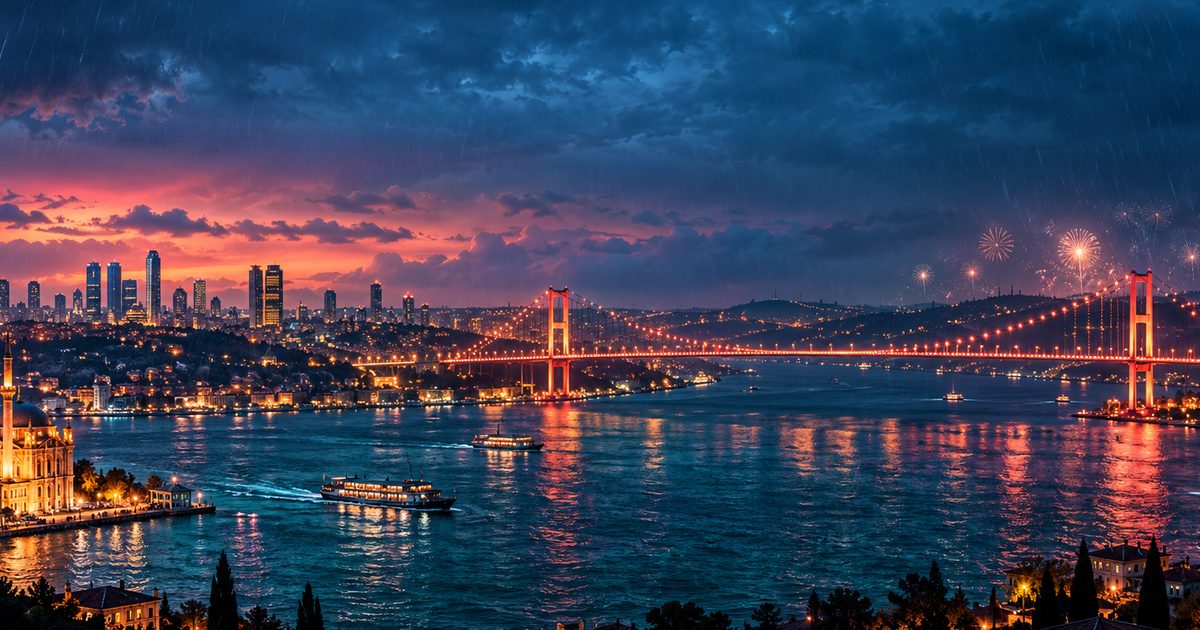
Istanbul in December: about 11–12°C by day, 5–6°C at night, rain on 13–15 days, sunset around 5:40 pm. Live forecast, what to wear, New Year, Uludağ.
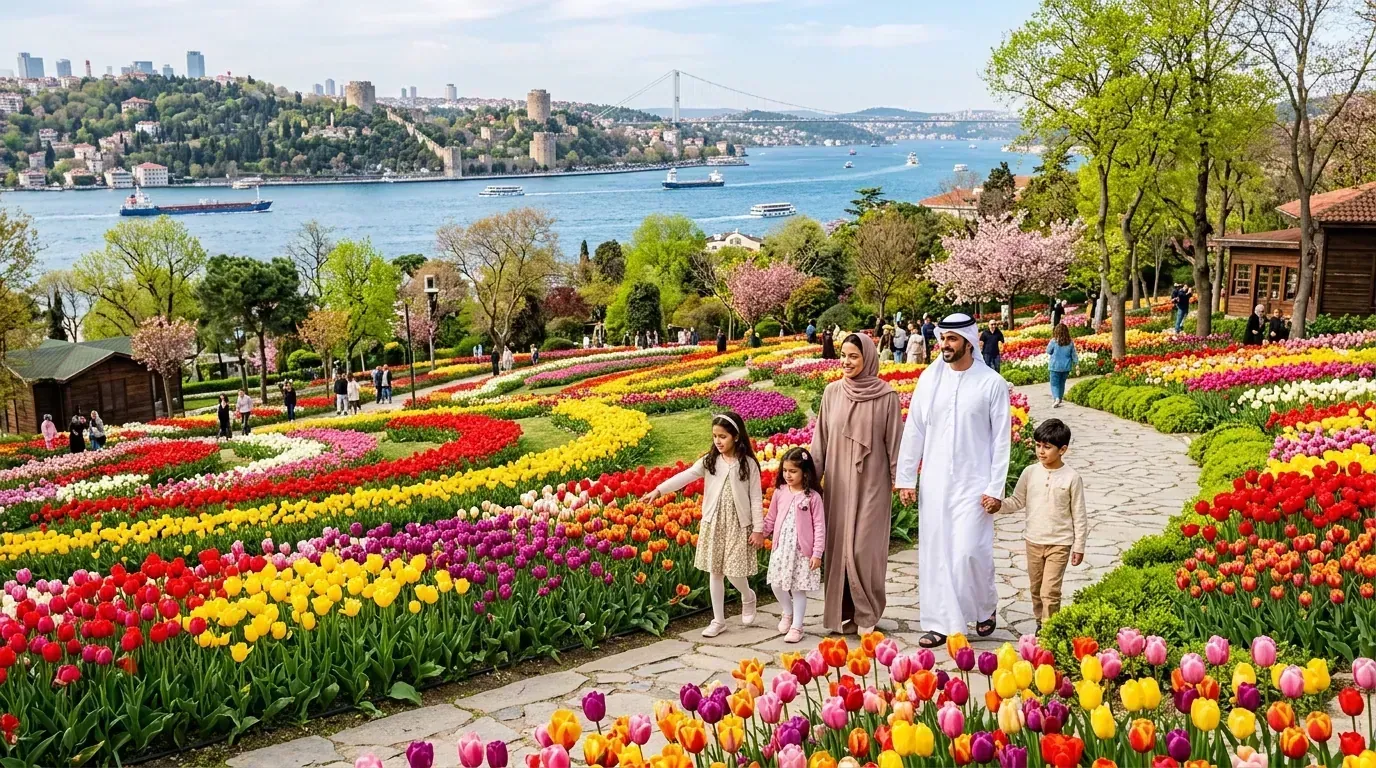
Best time to visit Istanbul 2026: month-by-month weather, crowds and prices, Gulf school holiday dates, Ramadan timing and season tips.
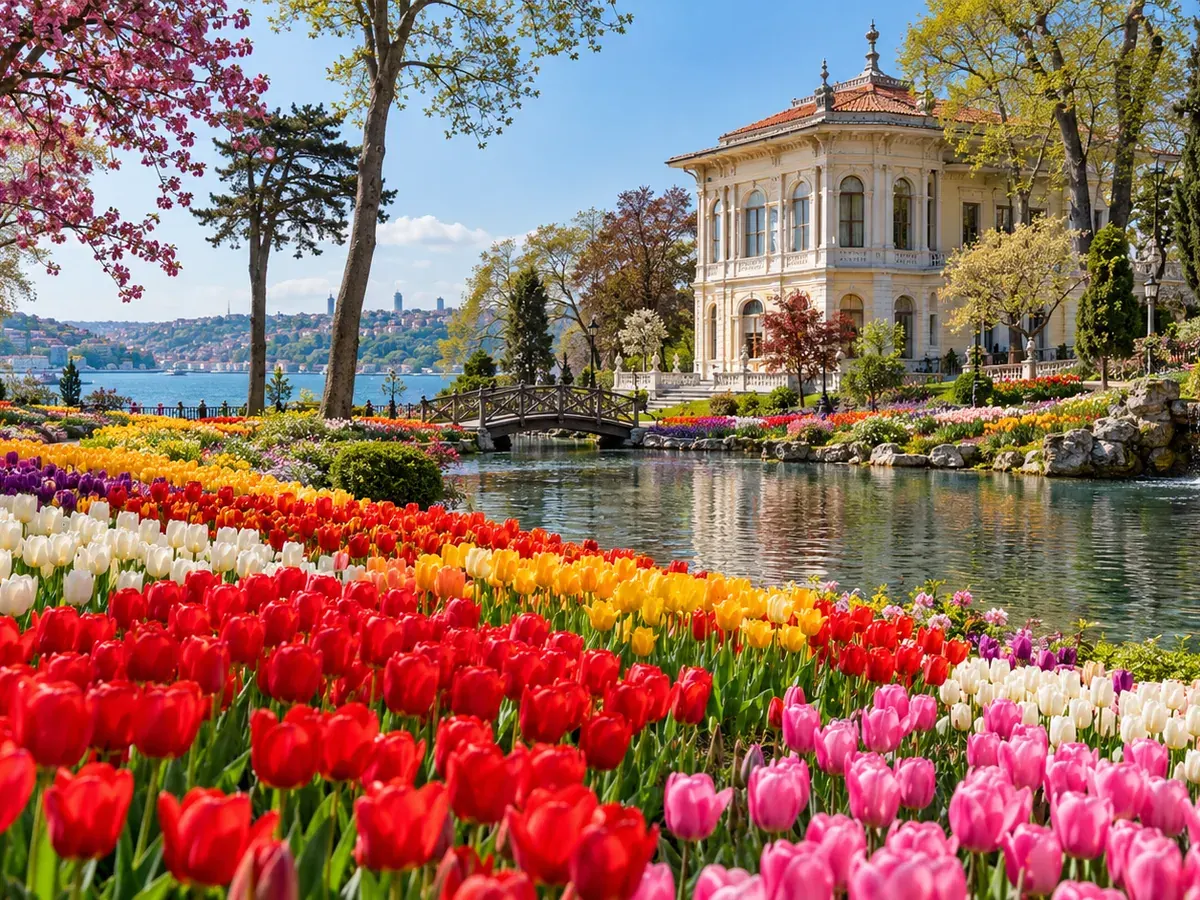
Emirgan Park Istanbul: the tulip festival, the three historic pavilions, Bosphorus-side breakfast cafes and nearby sights for the same day.
Ready to explore Turkey?
Voyago brings together airport transfers, guided tours and car rental to help you plan the perfect trip to Turkey.